


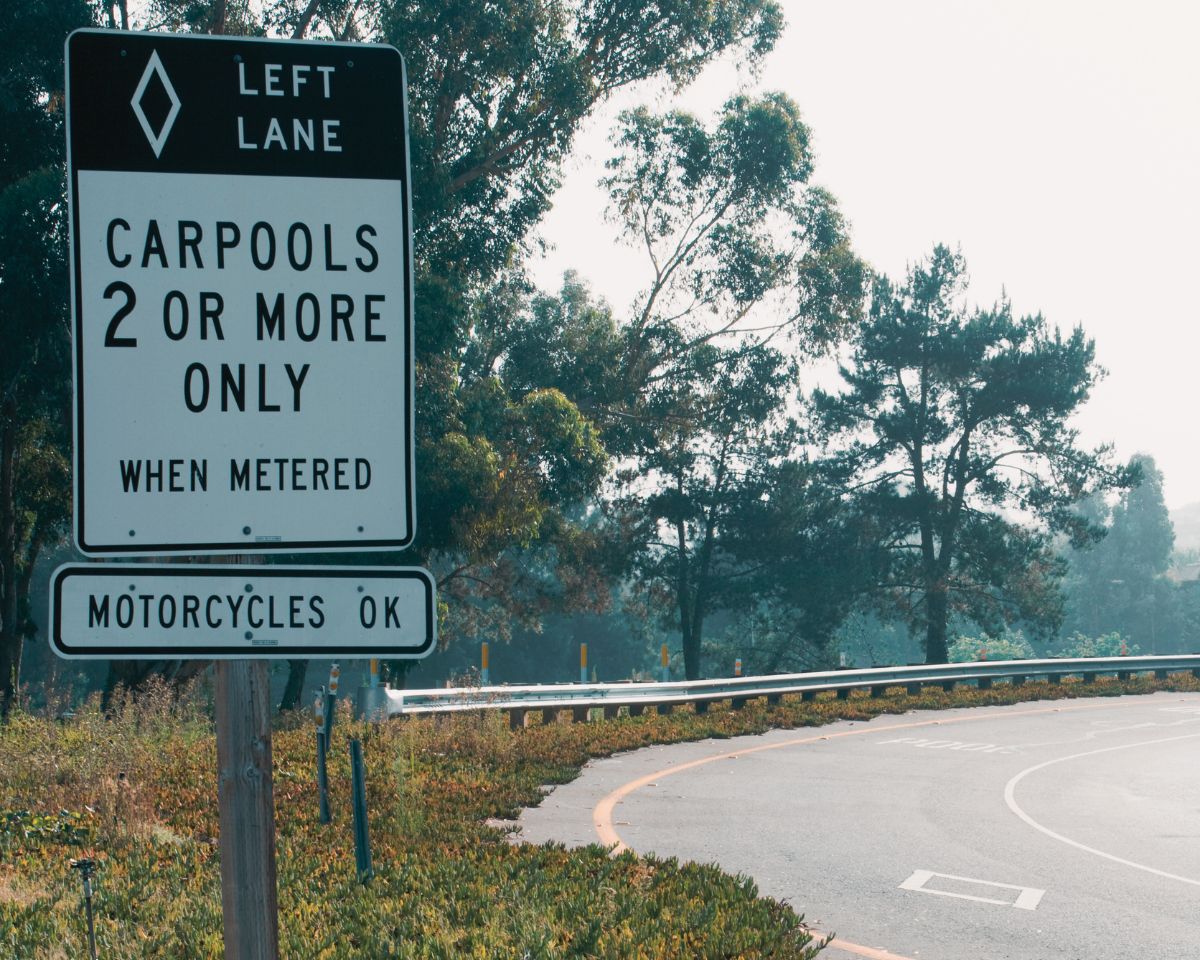
If you’ve been cited for driving in a carpool or HOV (High Occupancy Vehicle) lane in California without meeting the necessary requirements, you’re likely dealing with a violation under Vehicle Code § 21655.5.
Many drivers mistakenly assume that carpool lane violations are minor infractions, but the reality is that these tickets can be expensive, and in some cases, challenging to contest. Understanding what the law says, what counts as a violation, and how to fight back can make all the difference.
Here’s everything you need to know about VC § 21655.5 and your options.
What Does California Vehicle Code § 21655.5 Prohibit?
VC § 21655.5 allows certain lanes on California highways to be designated for use by vehicles carrying multiple passengers—usually two or more. These lanes are commonly known as carpool or HOV lanes.
It is a violation of this law to:
Drive in a carpool lane during restricted hours without the required number of passengers.
Use the lane when you’re not authorized, such as when your vehicle doesn’t meet certain exemption criteria.
Ignore posted signage or enter/exit the lane improperly, such as crossing solid double white lines.
These violations are typically enforced by highway patrol or local law enforcement and can carry hefty fines.
Who Can Legally Use the Carpool Lane?
While the general rule is that vehicles must carry at least two people (sometimes three, depending on the sign), several exceptions exist:
Motorcycles – Allowed regardless of the number of occupants.
Public transit and paratransit vehicles – Often permitted even with only the driver, provided they are properly marked.
Low-emission or zero-emission vehicles (Clean Air Vehicles) – Permitted if they display valid decals issued by the DMV.
Blood transport vehicles – Authorized if clearly marked and compliant with the regulations.
Emergency scenarios – In some cases, exceptions may apply if a public transit vehicle is disabled in the lane.
These exemptions only apply under specific conditions, and failure to comply with all the requirements—even with a qualifying vehicle—can still result in a ticket.
Common Types of Carpool Lane Violations
Some of the most frequent violations under VC § 21655.5 include:
Solo Driving in the HOV Lane: Driving alone in the carpool lane during restricted hours.
Using Invalid or Expired CAV Decals: Even if your vehicle qualifies as a low-emission vehicle, you must have a valid and current decal.
Crossing Solid or Double Lines: Entering or exiting the HOV lane where it’s prohibited by road markings.
Failure to Observe Signs or Lane Restrictions: Not following posted rules regarding times, occupancy requirements, or authorized vehicles.
Even an honest mistake—such as misunderstanding when restrictions apply—can lead to a citation.
Penalties for Violating VC § 21655.5
While carpool lane violations are classified as infractions and not criminal offenses, the penalties can still be significant:
Fines: The base fine is typically around $490, but with added penalties and court fees, the total amount can easily exceed $600.
No Points: The good news is that a standard VC § 21655.5 violation does not add points to your driving record.
Insurance Impact: Although this is a non-point violation, it may still appear on your driving record and could affect your insurance depending on the provider.
Note: If your violation involved crossing double lines, you could also be cited under a different section of the Vehicle Code that does add points to your license.
Can You Fight a Carpool Lane Ticket?
Yes, and you absolutely should—especially if you believe the citation was issued in error. As traffic defense attorneys, we frequently challenge carpool lane violations based on:
Insufficient signage or unclear markings
Valid occupancy (e.g., child passengers that weren’t seen by the officer)
Vehicle exemption status (motorcycles, Clean Air Vehicles, etc.)
Illegal traffic stop (no probable cause)
Emergency situations or necessity
Every case is different, and the key to a successful defense is a careful analysis of the specific facts, road conditions, and applicable exemptions.
Your Options After Receiving a Carpool Lane Ticket
If you’ve received a citation under VC § 21655.5, you have several options:
1. Pay the Fine
This is the simplest option but is essentially an admission of guilt. You lose the opportunity to fight the ticket or seek a reduced penalty.
2. Request a Trial by Written Declaration
California allows drivers to fight traffic tickets by submitting written testimony and evidence by mail. If the officer does the same, a judge decides the case without a court appearance.
3. Request an In-Person Court Trial
You can appear in traffic court, present your case, question the officer, and submit evidence or witnesses. An experienced traffic attorney can help build a strong case on your behalf.
4. Hire a Traffic Defense Attorney
If you’re unsure about how to proceed or want the best chance of success, hiring a lawyer can help ensure your rights are protected and your case is presented effectively.
Frequently Asked Questions
Q: Is a carpool lane ticket considered a moving violation?
A: No, VC § 21655.5 violations are typically non-moving infractions and do not carry DMV points.
Q: Can I use the carpool lane with a baby or child as my passenger?
A: Yes. Children count as passengers as long as they are alive and in the vehicle—even infants in car seats.
Q: Can I fight the ticket even if I already paid it?
A: Unfortunately, once you pay the ticket, you’re considered to have admitted guilt. It’s much harder—if not impossible—to contest the charge afterward.
Q: Are dummy passengers or mannequins a valid defense?
A: Absolutely not. Using a fake passenger is not only illegal but can result in further penalties or even criminal charges.
Q: Can toll lanes be used as carpool lanes?
A: Some toll lanes operate as HOV lanes under certain conditions. Always read posted signs to determine whether you qualify to use the lane at that time.
Southwest Legal Can Help You Fight Back
If you’ve been cited for a carpool lane violation in Southern California, don’t assume you have to pay the fine. There may be legitimate grounds to challenge the ticket, reduce the penalties, or even get the case dismissed entirely.
At Southwest Legal, our experienced traffic defense attorneys have successfully handled traffic cases throughout Southern California. Call us today, let us review your case and help you build the strongest possible defense. You don’t have to face this alone—Southwest Legal is here to help.