


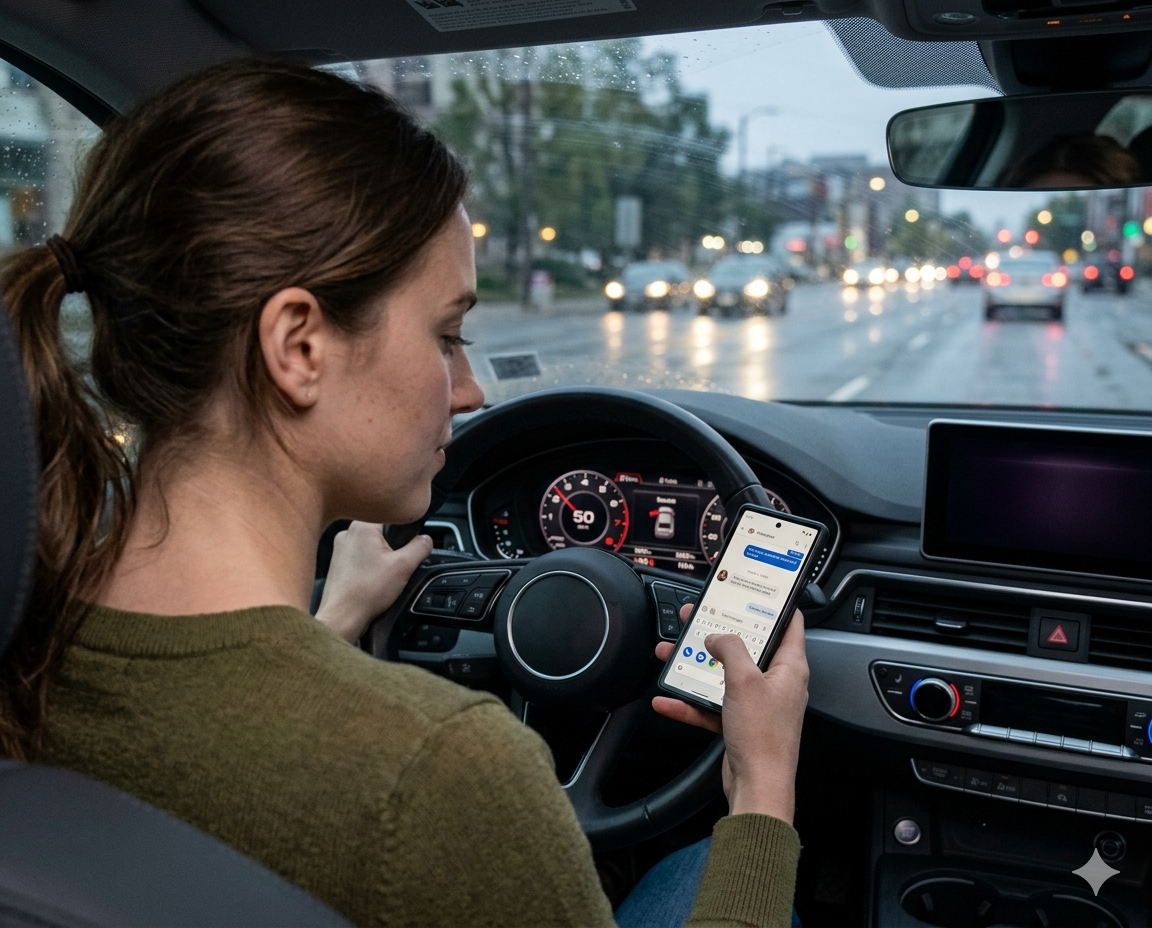
Distracted driving is one of the leading causes of traffic accidents in California. To reduce crashes caused by mobile phone use, the state enforces strict rules on how drivers may interact with electronic devices. One of the most important laws in this area is California Vehicle Code §23123.5(a), commonly known as the California Hands-Free Driving Law.
This law is designed to minimize distractions by restricting handheld phone use while driving and encouraging safer, hands-free alternatives.
Understanding this law is essential for every California driver to avoid fines, protect their driving record, and stay safe on the road.
What Is California Vehicle Code §23123.5(a)?
California Vehicle Code §23123.5(a) makes it illegal for a person to drive a motor vehicle while holding and operating a handheld wireless telephone or electronic communication device.
In simple terms, drivers are not allowed to physically hold a phone or similar device while driving.
Instead, any phone use must be done using hands-free technology such as:
- Voice commands
- Bluetooth systems
- Mounted devices with limited touch interaction
This law applies to smartphones, tablets, GPS units, and other electronic communication devices.
What Does “Operating a Device” Mean?
Under this law, “operating” a device includes any manual interaction with a handheld electronic device while driving.
This includes:
- Holding the phone while talking
- Sending or reading text messages
- Scrolling through apps or social media
- Entering navigation information while holding the device
- Watching videos or using entertainment apps
Even brief interaction with a handheld device while the vehicle is moving can result in a violation.
The only limited exception is when a device is properly mounted and the driver performs a single tap or swipe to activate or deactivate a function.
Legal Use of Phones While Driving
Although strict, the law does allow safe and legal use of technology when done properly.
Allowed uses include:
- Hands-free calling using Bluetooth or speaker systems
- Voice-activated commands such as Siri or Google Assistant
- Navigation systems set up before driving or controlled by voice
- Audio streaming such as music or podcasts using voice or steering wheel controls
Proper phone mounting:
A driver may use a phone only if it is securely mounted on:
- The dashboard
- The windshield in a legal position
- The center console
The device must not block the driver’s view of the road.
What Is Not Allowed?
The law clearly prohibits several actions while driving.
Drivers may not:
- Hold a phone to make or receive calls
- Send or read text messages
- Use social media or apps while holding the device
- Watch videos or livestream content
- Hold a GPS device while navigating
- Perform repeated taps or gestures on a mounted device
Even when stopped at a red light or in traffic, these restrictions still apply because the vehicle is not legally considered parked.
When Can You Use a Phone Legally?
There are limited exceptions under the law:
Emergency situations
Drivers may use a handheld device to contact emergency services such as:
- Police
- Fire department
- Medical responders
Emergency personnel
Law enforcement officers and emergency responders are exempt when performing official duties.
Parked vehicles
The law does not apply when a vehicle is fully parked in a legal parking space and turned off or stationary.
Penalties for Violating the Law
Violating California Vehicle Code §23123.5(a) is considered an infraction.
Financial penalties:
- First offense: base fine of approximately 20 dollars plus additional fees
- Subsequent offenses: base fine of approximately 50 dollars plus fees
In total, a citation often costs between 150 and 250 dollars or more after penalties and assessments are included.
Driving record impact:
- First offense: typically no DMV points
- Second offense within 36 months: one point may be added to the driving record
Accumulating points can result in:
- Higher insurance premiums
- Insurance policy changes
- Possible license suspension
Why California Enforces This Law
The purpose of this law is to reduce distracted driving and improve road safety.
Research shows that using a phone while driving significantly increases the risk of accidents. Even a few seconds of distraction can lead to:
- Delayed reaction times
- Lane drifting
- Rear-end collisions
- Serious or fatal crashes
The law encourages drivers to keep their attention fully on the road.
Common Misconceptions
Many drivers misunderstand how the law works.
GPS use is allowed if you hold the phone
This is incorrect. Holding the device while driving is illegal, even for navigation.
It is okay to use a phone at a red light
This is incorrect. A driver is still considered operating a vehicle when stopped at a signal.
Bluetooth calls are illegal
This is incorrect. Hands-free calling is fully legal and encouraged.
Quick replies are allowed
This is incorrect. Any texting or typing while holding a device is prohibited.
How to Stay Compliant
Drivers can easily follow the law by adopting safe habits:
- Set navigation before starting the trip
- Use a secure phone mount
- Enable voice assistants for communication
- Connect Bluetooth before driving
- Avoid touching the phone while the vehicle is in motion
- Use steering wheel controls when available
These practices help ensure compliance and improve safety.
Final Thoughts
California Vehicle Code § 23123.5(a) is a strict but important law designed to reduce distracted driving and prevent accidents. It requires drivers to avoid holding and operating electronic devices while driving and instead rely on hands-free technology.
The rule is simple: If you are driving, your phone should not be in your hand.
Following this law helps protect your driving record, your finances, and most importantly, your safety and the safety of others on the road.
Contact Southwest Legal
If you received a citation for violating California’s hands-free driving law or need help understanding your legal options, Southwest Legal can assist you. Our defense team provides guidance for traffic violations, helps protect your driving record, and works to challenge unfair or improper tickets.
Contact us today for a free consultation to discuss your case and get the legal support you need to move forward.
Disclaimer: This article is for general informational purposes only and does not constitute legal advice or create an attorney-client relationship. No attorney-client relationship is formed unless and until the firm and client enter into an agreement for legal services. Laws may change, and legal outcomes depend on the specific facts of each case. Consult a qualified attorney for advice regarding your situation.