


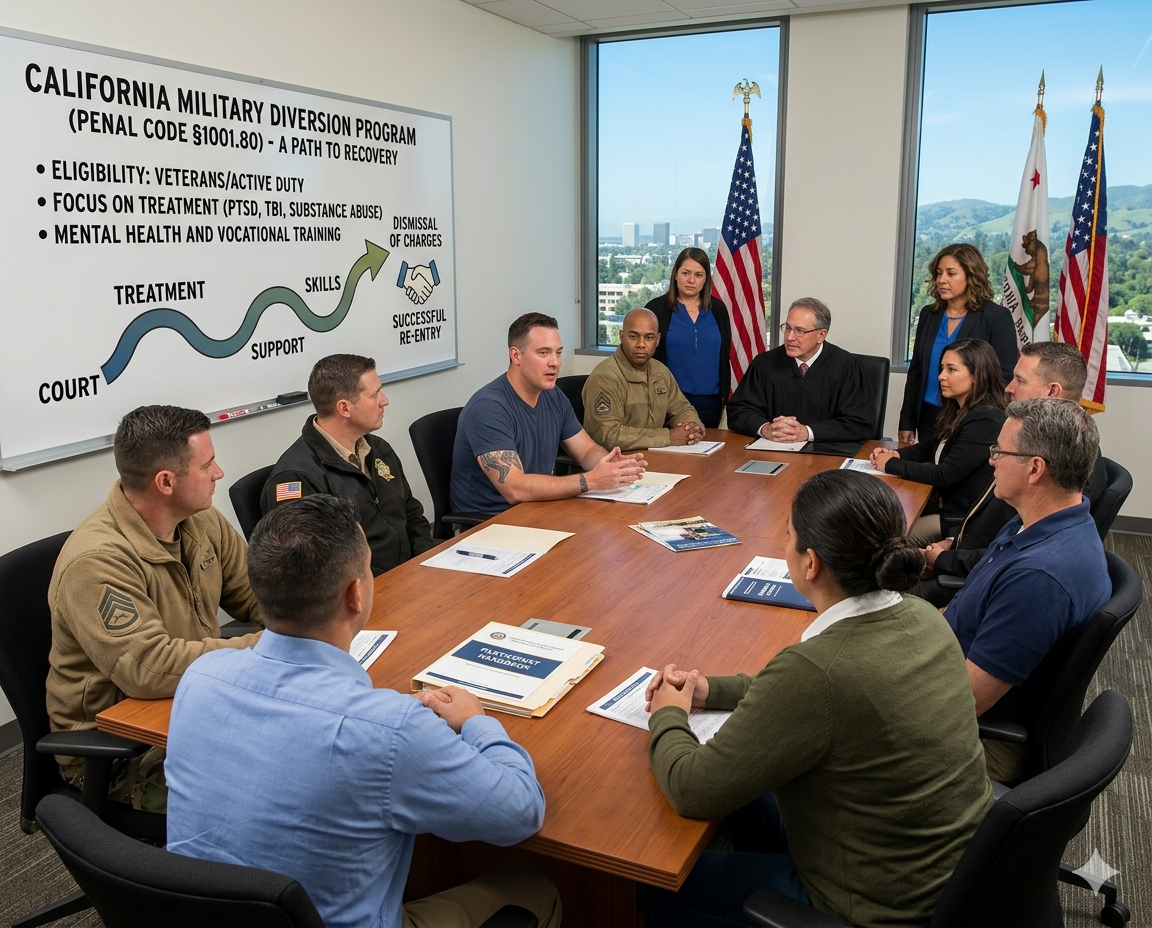
If you or a loved one is facing criminal charges in California and have served in the military, there may be an alternative to traditional prosecution that focuses on treatment instead of punishment. California Penal Code 1001.80 creates a pathway for eligible service members and veterans to enter a diversion program that can ultimately lead to a dismissal of charges.
This guide explains how the law works, who qualifies, and what steps are involved in getting charges dismissed under this powerful legal option.
What Is California Penal Code 1001.80?
California Penal Code 1001.80 establishes a military diversion program. Diversion means that instead of continuing with the normal criminal court process, the case is paused while the defendant participates in a structured treatment program.
The purpose of this law is to recognize that some criminal behavior may be connected to conditions related to military service, such as:
- Post-traumatic stress disorder (PTSD)
- Traumatic brain injury (TBI)
- Substance use disorders
- Other mental health conditions
- Sexual trauma related to service
If the court grants diversion and the program is successfully completed, the criminal case is dismissed. In most situations, the law allows the individual to move forward without a conviction on their record.
Who Qualifies for Penal Code 1001.80?
Not everyone is eligible. The court will carefully evaluate several factors before granting diversion.
1. Military Status Is Required
To qualify, you must be:
- A current member of the U.S. Armed Forces, or
- A veteran of military service
This requirement is mandatory. Civilian defendants are not eligible under this statute.
2. A Service-Related Condition Must Be Present
The court must find that you suffer from a condition connected to your military service. Common qualifying conditions include:
- PTSD
- Traumatic brain injury
- Substance abuse or addiction
- Mental health disorders such as depression or anxiety
- Sexual trauma related to military service
Evidence is typically required, such as medical records, treatment history, or evaluations from qualified professionals.
3. The Charges Must Be Eligible
Many misdemeanor and some non-violent felony offenses may qualify for diversion. However, the law excludes certain serious crimes.
You are generally not eligible if you are charged with offenses such as:
- Murder or voluntary manslaughter
- Certain sex offenses, especially those requiring registration
- Serious or violent felonies involving significant harm
Each case is unique, so eligibility often depends on the specific charges and circumstances.
4. The Judge Must Approve Diversion
Even if you meet all the criteria, diversion is not automatic. The judge has discretion and will consider:
- Your criminal history
- The nature of the offense
- Whether treatment is appropriate
- Public safety concerns
A well-prepared presentation to the court can significantly impact the outcome.
How the Diversion Process Works
Understanding the process can help you prepare and avoid mistakes.
Step 1: Requesting Diversion
Your attorney will typically request diversion by filing a motion with the court. Supporting documents may include:
- Proof of military service
- Medical or psychological evaluations
- A proposed treatment plan
Step 2: Court Review and Evaluation
The court will review your eligibility and may request additional assessments. This step is critical in determining whether your condition is connected to your service and whether you are a good candidate for diversion.
Step 3: Entry Into the Program
If approved, your case is paused while you complete a treatment program. Depending on your situation, this may include:
- Individual counseling or therapy
- Substance abuse treatment
- Mental health services
- Participation in veterans-focused programs
Diversion programs can last up to two years.
Step 4: Monitoring and Compliance
Throughout the program, the court will monitor your progress. You may be required to:
- Attend regular treatment sessions
- Provide progress updates
- Comply with all program rules
Failure to follow the program requirements can result in removal from diversion.
Step 5: Case Dismissal
If you successfully complete the program, the court will dismiss your charges. This is the ultimate goal of diversion.
In most cases, the dismissal allows you to move forward without a criminal conviction, although certain exceptions may apply for specific types of employment or government applications.
Benefits of Penal Code 1001.80
This law offers several important advantages:
Avoiding Jail or Prison
Diversion allows eligible individuals to receive treatment instead of incarceration.
Opportunity for Case Dismissal
Successful completion results in the charges being dismissed.
Reduced Long-Term Consequences
A dismissal can help protect your future employment, housing, and educational opportunities.
Focus on Rehabilitation
The program addresses underlying issues rather than only punishing the offense.
Potential Risks and Limitations
While the benefits are significant, it is important to understand the potential downsides.
Diversion Is Not Guaranteed
The judge has full discretion and may deny the request even if you appear eligible.
Strict Program Requirements
You must fully comply with all conditions. Missing appointments or violating program rules can lead to termination.
Charges Can Be Reinstated
If you fail the program, your criminal case will resume, and you may face prosecution.
Limited Exceptions for Disclosure
Although the case may be dismissed, certain positions—such as law enforcement roles—may still require disclosure of the arrest.
How to Improve Your Chances of Getting Charges Dismissed
Preparation and strategy are key to success under Penal Code 1001.80.
Gather Strong Evidence
Provide documentation of your military service and medical condition. The stronger the connection to your service, the better your chances.
Start Treatment Early
Taking initiative by enrolling in treatment before your court date can demonstrate seriousness and commitment.
Present a Clear Plan
Courts are more likely to approve diversion when there is a structured treatment plan in place.
Work With an Experienced Defense Attorney
Legal guidance can make a critical difference in how your case is presented and whether diversion is granted.
Frequently Asked Questions
Can felony charges be dismissed under Penal Code 1001.80?
Yes, some non-violent felony charges may qualify, provided they are not excluded by law.
How long does the program last?
Diversion can last up to two years, depending on the treatment plan and individual progress.
What happens after dismissal?
In most situations, the case is treated as though it did not result in a conviction, allowing you to move forward with fewer legal consequences.
What if I do not complete the program?
If you fail to comply with the requirements, the court may terminate diversion and continue with prosecution.
Contact Southwest Legal
California Penal Code 1001.80 provides a valuable opportunity for service members and veterans to avoid a criminal conviction and focus on recovery. However, the process can be complex, and success often depends on how well your case is prepared and presented. If you or a loved one may qualify for military diversion, it is important to act quickly and get experienced legal guidance.
Southwest Legal is committed to helping veterans and service members navigate the criminal justice system and pursue the best possible outcome. Our team understands the unique challenges faced by those who have served and is ready to fight for your future.
Contact us today for a free consultation and find out how we can help you seek dismissal of your charges under California Penal Code 1001.80.