


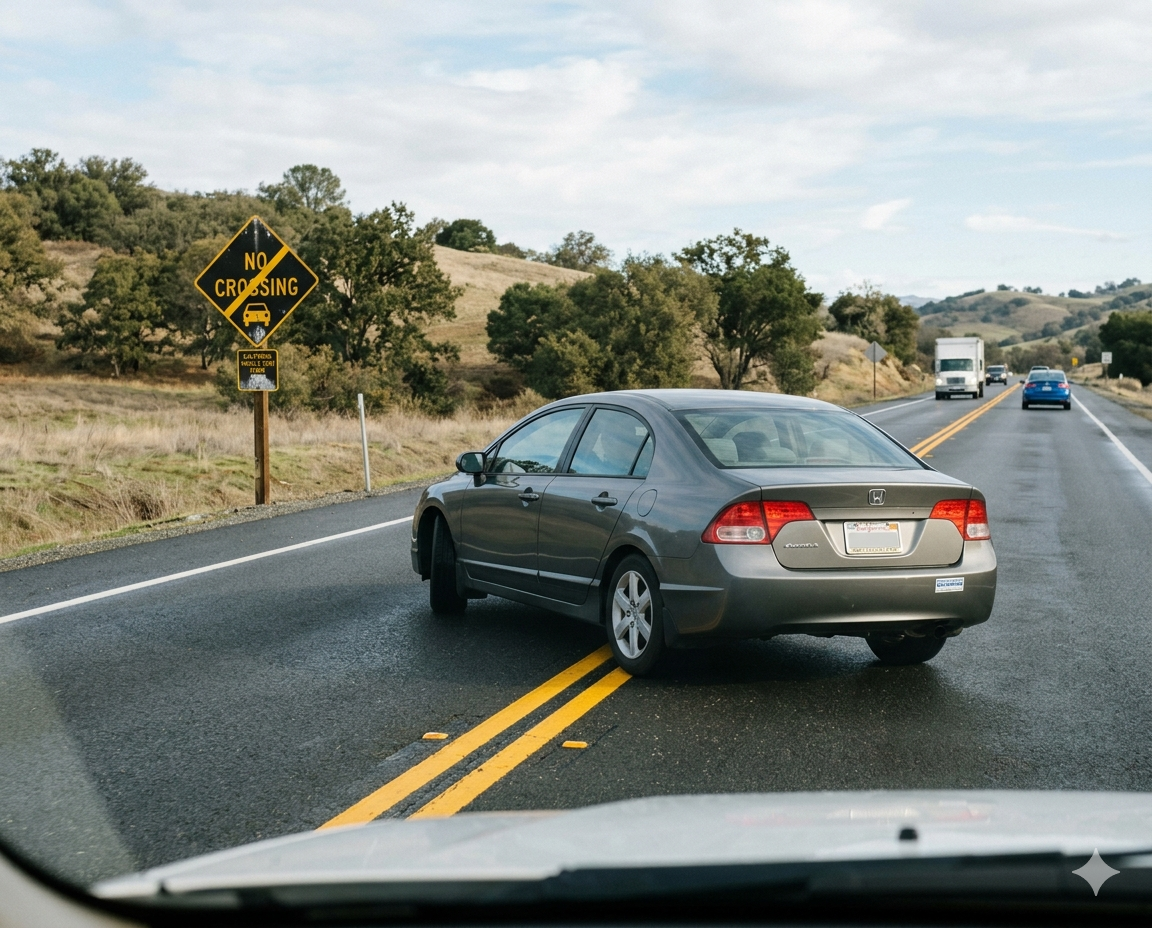
Understanding California Vehicle Code § 21460 is important for every driver in California because it explains when drivers are allowed—or not allowed—to cross double yellow lines. This rule is designed to reduce head-on collisions and keep traffic flowing safely on roads with limited visibility or restricted passing zones.
What Is California Vehicle Code § 21460?
California Vehicle Code § 21460 is the law that regulates how drivers may interact with roadway centerline markings, including:
- Double solid yellow lines
- Broken and solid yellow line combinations
- Certain restricted lane markings related to center dividers
In simple terms, this law generally prohibits driving on or crossing these markings unless a specific legal exception applies.
The main goal is to prevent unsafe passing maneuvers and reduce the risk of head-on collisions.
Meaning of Double Yellow Lines
1. Double Solid Yellow Lines
Double solid yellow lines indicate a no-passing zone for vehicles traveling in either direction.
This means:
- You cannot pass another vehicle by crossing them
- You cannot use them as a travel lane
- You cannot drive on the opposite side of traffic using these markings
These lines are placed in areas where passing would be dangerous, such as curves, hills, or narrow roads.
2. Broken and Solid Yellow Line Combination
When one side has a broken line and the other has a solid line:
- Drivers on the broken-line side may cross to pass when safe
- Drivers on the solid-line side are not allowed to pass
This system helps control passing based on visibility and safety conditions.
When You Are Allowed to Cross Double Yellow Lines
Even though the rule is strict, California law allows several important exceptions.
1. Turning Left at an Intersection
Drivers may cross double yellow lines to make a legal left turn at:
- Intersections
- Roads that meet at an entry point
This is one of the most common legal uses of crossing the centerline.
2. Entering or Exiting Driveways and Private Roads
You are allowed to cross double yellow lines when:
- Turning into a driveway
- Leaving a driveway
- Entering or exiting private property or parking areas
This exception ensures drivers can access homes, businesses, and parking lots safely.
3. Making Legal U-Turns
U-turns may be allowed if:
- There is no posted sign prohibiting them
- The maneuver can be done safely
- Road conditions provide enough visibility
However, even if a U-turn is technically possible, it may still be illegal if signage restricts it.
4. Passing on Roads with a Broken Yellow Line
Crossing is allowed only when:
- The broken yellow line is on your side
- The road ahead is clear and safe
- No other traffic rules or signs prohibit passing
If the solid line is on your side, passing is not allowed.
5. Avoiding Obstructions
In limited situations, drivers may briefly cross double yellow lines to avoid:
- Disabled vehicles
- Road debris
- Other unexpected hazards
However, this must be done carefully and only when necessary for safety.
When Crossing Double Yellow Lines Is Illegal
It is illegal under California law to:
- Pass another vehicle by crossing double solid yellow lines
- Drive along or straddle the centerline as a travel lane
- Enter oncoming traffic lanes in a no-passing zone
- Ignore solid-line restrictions during passing attempts
Even a momentary crossing to overtake another vehicle can result in a violation.
Common Driving Situations Explained
Passing a Slow Vehicle
- Not allowed if both lines are solid
- Allowed only if the broken line is on your side
Turning Into a Parking Lot or Store
- Allowed if it is a legitimate driveway or entrance
- Double yellow lines do not prevent entry or exit turns
Overtaking on a Two-Lane Road
- Only allowed where road markings explicitly permit passing
- Never allowed in clearly marked no-passing zones
Swerving Around a Road Hazard
- May be allowed if necessary for safety
- Must return to your lane immediately after clearing the hazard
Penalties for Violating This Law
Violating California Vehicle Code § 21460 can result in:
- Traffic ticket and fines
- DMV points on your driving record
- Increased insurance premiums
- Additional penalties if the violation contributes to a crash
If an accident occurs, crossing double yellow lines may also be used as evidence of unsafe driving behavior.
Why This Law Matters
Double yellow lines exist to protect drivers by:
- Preventing dangerous head-on collisions
- Controlling passing in low-visibility areas
- Reducing accidents on curves, hills, and narrow roads
- Improving overall traffic safety and predictability
Following these markings helps maintain safer roads for everyone.
Final Thoughts
California Vehicle Code § 21460 double yellow lines are meant to restrict crossing for safety, with only limited and clearly defined exceptions. Understanding when you can legally cross them helps you avoid tickets and, more importantly, prevents serious accidents.
If you were cited for crossing double yellow lines or involved in a traffic-related incident, getting legal guidance can make a significant difference in the outcome of your case.
Contact Southwest Legal
Southwest Legal helps clients understand their rights, challenge traffic violations, and address related legal matters with professional support. Contact us today for a free consultation and learn how our legal team can help you protect your driving record and understand your available options.
Disclaimer: This article is for general informational purposes only and does not constitute legal advice or create an attorney-client relationship. No attorney-client relationship is formed unless and until the firm and client enter into an agreement for legal services. Laws may change, and legal outcomes depend on the specific facts of each case. Consult a qualified attorney for advice regarding your situation.