


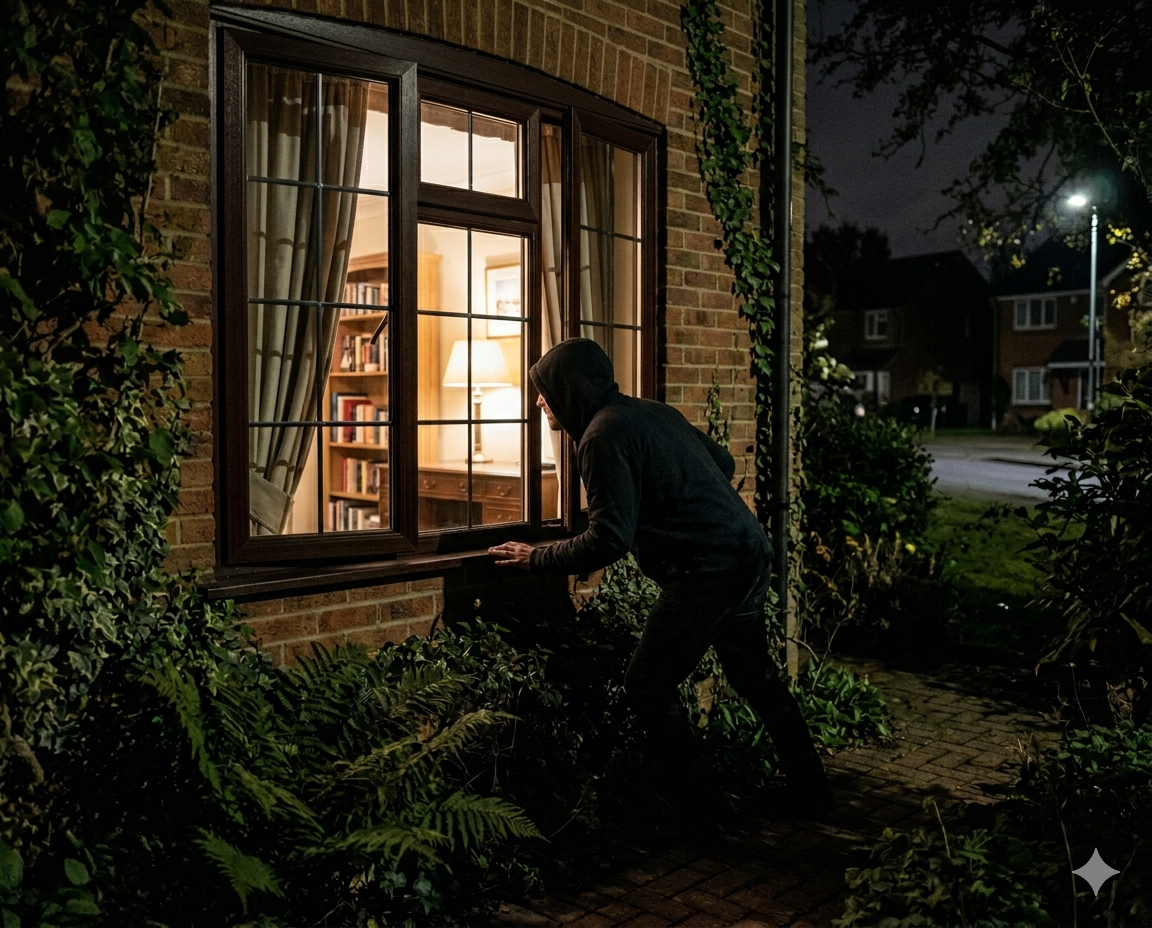
California Penal Code § 647(i) addresses a criminal offense commonly referred to as “peeking while loitering.” While it may not sound as serious as violent crimes or major felonies, a conviction under this statute can still result in jail time, fines, probation, and a permanent criminal record that may affect employment, housing, and professional opportunities.
This guide explains the meaning of California Penal Code § 647(i), how the law works, potential penalties, common defenses, related offenses, and what prosecutors must prove to obtain a conviction.
What Is California Penal Code § 647(i)?
California Penal Code Section 647(i) makes it unlawful for a person to loiter, prowl, or wander on the private property of another person without lawful business while peeking into doors or windows of inhabited buildings or structures.
In simple terms, the law targets individuals who remain on private property without a valid reason and secretly look into homes, apartments, or occupied buildings.
The purpose of the law is to protect privacy and discourage suspicious behavior that may create fear, harassment, or safety concerns for residents.
Legal Elements Prosecutors Must Prove
To convict someone under Penal Code § 647(i), prosecutors generally must establish all of the following elements beyond a reasonable doubt:
- The individual loitered, prowled, or wandered on private property belonging to another person.
- The individual had no visible or lawful business with the owner or occupant.
- The person peeked into a window or door.
- The structure was inhabited or occupied.
- The conduct was intentional.
If any of these elements cannot be proven, the charges may be reduced or dismissed.
Understanding “Loitering” Under California Law
Loitering does not simply mean standing or walking in a location. Under California law, loitering generally involves lingering or remaining somewhere without a legitimate purpose.
For example, merely walking past a home is not illegal. However, remaining near windows, hiding around the property, or behaving suspiciously without lawful business may lead to criminal allegations.
Examples of lawful reasons for being on private property include:
- Delivering packages
- Visiting residents
- Performing maintenance or repair work
- Responding to emergencies
- Conducting authorized business
The lack of a legitimate purpose is an important part of the offense.
What Counts as “Peeking”?
Peeking usually refers to secretly or intentionally looking into windows or doors in a way that invades another person’s privacy.
Common examples may include:
- Looking through bedroom windows late at night
- Hiding behind bushes while watching people inside a residence
- Repeatedly walking around a property while staring through windows
- Attempting to avoid detection while observing occupants
Accidental or brief glances generally do not qualify as criminal conduct. Intent plays a major role in these cases.
Examples of Penal Code § 647(i) Violations
Suspicious Nighttime Activity
A person hides near a residential property after midnight and repeatedly looks through a bedroom window. The individual has no connection to the residents and no legitimate reason for being there. Police responding to a report may arrest the person for peeking while loitering.
Apartment Complex Incident
An individual wanders around an apartment complex for an extended period while looking into several ground-floor windows. Residents report the behavior to law enforcement, leading to an investigation.
No Criminal Intent
A delivery driver briefly looks through a front window while attempting to determine whether someone is available to receive a package. Because the driver has lawful business on the property and no intent to invade privacy, this conduct would likely not violate Penal Code 647(i).
Penalties for Violating Penal Code § 647(i)
Peeking while loitering is generally charged as a misdemeanor offense in California.
Potential penalties may include:
- Up to six months in county jail
- A fine of up to $1,000
- Informal probation
- Community service
- Court-ordered counseling in some cases
Although the offense is classified as a misdemeanor, the long-term consequences of a conviction can still be significant.
A criminal record may negatively affect:
- Employment opportunities
- Professional licensing
- Housing applications
- Educational opportunities
- Immigration status
Common Legal Defenses
Several defenses may apply in peeking while loitering cases depending on the facts and available evidence.
Lawful Purpose
If the accused had a valid reason for being on the property, prosecutors may not be able to prove the offense.
Examples may include:
- Delivery personnel
- Contractors
- Maintenance workers
- Guests
- Utility company employees
Lack of Intent
The prosecution must usually show intentional conduct. Accidentally glancing through a window or briefly observing a property may not qualify as criminal behavior.
False Accusations
Witnesses may misunderstand innocent behavior or incorrectly identify someone, especially in poor lighting or stressful situations.
Insufficient Evidence
Weak surveillance footage, inconsistent witness testimony, or a lack of reliable evidence may create reasonable doubt.
Constitutional Violations
If law enforcement violated constitutional rights during the investigation or arrest, certain evidence may potentially be excluded from court.
Difference Between Peeking While Loitering and Trespassing
Although these offenses are related, they are not the same crime.
Peeking While Loitering
- Involves suspicious observation
- Requires peeking into windows or doors
- Focuses on invasion of privacy
Trespassing
- Involves entering or remaining on property without permission
- Does not necessarily involve peeking or surveillance
- Applies to a wider range of conduct
In some cases, prosecutors may file both charges.
Related California Laws
Penal Code 647(j): Invasion of Privacy
This law prohibits secretly viewing, recording, or photographing individuals in private settings without consent.
Examples include:
- Hidden cameras
- Unauthorized recordings
- Secret photography in private areas
- Video voyeurism
Penal Code 602: Trespassing
California trespassing laws prohibit unauthorized entry onto private property.
Penal Code 646.9: Stalking
Repeated harassment or surveillance that causes fear may lead to stalking charges, which carry more severe penalties.
Expungement Possibilities
Many individuals convicted under Penal Code 647(i) may qualify for expungement after successfully completing probation and satisfying court requirements.
An expungement may help improve:
- Employment opportunities
- Housing prospects
- Professional licensing applications
- Personal reputation
Eligibility depends on the circumstances of the case and compliance with court orders.
Immigration Consequences
Even misdemeanor offenses may create immigration complications for non-citizens.
Potential consequences can include:
- Visa issues
- Green card complications
- Naturalization problems
- Immigration proceedings
Anyone facing criminal allegations while dealing with immigration matters should seek qualified legal assistance immediately.
How Law Enforcement Investigates These Cases
Investigations often involve:
- Resident complaints
- Witness statements
- Security camera footage
- Police observations
- Surveillance evidence
- Photographs or videos
In some situations, prosecutors rely heavily on circumstantial evidence when direct evidence is unavailable.
What To Do If You Are Accused
If you are accused of violating Penal Code 647(i), taking the situation seriously is important.
Recommended steps may include:
- Avoid speaking to law enforcement without legal counsel.
- Preserve evidence that supports your explanation.
- Identify witnesses who can confirm your lawful purpose.
- Follow all court requirements and deadlines.
- Contact an experienced California criminal defense attorney.
Early legal intervention may improve the chances of reducing or dismissing charges.
Frequently Asked Questions
Is Penal Code 647(i) a felony?
No. It is generally charged as a misdemeanor offense.
Can someone be charged without entering a building?
Yes. A person may still face charges while remaining outside if they are unlawfully lingering on private property and peeking into windows or doors.
Is video evidence required?
No. Prosecutors may rely on witness testimony and other forms of evidence.
Can juveniles be charged?
Yes. Minors may face proceedings in juvenile court for similar conduct.
Can charges be dismissed?
Yes. Charges may be reduced or dismissed if the evidence is weak or if the defense establishes lawful conduct or lack of intent.
Why Privacy Laws Are Important
California privacy laws are designed to protect individuals from intrusive and suspicious behavior. Residents have a reasonable expectation of privacy within their homes and occupied spaces.
At the same time, the legal system requires prosecutors to prove every element of the offense beyond a reasonable doubt. Innocent conduct should not automatically be treated as criminal behavior.
Final Thoughts
California Penal Code Section 647(i) prohibits peeking into doors or windows while loitering on private property without lawful business. While the offense may appear straightforward, these cases often involve complicated questions about intent, privacy rights, witness credibility, and lawful presence.
A conviction can carry serious consequences, including jail time, fines, probation, and long-term damage to a person’s reputation and future opportunities. Understanding the law and available defenses is essential for anyone facing allegations under this statute.
Every case is unique, and outcomes often depend on the facts, evidence, and quality of legal representation involved.
Contact Southwest Legal
If you or someone you know is facing charges under California Penal Code Section § 647(i) or any other criminal offense, obtaining experienced legal representation as early as possible can make a significant difference in the outcome of the case.
The legal team at Southwest Legal understands how stressful criminal allegations can be and works to protect clients’ rights, reputations, and futures. Whether you are dealing with misdemeanor charges, privacy-related offenses, or more serious allegations, knowledgeable legal guidance is critical.
Contact us today for a free consultation to discuss your case, understand your legal options, and receive a confidential consultation with an experienced California criminal defense professional.
Disclaimer: This article is for general informational purposes only and does not constitute legal advice or create an attorney-client relationship. No attorney-client relationship is formed unless and until the firm and client enter into an agreement for legal services. Laws may change, and legal outcomes depend on the specific facts of each case. Consult a qualified attorney for advice regarding your situation.