


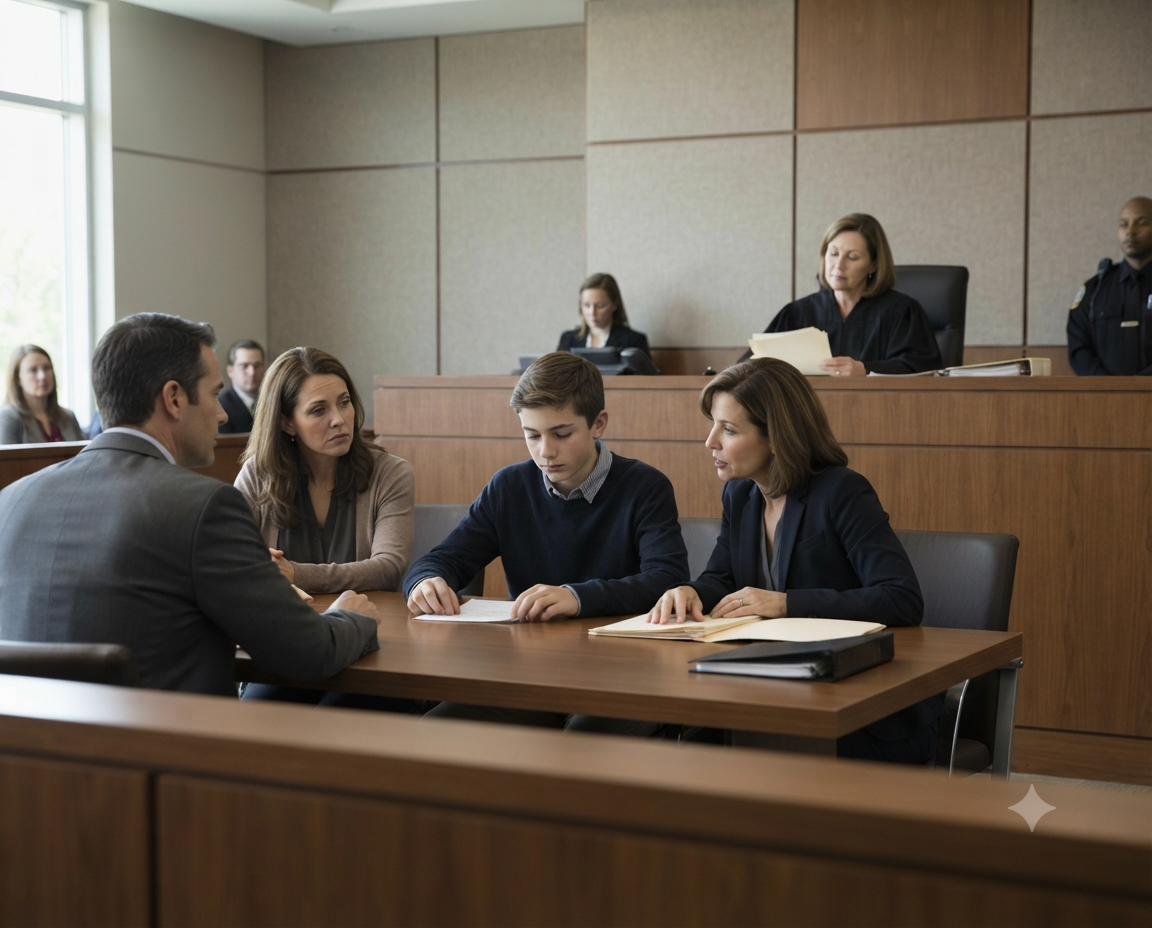
When a young person is accused of committing a crime in California, one of the most important stages of the juvenile court process is the adjudication hearing. Many people refer to this proceeding as a “juvenile trial,” but California juvenile court uses different terminology and follows procedures that are different from adult criminal court.
For families facing juvenile charges, understanding what happens during an adjudication hearing can make an unfamiliar and stressful process easier to navigate. This hearing determines whether the allegations in a juvenile delinquency case are proven and whether the court will move forward with supervision, treatment, or other consequences.
Unlike an adult criminal trial, a juvenile adjudication hearing focuses less on punishment and more on rehabilitation, accountability, and helping the minor avoid future involvement with the justice system. However, the outcome can still have significant consequences for a young person’s education, future opportunities, and record.
What Is an Adjudication Hearing in a California Juvenile Case?
An adjudication hearing is the juvenile court’s version of a trial. During this hearing, a judge reviews evidence presented by the prosecution and the defense to decide whether the allegations against the minor are true.
In adult criminal court, a person is found “guilty” or “not guilty.” In California juvenile court, the judge typically determines whether the allegations are sustained or not sustained.
- Sustained: The judge finds that the prosecution proved the allegations.
- Not sustained: The judge finds that the prosecution did not prove the allegations.
If the allegations are sustained, the case may move to a disposition hearing, which is similar to a sentencing hearing in adult court. At that stage, the judge decides what services, supervision, or consequences are appropriate.
Is a Juvenile Trial the Same as an Adult Criminal Trial?
No. Although an adjudication hearing has similarities to a criminal trial, juvenile court operates under a different system.
Some important differences include:
1. A Judge Decides the Outcome
California juvenile cases generally do not involve a jury trial. Instead, a juvenile court judge hears the evidence and makes the decision.
The judge evaluates witness testimony, documents, physical evidence, and arguments from both sides before deciding whether the allegations have been proven.
2. The Focus Is Rehabilitation
The juvenile justice system is designed to address a young person’s behavior and provide opportunities for rehabilitation. The court may consider factors such as:
- The minor’s age
- School history
- Family circumstances
- Prior involvement with the justice system
- The seriousness of the alleged offense
- The minor’s willingness to participate in services
However, rehabilitation does not mean the allegations are treated casually. A sustained finding can still affect a minor’s future.
3. Different Terminology Is Used
California juvenile court uses different terms than adult criminal court. Common terms include:
- Petition: The document that starts a juvenile delinquency case
- Minor: The young person accused of an offense
- Adjudication hearing: The juvenile trial
- Sustained petition: A finding that the allegations were proven
- Disposition hearing: The hearing where the court decides the outcome
Understanding these terms can help families follow what is happening in court.
What Happens Before a Juvenile Adjudication Hearing?
Before the trial begins, several important steps usually occur.
Filing of a Juvenile Petition
A juvenile delinquency case generally begins when the prosecutor files a petition alleging that the minor committed an offense.
The petition identifies the alleged violations and provides the basis for the court proceedings.
Detention Hearing
If the minor is taken into custody, the court may hold a detention hearing to determine whether the young person should remain in custody while the case continues.
The judge may consider factors such as:
- Public safety concerns
- Whether the minor is likely to return to court
- Whether there are appropriate alternatives to detention
Some minors are released to their parents or guardians while the case proceeds.
Pretrial Hearings and Case Preparation
Before the adjudication hearing, attorneys may attend court conferences, review evidence, negotiate possible resolutions, and prepare legal arguments.
The defense attorney may investigate:
- Police reports
- Witness statements
- Video evidence
- School records
- Physical evidence
- Whether law enforcement followed proper procedures
This preparation is often critical because weaknesses in the prosecution’s case may become important during the hearing.
What Happens During a Juvenile Trial in California?
During an adjudication hearing, both sides have the opportunity to present their case.
The Prosecution Presents Evidence
The prosecutor has the burden of proving the allegations. This may involve presenting:
- Police officers
- Witnesses
- Victims
- Documents
- Photographs
- Video recordings
- Other evidence related to the allegations
The defense has the opportunity to challenge this evidence and question witnesses.
The Defense Challenges the Case
The defense attorney’s role is to protect the minor’s rights and ensure the court carefully evaluates the evidence.
Defense strategies may include:
- Showing that the evidence is insufficient
- Challenging witness credibility
- Presenting evidence supporting the minor’s version of events
- Identifying mistakes in the investigation
- Raising legal issues involving how evidence was obtained
The defense may also decide whether presenting additional evidence is beneficial to the case.
The Judge Makes a Decision
After hearing the evidence and arguments, the judge determines whether the prosecution met its burden of proof.
If the judge does not find sufficient evidence, the petition may be dismissed. If the judge finds the allegations proven, the case proceeds to the next stage.
What Standard of Proof Is Used in a California Juvenile Trial?
The prosecution must prove the allegations beyond a reasonable doubt.
This is the same high standard used in adult criminal cases. The judge cannot sustain allegations simply because they seem likely or possible. The evidence must meet the legal standard required by the court.
If reasonable doubt remains, the judge must find that the allegations were not proven.
What Happens After a Juvenile Adjudication Hearing?
The outcome depends on the judge’s decision.
If the Petition Is Not Sustained
If the judge finds the allegations were not proven, the case may end. The minor may avoid further juvenile court proceedings related to those allegations.
If the Petition Is Sustained
If the court finds the allegations true, the case moves to a disposition hearing.
At disposition, the judge determines what steps are appropriate. Possible outcomes may include:
- Probation
- Counseling or treatment programs
- Educational services
- Community service
- Restitution
- Placement outside the home in certain situations
The goal is generally to address the behavior while helping the minor move forward.
Can a Juvenile Adjudication Affect a Child’s Future?
Many families wonder whether a juvenile court case will follow their child into adulthood.
The impact depends on the circumstances, including the type of offense, the outcome of the case, and whether records are eligible for sealing.
A juvenile case can potentially affect:
- Future employment opportunities
- College applications
- Professional licensing
- Background checks
- Military opportunities
Because every case is different, families should understand the possible long-term consequences before making decisions about how to handle a juvenile court matter.
Do Juveniles Have the Right to an Attorney in California?
Yes. A minor involved in a juvenile delinquency proceeding has the right to legal representation.
A juvenile defense attorney can help by:
- Explaining the charges and possible outcomes
- Reviewing evidence
- Protecting the minor’s legal rights
- Challenging weaknesses in the prosecution’s case
- Advocating for alternatives that support the minor’s future
Having experienced legal guidance can be especially important because juvenile court procedures can be complex and unfamiliar for families.
Common Questions About California Juvenile Trials
How long does a juvenile trial take in California?
The timeline varies depending on the complexity of the case, the number of witnesses, the amount of evidence, and the court’s schedule. Some hearings may be completed quickly, while more complicated cases may require multiple court dates.
Can parents attend a juvenile adjudication hearing?
Parents or guardians are generally involved in juvenile court proceedings and may attend hearings. However, specific courtroom rules and privacy requirements may apply.
Can juvenile charges be dismissed before trial?
Yes. Depending on the facts of the case, charges may sometimes be resolved or dismissed before an adjudication hearing through legal motions, negotiations, or other case outcomes.
Does a juvenile case go on a criminal record?
Juvenile cases are handled differently from adult criminal cases. Whether records are accessible, sealed, or have future consequences depends on the circumstances and applicable California law.
Should a minor accept responsibility without fighting the case?
Every situation is different. A decision about whether to admit allegations, negotiate a resolution, or proceed to an adjudication hearing should be made after reviewing the evidence and understanding the possible consequences.
How a California Juvenile Defense Attorney Can Help
Facing a juvenile court case can be overwhelming for both minors and their families. The decisions made early in the process can have lasting effects.
A California juvenile defense attorney can help families understand the allegations, explain available options, and develop a strategy focused on protecting the minor’s rights and future.
An adjudication hearing is a critical stage in a juvenile case. Understanding the process, the evidence involved, and the possible outcomes allows families to make informed decisions and better prepare for what comes next.
If your child is facing a juvenile delinquency case in California, seeking legal guidance early can help protect their interests throughout the court process.
Contact Southwest Legal
Facing a juvenile delinquency case can be stressful for both parents and minors. The decisions made during the early stages of a case can significantly impact the outcome and a young person’s future.
At Southwest Legal, our experienced juvenile defense attorneys help families understand their rights, navigate the California juvenile court process, and develop a defense strategy focused on protecting the minor’s interests. From reviewing the allegations and investigating the evidence to representing clients during adjudication hearings, we are committed to providing knowledgeable and dedicated legal guidance.
If your child is facing a juvenile charge in California, do not wait until the situation becomes more complicated. Contact us today for a free consultation to discuss your case, understand your options, and learn how our legal team can help protect your child’s future.
Disclaimer: This article is for general informational purposes only and does not constitute legal advice or create an attorney-client relationship. No attorney-client relationship is formed unless and until the firm and client enter into an agreement for legal services. Laws may change, and legal outcomes depend on the specific facts of each case. Consult a qualified attorney for advice regarding your situation.