


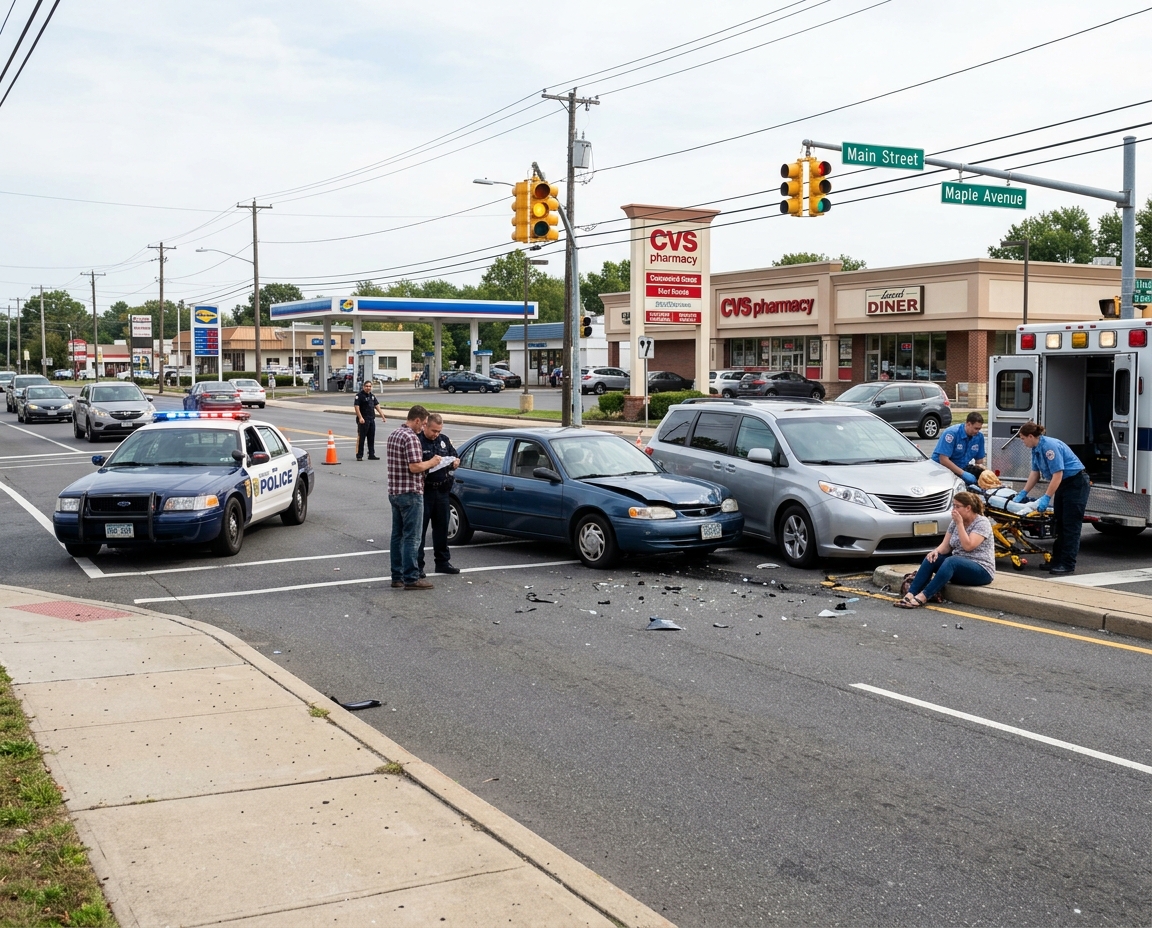
California Vehicle Code § 14601.4 addresses a specific and potentially serious situation involving a suspended or revoked driver’s license: driving when the license was suspended or revoked under certain DUI-related circumstances and causing bodily injury to another person through unlawful driving conduct or a failure to perform a legal driving duty.
Unlike a basic suspended-license offense, a charge under Vehicle Code § 14601.4 involves an alleged injury-causing act or omission while the person was driving. The potential consequences can include county jail, fines, probation conditions, ignition-interlock requirements, and additional DMV consequences.
This article explains California Vehicle Code § 14601.4, including what the law means, what prosecutors generally need to establish, potential penalties, whether the offense is a misdemeanor or felony, how causation may become an issue, and answers to common questions about driving on a suspended license and causing injury.
What Is California Vehicle Code § 14601.4?
California Vehicle Code § 14601.4 concerns driving while a person’s license or driving privilege is suspended or revoked under Vehicle Code § 14601.2 when the person, while driving, commits an unlawful act or fails to perform a legal duty associated with operating a vehicle and that conduct causes bodily injury to another person.
In simple terms, the law involves three central issues:
- The driver’s license was suspended or revoked under the type of suspension covered by § 14601.2.
- The driver engaged in unlawful conduct or neglected a legal driving duty.
- That conduct caused bodily injury to someone other than the driver.
This means that having a suspended license by itself is not necessarily enough to establish a violation of § 14601.4. The circumstances of the driving and the resulting injury are also important.
Why Does Vehicle Code § 14601.2 Matter?
Understanding § 14601.2 is essential because § 14601.4 specifically refers to a license or driving privilege suspended or revoked under that provision.
Vehicle Code § 14601.2 generally addresses driving when a person’s driving privilege has been suspended or revoked because of certain DUI convictions. These include convictions under California’s DUI laws involving driving under the influence or driving with specified prohibited alcohol or drug concentrations.
Section 14601.2 also contains provisions concerning a person’s knowledge of the suspension or revocation.
Consequently, not every suspended license falls under Vehicle Code § 14601.4.
For example, someone whose license was suspended for an unrelated administrative reason may face a different suspended-license statute if they drive during the suspension.
Determining why the license was suspended is therefore one of the first questions to consider when evaluating a potential § 14601.4 case.
What Are the Elements of VC 14601.4?
The exact legal instructions applicable to a criminal case depend on the circumstances, but a prosecution under § 14601.4 generally involves proving several key facts.
1. The person was driving
The prosecution must establish that the defendant was operating a motor vehicle.
2. The person’s license was suspended or revoked under § 14601.2
The suspension or revocation must fall within the category specified by § 14601.4.
3. The person committed an unlawful act or neglected a legal duty while driving
The allegation must involve conduct that was prohibited by law or a failure to perform a legal duty associated with operating the vehicle.
The statute specifically addresses situations in which the prosecution alleges that a driver neglected a legal duty without necessarily identifying a particular Vehicle Code provision that was violated.
4. The conduct caused bodily injury
The prosecution must establish a sufficient causal connection between the unlawful act or neglected duty and the bodily injury.
5. The injured person was someone other than the driver
The statute addresses bodily injury to another person. The driver cannot be the person whose injury is used to satisfy this particular element.
These elements distinguish § 14601.4 from an ordinary allegation that someone simply drove while their license was suspended.
What Does “Proximate Cause” Mean?
One of the most important concepts in a § 14601.4 case is proximate cause.
In general terms, proximate cause concerns whether the driver’s alleged unlawful conduct or failure to perform a legal duty was sufficiently connected to the injury.
Consider a simple example.
A driver has a qualifying suspended license. The driver operates a vehicle and fails to stop at a red traffic signal. The driver then collides with another vehicle, injuring its occupant.
The prosecution could argue that the driver’s failure to obey the traffic signal caused the collision and resulting injury.
Now consider a different situation.
A driver has a qualifying suspended license and is traveling through an intersection. Another motorist unexpectedly runs a red light and causes a collision that injures a passenger.
The suspended-license driver may still have violated a different law simply by driving during the suspension, but the facts do not automatically establish that the driver’s conduct caused the other person’s injury.
This distinction is important because the existence of a suspended license and the cause of an accident are separate issues.
Is VC 14601.4 a Misdemeanor or Felony?
Vehicle Code § 14601.4 is a misdemeanor offense.
That classification should not be confused with other criminal charges that could potentially arise from the same accident.
For example, depending on the facts, a collision involving an injured person could also result in allegations involving:
- Driving under the influence causing injury;
- Reckless driving;
- Hit-and-run;
- Other traffic violations;
- Additional injury-related offenses or enhancements.
Some of these offenses can carry substantially different penalties and, depending on the circumstances, may be charged as felonies.
Therefore, someone should not assume that the classification of § 14601.4 determines the classification or potential punishment of every charge arising from an accident.
What Are the Penalties for VC 14601.4?
The penalty structure of § 14601.4 is closely connected to Vehicle Code § 14601.2.
For purposes of the minimum incarceration requirement, § 14601.4 incorporates the applicable minimum jail period provided under § 14601.2.
Generally, the § 14601.2 penalty structure includes:
| Circumstance | Potential County Jail | Potential Fine |
|---|---|---|
| First qualifying conviction | 10 days to 6 months | $300 to $1,000 |
| Certain qualifying subsequent convictions within 5 years | 30 days to 1 year | $500 to $2,000 |
The exact application of these penalties depends on the person’s prior convictions and the circumstances specified by the statute.
Section 14601.4 also imposes restrictions concerning release programs before the applicable minimum period of imprisonment has been served.
Because sentencing laws can change, anyone evaluating the potential sentence in a current case should have the applicable law reviewed based on the date of the alleged offense and the person’s criminal history.
Can Probation Be Granted for VC 14601.4?
Probation may be available in an appropriate case.
However, probation does not necessarily eliminate the mandatory minimum jail requirement associated with § 14601.4.
When probation is granted, the statute requires the applicable minimum period of imprisonment under § 14601.2 to be imposed as a condition of probation.
This means that a person should not assume that receiving probation automatically means avoiding all custody time.
Is There a Fine for Driving on a Suspended License Causing Injury?
The fine structure associated with § 14601.4 is connected to the penalty provisions of § 14601.2.
Generally, the statutory fine range is:
- $300 to $1,000 for a first qualifying conviction; and
- $500 to $2,000 for certain qualifying subsequent convictions within five years.
Other financial consequences may arise from a criminal case, including court-imposed assessments, restitution where legally applicable, or financial consequences associated with other charges.
Those additional amounts are separate from the basic statutory fine ranges discussed above.
Does the Injury Have to Be Serious?
Vehicle Code § 14601.4 refers to bodily injury to another person.
The statute does not state that the injury must meet the separate legal standard of “great bodily injury.”
This distinction matters because California criminal law uses different definitions and standards for different offenses and sentencing provisions.
For example, a prosecution under § 14601.4 should not automatically be treated as requiring proof of the same level of injury that another California criminal statute might require.
The nature and extent of the injury can nevertheless be important, particularly if prosecutors are considering additional charges.
Can a Person Be Charged With DUI and VC 14601.4?
Yes, potentially.
A DUI offense and § 14601.4 address different conduct.
A DUI charge generally concerns the driver’s impairment or prohibited alcohol or drug concentration. Section 14601.4 concerns driving during a qualifying suspension or revocation and causing bodily injury through unlawful driving conduct or neglect of a legal duty.
For example, imagine a person whose license was suspended following a DUI conviction. The person drives again, is allegedly impaired, commits a traffic violation, and causes a collision that injures another person.
Depending on the evidence, the prosecution could potentially pursue both DUI-related charges and a suspended-license injury charge.
The potential penalties for a separate DUI-causing-injury offense can be considerably different from those associated with § 14601.4.
What If Another Driver Caused the Accident?
The cause of the accident can become an important issue.
Suppose a driver has a suspended license under the circumstances covered by § 14601.2. The driver is traveling normally when another motorist suddenly crosses into the driver’s lane and causes a collision.
If another person’s actions caused the accident, the prosecution would still need to establish the elements required by § 14601.4, including the required unlawful act or neglected duty and the causal connection between that conduct and the injury.
On the other hand, if the suspended-license driver was speeding, failed to yield, ran a stop sign, or engaged in another unlawful driving action that contributed to the collision, the causation analysis could be different.
The important point is that a suspended license does not automatically establish responsibility for an accident.
What If the Driver Did Not Know the License Was Suspended?
Knowledge can be an important issue in California suspended-license cases.
Vehicle Code § 14601.2 contains specific provisions concerning a driver’s knowledge of a suspension or revocation. The law also provides circumstances under which knowledge may be conclusively presumed based on DMV notice.
This means DMV records and notice can become relevant when determining whether the statutory requirements have been satisfied.
A driver should not assume that simply saying, “I did not know my license was suspended,” automatically resolves the issue. At the same time, the precise notice and knowledge requirements should be evaluated under the statute applicable to the case.
What Happens to the Driver’s License After a VC 14601.4 Conviction?
Criminal court proceedings and DMV proceedings are separate.
A conviction under § 14601.4 can have consequences for a person’s driving privilege, including requirements related to an ignition interlock device and reinstatement of driving privileges.
Section 14601.4 contains specific DMV provisions concerning proof related to an ignition interlock device before the driving privilege can be reinstated, subject to statutory exceptions.
A person should therefore not assume that completing a jail sentence, paying a fine, or completing probation automatically restores the right to drive.
Before operating a vehicle, a person should confirm with the California DMV that their driving privilege has actually been restored and determine whether any restrictions or additional requirements apply.
Can an Ignition Interlock Device Be Required?
Yes, an ignition interlock device may be required in certain circumstances.
An ignition interlock device is a breath-testing device installed in a vehicle. Depending on the applicable legal requirements, the driver may have to provide an alcohol-free breath sample before the vehicle can start.
Vehicle Code § 14601.4 contains specific ignition-interlock provisions involving certain plea arrangements and convictions connected to § 14601.2.
The duration and applicability of an ignition-interlock requirement can depend on the person’s prior convictions, the specific offense, and the circumstances of the case.
Because California’s ignition-interlock laws have changed over time, current requirements should be checked against the law applicable to the particular case.
Can the Vehicle Be Impounded?
Potentially.
California law provides authority for vehicle removal or impoundment in certain circumstances involving drivers accused of suspended-license offenses, including circumstances involving § 14601.4.
Whether a vehicle is actually impounded can depend on factors such as the circumstances of the stop, the applicable statutory authority, vehicle ownership, and other facts.
Impoundment is also separate from the criminal case. Resolving a criminal charge does not necessarily resolve all issues involving towing, storage, or the vehicle itself.
How Is VC 14601.4 Different From Other Suspended-License Laws?
California has several different laws addressing driving while a license or driving privilege is suspended or revoked.
Vehicle Code § 14601
This provision generally addresses driving while a person’s driving privilege has been suspended or revoked under specified circumstances.
Vehicle Code § 14601.1
This provision addresses certain suspended or revoked driving privileges that fall outside some of the more specific suspended-license statutes.
Vehicle Code § 14601.2
This provision concerns driving during certain suspensions or revocations resulting from DUI convictions. Its penalty provisions are particularly important because § 14601.4 relies on § 14601.2 for the applicable minimum imprisonment period.
Vehicle Code § 14601.3
This provision concerns driving during a suspension or revocation associated with a person designated as a habitual traffic offender.
Vehicle Code § 14601.5
This provision addresses certain suspensions or revocations involving chemical-test refusal and specified alcohol-related circumstances.
Vehicle Code § 14601.4
This provision specifically involves driving during a qualifying § 14601.2 suspension or revocation while engaging in unlawful driving conduct or neglecting a legal driving duty that results in bodily injury to another person.
Because these statutes have different requirements, identifying the correct Vehicle Code section is important.
Examples of Potential VC 14601.4 Cases
Example 1: Running a red light
A person’s license has been suspended under circumstances covered by § 14601.2. The person drives anyway and runs a red light. The driver collides with another vehicle, and the other driver suffers bodily injury.
If the prosecution can establish the required elements, the alleged traffic violation and resulting injury could support a § 14601.4 charge.
Example 2: Another driver causes the crash
A person with a qualifying suspended license drives through an intersection while obeying traffic laws. Another motorist runs a stop sign and causes a collision that injures a passenger.
The mere fact that the first driver had a suspended license does not automatically establish the injury and causation elements of § 14601.4.
Example 3: The suspension was for another reason
A person’s license was suspended for a reason that does not fall within § 14601.2. The person later drives and causes an accident that injures another person.
Section 14601.4 may not be the appropriate charge because its application depends on the specific type of suspension or revocation described in § 14601.2.
Other California suspended-license laws may apply depending on the circumstances.
Can VC 14601.4 Charges Be Dismissed?
There is no automatic dismissal simply because a person disputes the allegation.
However, criminal cases can be resolved in different ways depending on the facts, evidence, procedural history, and applicable law. Potential issues can include:
- Whether the person’s license was actually suspended or revoked under § 14601.2;
- Whether the required notice or knowledge can be established;
- Whether the prosecution can establish that the person was driving;
- What unlawful act or neglected legal duty is alleged;
- Whether that conduct caused the injury;
- Whether the alleged injury satisfies the statutory requirement;
- Whether there are evidentiary or procedural problems; and
- Whether other charges have been filed.
The existence of one of these issues does not guarantee dismissal. Its importance depends on the evidence and circumstances of the particular case.
What Happens After a VC 14601.4 Arrest?
Being arrested or cited does not mean a person has been convicted.
After an arrest or filing of charges, the case can involve several stages, which may include an arraignment, negotiations between the prosecution and defense, motions, court appearances, and potentially a trial.
The exact procedure depends on the charges and the circumstances.
A person facing this type of charge should carefully review the charging document to determine:
- The exact Vehicle Code sections alleged;
- Whether DUI or injury-related charges are also included;
- The date and circumstances of the alleged offense;
- The claimed reason for the license suspension;
- Whether prior convictions are alleged; and
- Whether there are separate DMV issues requiring attention.
What Should You Do If You Are Charged With VC 14601.4?
Anyone facing a criminal charge should take the allegation seriously and obtain information about the specific case.
General steps that may be helpful include:
- Review the charges. Determine exactly which Vehicle Code sections have been alleged.
- Identify the reason for the suspension. This can be particularly important because § 14601.4 specifically references § 14601.2.
- Review DMV records. Suspension notices and driving records may be relevant to the case.
- Understand the accident allegations. Determine what conduct is claimed to have caused the injury.
- Avoid assuming your license has been restored. A criminal court proceeding does not necessarily reinstate a suspended driving privilege.
- Get legal guidance. A California attorney can review the specific charges, evidence, DMV history, and potential consequences.
These are general informational steps and should not be considered individualized legal advice.
Frequently Asked Questions
Is VC 14601.4 a misdemeanor?
Yes. Vehicle Code § 14601.4 is classified as a misdemeanor.
Is driving on a suspended license causing injury automatically a felony?
No. Section 14601.4 itself is a misdemeanor. However, a collision involving injury can result in additional charges that may carry different classifications and penalties.
How much jail time can someone receive?
The applicable minimum imprisonment period is connected to Vehicle Code § 14601.2. Generally, the minimum is 10 days for a first qualifying conviction and 30 days for certain qualifying subsequent offenses within five years. The applicable maximum under § 14601.2 can be six months for a first conviction or one year for certain qualifying subsequent offenses.
Can probation be granted?
Probation may be available, but the applicable minimum imprisonment requirement can still apply as a condition of probation.
Does the injury have to be serious?
The statute requires bodily injury but does not specifically require the separate legal standard of “great bodily injury.”
Does the suspended license have to be related to a DUI?
For § 14601.4 to apply, the suspension or revocation must be one covered by § 14601.2. Section 14601.2 addresses suspensions or revocations connected to specified DUI convictions.
Can someone face both DUI and VC 14601.4 charges?
Potentially. The offenses involve different legal requirements, so multiple charges may arise from the same incident when supported by the evidence.
Can a person drive while a § 14601.4 case is pending?
A pending criminal case does not automatically restore a suspended driving privilege. A person should verify their current driving status with the DMV before driving.
Can the vehicle be impounded?
Potentially. California law permits vehicle removal or impoundment in certain circumstances involving suspended-license violations.
Can VC 14601.4 affect insurance?
A conviction or driving-related incident may have consequences for insurance, but the specific effect depends on the insurer, driving history, accident circumstances, and applicable insurance rules. Insurance consequences should be considered separately from the criminal penalties imposed by § 14601.4.
Key Takeaways
California Vehicle Code § 14601.4 addresses a specific type of suspended-license driving case involving bodily injury.
The central issues generally include:
- The person was driving a vehicle;
- The person’s driving privilege was suspended or revoked under § 14601.2;
- The person engaged in unlawful conduct or neglected a legal duty while driving;
- That conduct proximately caused bodily injury; and
- The injured person was someone other than the driver.
The offense itself is a misdemeanor, but that does not mean the consequences are insignificant. The statute incorporates minimum imprisonment requirements from § 14601.2 and can also involve probation conditions, DMV consequences, ignition-interlock requirements, and potential vehicle impoundment.
A collision can also lead to additional criminal charges, particularly when allegations involve DUI, reckless driving, hit-and-run, or other conduct. Those charges must be evaluated separately because their penalties and legal requirements can be different.
Most importantly, a suspended license alone does not establish every element of Vehicle Code § 14601.4. The reason for the suspension, the driver’s conduct, the circumstances of the collision, the nature of the injury, and the causal connection between the conduct and injury can all be significant.
Contact Southwest Legal
Need Guidance About a California Vehicle Code § 14601.4 Charge?
If you or someone you know is facing an allegation involving California Vehicle Code § 14601.4, driving on a suspended or revoked license causing injury, or another California driving offense, understanding the charges and potential consequences can be an important first step.
Southwest Legal can guide you through your legal matter. Contact us today for a free consultation to discuss your situation and learn more about the legal issues that may apply to your case.
Disclaimer: This article is for general informational purposes only and does not constitute legal advice or create an attorney-client relationship. No attorney-client relationship is formed unless and until the firm and client enter into an agreement for legal services. Laws may change, and legal outcomes depend on the specific facts of each case. Consult a qualified attorney for advice regarding your situation.