


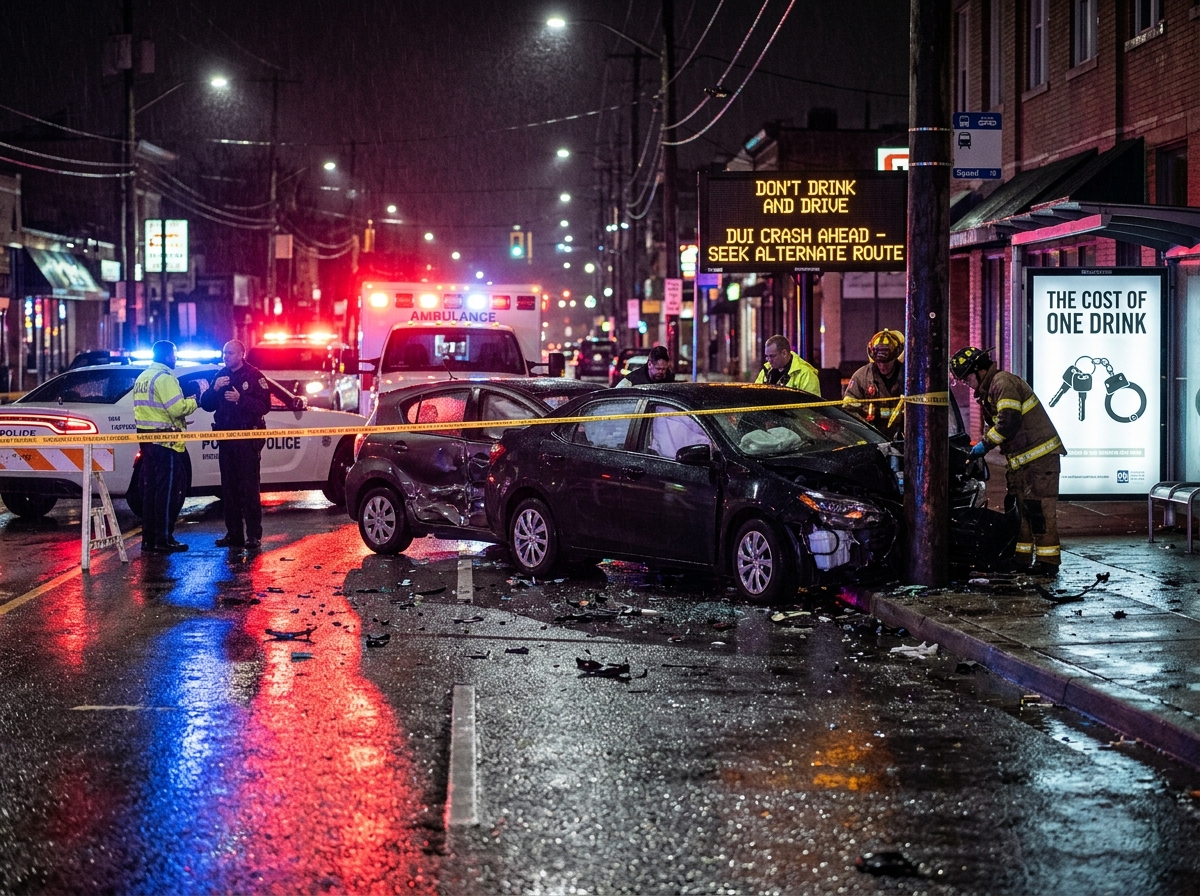
If you have been convicted of a DUI in California, you may have heard the term Watson advisement or Watson warning. But what does a Watson advisement actually mean, and why is it important?
A Watson advisement is a formal warning given by a California court to people convicted of certain DUI-related offenses. The warning explains that driving under the influence of alcohol or drugs is extremely dangerous to human life and that, if a person continues to drive under the influence and someone is killed as a result, the person can be charged with murder.
The Watson advisement comes from the California Supreme Court’s 1981 decision in People v. Watson. California law now specifically addresses the advisement in California Vehicle Code section 23593.
Importantly, a Watson advisement is not a separate criminal charge or a murder conviction. Instead, it is a formal warning that may become significant if the person is later accused of causing a fatal collision while driving under the influence.
What Is a Watson Advisement in California?
A Watson advisement is a court-issued warning associated with certain DUI-related convictions.
The advisement informs the person that alcohol or drugs can impair their ability to safely operate a motor vehicle and that driving under the influence presents an extreme danger to human life.
It also warns that if the person continues to drive under the influence and someone is killed as a result of that driving, they can be charged with murder.
The warning is designed to make the potential consequences of future impaired driving clear.
A Watson advisement does not mean that the person has committed murder. It also does not automatically mean that a future DUI-related death will result in a murder conviction.
Why Is It Called a Watson Advisement?
The term comes from People v. Watson, a California Supreme Court case decided in 1981.
The case involved a fatal collision involving a driver who had consumed alcohol. The California Supreme Court considered whether the circumstances could support a charge of second-degree murder based on implied malice.
The court determined that a murder charge could be appropriate when the facts support the required finding of implied malice. The decision distinguished conduct involving the mental state required for implied malice from conduct that may amount to vehicular manslaughter based on gross negligence.
The case became an important part of California law concerning fatal DUI incidents.
California subsequently enacted Vehicle Code section 23593, which requires a court to provide a specific warning to people convicted of certain DUI-related offenses.
When Is a Watson Advisement Required?
California Vehicle Code section 23593 requires the court to provide the Watson advisement to a person convicted of specified offenses.
These include:
-
A violation of Vehicle Code section 23103, when handled as specified under section 23103.5;
-
Vehicle Code section 23152, which generally covers DUI offenses; and
-
Vehicle Code section 23153, which covers DUI offenses involving injury.
A qualifying section 23103.5 disposition is commonly referred to as a wet reckless.
Because the statute identifies specific offenses, a Watson advisement is not a general warning required after every traffic offense or every driving-related conviction.
The specific offense of conviction matters.
What Is a Wet Reckless, and Does It Include a Watson Advisement?
A wet reckless is a commonly used term for a negotiated resolution involving Vehicle Code section 23103.5 where alcohol or drug use is an element of the offense.
A wet reckless is different from a standard DUI conviction. However, California Vehicle Code section 23593 specifically includes qualifying section 23103.5 convictions among the offenses requiring a Watson advisement.
Therefore, a person should not assume that resolving a DUI case as a wet reckless means the Watson advisement does not apply.
What Does a Watson Warning Say?
The statutory warning focuses on the dangers of impaired driving.
In substance, it advises the person that:
-
Alcohol and drugs can impair safe driving ability.
-
Driving under the influence is extremely dangerous to human life.
-
If the person continues to drive under the influence and someone is killed as a result, the person can be charged with murder.
The advisement may be included in a plea form, if one is used, or the court may state on the record that the warning was given.
California law also requires the fact that the advisement was provided to be included on the applicable abstract of conviction or violation submitted to the Department of Motor Vehicles.
Is a Watson Advisement a Separate Criminal Charge?
No.
A Watson advisement is a warning, not a criminal charge.
For example, if a person is convicted of DUI and receives a Watson advisement, the advisement does not create an additional criminal conviction.
The person’s conviction remains the underlying offense. The Watson advisement documents that the court provided the required warning about the dangers and potential consequences of future impaired driving.
Why Does a Watson Advisement Matter?
The Watson advisement can become particularly important if a person later drives under the influence and another person dies as a result.
A documented Watson advisement may provide evidence that the person had previously been specifically warned about the serious danger associated with impaired driving.
That evidence may become relevant to the person’s knowledge of the risks in a later criminal case.
However, a Watson advisement does not automatically establish implied malice.
The prosecution must still prove the legal elements of any murder charge beyond a reasonable doubt. The advisement is potentially one piece of evidence; it does not, by itself, determine the outcome of a later case.
What Is Implied Malice in a California DUI Murder Case?
To understand why a Watson advisement can matter, it helps to understand implied malice.
California murder law generally recognizes both express and implied malice. In a DUI-related second-degree murder prosecution based on implied malice, the prosecution must establish the required mental state.
California courts have explained that implied malice involves a defendant who actually appreciates the danger their conduct poses to human life and nevertheless acts with conscious disregard for life.
This is different from simply showing that the defendant was negligent or made a mistake.
For that reason, a fatal DUI collision does not automatically constitute second-degree murder.
The prosecution must establish the applicable mental state from the evidence and circumstances of the case.
Does a Watson Advisement Automatically Mean Murder After a Fatal DUI?
No.
This is one of the most important points to understand about a Watson warning.
Suppose a person receives a Watson advisement after a previous DUI conviction. Years later, that person allegedly drives under the influence and is involved in a collision that kills another person.
The prior Watson advisement could potentially be relevant evidence concerning the person’s knowledge of the dangers of impaired driving.
But the existence of the warning does not automatically establish that the person acted with implied malice or that the person is guilty of murder.
The prosecution would still need to prove the elements of the charged offense based on the evidence.
The circumstances of the later incident can therefore be critically important.
Can Someone Be Charged With Murder Without a Watson Advisement?
Yes, the absence of a Watson advisement does not necessarily prevent a murder prosecution following a fatal DUI incident.
The Watson advisement can provide evidence concerning a defendant’s prior warning and knowledge, but it is not the only type of evidence that can be relevant to implied malice.
California courts have recognized that implied malice can be established through evidence concerning the defendant’s conduct and circumstances, rather than solely through a prior Watson advisement.
Consequently, it would be incorrect to say that a Watson advisement is a legal prerequisite for every possible DUI-related murder prosecution.
What Is a “Watson Murder” in California?
The phrase Watson murder is commonly used to describe a second-degree murder prosecution arising from a fatal DUI incident where the prosecution relies on an implied-malice theory associated with People v. Watson.
“Watson murder” is not the formal name of a separate crime under California law.
Instead, it is a commonly used description of a particular type of murder prosecution involving allegations of impaired driving and a death.
The underlying murder statute and requirements still apply.
How Is a Watson Advisement Documented?
California law provides that the Watson advisement may be included in a plea form when a plea form is used. Alternatively, the fact that the court gave the warning may be stated on the record.
The law also requires the fact of the advisement to be included on the applicable abstract of conviction or violation submitted to the Department of Motor Vehicles.
For someone reviewing an older DUI case, the court’s actual records can therefore be important.
Depending on the case, relevant documents may include:
-
Plea forms;
-
Sentencing documents;
-
Court minutes;
-
The abstract of conviction; and
-
Other records from the criminal proceeding.
Frequently Asked Questions
What is a Watson advisement?
A Watson advisement is a formal California court warning given to people convicted of certain DUI-related offenses. It warns that impaired driving is extremely dangerous and that continued impaired driving resulting in someone’s death can lead to a murder charge.
Is a Watson advisement required after a DUI?
For the offenses specifically identified in California Vehicle Code section 23593, the court is required to provide the advisement.
Does every California DUI conviction include a Watson advisement?
The statutory requirement applies to the offenses listed in Vehicle Code section 23593. The specific conviction therefore matters.
Is a Watson advisement the same as a DUI conviction?
No. The DUI conviction is the underlying criminal offense. The Watson advisement is a formal warning associated with qualifying convictions.
Does signing a Watson advisement mean I admitted to murder?
No. Receiving or acknowledging the advisement is not an admission that a person committed murder.
Can a Watson advisement be used in a future case?
It can potentially be relevant evidence in a later case involving allegations of impaired driving and a death, particularly regarding issues concerning the defendant’s knowledge of the dangers of impaired driving.
Does a Watson advisement automatically establish implied malice?
No. A Watson advisement may be relevant to the evidence, but implied malice requires the prosecution to establish the applicable mental state based on the evidence in the case.
Can someone face a murder charge after a fatal DUI without a Watson advisement?
The absence of a Watson advisement does not necessarily prevent a murder prosecution. Other evidence may be relevant to establishing the required mental state.
Is Watson murder a separate crime?
No. “Watson murder” is a commonly used term for a second-degree murder prosecution involving a fatal DUI and an implied-malice theory associated with People v. Watson.
Key Takeaways
If you are researching Watson advisement California, the most important points are:
-
A Watson advisement is a formal warning associated with certain California DUI-related convictions.
-
It originates from the California Supreme Court’s decision in People v. Watson.
-
California Vehicle Code section 23593 specifies the offenses for which the statutory advisement is required.
-
The warning addresses the serious danger of driving under the influence.
-
It warns that continued impaired driving resulting in someone’s death can lead to a murder charge.
-
A Watson advisement is not a separate criminal offense.
-
Receiving a Watson advisement does not automatically establish implied malice.
-
A fatal DUI incident does not automatically result in a murder conviction.
-
A prior Watson advisement may be relevant evidence in a later fatal DUI case.
-
The specific facts and evidence of any later incident remain important.
Contact Southwest Legal
Understanding Your Watson Advisement
A Watson advisement is more than routine language in a California DUI case. It is a formal warning about the potentially life-threatening consequences of impaired driving and the possibility of a murder charge following a fatal DUI incident.
At the same time, the advisement should not be misunderstood. It does not itself constitute a murder charge, does not establish guilt, and does not guarantee a particular result in a future case.
If you have a Watson advisement in your California DUI records and are unsure what it means, reviewing the specific court documents and circumstances of your case can help you understand its significance.
Southwest Legal can help you understand the legal terminology and issues surrounding a California DUI and Watson advisement. If you have questions about what a Watson warning means or how it relates to your legal records, contact us today for a free consultation. Take the next step toward understanding your situation, your rights, and the legal issues that may affect you.
Disclaimer: This article is for general informational purposes only and does not constitute legal advice or create an attorney-client relationship unless and until the firm and client enter into an agreement for legal services. Laws may change, and legal outcomes depend on the specific facts of each case. Consult a qualified attorney for advice regarding your situation.