


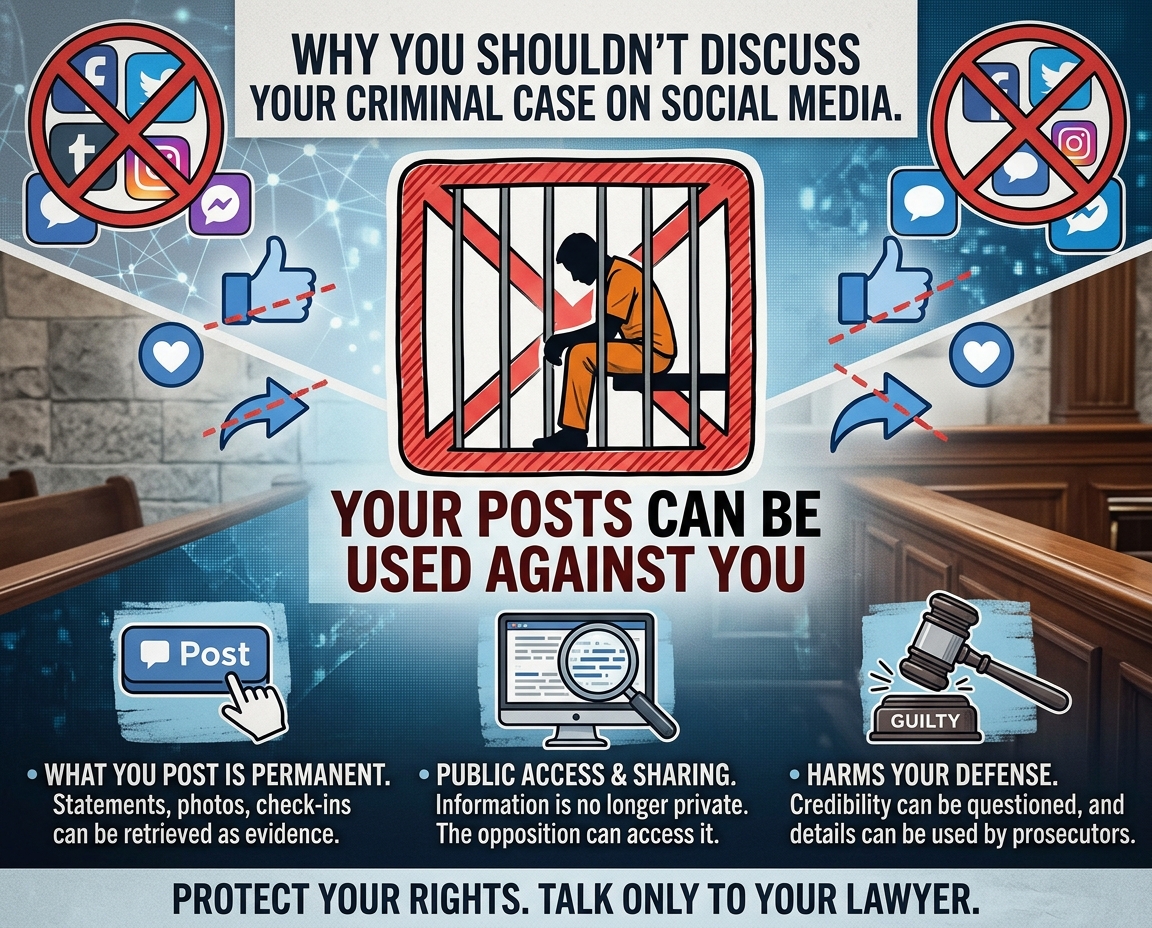
If you are facing criminal charges in California, avoid discussing your criminal case on social media because your posts, comments, photos, videos, and private messages may become evidence. Even a seemingly harmless statement can raise questions about your credibility, reveal information about your defense, or create additional legal complications.
The safest approach is to keep case details off social media and discuss your concerns privately with your criminal defense attorney. Understanding how California law treats digital evidence can help you make informed decisions while your case is pending.
Can Social Media Posts Be Used as Evidence in a California Criminal Case?
Yes. Social media posts may be used as evidence in a California criminal case if they are relevant and satisfy applicable legal requirements. This includes posts, comments, photographs, videos, and direct messages.
California courts consider whether evidence is relevant, properly authenticated, and admissible under applicable rules. For example, a screenshot does not automatically prove who created a post or whether it accurately represents the original conversation.
Social media content may become relevant in several ways:
- Posts and comments: Statements about an incident may be compared with other evidence.
- Photos and videos: Images may help establish a timeline, location, or activity.
- Private messages: Communications may become evidence if lawfully obtained and admissible.
- Deleted posts: Screenshots or saved copies may remain available after content is removed.
Imagine someone charged with assault posts, “I did what I had to do.” Although the statement does not automatically establish guilt, prosecutors may examine it alongside witness statements and other evidence.
The important point is that online content can be interpreted differently from how the person intended it.
How Can Social Media Hurt Your Criminal Defense?
Social media can complicate your defense by creating statements that prosecutors may compare with witness accounts, physical evidence, and other information.
1. Your posts may contradict your statements
Suppose you tell investigators that you were not at a particular location, but later post a photograph showing you there on the relevant date. The photograph may not prove that you committed a crime, but it could raise questions about your earlier statement.
2. Your comments may appear incriminating
An emotional reaction or poorly worded comment may be interpreted as an admission or used to support an argument about your actions or knowledge. Its significance depends on the circumstances, but unnecessary public statements can create avoidable problems.
3. You may reveal information about your defense
Discussing your explanation of events, potential witnesses, or legal strategy online may disclose information that is better discussed privately with your attorney.
4. Your posts may attract additional scrutiny
Sharing details about an incident or other people involved may prompt further questions from investigators. Even if your intention is to defend yourself, posting online may complicate the situation.
Before posting anything related to your criminal charges, consider whether the information could be misunderstood or used in a legal proceeding.
Can Deleted Social Media Posts Still Be Used Against You?
Yes. Deleting a social media post does not guarantee that it has disappeared permanently. Someone may have taken a screenshot, saved the content, or shared it with others.
For example, if you publish a comment about an alleged offense and delete it shortly afterward, another user may still have a copy.
Do not attempt to conceal, alter, or destroy potentially relevant evidence. Depending on the circumstances, doing so may create additional legal problems.
If you have already posted or deleted something related to your case, discuss it with your attorney before taking further action. Your attorney can help you understand how to handle existing content appropriately.
Can Social Media Posts About Witnesses Cause Legal Problems?
Yes, depending on the content and circumstances. Threatening a witness, pressuring someone to change their account, or attempting to discourage a person from cooperating with authorities may create additional legal exposure.
California Penal Code section 136.1 addresses specified conduct intended to prevent or dissuade victims or witnesses from reporting crimes, cooperating with prosecution, or participating in legal proceedings. Whether particular conduct violates the law depends on the applicable statutory requirements and the facts.
For example, someone charged with assault might publish a post naming a witness and telling them to keep quiet about the incident. Depending on the content and intent, that communication could raise concerns beyond the original allegation.
Not every post mentioning a witness is a crime. However, threatening messages and attempts to influence testimony can create serious complications.
While your case is pending:
- Do not threaten or pressure witnesses.
- Do not ask anyone to change their account of events.
- Avoid posting accusations about an alleged victim.
- Follow applicable restraining orders, no-contact orders, and release conditions.
If a court order prohibits contact with a particular person, do not assume that social media messages or indirect communications are permitted.
Can Police Access Your Private Social Media Messages?
Police may review publicly available social media content as part of an investigation. Access to private messages, account records, and other nonpublic information is subject to applicable laws and legal procedures.
Depending on the circumstances, investigators may seek information through a warrant, subpoena, court order, or another legally authorized process. The requirements differ according to the type of information sought and the governing law.
Private messages may also be shared voluntarily by someone who received them. For example, a person involved in a dispute might provide investigators with screenshots of a conversation.
Having a private account or using disappearing messages does not guarantee that communications will remain inaccessible. However, this does not mean police have unrestricted access to every private account or message.
If investigators contact you about your online activity, consider speaking with a California criminal defense attorney before answering questions or making statements about the allegations.
Does Attorney-Client Privilege Protect Social Media Posts?
No. Attorney-client privilege does not automatically protect information you publish on social media.
California Evidence Code sections 952 and 954 address qualifying confidential attorney-client communications and the privilege that protects them. Confidential discussions with your attorney are different from publicly sharing legal advice or defense strategies.
For example, asking your attorney how to challenge a witness’s account may be protected if the legal requirements are met. Publishing your proposed defense strategy online does not automatically receive the same protection.
To help protect the confidentiality of your legal discussions:
- Discuss defense strategy directly with your attorney.
- Avoid publishing details about legal advice you receive.
- Do not share confidential case discussions in public forums.
- Ask your attorney how to communicate safely about sensitive information.
Not every communication with an attorney is automatically privileged. Confidentiality and the purpose of the communication matter.
What Should You Avoid Posting While Your Criminal Case Is Pending?
The safest approach is to avoid discussing your charges, the alleged incident, or your defense on social media.
Follow these practical guidelines:
- Do not discuss the allegations. Avoid posting your version of events or responding publicly to accusations.
- Do not share evidence. Avoid uploading relevant photographs, videos, messages, or documents.
- Do not discuss witnesses. Avoid contacting or attempting to influence people involved in the case.
- Do not reveal legal strategy. Discuss defense questions directly with your attorney.
- Do not ask others to post for you. Having a friend publish your explanation can create similar risks.
- Do not violate court orders. Follow all restrictions on contact and other release conditions.
- Be careful with comments and private messages. A reply or direct message can also become relevant to an investigation.
You can protect your privacy without publicly explaining the charges. If people ask about your case, a brief response such as “I’m not discussing this matter publicly” may help you avoid an unnecessary online debate.
What Should You Do If You Already Posted About Your Criminal Case?
If you have already discussed your case online, do not panic. A post does not automatically damage your defense. Its significance depends on its content, context, and relationship to the allegations.
Consider these steps:
- Stop posting about the case. Avoid publishing additional explanations or arguments.
- Tell your attorney what happened. Explain what you posted, when you posted it, and whether anyone responded or shared it.
- Preserve potentially relevant information. Do not alter, destroy, or conceal material that may be evidence.
- Avoid contacting people to coordinate accounts. Do not ask witnesses or other involved individuals to change statements or remove information.
- Get legal guidance before taking further action. Your attorney can assess potential concerns and advise you on appropriate next steps.
For example, someone who posted an angry comment after an arrest may worry that the comment will automatically lead to a conviction. That conclusion would be premature. The wording, context, authenticity, admissibility, and relationship to the alleged offense all matter.
Being honest with your criminal defense attorney about online activity can help them assess the situation and determine how best to address it.
Frequently Asked Questions
1. Can police review my social media during an investigation?
Yes. Investigators may review publicly available content and may seek access to certain nonpublic information through legally authorized procedures. Police do not have unrestricted access to every private account or message.
2. Can private messages be used as evidence?
Potentially. Private messages may become evidence if they are lawfully obtained and satisfy applicable evidentiary requirements. A recipient may also voluntarily share messages with investigators.
3. Should I delete my social media account after being charged?
Discuss this with your attorney before making changes. Deleting an account does not guarantee that its content disappears, and improperly handling potentially relevant evidence may create additional legal problems.
4. Can my friends or family members post about my criminal case?
Their posts may create complications if they disclose case details, discuss evidence, or attempt to influence witnesses. You can ask friends and family to respect your privacy and avoid discussing the allegations publicly.
5. Does staying silent on social media make me look guilty?
No. Choosing not to discuss pending criminal allegations publicly is not, by itself, an admission of guilt. You can protect your privacy while addressing the case through appropriate legal channels.
6. Should I tell my attorney about a post I regret making?
Yes. Be candid with your attorney about relevant posts, comments, and messages. This allows your attorney to assess potential concerns and advise you about appropriate next steps.
Key Takeaways
- Social media posts and private messages may become evidence in a California criminal case.
- Deleting a post does not guarantee that it is permanently gone.
- Online comments can raise credibility issues or disclose sensitive defense information.
- Threatening or improperly pressuring witnesses may create additional legal risks.
- Attorney-client privilege does not automatically protect public posts.
- Police access to private communications is governed by applicable law and legal procedures.
- If you have already posted something relevant, consult your attorney before taking further action.
Contact Southwest Legal
Get Help Protecting Your Criminal Case
Facing criminal charges can be stressful, especially when you are unsure what to say, what to share, or how your online activity might affect your future. You do not have to navigate these concerns without guidance.
Southwest Legal can help you better understand the legal issues surrounding your criminal case, address concerns about social media evidence, and explore the options available to you under California law.
If you have been charged with a crime or are worried that a post, message, or online interaction could affect your defense, contact us today for a free consultation. Get answers to your questions, discuss your concerns, and take a more informed step toward protecting your rights.
Disclaimer: This article is for general informational purposes only and does not constitute legal advice. The application of California law depends on the specific facts and circumstances of each case.