


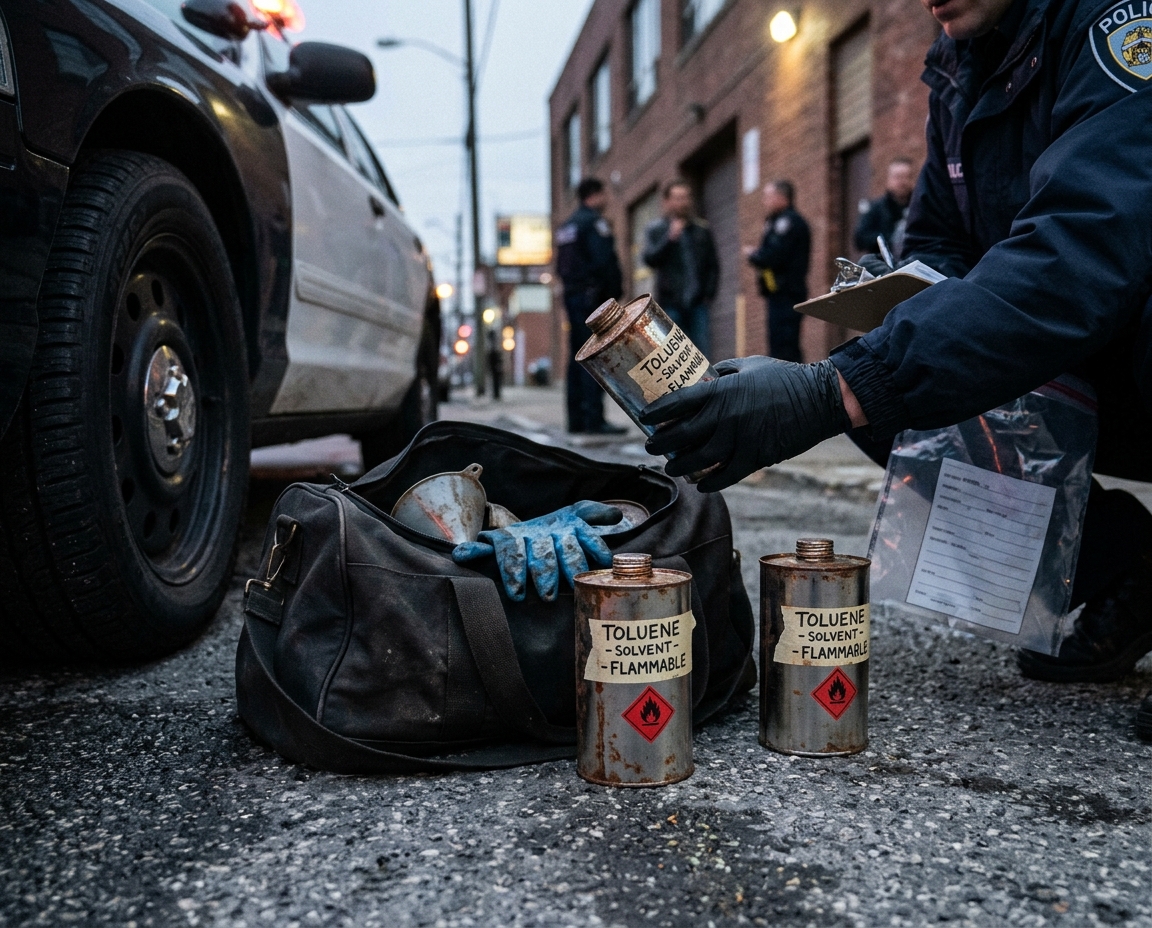
Possession of toluene is a misdemeanor under California Penal Code § 381(a) when a person possesses toluene or a substance containing toluene with the intent to inhale, breathe, or ingest it to produce intoxication or alter their mental or sensory processes. However, possessing a product containing toluene for a legitimate commercial, occupational, or household purpose is not automatically a crime.
California law focuses on the intended use of the substance and the circumstances surrounding possession. Understanding the legal requirements, potential penalties, and available defenses is important for anyone facing a toluene-related criminal charge.
What Is California Penal Code 381(a)?
California Penal Code § 381(a) prohibits possessing toluene or a substance containing toluene with the intent to breathe, inhale, or ingest it for an intoxicating or mind-altering effect.
The prohibited purposes include producing:
- Intoxication or euphoria.
- Elation or dizziness.
- Stupefaction.
- Dulling of the senses.
- Changes or disturbances in auditory or visual processes.
- Changes or disturbances in mental processes.
The statute also separately addresses knowingly being under the influence of toluene or a covered material with the required intent.
A violation is classified as a misdemeanor.
Importantly, the law does not criminalize every instance of possessing a product containing toluene. The prosecution must establish the prohibited purpose required by the statute for a possession-based charge.
What Products Contain Toluene?
Toluene is a chemical solvent used in various industrial, commercial, and household products.
Products that may contain toluene include:
- Certain paints and paint thinners.
- Some adhesives and glues.
- Certain types of cement and bonding products.
- Shellac thinners.
- Industrial solvents.
These products have legitimate applications in construction, manufacturing, and maintenance.
For example, a painter may carry paint thinner for a scheduled project, while a mechanic may keep industrial solvent for vehicle maintenance.
These activities do not automatically violate Penal Code § 381(a). The prosecution must establish that the substance was possessed for a prohibited intoxicating purpose.
What Must Prosecutors Prove in a Possession of Toluene Case?
To obtain a conviction for possession under Penal Code § 381(a), prosecutors must prove the required elements beyond a reasonable doubt.
Generally, the prosecution must establish that:
- The defendant possessed toluene, a substance containing toluene, or a covered combination of hydrocarbons.
- The defendant intended to breathe, inhale, or ingest the substance.
- The intended purpose was to produce an intoxicating or mind-altering effect described in the statute.
The statute separately addresses knowingly being under the influence with the required intent.
1. Actual or Constructive Possession
Possession does not always require physically holding a substance. It may involve actual or constructive possession.
- Actual possession: The person physically holds or carries the substance.
- Constructive possession: The person has the right or ability to exercise control over the substance, even if it is not physically on them.
For example, police may discover a container of solvent inside a shared vehicle. The discovery does not automatically establish that every passenger possessed the substance.
The prosecution must establish the accused person’s connection to and control over the item.
2. Knowledge and Prohibited Intent
The prosecution must establish the intent required by the statute. Relevant evidence may include statements, surrounding circumstances, and other evidence of the person’s intended use.
Simply possessing a product containing toluene does not establish an intention to become intoxicated.
For example, a contractor carrying paint thinner for a renovation project may have a legitimate explanation for possessing the product.
The prosecution must prove the prohibited purpose rather than rely solely on the presence of the chemical.
3. The Intended Intoxicating Effect
The intended use must involve producing an effect identified in the statute, such as euphoria, dizziness, intoxication, stupefaction, or changes in mental or sensory processes.
The prosecution may examine the circumstances surrounding the alleged possession to determine whether the required intent existed.
Ultimately, the prosecution must prove every required element beyond a reasonable doubt.
What Are the Penalties for Possession of Toluene in California?
Possession of toluene under California Penal Code § 381(a) is a misdemeanor.
Because the statute does not establish a separate punishment, California Penal Code § 19 provides the general misdemeanor penalties.
| Penalty | Maximum punishment |
|---|---|
| County jail | Up to six months |
| Criminal fine | Up to $1,000 |
| Both | Jail time and a fine |
These are maximum statutory penalties, not automatic sentences. The actual punishment depends on the circumstances, criminal history, and the court’s sentencing decision.
Can You Receive Probation Instead of Jail?
Probation may be available depending on the circumstances of the case.
A court may consider probation rather than imposing the maximum jail sentence. Conditions may include obeying all laws, attending required court appearances, and completing court-ordered counseling or assessments when appropriate.
Probation is not guaranteed.
Does a Conviction Create a Criminal Record?
Yes. A misdemeanor conviction under Penal Code § 381(a) can become part of a person’s criminal record.
A conviction may affect employment opportunities, housing applications, and professional licensing.
Some individuals may qualify for record-clearing relief under California Penal Code § 1203.4, depending on their conviction, probation status, and other eligibility requirements. Such relief does not necessarily eliminate every consequence of a conviction.
What Are the Legal Defenses to Possession of Toluene?
Several defenses may apply to a charge under Penal Code § 381(a). The appropriate defense depends on the evidence, the circumstances of the investigation, and the prosecution’s allegations.
1. Lack of Prohibited Intent
The prosecution must establish that the substance was possessed for an intoxicating or mind-altering purpose.
For example, a contractor carrying paint thinner for a construction project may have evidence supporting a legitimate business purpose.
If the evidence does not establish the required intent, the prosecution may have difficulty proving the possession offense.
2. Lack of Actual or Constructive Possession
Being near a substance does not automatically establish possession.
For example, if police discover a container of solvent inside a shared vehicle, the prosecution must establish that the accused actually or constructively possessed it.
Evidence showing that another person owned or controlled the substance may be relevant.
3. Insufficient Evidence That the Substance Contained Toluene
The prosecution must establish that the substance falls within the statute.
If reliable testing or other evidence does not establish its chemical composition, the identity of the substance may become an important issue.
The defense may examine laboratory procedures, testing reliability, and the handling of the evidence.
4. Insufficient Evidence of the Alleged Purpose
Even if the substance contained toluene and was possessed by the accused, the prosecution must establish the required intoxicating intent.
A legitimate occupational, commercial, or household purpose may be relevant when challenging the prosecution’s allegations.
The defense may examine whether statements, physical evidence, and surrounding circumstances actually support the alleged purpose.
5. Unlawful Search or Seizure
The Fourth Amendment protects individuals against unreasonable searches and seizures.
If officers obtained evidence through an unconstitutional search, a defense attorney may evaluate whether a motion to suppress that evidence is appropriate.
The legality of a search depends on the circumstances, including whether officers had a warrant or whether a recognized exception applied.
Is Possession of Toluene the Same as Selling It to a Minor?
No. California treats possession for prohibited intoxicating purposes and selling or distributing toluene to minors as separate offenses.
Penal Code § 381(a) addresses possession and specified intoxication-related conduct.
Penal Code § 380(a), on the other hand, makes it a misdemeanor to sell, dispense, or distribute toluene or a substance containing toluene to someone under 18 years old.
A violation of § 380(a) carries a fine of $1,000 to $2,500 or imprisonment for six months to one year.
The two statutes address different conduct and have different legal requirements.
Frequently Asked Questions
1. Is possession of toluene illegal in California?
Not automatically. Penal Code § 381(a) prohibits possessing toluene or a covered substance with the intent to inhale, breathe, or ingest it for a prohibited intoxicating or mind-altering purpose.
2. Is possession of toluene a felony or misdemeanor?
It is a misdemeanor under California Penal Code § 381(a).
3. What is the maximum jail sentence for possession of toluene?
A conviction can carry up to six months in county jail, a fine of up to $1,000, or both.
4. Can I be arrested for having paint thinner or glue in my car?
Possessing these products does not automatically establish a violation. The prosecution must establish the required prohibited intent or the separate under-the-influence conduct covered by the statute.
5. Does the prosecution have to prove that I actually inhaled toluene?
Not for the possession-based offense. Prosecutors must establish possession and the required intent to use the substance for a prohibited purpose. The statute separately addresses knowingly being under the influence.
6. Can I fight a possession of toluene charge if the substance was for work?
Yes. Evidence of a legitimate occupational purpose may help challenge the allegation that the substance was possessed for intoxication.
7. Can possession of toluene charges be dismissed?
Dismissal may be possible if the prosecution lacks sufficient evidence or cannot establish an essential element. Unlawful searches and other legal issues may also affect the case. Dismissal is not guaranteed.
8. Will a conviction for possession of toluene stay on my criminal record?
A conviction can become part of your criminal record. However, eligible individuals may qualify for relief under California Penal Code § 1203.4.
9. Is Penal Code 381(a) the same as Penal Code 381a?
No. Penal Code § 381(a) concerns possession of toluene for prohibited intoxicating purposes. Penal Code § 381a is a separate provision involving dairy-product testing and representations.
Key Takeaways
- Possession is not automatically illegal: Having paint thinner, glue, or another product containing toluene for a legitimate purpose does not automatically violate California law.
- Intent matters: The prosecution must establish the prohibited intoxicating purpose for a possession-based violation.
- It is a misdemeanor: A conviction is punishable by up to six months in county jail, a fine of up to $1,000, or both under the general misdemeanor statute.
- Defenses may be available: Lack of possession, lack of prohibited intent, insufficient chemical evidence, and unlawful searches may be relevant defenses.
- Criminal records matter: A conviction can have consequences beyond the immediate sentence.
Contact Southwest Legal
Facing a Possession of Toluene Charge in California?
A possession of toluene charge can raise serious concerns about your criminal record, employment, and future. Understanding the specific allegations and the evidence against you is essential when evaluating your legal options.
At Southwest Legal, we believe that understanding your rights is an important first step when facing a criminal accusation.
If you or someone you know is facing a charge under California Penal Code § 381(a), it is important to understand what the prosecution must prove and whether the evidence supports the allegations.
Do not assume that possessing a product containing toluene automatically means a criminal conviction is inevitable. The facts, evidence, and circumstances of the case matter.
Contact us today for a free consultation. Get answers to your questions, understand your legal options, and take an informed step toward protecting your rights and addressing your possession of toluene charge.
Disclaimer: This article is for general informational purposes only and does not constitute legal advice or create an attorney-client relationship unless and until the firm and client enter into an agreement for legal services. Laws may change, and legal outcomes depend on the specific facts of each case. Consult a qualified attorney for advice regarding your situation.