


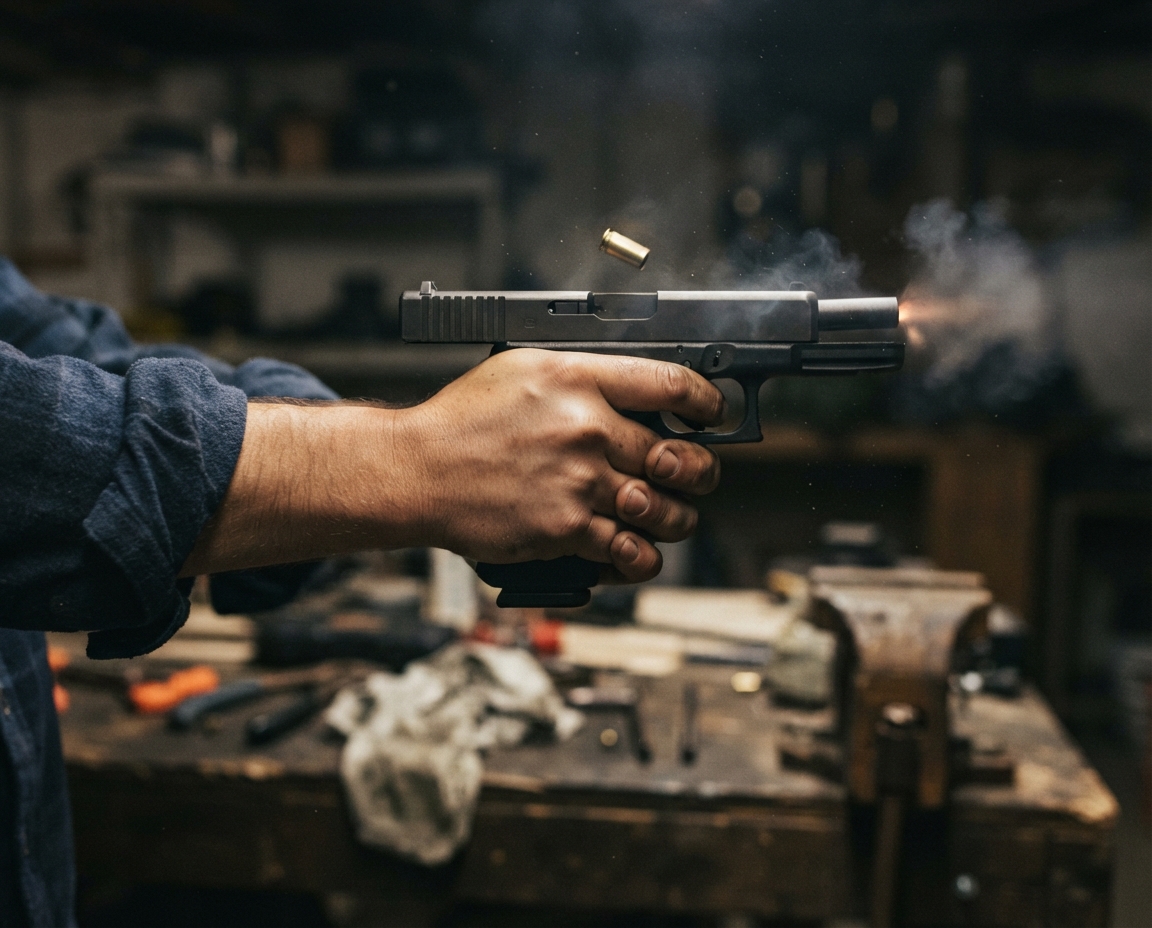
A negligent discharge of a firearm in California can result in criminal charges under California Penal Code § 246.3. This law prohibits willfully firing a firearm in a grossly negligent manner that could cause injury or death to another person, even if nobody is actually hurt. Depending on the circumstances, the offense can be charged as either a misdemeanor or a felony, potentially resulting in jail time, fines, probation, and firearm restrictions.
Understanding the elements of this offense, its potential penalties, and available legal defenses can help individuals facing a negligent discharge allegation better understand their rights under California law.
What Is Negligent Discharge of a Firearm Under California Penal Code 246.3?
California Penal Code § 246.3 makes it illegal to willfully discharge a firearm in a grossly negligent manner when the shooting could result in injury or death to another person.
The law focuses on dangerous firearm conduct that puts other people’s safety at risk, regardless of whether anyone is actually injured.
Examples of conduct that could potentially result in charges include:
- Intentionally firing a gun into the air in a populated neighborhood.
- Discharging a firearm toward an area where people are present.
- Recklessly firing a weapon near homes or occupied buildings.
- Shooting a firearm without considering the potential danger to nearby individuals.
Example: Someone fires a handgun into the air during a neighborhood celebration. Although nobody is injured, the conduct could create a serious risk to people nearby. Depending on the circumstances, prosecutors may pursue charges under PC 246.3.
Importantly, the prosecution does not have to prove that someone was actually injured or killed. It must establish that the discharge could have resulted in injury or death.
What Must Prosecutors Prove Under PC 246.3?
To obtain a conviction for negligent discharge of a firearm, prosecutors must prove every required element beyond a reasonable doubt.
Under California Criminal Jury Instructions (CALCRIM No. 970), the prosecution generally must establish three elements:
- The defendant intentionally discharged a firearm.
- The defendant acted with gross negligence.
- The shooting could have resulted in injury or death to another person.
Each element must be established for a conviction.
1. Willful Discharge of a Firearm
The defendant must have intentionally fired the firearm. However, the prosecution does not need to prove that the defendant intended to hurt anyone.
For example, deliberately pulling the trigger and firing a gun into the air may satisfy this element, depending on the circumstances.
An accidental discharge is different because the firing itself was not intentional.
2. Gross Negligence
Gross negligence means acting recklessly in a way that creates a high risk of death or great bodily injury.
A reasonable person would recognize that the conduct creates such a serious danger.
For example, deliberately firing a gun toward an area where people may be present could support a finding of gross negligence.
Ordinary carelessness, inattention, or a simple mistake is not necessarily enough.
3. Potential for Injury or Death
The shooting must occur under circumstances where another person could have been injured or killed.
Actual injury is not required.
For example, firing a gun into the air in a residential neighborhood could create a risk to people nearby, even if nobody is struck.
Is Negligent Discharge of a Firearm a Felony or Misdemeanor in California?
Negligent discharge of a firearm under PC 246.3(a) is a wobbler offense. This means prosecutors can charge it as either a misdemeanor or a felony, depending on the circumstances.
A court may also reduce an eligible felony conviction to a misdemeanor under California Penal Code § 17(b).
Misdemeanor Penalties
A misdemeanor conviction under PC 246.3 can result in:
- Up to one year in county jail.
- Applicable criminal fines and assessments.
- Summary probation.
- A firearm restriction.
Felony Penalties
A felony conviction carries a potential sentence of:
- 16 months.
- Two years.
- Three years.
Under Penal Code § 1170(h), an applicable felony sentence is generally served in county jail rather than state prison, subject to statutory exceptions.
The actual sentence depends on the circumstances of the offense, criminal history, applicable sentencing rules, and the court’s determination.
| Legal consideration | Misdemeanor | Felony |
|---|---|---|
| Offense classification | Misdemeanor | Felony |
| Potential incarceration | Up to one year in county jail | 16 months, two years, or three years |
| Probation | Possible | Possible, depending on eligibility |
| Firearm restrictions | Generally 10 years under PC 29805 | Generally lifetime under PC 29800 |
| Criminal record | Misdemeanor conviction | Felony conviction |
Does a Negligent Discharge Conviction Affect Your Gun Rights?
Yes. A conviction under California Penal Code § 246.3 can have serious consequences for firearm ownership and possession.
Misdemeanor Conviction: 10-Year Firearm Restriction
Under Penal Code § 29805, a misdemeanor conviction for negligent discharge of a firearm generally triggers a 10-year firearm prohibition.
During the applicable period, the individual is generally prohibited from owning, purchasing, receiving, or possessing a firearm.
Certain statutory exceptions and procedures for relief may apply.
Felony Conviction: Lifetime Firearm Restriction
A felony conviction generally results in a lifetime firearm prohibition under Penal Code § 29800, subject to applicable exceptions and legal relief.
These restrictions can affect a person’s ability to legally possess firearms long after the criminal case ends.
What Defenses Can Be Used Against Negligent Discharge Charges?
A PC 246.3 charge does not automatically result in a conviction. The prosecution must prove every required element beyond a reasonable doubt.
Depending on the circumstances, several defenses may apply.
1. Accidental Discharge
PC 246.3 requires an intentional discharge. If the firearm went off unintentionally, the prosecution may be unable to establish this element.
For example, a firearm that unexpectedly discharges because of a mechanical malfunction may raise questions about whether the shooting was intentional.
The circumstances and available evidence are important in determining whether this defense applies.
2. Lack of Gross Negligence
Not every careless action involving a firearm qualifies as gross negligence.
The prosecution must establish that the defendant acted recklessly and created a high risk of death or great bodily injury.
If the conduct does not meet this legal standard, the charge may be challenged.
3. Belief That the Firearm Was Unloaded
An actual belief that a firearm was unloaded may be relevant to whether the defendant intentionally discharged it.
In People v. Robertson (2004) 34 Cal.4th 156, the California Supreme Court addressed how an actual belief that a firearm was unloaded affects the required mental state under PC 246.3.
Whether this defense applies depends on the available evidence.
4. Self-Defense or Defense of Another Person
A firearm discharge may be legally justified when it occurs under circumstances involving lawful self-defense or defense of another person.
The relevant legal considerations include whether an imminent threat existed, whether the defendant reasonably believed force was necessary, and whether the force used was legally justified.
5. Insufficient Evidence
The prosecution must prove all elements beyond a reasonable doubt.
A defense may challenge whether the evidence establishes:
- That the defendant intentionally fired the weapon.
- That the conduct amounted to gross negligence.
- That the discharge could have resulted in injury or death.
Witness statements, physical evidence, firearm examination results, and other investigative materials may be relevant to evaluating the allegations.
What Is the Difference Between Penal Code 246.3 and Penal Code 246?
Although both laws involve firearms, they address different conduct.
Penal Code § 246.3 prohibits grossly negligent firearm discharge that could cause injury or death.
Penal Code § 246 generally prohibits maliciously and willfully shooting at an inhabited dwelling, occupied building, or occupied vehicle.
| Legal issue | PC 246 | PC 246.3 |
|---|---|---|
| Prohibited conduct | Shooting at specified occupied structures or vehicles | Grossly negligent firearm discharge |
| Mental state | Willful and malicious | Willful discharge with gross negligence |
| Actual injury required | No | No |
| Classification | Generally felony | Wobbler |
For example, firing toward an occupied house may result in charges under PC 246, while firing a gun into the air in a populated neighborhood may potentially result in charges under PC 246.3.
The specific circumstances determine which statute applies.
Can You Be Charged Under PC 246.3 if Nobody Was Injured?
Yes. California Penal Code § 246.3 does not require proof that someone was actually injured or killed.
The prosecution must establish that the firearm was discharged with gross negligence under circumstances where the shooting could have resulted in injury or death.
For example, someone who fires a handgun into the air at a crowded gathering may face charges even if nobody is hurt.
The potential danger created by the discharge is what matters.
Frequently Asked Questions
1. Is negligent discharge of a firearm a felony in California?
It can be. PC 246.3 is a wobbler offense, meaning it can be charged as either a misdemeanor or felony depending on the circumstances.
2. How much jail time can you get for negligent discharge?
A misdemeanor conviction can result in up to one year in county jail. A felony conviction carries a potential sentence of 16 months, two years, or three years under the applicable sentencing provisions.
3. Do you have to injure someone to be charged under PC 246.3?
No. The prosecution must establish that the firearm discharge could have caused injury or death under the circumstances. Actual physical injury is not required.
4. Does an accidental gun discharge count as negligent discharge?
Not automatically. PC 246.3 requires a willful discharge. A genuinely accidental discharge may provide a defense, depending on the evidence.
5. What is considered gross negligence when firing a gun?
Gross negligence involves reckless conduct that creates a high risk of death or great bodily injury that a reasonable person would recognize.
6. Can you lose your gun rights after a PC 246.3 conviction?
Yes. A misdemeanor conviction generally triggers a 10-year firearm prohibition under PC 29805. A felony conviction generally results in a lifetime firearm prohibition under PC 29800, subject to applicable exceptions and legal relief.
7. Can self-defense be used against a negligent discharge charge?
Potentially. If the firearm discharge was legally justified under California self-defense or defense-of-another principles, that may provide a defense.
8. Can negligent discharge charges be dismissed or reduced?
Depending on the evidence and applicable law, charges may be challenged, dismissed, or resolved through a negotiated reduction. An eligible felony conviction may also be reduced to a misdemeanor under PC 17(b).
9. Can you be charged for firing a gun into the air?
Yes. Firing a gun into the air in circumstances that create a risk of injury or death may violate PC 246.3, even if nobody is injured.
Key Takeaways
- California Penal Code § 246.3 prohibits willfully discharging a firearm with gross negligence when the shooting could cause injury or death.
- Actual physical injury is not required.
- The offense is a wobbler that can be charged as a misdemeanor or felony.
- Misdemeanor penalties include up to one year in county jail.
- Felony penalties include 16 months, two years, or three years under the applicable sentencing provisions.
- A misdemeanor conviction generally triggers a 10-year firearm prohibition.
- A felony conviction generally results in a lifetime firearm prohibition.
- Potential defenses include accidental discharge, lack of gross negligence, belief that the firearm was unloaded, self-defense, and insufficient evidence.
Speak With Southwest Legal About a Negligent Discharge Charge
Facing a negligent discharge of a firearm charge in California can put your freedom, criminal record, and firearm rights at risk.
Understanding the allegations, potential penalties, and available legal defenses is an important step when deciding how to approach your case.
Southwest Legal recognizes the seriousness of firearm-related criminal charges and the importance of protecting the rights of individuals navigating California’s criminal justice system.
If you are facing an investigation or prosecution under California Penal Code § 246.3, take the time to understand your legal options before making important decisions about your case.
Contact us today for a free consultation.
Take an informed step toward protecting your rights and understanding your options. Let Southwest Legal help you navigate the legal challenges surrounding a negligent discharge charge.
Disclaimer: This article is for general informational purposes only and does not constitute legal advice or create an attorney-client relationship unless and until the firm and client enter into an agreement for legal services. Laws may change, and legal outcomes depend on the specific facts of each case. Consult a qualified attorney for advice regarding your situation.