


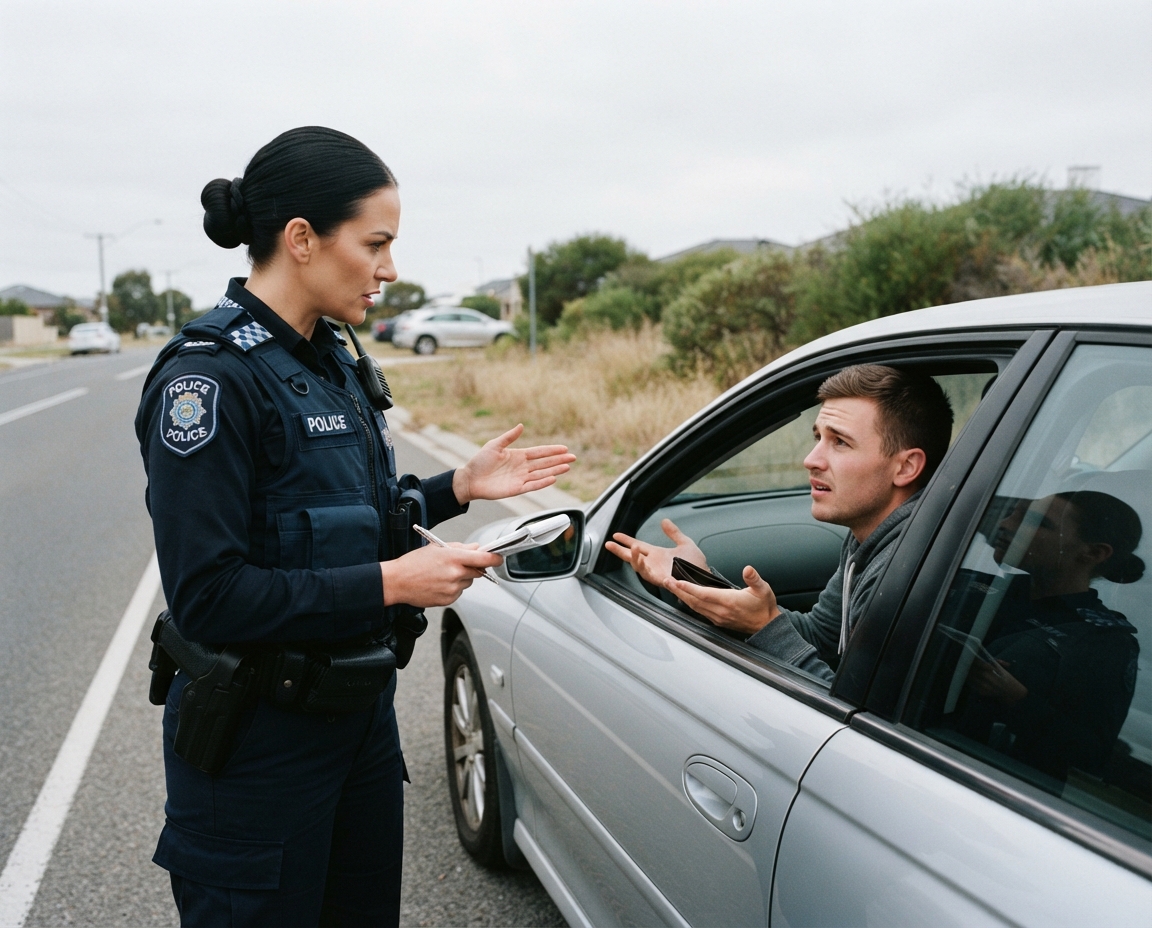
Failing to present a driver’s license in California can result in legal consequences under California Vehicle Code § 12951. The law requires drivers to carry a valid driver’s license while driving and present it for examination when a peace officer enforcing the Vehicle Code demands it. Depending on the circumstances, a violation may be classified as an infraction or a misdemeanor.
However, California law treats these situations differently. Forgetting a valid driver’s license at home is generally an infraction, while failing to present a license after an officer’s qualifying demand is a misdemeanor. Understanding the difference can help drivers recognize the potential consequences and their legal options.
What Is California Vehicle Code § 12951?
California Vehicle Code § 12951 establishes two requirements involving driver’s licenses: carrying a valid license while driving and presenting that license to a peace officer upon demand.
The law has two subdivisions:
- VC 12951(a): Requires drivers to have their valid driver’s license in their immediate possession while operating a motor vehicle on a highway.
- VC 12951(b): Requires drivers to present their driver’s license for examination when a peace officer enforcing the Vehicle Code demands it.
Although both provisions involve driver’s licenses, they address different conduct and carry different legal consequences.
For example, a driver who has a valid California driver’s license but accidentally leaves it at home may violate subdivision (a). A driver who does not present their license after an officer demands to examine it may face a charge under subdivision (b).
The distinction is important because VC 12951(a) is generally an infraction, while VC 12951(b) is a misdemeanor.
What Does Failing to Present a Driver’s License Mean in California?
Failing to present a driver’s license means not producing the license for examination after a peace officer enforcing the California Vehicle Code demands it.
Under VC 12951(b), the prosecution must establish three elements:
- The defendant drove a motor vehicle.
- A peace officer enforcing the Vehicle Code demanded that the defendant present their driver’s license for examination.
- The defendant did not present their driver’s license in response to the officer’s request.
These elements are reflected in California’s Criminal Jury Instructions, CALCRIM No. 2222.
Importantly, the prosecution must establish that the required demand occurred and that the driver did not present the license. A separate finding of intentional or deliberate refusal is not listed as an element of the offense.
Example: A driver is stopped by a police officer. The officer requests the driver’s license for examination, but the driver does not produce it. Depending on the evidence and circumstances, this conduct may support a charge under VC 12951(b).
The exact interaction matters when determining whether the legal requirements have been satisfied.
What Is the Difference Between VC 12951(a) and VC 12951(b)?
The main difference is whether the driver failed to carry a valid license or failed to present it after an officer demanded to examine it.
| Legal issue | VC 12951(a) | VC 12951(b) |
|---|---|---|
| Main requirement | Carry a valid license while driving | Present the license upon an officer’s demand |
| Typical situation | Driver leaves license at home | Driver does not present license when requested |
| Classification | Infraction | Misdemeanor |
| Potential consequences | Fine and applicable assessments | Fine and/or county jail |
| Special dismissal provision | Yes, subject to statutory requirements | No equivalent automatic dismissal provision |
What Happens Under VC 12951(a)?
Subdivision (a) requires drivers to keep their valid driver’s licenses in their immediate possession while driving on a highway.
A driver may violate this provision even if they have a valid driving privilege but simply forget their physical license.
For example, someone leaves home with a valid California driver’s license but accidentally leaves their wallet on the kitchen counter. If stopped by law enforcement, that driver may receive a citation under VC 12951(a).
This situation is different from driving without ever obtaining a valid driver’s license.
What Happens Under VC 12951(b)?
Subdivision (b) requires drivers to present their licenses for examination when a peace officer enforcing the Vehicle Code demands them.
For example, a driver has a valid license in their wallet but does not produce it after an officer requests to examine it during a traffic enforcement interaction.
Unlike subdivision (a), subdivision (b) is classified as a misdemeanor under California Vehicle Code § 40000.11(g).
What Are the Penalties for Failing to Present a Driver’s License in California?
The penalties depend on which subdivision of VC 12951 applies.
Penalties for VC 12951(a): Not Having a License in Your Possession
A violation of VC 12951(a) is generally an infraction.
Under California Vehicle Code § 42001, the general maximum statutory base fines for qualifying Vehicle Code infractions are:
- First qualifying conviction: Up to $100.
- Second qualifying infraction within one year: Up to $200.
- Third or subsequent qualifying infraction within one year: Up to $250.
These are maximum statutory fines, not necessarily the amount a driver will actually pay. Court assessments, penalty fees, and other applicable charges may increase the total amount.
The actual amount depends on the applicable court’s penalty schedule.
Penalties for VC 12951(b): Failing to Present a License
A violation of VC 12951(b) is a misdemeanor, not an ordinary traffic infraction.
Under California Vehicle Code § 42002, the general maximum punishment for a misdemeanor Vehicle Code violation is:
- A fine of up to $1,000.
- Imprisonment in county jail for up to six months.
- Both a fine and county jail imprisonment.
These are maximum potential penalties. They do not mean every person accused of violating VC 12951(b) will receive the maximum punishment.
The actual outcome depends on the evidence, circumstances, applicable law, and court proceedings.
Can a VC 12951(a) Ticket Be Dismissed If You Have a Valid Driver’s License?
Yes. California Vehicle Code § 12951(a) contains a specific provision requiring dismissal when a qualifying driver’s license is produced in court.
The license must have been duly issued to the person and valid at the time of the arrest.
There is an important exception: For a third or subsequent charge, the court has discretion to dismiss the charge rather than being required to do so.
Special requirements apply when producing a temporary, interim, or duplicate driver’s license. The court must receive proof from the Department of Motor Vehicles establishing that:
- The license was issued before the arrest.
- The driving privilege and license had not been suspended or revoked.
- The person was eligible for the temporary, interim, or duplicate license.
Example: Maria has a valid California driver’s license but accidentally leaves her wallet at home. During a traffic stop, she receives a citation under VC 12951(a).
When she appears in court, she produces her valid driver’s license, which was issued before the incident and was valid at the time of her arrest.
If the statutory requirements are satisfied and this is not a third or subsequent charge, the law requires dismissal.
This special dismissal provision applies to VC 12951(a), not VC 12951(b).
What Defenses Are Available for a VC 12951(b) Charge?
A person accused of failing to present a driver’s license may have potential defenses depending on the facts and available evidence.
Because VC 12951(b) is a misdemeanor, the prosecution must prove every required element beyond a reasonable doubt.
Potential defenses and issues to examine include:
1. The Officer Did Not Make a Qualifying Demand
The prosecution must establish that a peace officer enforcing the Vehicle Code demanded that the driver present their license for examination.
If no qualifying demand occurred, an essential element of the offense may be missing.
2. The Driver Actually Presented the License
A driver may dispute the allegation by demonstrating that they presented their license in response to the officer’s request.
Relevant evidence may include body-camera footage, dash-camera recordings, witness statements, and the officer’s written report.
3. The Prosecution Cannot Establish That the Driver Failed to Present the License
The prosecution must establish that the driver did not present the license in response to the demand.
If available evidence contradicts the officer’s account, it may raise questions about whether the alleged violation occurred.
4. The Prosecution Cannot Prove the Driver Was Driving
Driving a motor vehicle is one of the elements of VC 12951(b).
If the evidence does not establish that the accused drove a motor vehicle, the prosecution may be unable to prove the charge.
The availability of these defenses depends on the facts, evidence, and applicable law. No particular defense guarantees dismissal.
Is Failing to Present a Driver’s License the Same as Driving Without a License?
No. Failing to present a driver’s license and driving without a valid driver’s license are separate legal issues under California law.
VC 12951 concerns possessing and presenting a driver’s license. California Vehicle Code § 12500(a), on the other hand, generally prohibits driving a motor vehicle without being duly licensed.
Consider these examples:
| Situation | Potentially applicable law |
|---|---|
| Driver has a valid license but leaves it at home | VC 12951(a) |
| Driver does not present a license after an officer’s qualifying demand | VC 12951(b) |
| Driver operates a vehicle without obtaining the required license | VC 12500(a) |
| Driver operates a vehicle while their license is suspended or revoked | Potentially VC 14601 or a related provision |
The distinction matters because the applicable offense and potential penalties can be significantly different.
For example, someone who accidentally forgets their wallet is not automatically guilty of driving without ever obtaining a license.
Drivers should examine the exact Vehicle Code section listed on their citation rather than assuming all driver’s license-related violations are the same.
What Should You Do If You Receive a VC 12951 Citation?
Receiving a citation for failing to present a driver’s license can be stressful, particularly when the accusation involves a misdemeanor.
Taking the following steps can help you understand your legal position:
- Check the citation. Determine whether the charge is under VC 12951(a) or VC 12951(b).
- Verify your license status. Confirm whether your license was valid, suspended, revoked, or otherwise restricted at the time of the incident.
- Keep relevant evidence. Preserve your citation, license records, photographs, and other documentation.
- Review available video footage. Body-camera and dash-camera recordings may help establish what happened during the traffic stop.
- Identify potential witnesses. Their accounts may be relevant when determining whether you presented your license.
- Observe court deadlines. Review your citation and follow the applicable court instructions.
- Consider legal guidance. If you face a misdemeanor charge, consider consulting a qualified California criminal defense attorney before entering a plea.
Understanding the specific charge and available evidence can help you make informed decisions about your case.
Frequently Asked Questions
1. Is failing to present a driver’s license a misdemeanor in California?
It depends on the violation. Failing to carry a valid license under VC 12951(a) is generally an infraction. Failing to present a license after a qualifying demand under VC 12951(b) is a misdemeanor.
2. What happens if I forget my driver’s license at home?
You may receive a citation under VC 12951(a). However, the law provides a specific dismissal procedure if you produce a qualifying driver’s license that was valid at the time of your arrest, subject to the statutory exception for a third or subsequent charge and special requirements for certain temporary, interim, or duplicate licenses.
3. Can I be charged under VC 12951(b) if I have a valid driver’s license?
Yes. Having a valid license does not automatically prevent a VC 12951(b) charge. The law requires drivers to present their licenses when a qualifying peace officer demands to examine them.
4. How much is the fine for failing to present a driver’s license?
For VC 12951(a), the general maximum statutory infraction fines under Vehicle Code § 42001 are $100 for a first qualifying conviction, $200 for a second qualifying conviction within one year, and $250 for a third or subsequent qualifying conviction within one year.
For VC 12951(b), the general maximum misdemeanor punishment is a fine of up to $1,000, up to six months in county jail, or both.
5. Can a VC 12951 charge be dismissed?
Yes, depending on the circumstances. VC 12951(a) provides for mandatory dismissal when a qualifying valid driver’s license is produced in court, subject to statutory exceptions. A VC 12951(b) charge may also be dismissed if the prosecution cannot prove the required elements or another valid legal basis for dismissal exists.
6. Will a VC 12951 conviction put points on my California driving record?
A conviction does not automatically mean DMV points will be assessed. The consequences depend on the specific violation and any additional offenses involved.
7. Can I be charged with driving without a license and failing to present a license?
Potentially, depending on the facts. VC 12951 addresses possession and presentation of a license, while VC 12500(a) generally concerns driving without being duly licensed. The specific allegations and evidence determine which provisions may apply.
8. What if I could not find my driver’s license during a traffic stop?
The circumstances matter. The prosecution must establish that a qualifying officer demanded the license and that the driver did not present it in response. Being unable to locate a license immediately does not automatically defeat the charge, but evidence about the interaction may be relevant.
9. Do I need a lawyer for a VC 12951 violation?
Legal representation is not mandatory for every traffic infraction. However, consulting a qualified California attorney may be helpful, particularly if you face a VC 12951(b) misdemeanor. An attorney can review the allegations, examine available evidence, and explain potential legal defenses.
Key Takeaways
- VC 12951(a) requires drivers to carry a valid driver’s license while driving on a highway.
- VC 12951(b) requires drivers to present their licenses for examination when demanded by a qualifying peace officer.
- Failing to carry a license is generally an infraction, while failing to present it upon demand is a misdemeanor.
- VC 12951(a) provides a specific statutory dismissal procedure when a qualifying valid license is produced in court.
- A VC 12951(b) misdemeanor may carry a fine of up to $1,000, up to six months in county jail, or both.
- The prosecution must establish the required elements of a VC 12951(b) violation.
- The exact charge, available evidence, and circumstances matter when evaluating potential defenses.
Contact Southwest Legal
Get Help With a California Vehicle Code § 12951 Charge
Facing a citation for failing to present a driver’s license can be confusing, especially when you are unsure whether the charge is an infraction or a misdemeanor. Understanding your rights, the allegations against you, and the legal options available can make an important difference in how you approach your case.
Southwest Legal can help you understand the charges, review your situation, and explore the next steps available under California law. You do not have to navigate the legal process without guidance.
Contact us today for a free consultation. Let Southwest Legal help you understand your options, address your concerns, and move forward with greater confidence.
Disclaimer: This article is for general informational purposes only and does not constitute legal advice or create an attorney-client relationship unless and until the firm and client enter into an agreement for legal services. Laws may change, and legal outcomes depend on the specific facts of each case. Consult a qualified attorney for advice regarding your situation.