


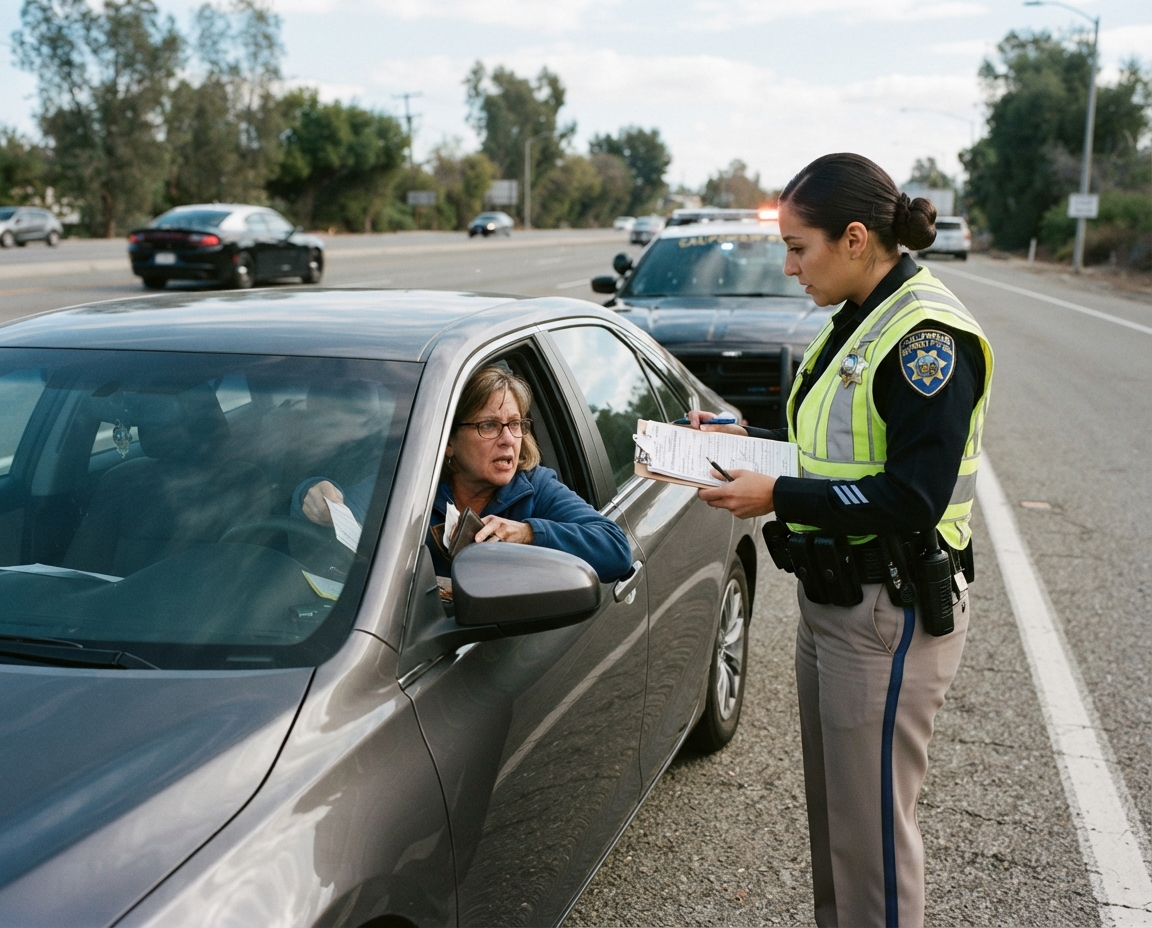
California law requires drivers and vehicle owners to maintain financial responsibility and carry evidence of that responsibility in their vehicles. Under California Vehicle Code § 16020, failing to carry proof of insurance or another legally acceptable form of financial responsibility can result in legal consequences, even if the vehicle is insured.
Understanding the difference between failing to carry proof of insurance and driving without insurance is important because these situations involve different legal requirements and potential consequences.
What Is California Vehicle Code § 16020?
California Vehicle Code § 16020 is part of the state’s financial responsibility laws. It requires vehicle owners and drivers to maintain legally acceptable financial responsibility and carry evidence of that responsibility in the vehicle.
In practical terms, California drivers must:
- Maintain the required financial responsibility for the vehicle.
- Carry evidence of that financial responsibility while driving.
- Provide proof when requested under applicable California law.
The most common way to satisfy this requirement is through an automobile liability insurance policy.
California also recognizes other legally acceptable forms of financial responsibility, including qualifying self-insurance and certain other approved documentation.
The purpose of this requirement is to help ensure that drivers can demonstrate their ability to meet financial obligations arising from vehicle accidents.
What Does Failure to Carry Proof of Insurance Mean in California?
Failure to carry proof of insurance means operating a vehicle without having acceptable evidence of financial responsibility available when required.
A driver may have an active insurance policy but still encounter legal problems if they cannot produce the required documentation.
For example, imagine a driver with a current automobile insurance policy who forgets to bring their insurance identification card. During a lawful traffic stop, the driver cannot locate the card or access an electronic copy.
Although the vehicle is insured, the driver may receive a citation for failing to comply with the applicable proof-of-insurance requirement.
It is important to distinguish between two situations:
- Failure to carry proof of insurance: The vehicle has qualifying financial responsibility, but the required evidence is unavailable.
- Driving without insurance: The vehicle does not have the required liability coverage or another legally acceptable form of financial responsibility.
This distinction matters because proving that valid coverage existed when a citation was issued may provide an opportunity to have certain insurance-related citations dismissed.
What Forms of Proof of Insurance Are Accepted in California?
California recognizes several forms of evidence of financial responsibility under its Vehicle Code.
The most common is an automobile liability insurance identification card issued by an insurance company.
Other legally recognized forms may include:
- An automobile insurance policy.
- A qualifying insurance binder or covering note.
- A certificate of self-insurance issued by the DMV.
- An assignment of deposit letter issued by the DMV.
- Other documentation recognized under California financial responsibility laws.
Drivers should make sure their documentation is current and establishes that the required financial responsibility applies to the vehicle.
An expired insurance card or documentation for a different vehicle may not satisfy the legal requirement.
What Is the Difference Between California Vehicle Code § 16020 and § 16028?
California Vehicle Code §§ 16020 and 16028 are closely related, but they address different legal responsibilities.
| Legal provision | Main requirement |
|---|---|
| Vehicle Code § 16020 | Requires drivers and vehicle owners to maintain financial responsibility and carry evidence in the vehicle. |
| Vehicle Code § 16028 | Requires drivers to provide evidence of financial responsibility when properly requested by law enforcement. |
| Vehicle Code § 16029 | Establishes penalties for violations of § 16028(a). |
Section 16020 establishes the underlying obligation to maintain and carry evidence of financial responsibility.
Section 16028 addresses the obligation to present that evidence when requested in circumstances authorized by law.
This distinction is important when reviewing a traffic citation. The exact Vehicle Code section listed on the citation helps determine which legal requirements and penalties may apply.
Can You Get a Ticket for Not Having Proof of Insurance in California?
Yes. California drivers may receive a traffic citation for failing to carry or provide the required evidence of financial responsibility.
Under Vehicle Code § 16028(a), drivers must provide evidence of financial responsibility when properly requested by a peace officer.
For example, a driver stopped for speeding may be asked to provide a driver’s license, vehicle registration, and proof of insurance.
If the driver cannot provide acceptable evidence, the officer may issue a citation under the applicable law.
However, California Vehicle Code § 16028(a) generally prohibits officers from stopping a vehicle solely to determine whether the driver is complying with the proof-of-insurance requirement.
What Are the Penalties for Failure to Carry Proof of Insurance?
The consequences depend on the specific Vehicle Code section involved and whether the driver actually had valid financial responsibility when the citation was issued.
It is important to distinguish between a violation involving the obligation to carry evidence under § 16020 and a violation involving failure to provide evidence under § 16028(a).
What Are the Fines Under Vehicle Code § 16028(a)?
California Vehicle Code § 16029 establishes the following statutory fines for violations of § 16028(a):
| Violation | Statutory fine |
|---|---|
| First conviction | $100–$200 |
| Subsequent conviction within three years of a prior conviction | $200–$500 |
Additional penalty assessments and court fees may increase the total amount owed.
These amounts specifically apply to convictions under § 16028(a). They should not automatically be treated as the penalties for every citation involving § 16020.
What If You Had Valid Insurance at the Time of the Citation?
California provides a dismissal procedure for qualifying drivers who had valid financial responsibility when the citation was issued.
Under Vehicle Code § 16028(e), a driver cited under § 16028(a) may submit evidence establishing that the required financial responsibility existed when the notice to appear was issued.
If the documentation satisfies the statutory requirements, the court clerk must dismiss the proceedings on that citation.
A $25 transaction fee is authorized under Vehicle Code § 40611 for this dismissal procedure.
What If You Were Driving Without Insurance?
The situation is different if the vehicle was uninsured when the citation was issued.
For example, imagine a driver’s insurance policy expired before a traffic stop. The driver purchases a new policy the following day.
The new policy does not establish that the vehicle was insured on the date of the original violation.
Obtaining coverage is important for future compliance, but it does not automatically eliminate responsibility for an earlier violation.
Can You Show Electronic Proof of Insurance in California?
Yes. California allows drivers to present acceptable electronic proof of insurance through a mobile electronic device.
Under Vehicle Code § 16028(a), drivers may provide evidence of financial responsibility electronically.
This means drivers can generally use their insurance company’s mobile application or display an acceptable electronic insurance identification card.
To avoid problems during a traffic stop:
- Keep your electronic insurance card updated.
- Make sure your insurance policy is active.
- Download your insurance provider’s mobile application.
- Keep your insurance information accessible if internet service is unavailable.
California Vehicle Code § 16028(g) also limits an officer’s access to a driver’s mobile device. When electronic proof is presented, the officer may view the insurance evidence but cannot use that access to examine unrelated content on the device.
How Can You Get a No-Proof-of-Insurance Ticket Dismissed?
A qualifying citation may be dismissed if you can establish that valid financial responsibility existed when the citation was issued.
If you receive a citation under Vehicle Code § 16028(a), consider taking these steps:
- Review your citation. Identify the exact Vehicle Code section listed on the ticket.
- Contact your insurance provider. Confirm whether your policy was active on the citation date.
- Request proof of coverage. Obtain an insurance card, policy document, or written confirmation showing the applicable coverage dates.
- Check the court’s requirements. Review the procedures for submitting proof of insurance.
- Submit your documentation. Follow the court’s instructions and applicable deadlines.
The documentation should establish that qualifying financial responsibility existed when the citation was issued.
If the vehicle was uninsured at the time, the dismissal procedure under § 16028(e) generally will not apply.
What Are California’s Minimum Car Insurance Requirements?
California requires drivers to maintain minimum liability insurance coverage or another legally acceptable form of financial responsibility.
Under California Vehicle Code § 16056, the minimum liability insurance limits for policies issued or renewed on or after January 1, 2025, are:
| Coverage type | Minimum coverage |
|---|---|
| Bodily injury or death to one person | $30,000 |
| Bodily injury or death to multiple people in one accident | $60,000 |
| Property damage | $15,000 |
These limits are commonly known as 30/60/15 coverage.
Liability insurance helps pay for injuries or property damage suffered by other people when an insured driver is legally responsible for an accident.
Comprehensive and collision insurance alone do not satisfy California’s minimum liability insurance requirements.
Frequently Asked Questions
1. Is failure to carry proof of insurance illegal in California?
Yes. California Vehicle Code § 16020 requires drivers and vehicle owners to maintain financial responsibility and carry evidence in their vehicles. Failure to comply may result in a citation under the applicable legal provision.
2. Can I get a ticket if I have insurance but forget my insurance card?
Yes. However, if you had valid financial responsibility when cited, you may qualify for dismissal under the applicable statutory procedure. Section 16028(e) specifically provides a dismissal process for qualifying citations under § 16028(a).
3. Can I show proof of insurance on my phone in California?
Yes. California permits electronic proof of insurance through a mobile device. Drivers may generally present an acceptable electronic insurance identification card or other qualifying electronic evidence.
4. How much is a no-proof-of-insurance ticket in California?
Under Vehicle Code § 16029, a first conviction under § 16028(a) carries a statutory fine of $100 to $200, plus applicable penalty assessments. A subsequent conviction within three years of a prior conviction carries a fine of $200 to $500, plus assessments.
5. Will my ticket be dismissed if I show proof of insurance later?
It may be dismissed if you prove that valid financial responsibility existed when the citation was issued. Purchasing insurance after receiving the ticket generally does not qualify for dismissal under § 16028(e).
6. Can police stop me just to check my insurance?
Generally, no. California Vehicle Code § 16028(a) prohibits stopping a vehicle solely to determine whether the driver is complying with the proof-of-financial-responsibility requirement.
7. Do I need to carry a physical insurance card?
No. California allows acceptable electronic proof of insurance through a mobile electronic device. A paper insurance card is not the only permitted form of evidence.
8. What happens if I drive without insurance in California?
Driving without the required financial responsibility can result in traffic penalties and other legal consequences. It may also expose an uninsured driver to personal financial liability if they cause an accident.
Key Takeaways
- California Vehicle Code § 16020 requires drivers and vehicle owners to maintain financial responsibility and carry evidence in their vehicles.
- Section 16028 addresses providing proof when properly requested by law enforcement.
- California accepts qualifying electronic proof of insurance.
- Having valid insurance but forgetting the insurance card is different from driving without insurance.
- Drivers who had valid coverage when cited may qualify for dismissal under § 16028(e), when its requirements are satisfied.
- A first conviction under § 16028(a) carries a statutory fine of $100 to $200, plus applicable assessments.
- Purchasing insurance after receiving a citation does not automatically eliminate the original violation.
Contact Southwest Legal
Need Help With a Failure to Carry Proof of Insurance Citation?
Receiving a traffic citation for failure to carry proof of insurance can leave you uncertain about the applicable penalties, required documentation, and steps you should take next.
Understanding your rights under California law can help you determine how to address the citation and whether you may qualify for a dismissal based on existing insurance coverage.
Southwest Legal can help you better understand the legal issues surrounding your citation, explain the applicable California requirements, and discuss the options that may be available in your circumstances.
Contact us today for a free consultation.
You do not have to navigate confusing insurance-related traffic laws without guidance. Reach out to Southwest Legal to get answers to your questions and a clearer understanding of your next steps.
Disclaimer: This article is for general informational purposes only and does not constitute legal advice or create an attorney-client relationship unless and until the firm and client enter into an agreement for legal services. Laws may change, and legal outcomes depend on the specific facts of each case. Consult a qualified attorney for advice regarding your situation.