


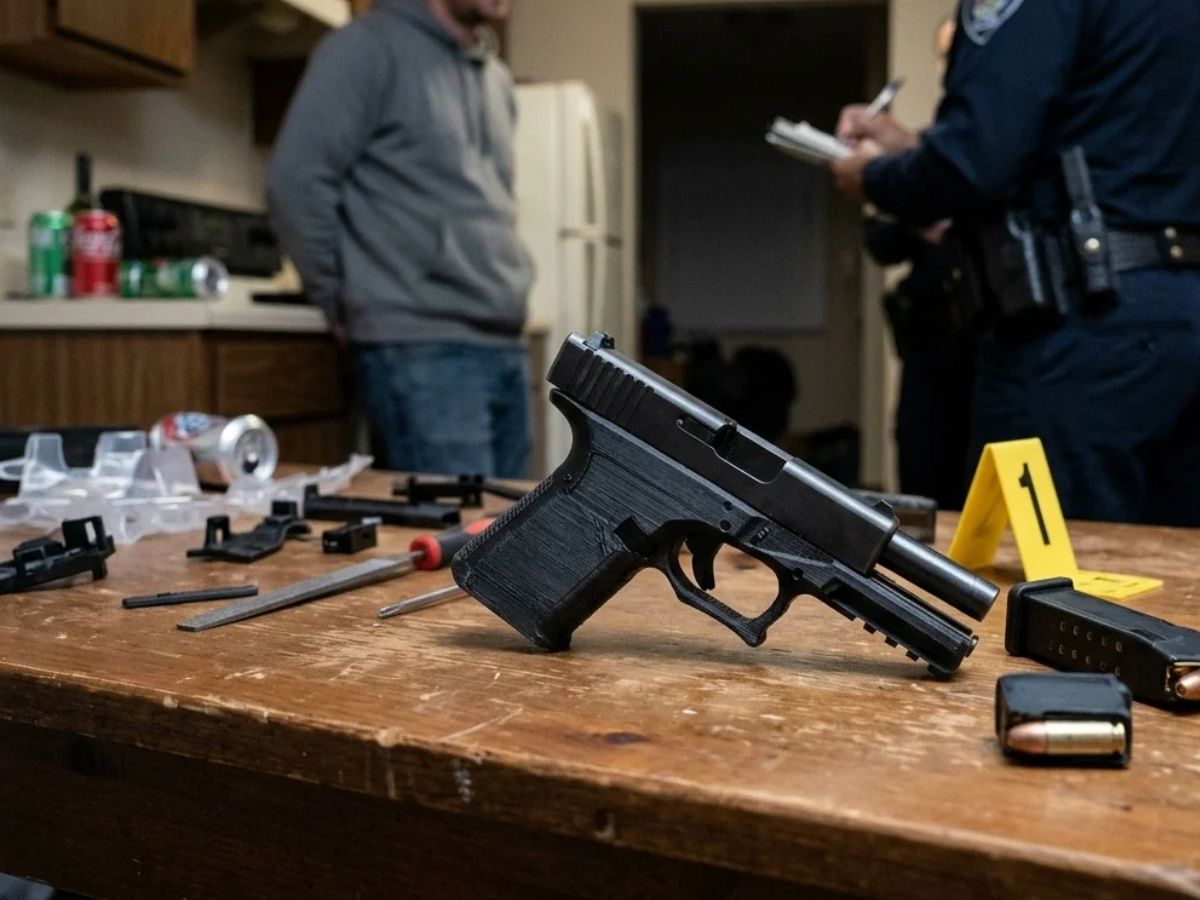
Possession of an unregistered firearm commonly known as a “ghost gun” can lead to criminal charges in California. Under California Penal Code § 23920(b), knowingly possessing a firearm without a valid state or federal serial number or identifying mark is generally a misdemeanor, while Penal Code § 29180 regulates the unlawful manufacture and assembly of privately made firearms.
California strictly regulates ghost guns, including their manufacture, identification, possession, and transfer. Understanding these requirements is important for anyone facing a ghost gun investigation or criminal charge.
What Is a Ghost Gun Under California Law?
A ghost gun is generally a privately manufactured or assembled firearm that does not have a valid serial number or legally recognized identifying mark.
Unlike commercially manufactured firearms, ghost guns may be assembled privately using unfinished firearm frames, receivers, or other components.
Examples include:
- Privately manufactured firearms without required serial numbers.
- Firearms assembled using certain unfinished frames or receivers.
- Certain firearms produced using 3D-printing technology.
- Privately assembled firearms that have not received the required identifying marks.
California law also regulates certain firearm precursor parts, including qualifying unfinished frames and receivers. These components may fall within the state’s firearm restrictions even before they become fully assembled firearms.
What Is California Penal Code § 29180?
California Penal Code § 29180 regulates the manufacture and assembly of privately made firearms, including requirements for obtaining and applying unique serial numbers.
Generally, individuals manufacturing or assembling qualifying firearms must obtain a unique serial number from the California Department of Justice (DOJ) before beginning the manufacturing or assembly process.
The law establishes several requirements:
- Apply to the California DOJ for a unique serial number or identifying mark under Penal Code § 29182.
- Obtain the identifying number before manufacturing or assembling the firearm.
- Permanently engrave or affix the assigned number within the required period.
- Notify the DOJ after completing the required marking process.
Generally, the identifying number must be permanently applied within 10 days after manufacturing or assembling the firearm.
The law also prohibits knowingly manufacturing or assembling a firearm without a valid state or federal serial number or identifying mark.
Does Penal Code § 29180 Make Possession of an Unregistered Firearm “Ghost Gun” Illegal?
Section 29180 primarily regulates manufacturing and assembly. The specific prohibition against knowingly possessing certain unserialized firearms is found in Penal Code § 23920(b).
These statutes address different conduct:
- Penal Code § 29180: Regulates the manufacture and assembly of privately made firearms.
- Penal Code § 23920(b): Prohibits knowing possession of certain firearms without valid identifying marks.
- Penal Code § 27530: Prohibits the sale or transfer of certain firearms without the required serial number.
For example, someone who unlawfully assembles an unserialized handgun and knowingly keeps it at home may face allegations involving both unlawful manufacturing and possession.
The specific charges depend on the circumstances and available evidence.
Is Possession of an Unregistered Firearm Illegal in California?
Yes. California Penal Code § 23920(b) generally makes it a misdemeanor to knowingly possess a firearm without a valid state or federal serial number or identifying mark.
This prohibition applies to possession occurring on or after January 1, 2024, subject to applicable statutory exceptions.
It is important to understand that an unregistered firearm and an unserialized firearm are not necessarily the same thing. California’s ghost gun possession prohibition specifically concerns the absence of a valid identifying mark, rather than simply whether a firearm appears in a registration database.
For example, someone who knowingly possesses a privately assembled handgun without the required identifying number may violate California law.
However, the prosecution must establish the required elements of the offense, and certain statutory exceptions may apply.
What Are the Penalties for Possessing a Ghost Gun in California?
Knowingly possessing an unserialized firearm in violation of Penal Code § 23920(b) is generally a misdemeanor.
Potential penalties include:
- Up to six months in county jail.
- A fine of up to $1,000.
- Both imprisonment and a fine.
Penal Code § 29180 establishes separate penalties for unlawful manufacturing or assembly.
| Violation | Potential maximum penalty |
|---|---|
| Unlawful manufacture or assembly of a handgun | One year in county jail and/or a $1,000 fine |
| Unlawful manufacture or assembly of another firearm | Six months in county jail and/or a $1,000 fine |
| Knowing possession of a qualifying unserialized firearm | Six months in county jail and/or a $1,000 fine |
Each firearm found to violate § 29180 constitutes a separate offense.
The actual consequences depend on the specific allegations, the evidence, and whether additional firearm-related offenses are involved.
What Must Prosecutors Prove in a Ghost Gun Possession Case?
To establish a violation of Penal Code § 23920(b), prosecutors generally must prove that the defendant knowingly possessed a firearm without a valid state or federal serial number or identifying mark and that no applicable statutory exception applies.
Evidence may include:
- The firearm recovered by law enforcement.
- Examination of the firearm’s identifying marks.
- Statements made during the investigation.
- Evidence connecting the defendant to the firearm.
- Witness testimony and other relevant evidence.
What Does Knowing Possession Mean?
Knowing possession generally involves awareness of the firearm and the ability to exercise control over it.
Physical contact is not always necessary to establish possession. California recognizes both actual and constructive possession.
For example, police discover an unserialized handgun inside a person’s locked bedroom cabinet. Evidence that the individual knew the firearm was there and exercised control over the cabinet may support a possession allegation.
However, simply living in a home where a ghost gun is discovered does not automatically establish criminal possession.
The prosecution must establish the required connection between the defendant and the firearm.
Are There Exceptions to California’s Ghost Gun Possession Law?
Yes. California Penal Code § 23925 provides specific exceptions to the prohibition against possessing certain firearms without valid identifying marks.
Depending on the circumstances, exceptions include:
- Certain older firearms: Qualifying firearms manufactured or assembled before December 16, 1968, that are not handguns.
- Previously registered firearms: Certain firearms entered into California’s centralized firearm registry before July 1, 2018, with an assigned identifying mark.
- Antique firearms and curios or relics: Firearms meeting the applicable federal definitions.
- Federally licensed firearm businesses: Qualifying federally licensed manufacturers, importers, and other authorized licensees.
- Certain previously submitted applications: Individuals who applied for a unique serial number before January 1, 2024, and fully complied with the applicable requirements.
- Qualifying new California residents: Individuals who apply for a unique serial number within 60 days after arriving in California with the firearm and satisfy the remaining requirements.
- Certain nonresidents: Individuals transporting firearms in compliance with applicable federal interstate transportation requirements or possessing firearms exclusively for qualifying organized shooting events or competitions.
These exceptions have specific legal requirements. A person should not assume that a firearm qualifies simply because it is old, privately owned, or brought into California from another state.
Can You Register a Ghost Gun in California?
California allows eligible individuals to obtain unique serial numbers for qualifying privately made firearms through the Department of Justice.
However, the applicable deadlines are important.
Under Penal Code § 29180(b), individuals generally must apply for a unique serial number before manufacturing or assembling a qualifying firearm.
Penal Code § 29180(c) also established a compliance process for individuals who already owned firearms or firearm precursor parts without valid identifying marks.
For existing owners, the general application deadline was January 1, 2024. Qualifying new California residents have a separate 60-day application period after arriving in the state with the firearm.
The required compliance process includes:
- Submitting the appropriate application to the California DOJ.
- Providing the required personal and firearm information.
- Obtaining the assigned identifying number.
- Permanently applying the number within 10 days after receiving it.
- Notifying the DOJ after completing the marking process.
Important: As of November 2026, the January 1, 2024 deadline for existing owners has passed. Submitting a new application after that deadline does not automatically create an exception to the possession prohibition or retroactively legalize unlawful possession.
Other firearm restrictions may also apply, depending on the firearm and the individual’s eligibility to possess it.
What Are Possible Defenses to a California Ghost Gun Charge?
A ghost gun possession charge does not automatically establish guilt. The prosecution must prove the required elements of the offense.
Depending on the circumstances, several legal issues may affect a case.
1. Lack of Knowledge
Penal Code § 23920(b) requires knowing possession.
If someone genuinely did not know that an unserialized firearm was present, that issue may affect whether the prosecution can establish the required mental state.
2. Lack of Possession or Control
Finding a firearm in a shared residence or vehicle does not automatically prove that every person associated with that location possessed it.
The prosecution must establish the necessary connection between the defendant and the firearm.
3. Applicable Statutory Exception
A person may qualify for an exception under Penal Code § 23925.
The firearm’s age, classification, registration history, or compliance with applicable DOJ requirements may be relevant.
4. Unlawful Search or Seizure
The Fourth Amendment protects individuals against unreasonable searches and seizures.
If law enforcement obtained the firearm through an unlawful search, a court may consider whether the evidence should be excluded.
The availability of these defenses depends on the specific facts and applicable law.
Can You Face Additional Criminal Charges for Possessing a Ghost Gun?
Yes. Depending on the circumstances, a ghost gun investigation may involve additional firearm-related offenses.
These may include:
- Penal Code § 29180: Unlawful manufacture or assembly of a privately made firearm.
- Penal Code § 23920(a): Certain conduct involving firearms with altered, removed, or obliterated identifying marks.
- Penal Code § 27530: Unlawful sale or transfer of certain unserialized firearms.
- Penal Code § 29800: Possession of a firearm by certain prohibited persons.
- Penal Code § 30600: Certain unlawful conduct involving assault weapons.
California also enacted Penal Code § 29186, effective January 1, 2026. This provision addresses knowingly or willfully causing another person to engage in unlawful firearm manufacturing or knowingly or willfully aiding, abetting, promoting, or facilitating that conduct.
Each offense has separate legal requirements. Possessing a ghost gun does not automatically establish additional criminal violations.
What Should You Do If You Are Charged With Possessing a Ghost Gun?
If you are under investigation or facing criminal charges involving an unserialized firearm, understanding your legal rights is important.
Consider these steps:
- Understand the allegations. Determine whether the investigation involves possession under § 23920, manufacturing under § 29180, or additional firearm offenses.
- Avoid unnecessary statements. Statements made to investigators may be used as evidence. You have the right to remain silent and request legal representation.
- Preserve relevant records. Documentation concerning the firearm’s history, ownership, or previous DOJ application may be important.
- Do not alter or destroy evidence. Avoid actions that could create additional legal problems.
- Consult a criminal defense attorney. An attorney can review the allegations, evaluate potential defenses, and explain your legal options.
Getting legal guidance early can help you understand the charges and make informed decisions about your situation.
Frequently Asked Questions
1. Can you go to jail for having a ghost gun in California?
Yes. Knowingly possessing a qualifying unserialized firearm in violation of Penal Code § 23920(b) is generally a misdemeanor punishable by up to six months in county jail and a fine of up to $1,000.
2. Is an unserialized firearm illegal in California?
Generally, yes. California prohibits knowingly possessing certain firearms without valid state or federal serial numbers or identifying marks, subject to statutory exceptions.
3. What happens if police find a ghost gun in your home?
Law enforcement may seize the firearm when legally authorized. Depending on the evidence, the circumstances of possession, and applicable exceptions, the individual may face criminal charges.
4. Can a ghost gun charge be dismissed?
A charge may be challenged based on insufficient evidence, lack of knowing possession, an applicable statutory exception, or constitutional violations involving a search or seizure. Whether dismissal is possible depends on the facts and legal issues in the case.
5. Can I legally keep a privately made firearm at home?
Not automatically. Qualifying privately made firearms must comply with California’s serialization requirements unless an applicable statutory exception applies.
6. Can I get a serial number for a ghost gun?
Eligible individuals may apply for a unique serial number through the California DOJ. However, existing owners generally had to apply by January 1, 2024, while qualifying new residents have a separate 60-day application period.
7. Can I be charged if the ghost gun belongs to someone else?
Possibly, but ownership and possession are different legal concepts. Prosecutors generally must establish knowing possession or control. Simply living with someone who owns an unserialized firearm does not automatically establish criminal liability.
8. Should I hire a criminal defense attorney for a ghost gun charge?
Seeking legal representation is important if you are investigated, arrested, or charged. An attorney can review the evidence, evaluate applicable exceptions, and explain possible defenses.
Key Takeaways
California strictly regulates the possession and manufacture of privately made firearms.
The most important points are:
- Penal Code § 29180 regulates the manufacture and assembly of certain privately made firearms.
- Penal Code § 23920(b) generally prohibits knowingly possessing certain firearms without valid identifying marks.
- The possession prohibition became effective January 1, 2024.
- A violation of § 23920(b) is generally a misdemeanor punishable by up to six months in county jail and a fine of up to $1,000.
- Unlawful manufacturing under § 29180 carries separate penalties.
- California recognizes specific exceptions under § 23925.
- The general January 1, 2024 application deadline for existing owners has passed.
- The circumstances surrounding possession, knowledge, and firearm identification may affect criminal liability.
Facing a Ghost Gun Charge in California? Southwest Legal Can Help
Being investigated or charged with possessing an unregistered firearm can be overwhelming. You may be concerned about possible jail time, the evidence collected by law enforcement, or whether your circumstances qualify for an exception under California firearm law.
Southwest Legal can help you understand the allegations against you, evaluate the circumstances of your case, and identify potential legal defenses. Whether you are facing a possession charge under Penal Code § 23920 or a manufacturing allegation under § 29180, understanding your rights and available legal options is an important first step.
You do not have to face these concerns without understanding what comes next. Get help evaluating your situation and determining the appropriate steps to protect your legal interests.
Contact us today for a free consultation to discuss your case, understand your legal options, and get help navigating a California ghost gun charge.
Disclaimer: This article is for general informational purposes only and does not constitute legal advice or create an attorney-client relationship unless and until the firm and client enter into an agreement for legal services. Laws may change, and legal outcomes depend on the specific facts of each case. Consult a qualified attorney for advice regarding your situation.