


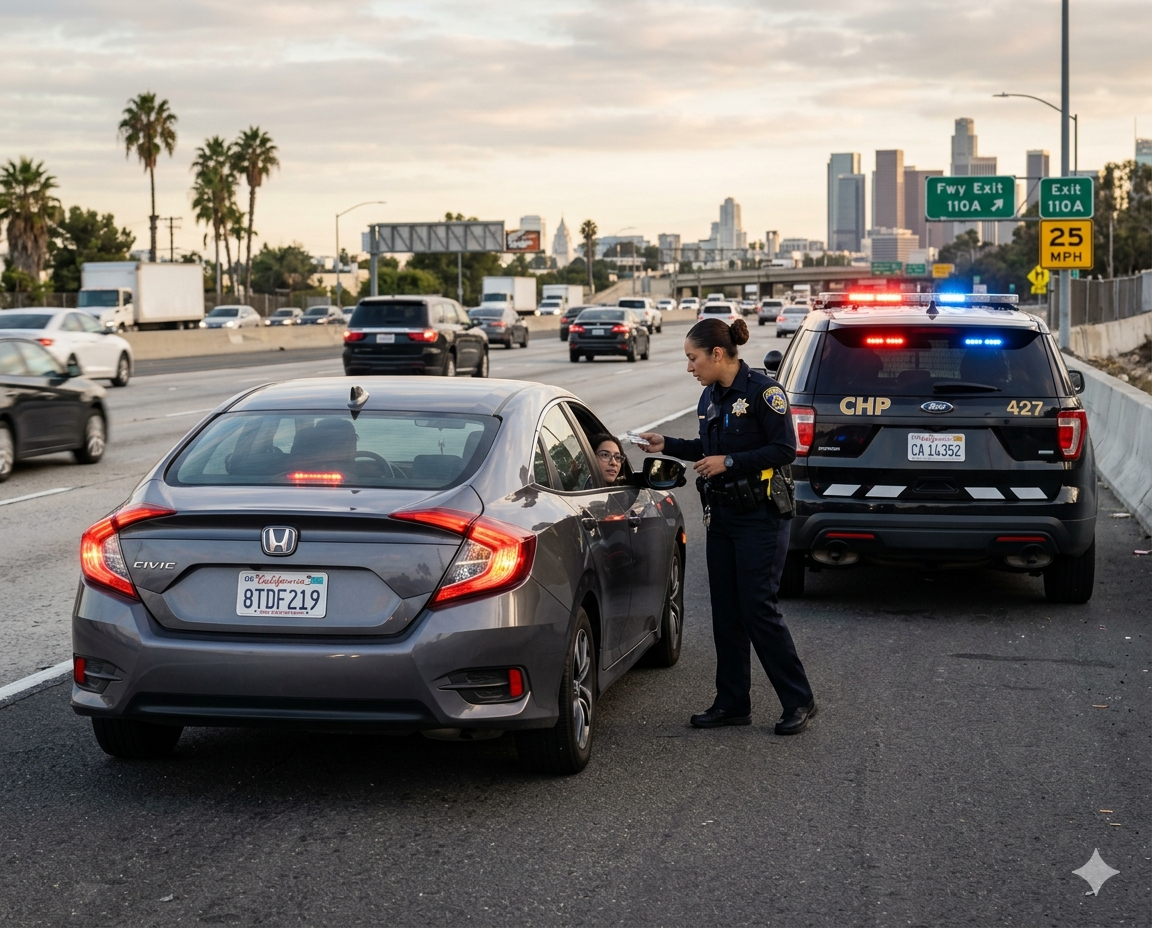
Police officers in California cannot legally stop, detain, or investigate someone based only on a guess or personal instinct. Under both federal and California law, officers must have a legally recognized reason before temporarily detaining a person. That legal standard is known as reasonable suspicion.
Reasonable suspicion is one of the most important concepts in criminal law because many criminal cases begin with a traffic stop, pedestrian stop, or brief police detention. Whether law enforcement had reasonable suspicion can directly impact whether evidence is allowed in court and whether prosecutors can continue pursuing criminal charges.
This article explains how reasonable suspicion works under California criminal law, what police officers must prove, examples of lawful and unlawful stops, and what rights individuals have during encounters with law enforcement.
What Is Reasonable Suspicion?
Reasonable suspicion is a legal standard that allows police officers to briefly stop or detain a person when they reasonably believe criminal activity may be occurring, has occurred, or is about to occur.
Under California law, reasonable suspicion must be based on specific and objective facts rather than assumptions, stereotypes, or unsupported suspicions. Officers must be able to clearly explain what observations or circumstances caused them to suspect criminal conduct.
Reasonable suspicion commonly arises during:
- Traffic stops
- DUI investigations
- Drug investigations
- Weapons investigations
- Pedestrian stops
- Investigative detentions
- Probation or parole compliance checks
A police officer’s “hunch” alone is not enough. Courts require objective facts that justify the detention.
Constitutional Protection Against Unlawful Stops
The concept of reasonable suspicion comes from the Fourth Amendment to the United States Constitution, which protects individuals against unreasonable searches and seizures.
Under constitutional law, police officers are permitted to briefly detain someone for investigative purposes if they have reasonable suspicion supported by articulable facts.
California courts strictly examine whether officers acted lawfully during stops and detentions. If police violate constitutional protections, evidence obtained during the stop may be excluded from court.
This legal safeguard is important because it helps prevent arbitrary police conduct and protects individual rights.
Reasonable Suspicion vs. Probable Cause
Many people mistakenly believe reasonable suspicion and probable cause mean the same thing. However, they are different legal standards.
Reasonable Suspicion
Reasonable suspicion is the lower standard. It allows police to temporarily stop or investigate someone when criminal activity is reasonably suspected.
Probable Cause
Probable cause is a higher legal standard required for arrests, search warrants, and many vehicle searches. It means there is enough evidence for a reasonable person to believe a crime likely occurred.
In simple terms:
- Reasonable suspicion allows a temporary detention
- Probable cause allows an arrest or more extensive search
An officer may legally stop someone based on reasonable suspicion but still lack probable cause to make an arrest.
What Can Create Reasonable Suspicion in California?
California courts examine the “totality of the circumstances” when determining whether reasonable suspicion existed. Officers are allowed to consider multiple facts together rather than relying on one isolated detail.
Some common factors that may contribute to reasonable suspicion include:
Suspicious Conduct
Police may observe behavior that appears connected to criminal activity, such as:
- Attempting to conceal objects
- Looking into parked vehicles repeatedly
- Fleeing when officers approach
- Engaging in hand-to-hand exchanges associated with drug activity
- Acting as a lookout during suspicious activity
Traffic Violations
Even minor traffic violations may justify a lawful stop, including:
- Speeding
- Running a stop sign
- Illegal turns
- Broken taillights
- Expired registration
- Unsafe lane changes
Matching a Suspect Description
Police may stop a person who closely matches a detailed description connected to a recent crime investigation.
Reliable Witness Information
Reasonable suspicion may arise from information provided by victims, witnesses, or reliable informants.
Signs of Impaired Driving
During DUI investigations, officers may rely on observations such as:
- Swerving
- Drifting between lanes
- Driving without headlights at night
- Sudden braking
- Extremely slow driving
Presence in Certain Circumstances
While being present in a high-crime area alone is not enough, courts may consider location as one factor among many surrounding circumstances.
What Does NOT Create Reasonable Suspicion?
Police officers cannot lawfully stop someone based solely on:
- Race or ethnicity
- Appearance alone
- Nervousness by itself
- Personal assumptions
- A vague hunch
- Refusal to answer questions
- Lawful exercise of constitutional rights
For example, merely walking away from police or declining consent to a search does not automatically create reasonable suspicion.
California courts carefully review whether police relied on objective evidence rather than unsupported assumptions or profiling.
Traffic Stops and California Criminal Cases
Traffic stops are among the most common situations involving reasonable suspicion.
Police officers may legally stop a vehicle if they reasonably suspect:
- A traffic violation occurred
- The driver is under the influence
- The vehicle is connected to criminal activity
- The driver violated California Vehicle Code provisions
Once a vehicle is stopped, officers may:
- Request identification
- Ask basic investigative questions
- Check for outstanding warrants
- Observe signs of impairment or criminal activity
However, officers generally cannot prolong a traffic stop beyond its original purpose unless additional facts create new reasonable suspicion.
For example, stopping a driver for speeding does not automatically allow officers to conduct an unrelated criminal investigation without further justification.
DUI Stops and Reasonable Suspicion
Reasonable suspicion plays a major role in California DUI cases.
Before police can investigate a driver for DUI, they usually must have a lawful reason for the initial stop.
Examples of driving behavior that may create reasonable suspicion include:
- Weaving within lanes
- Driving erratically
- Ignoring traffic signals
- Nearly causing collisions
- Driving significantly below the speed limit
- Failing to maintain lane position
After initiating the stop, officers may continue investigating if they observe signs of intoxication such as:
- Slurred speech
- Bloodshot eyes
- Odor of alcohol
- Delayed responses
- Open containers inside the vehicle
If the initial stop was unlawful, a criminal defense attorney may challenge the legality of the detention and seek suppression of evidence gathered afterward.
Can Police Frisk Someone During a Stop?
In some situations, police officers may conduct a limited pat-down search during a detention.
However, officers must reasonably believe the individual may be armed and dangerous before conducting a frisk.
Examples that may justify a frisk include:
- Visible bulges resembling weapons
- Threatening movements
- Reports involving violent crimes
- Statements suggesting possession of a weapon
A frisk is not the same as a full search. It is limited to checking for weapons to ensure officer safety.
Police cannot automatically frisk every person they stop.
How California Courts Evaluate Reasonable Suspicion
Judges examine reasonable suspicion issues on a case-by-case basis.
Courts often consider:
- What the officer personally observed
- Whether the observations were specific and objective
- The officer’s training and experience
- The timing and location of events
- Whether innocent explanations existed
- The overall circumstances surrounding the stop
California courts analyze the “totality of circumstances,” meaning all facts are reviewed together rather than separately.
Even if one fact appears innocent by itself, several combined factors may support reasonable suspicion.
What Happens If Police Lacked Reasonable Suspicion?
If police officers conducted an unlawful stop, a criminal defense attorney may file a motion asking the court to suppress evidence obtained during the detention.
This may lead to:
- Exclusion of evidence
- Suppression of statements
- Reduction of charges
- Dismissal of the case
Examples of evidence that may be challenged include:
- Drugs
- Weapons
- Confessions
- DUI evidence
- Stolen property
- Electronic evidence
When key evidence is suppressed, prosecutors may struggle to continue the case.
Because many criminal prosecutions begin with police detentions, reasonable suspicion issues can become a critical part of a defense strategy.
Common Examples of Reasonable Suspicion
Lawful Traffic Stop
An officer observes a driver weaving repeatedly between lanes late at night and nearly striking a curb.
The officer likely has reasonable suspicion to stop the vehicle and investigate possible DUI.
Investigative Detention
Police receive a report about a robbery suspect wearing a black hoodie and carrying a backpack near a shopping center. Minutes later, officers locate someone closely matching the description nearby.
That may justify a temporary detention for investigation.
Unlawful Stop
A person is walking through a neighborhood known for criminal activity but is not violating any laws or acting suspiciously.
Stopping the individual solely because of the neighborhood may violate constitutional protections.
Your Rights During a Police Stop in California
Even during a lawful stop, individuals still have constitutional rights.
You generally have the right to:
- Remain silent
- Decline consent to searches
- Ask whether you are free to leave
- Speak with an attorney
- Refuse to answer incriminating questions
During a lawful traffic stop, drivers are typically required to provide:
- Driver’s license
- Vehicle registration
- Proof of insurance
Remaining calm and avoiding physical resistance is important during any interaction with law enforcement.
Why Reasonable Suspicion Matters in Criminal Defense Cases
Reasonable suspicion often becomes a major issue in California criminal defense cases because an unlawful stop can weaken the prosecution’s entire case.
Defense attorneys frequently review:
- Police reports
- Body camera footage
- Dashcam recordings
- Witness statements
- Dispatch communications
- Officer testimony
Even small inconsistencies may help demonstrate that police lacked sufficient legal justification for the detention.
If constitutional violations occurred, courts may suppress the evidence obtained during the stop.
How a Criminal Defense Attorney Can Help
If you were stopped, searched, or arrested in California, an experienced criminal defense attorney can evaluate whether your constitutional rights were violated.
An attorney may:
- Investigate whether reasonable suspicion existed
- Challenge unlawful traffic stops
- File suppression motions
- Review police video footage
- Cross-examine law enforcement officers
- Seek dismissal or reduction of charges
Early legal representation can make a significant difference in the outcome of a criminal case.
Contact Southwest Legal Today
If you were stopped, searched, or arrested in California, it is important to understand your rights and legal options as soon as possible. Police officers must follow constitutional rules when conducting stops and investigations, and unlawful detentions may significantly impact a criminal case.
The criminal defense team at Southwest Legal aggressively protects the rights of individuals facing criminal charges throughout Southern California. Whether your case involves a traffic stop, DUI investigation, drug charges, weapons allegations, or other criminal offenses, experienced legal representation can help you challenge unlawful police conduct and protect your future.
Contact us today for a free consultation and learn how an experienced California criminal defense attorney can help defend your case.
Disclaimer: This article is for general informational purposes only and does not constitute legal advice or create an attorney-client relationship. No attorney-client relationship is formed unless and until the firm and client enter into an agreement for legal services. Laws may change, and legal outcomes depend on the specific facts of each case. Consult a qualified attorney for advice regarding your situation.