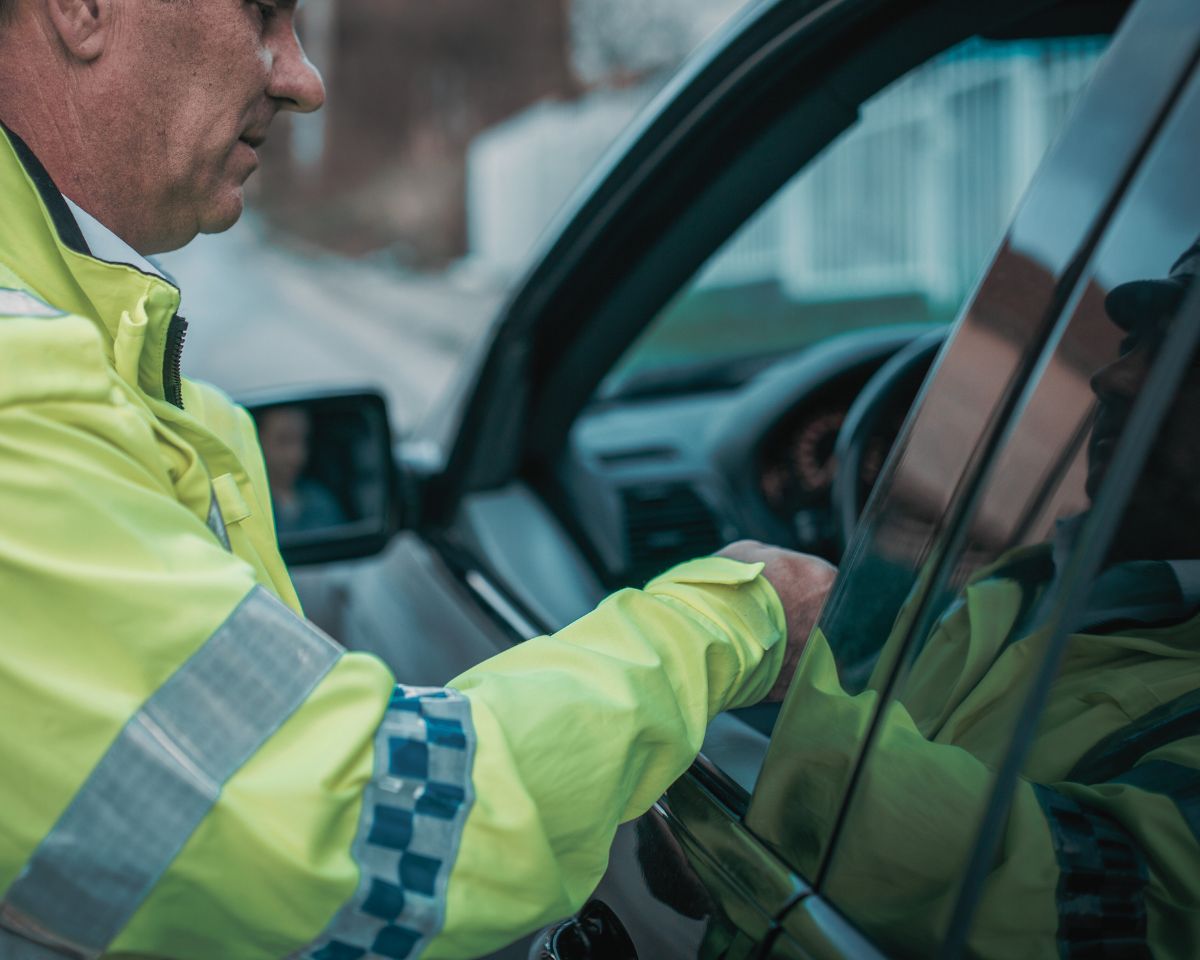
Many California drivers are surprised to learn how quickly a routine traffic stop can escalate into a DUI investigation. One moment, you are being pulled over for a minor traffic issue. The next, an officer may be asking questions about alcohol or drugs, requesting field sobriety tests, or reaching for a breath device.
Understanding when and how this shift occurs is critical. The law places clear limits on what police can do during a traffic stop, and those limits often play a central role in DUI defense cases.
This article explains how California law draws the line between a simple traffic stop and a DUI investigation, what officers must legally observe before expanding a stop, and what rights drivers have during each stage.
What Justifies a Traffic Stop in California
A traffic stop is considered a temporary detention under the Fourth Amendment. In California, police must have reasonable suspicion that a traffic violation or other lawful offense occurred before stopping a vehicle.
Reasonable suspicion is a low legal threshold, but it still requires an objective reason. Common justifications include speeding, failure to signal, running a red light, broken equipment, or other observed Vehicle Code violations.
Importantly, an officer does not need to suspect DUI in order to initiate a traffic stop. A stop based on a minor infraction can still be lawful even if impairment was not initially suspected.
Sobriety checkpoints are treated differently. At a properly conducted DUI checkpoint, officers may briefly stop drivers without individualized suspicion, provided constitutional guidelines are followed.
When a Traffic Stop Becomes a DUI Investigation
A traffic stop becomes a DUI investigation when an officer develops reasonable suspicion that the driver may be impaired by alcohol or drugs. This requires more than curiosity or a hunch. The officer must be able to point to specific, articulable facts suggesting impairment.
Common factors officers rely on include the smell of alcohol or marijuana, bloodshot or watery eyes, slurred or slow speech, delayed responses, coordination problems, or statements indicating recent alcohol or drug use. Visible open containers or drug paraphernalia may also contribute.
Once reasonable suspicion of impairment exists, the officer may lawfully expand the scope of the stop beyond the original traffic violation. At that point, questioning may shift toward alcohol or drug use, and the officer may request additional investigative steps.
Questioning During a DUI Investigation
During a DUI investigation, officers often ask questions such as where you are coming from, whether you have consumed alcohol, or how much you have had to drink.
Drivers should know that they are not legally required to answer investigative questions designed to gather evidence of impairment. You may politely decline to answer without being obstructive.
How a driver responds to questioning can later be used as evidence. Admissions of drinking, even small amounts, are frequently cited in police reports to justify further investigation or arrest.
Field Sobriety Tests and Their Role
Field sobriety tests are commonly used during DUI investigations to assess coordination, balance, and divided attention. These tests were developed as investigative tools, not scientific measurements, and performance can be affected by fatigue, medical conditions, age, footwear, or nervousness.
In California, standard field sobriety tests are voluntary for most drivers. You generally have the legal right to decline them without immediate criminal penalties. However, officers may still proceed with an arrest if they believe sufficient evidence of impairment exists.
Because these tests are subjective and often interpreted in the light most favorable to the prosecution, they are frequently challenged in DUI cases.
Preliminary Breath Tests at the Roadside
Officers may also request a preliminary alcohol screening breath test at the roadside. This handheld device is different from post-arrest chemical tests.
For most adult drivers who are not on DUI probation, the roadside breath test is optional before arrest. Refusing it does not carry the same consequences as refusing a chemical test after arrest.
Drivers under 21 or those on DUI probation are subject to different rules and may be required to submit to roadside testing.
From Investigation to Arrest
To make a DUI arrest, an officer must have probable cause. This is a higher legal standard than reasonable suspicion and requires facts that would lead a reasonable person to believe the driver was operating a vehicle while impaired.
Probable cause is based on the totality of circumstances, which may include driving behavior, physical observations, statements, field sobriety test performance, and breath test results if obtained.
Once an arrest is made, California’s implied consent law applies. At that stage, drivers are generally required to submit to a chemical test of breath or blood. Refusing a post-arrest chemical test can result in license suspension and other penalties, regardless of whether a DUI conviction ultimately occurs.
Why the Legal Distinction Matters
The distinction between a traffic stop, a DUI investigation, and an arrest is more than technical. Each stage requires a different legal justification. If police expand a stop without proper reasonable suspicion or make an arrest without probable cause, the evidence gathered may be challenged.
In DUI defense cases, attorneys often examine whether officers lawfully escalated the stop, whether the investigation was supported by facts, and whether constitutional rights were respected. Unlawful stops or investigations can lead to suppressed evidence and, in some cases, dismissal of charges.
Your Rights During a DUI Investigation
Drivers in California have important rights during traffic stops and DUI investigations. You have the right to remain silent and the right not to incriminate yourself. You generally have the right to decline field sobriety tests and preliminary breath tests before arrest. After arrest, you have the right to consult with an attorney and to challenge the legality of police conduct.
Exercising your rights politely and calmly can protect you without escalating the situation.
Final Thoughts
A traffic stop does not automatically mean a DUI investigation is justified. Police must meet specific legal standards at each stage, and those standards exist to protect drivers from unlawful searches, detentions, and arrests.
If you have been stopped, investigated, or arrested for DUI in California, the details matter. How the stop began, what the officer observed, and whether the investigation was legally justified can all have a major impact on your case.
Speak With Southwest Legal Today
If you are facing a DUI charge or believe your traffic stop or investigation crossed legal boundaries, Southwest Legal is here to help. Our experienced DUI defense team understands California DUI law and knows how to challenge unlawful stops, improper investigations, and weak evidence. Do not assume a DUI arrest means a conviction. Contact us today for a confidential consultation and learn how we can protect your rights and fight for the best possible outcome in your case.