


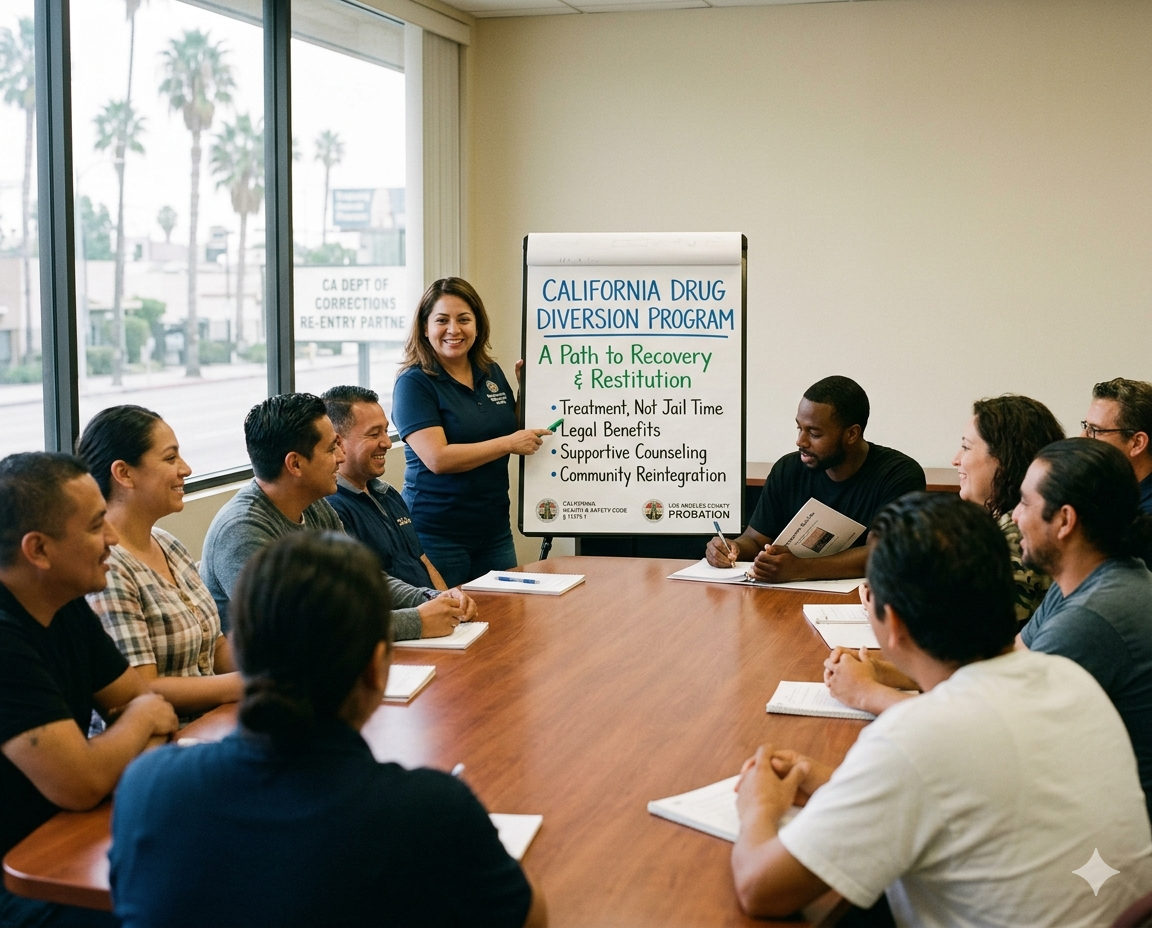
When someone is charged with a drug-related offense in California, one of the most important legal alternatives that may be available is a drug diversion program. These programs are designed to give eligible individuals the opportunity to avoid jail time and, in many cases, prevent a criminal conviction altogether.
Instead of focusing solely on punishment, California’s diversion system emphasizes treatment, rehabilitation, and recovery. For many individuals facing non-violent drug charges, diversion can provide a meaningful second chance and a path forward without the long-term consequences of a criminal record.
This article explains what drug diversion programs are, how they work, who may qualify, and the benefits they offer.
What Is a Drug Diversion Program in California?
A drug diversion program is a court-approved alternative to traditional prosecution for certain drug-related offenses. Rather than proceeding through the criminal justice system toward conviction and sentencing, the court allows an eligible defendant to complete a structured treatment or education program.
If the individual successfully completes the program, the court typically dismisses the charges. In most cases, this means the person avoids a criminal conviction entirely.
Drug diversion is generally intended for non-violent, low-level drug offenses, such as:
- Simple possession of controlled substances
- Possession of drug paraphernalia
- Being under the influence of drugs
- Certain minor prescription drug violations
- Some marijuana-related offenses
The goal is to address the underlying issue of substance use rather than impose incarceration as the primary solution.
How Drug Diversion Programs Work in California
Although procedures may vary slightly depending on the county and court, most drug diversion programs follow a similar structure.
1. Arrest and Filing of Charges
A person is arrested for a qualifying drug offense, and the district attorney files criminal charges. At this stage, the case may be reviewed for diversion eligibility.
2. Determination of Eligibility
The court evaluates whether the defendant qualifies for diversion. This evaluation considers the type of offense, criminal history, and other case-specific factors. A criminal defense attorney plays a critical role in advocating for eligibility.
3. Court Approval and Entry Into Program
If approved, the court allows the defendant to enter a diversion program instead of continuing with prosecution. In some cases, the defendant may need to agree to certain conditions or formally enter a deferred process.
4. Completion of Program Requirements
Once accepted, the defendant must comply with court-ordered requirements, which often include:
- Drug and alcohol education courses
- Substance abuse counseling or treatment programs
- Regular drug testing
- Court appearances or supervision check-ins
- Community service (in some cases)
The length of these programs typically ranges from several months to two years, depending on the case.
5. Successful Completion and Case Dismissal
If all requirements are completed successfully, the court dismisses the charges. This can prevent a conviction from appearing on the individual’s criminal record.
If the program is not completed successfully, the case returns to the traditional criminal court process.
Types of Drug Diversion Programs in California
California offers several forms of diversion depending on the offense and the defendant’s circumstances.
Pretrial Drug Diversion
This is one of the most common forms of diversion and is often available for first-time drug possession offenses. The focus is on rehabilitation rather than punishment. If the individual completes the program, the case is dismissed.
Deferred Judgment Programs
In some cases, a defendant may enter a plea that is delayed while they complete treatment. If successful, the plea is withdrawn and the case is dismissed. If unsuccessful, the court proceeds to sentencing.
Mental Health-Related Diversion
Some individuals may qualify for diversion if their drug-related offense is linked to a diagnosed mental health condition. These programs focus on treatment and stabilization.
Court-Ordered Treatment Programs
In certain situations, courts may require participation in structured rehabilitation programs instead of incarceration, especially for non-violent offenses.
Who Qualifies for Drug Diversion in California?
Eligibility for drug diversion is not automatic. Courts carefully review each case to determine whether diversion is appropriate.
In general, a person may qualify if:
 The offense is non-violent
Violent crimes or threats of violence typically disqualify a defendant.
The charge involves personal drug use
Most diversion programs are intended for simple possession or personal use cases, not sales or trafficking.
There is no intent to distribute drugs
Charges involving intent to sell or distribute controlled substances are usually excluded.
The defendant has limited criminal history
Many programs are designed for first-time offenders or individuals with minimal prior convictions.
The defendant has not recently failed diversion
Prior unsuccessful participation in diversion programs may impact eligibility.
Ultimately, eligibility depends on both legal criteria and judicial discretion, meaning each case is evaluated individually.
Benefits of a Drug Diversion Program
Drug diversion programs provide significant advantages for eligible individuals, both legally and personally.
1. Avoiding a Criminal Conviction
One of the most important benefits is the possibility of avoiding a permanent criminal record. A dismissal after completion can protect future opportunities, including employment, housing, and professional licensing.
2. Focus on Treatment Instead of Jail
Instead of incarceration, individuals participate in treatment programs that address substance use issues. This may include counseling, rehabilitation, and education.
3. Reduced Long-Term Consequences
A criminal conviction can have long-lasting effects. Diversion helps reduce or eliminate these consequences by resolving the case without a conviction.
4. Structured Support System
Participants receive structured supervision and support, which can help reduce relapse and improve long-term recovery outcomes.
5. Opportunity for a Fresh Start
For many individuals, diversion provides a meaningful opportunity to rebuild their lives without the burden of a criminal record.
What Happens If You Do Not Complete Diversion?
Failure to comply with program requirements can have serious consequences. If a participant does not successfully complete the program, the court may:
- Terminate diversion
- Reopen the criminal case
- Proceed with prosecution
- Impose penalties, including possible jail time
Common reasons for failure include missing treatment sessions, failing drug tests, or committing new offenses during the program.
Why Legal Representation Is Important
Navigating drug diversion eligibility is not always straightforward. Courts have discretion, and prosecutors may oppose diversion in certain cases. A knowledgeable criminal defense attorney can:
- Evaluate eligibility early in the case
- Advocate for diversion in court
- Negotiate with prosecutors for program entry
- Help ensure compliance with court requirements
- Protect the client’s rights throughout the process
Having strong legal representation can significantly increase the likelihood of securing a favorable outcome.
Final Thoughts
A drug diversion program in California offers an important alternative to traditional criminal prosecution for eligible individuals facing non-violent drug charges. Instead of focusing on punishment, these programs prioritize rehabilitation, recovery, and long-term stability.
For those who qualify, diversion can provide:
- Avoidance of a criminal conviction
- Reduced or eliminated jail exposure
- Access to treatment and support services
- A real opportunity for a fresh start
However, every case is unique, and eligibility is never guaranteed. Understanding your legal options early in the process is critical.
Contact Southwest Legal
If you or someone you love is facing drug-related charges in California, it is important to act quickly. Eligibility for diversion programs depends on the details of your case, and early legal intervention can make a significant difference in the outcome.
At Southwest Legal, our criminal defense team is committed to helping clients explore every possible legal option, including drug diversion programs. We work to protect your rights, reduce the impact of criminal charges, and guide you toward the best possible resolution for your case. Contact us today for a free consultation and learn how we can help you move forward.
Disclaimer: This article is for general informational purposes only and does not constitute legal advice or create an attorney-client relationship. No attorney-client relationship is formed unless and until the firm and client enter into an agreement for legal services. Laws may change, and legal outcomes depend on the specific facts of each case. Consult a qualified attorney for advice regarding your situation.