


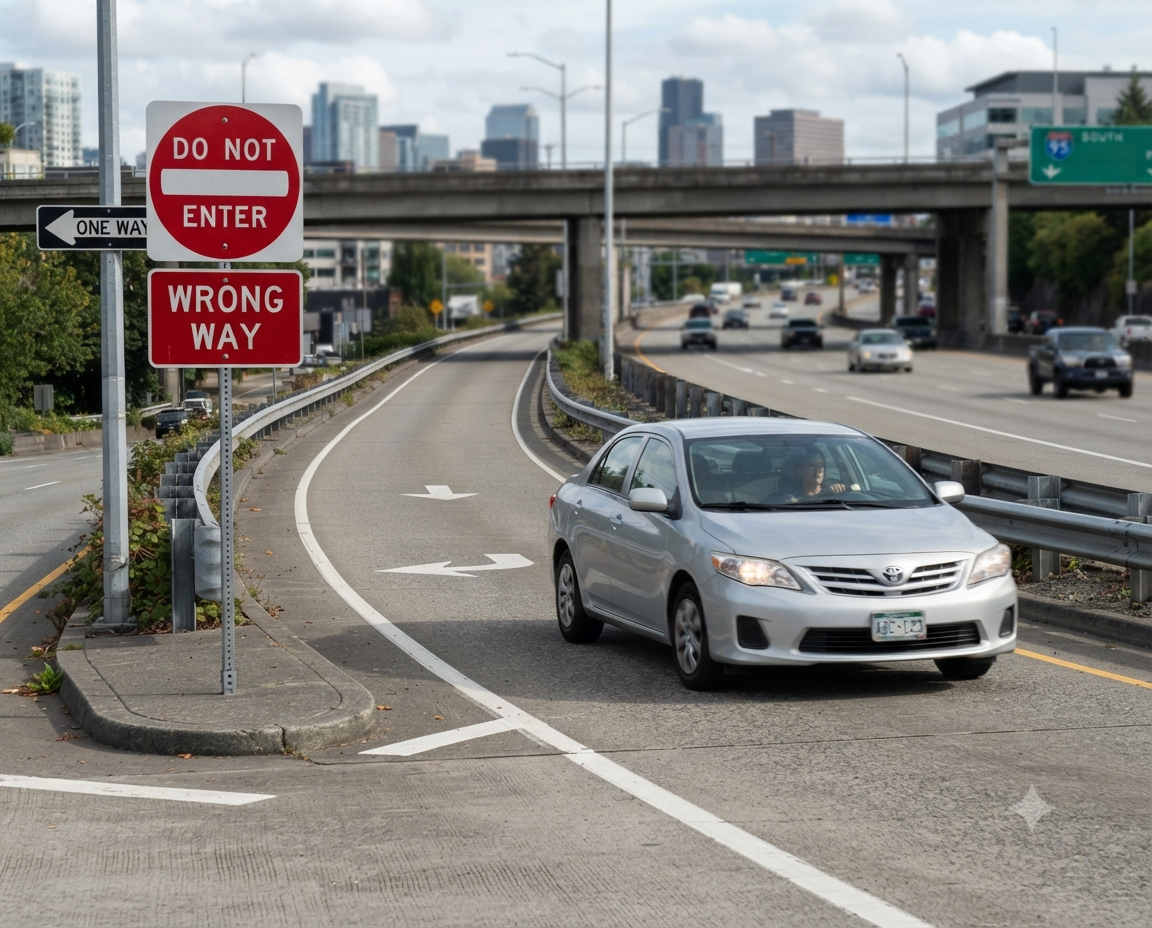
A wrong-way driving accusation in California can be a serious matter. While some drivers intentionally disregard traffic laws, many wrong-way driving incidents happen because of confusion, unfamiliar roads, poor visibility, mistakes, or other circumstances that do not necessarily reflect reckless behavior.
A traffic citation or criminal allegation does not automatically mean a driver is guilty. California law requires the government to prove that a violation occurred, and the facts surrounding each incident matter. A driver’s actions, road conditions, available evidence, and the circumstances leading to the alleged violation can all affect the outcome of a case.
If you are facing a wrong-way driving ticket or related charges, understanding California traffic laws, possible penalties, and available defenses can help you make informed decisions about your case.
What Is Wrong-Way Driving in California?
Wrong-way driving occurs when a driver operates a vehicle in a direction that conflicts with the lawful flow of traffic. This commonly involves traveling on a roadway where vehicles are only permitted to move in the opposite direction.
Examples of alleged wrong-way driving include:
- Entering a freeway through an exit ramp
- Driving against traffic on a divided highway
- Traveling the wrong direction on a one-way street
- Ignoring “Do Not Enter” or “Wrong Way” signs
- Turning into a lane designated for opposing traffic
For example, a driver unfamiliar with a freeway interchange may accidentally enter through an exit ramp late at night. If the driver immediately recognizes the mistake and safely corrects the situation, the circumstances may be viewed differently than a driver who knowingly continues traveling against traffic at high speeds.
The details of the incident are important when determining whether a driver committed a violation and what consequences may apply.
Why Do Drivers Get Accused of Wrong-Way Driving?
Wrong-way driving allegations can arise from many different situations. While impairment and reckless behavior are common concerns, not every wrong-way driving case involves intentional misconduct.
Common causes and circumstances include:
Driver Confusion
Complex intersections, unfamiliar roads, freeway entrances, and confusing signage can cause drivers to make mistakes.
A driver may unintentionally enter the wrong roadway direction because of:
- Poor lighting
- Construction changes
- Confusing road layouts
- GPS errors
- Unfamiliar locations
Inadequate or Unclear Road Signs
Traffic signs play an important role in directing drivers. If signs are missing, blocked, damaged, or difficult to see, a driver may have a stronger argument that the roadway conditions contributed to the incident.
Distracted Driving
Looking at navigation systems, phones, or other distractions can contribute to traffic mistakes. However, the specific facts determine whether distraction actually caused the alleged violation.
Alcohol or Drug-Related Allegations
Some wrong-way driving cases involve DUI investigations. Prosecutors may view traveling against traffic as evidence supporting impairment, but the existence of a wrong-way allegation alone does not prove a driver was under the influence.
Mistakes Made During Emergency Situations
A driver responding to an emergency, avoiding a hazard, or attempting to prevent a collision may have circumstances that should be considered.
California Laws That May Apply to Wrong-Way Driving
California does not have a single offense specifically called “wrong-way driving.” Instead, law enforcement may issue citations or pursue charges under different laws depending on what occurred.
Violations Involving Traffic Direction and Roadway Rules
Drivers are required to follow posted traffic controls, lane markings, and roadway restrictions. A wrong-way incident may result in a traffic citation if an officer believes the driver failed to follow these requirements.
Failure to Obey Traffic Signs
If a driver allegedly ignores signs such as “Do Not Enter” or one-way street indicators, the driver may face a traffic violation.
However, important questions may include:
- Was the sign visible?
- Was the sign properly placed?
- Did the driver actually see the sign?
- Were road conditions confusing?
Reckless Driving Allegations
In more serious cases, prosecutors may claim that wrong-way driving amounted to reckless driving.
Reckless driving generally involves operating a vehicle with a willful disregard for the safety of people or property. Not every wrong-way driving mistake qualifies as reckless driving.
For example, a driver who accidentally enters the wrong roadway and immediately attempts to correct the mistake may have a different legal situation than someone who intentionally drives against traffic for an extended distance.
DUI-Related Charges
When authorities believe alcohol or drugs contributed to wrong-way driving, a driver may face DUI charges in addition to traffic violations.
A DUI case involves separate legal issues, including:
- Whether there was probable cause for the traffic stop
- Whether field sobriety tests were properly conducted
- Whether chemical testing was reliable
- Whether the prosecution can prove impairment beyond a reasonable doubt
Penalties for Wrong-Way Driving in California
The consequences of a wrong-way driving case depend on the specific charge and circumstances involved.
Possible consequences may include:
Fines and Court Costs
Traffic violations may result in financial penalties. The total amount can vary depending on the specific violation, additional fees, and court requirements.
Points on Your Driving Record
A moving violation may add points to a driver’s DMV record. Accumulating points can result in increased insurance rates and potential DMV consequences.
Higher Insurance Premiums
Insurance companies may review traffic convictions when determining future rates. A conviction involving reckless driving or DUI may have more significant insurance consequences.
License Suspension or Restrictions
Certain offenses, especially those involving DUI or repeated violations, may result in license suspension or other driving restrictions.
Criminal Consequences
If wrong-way driving leads to criminal charges such as reckless driving or DUI, the consequences may include:
- Probation
- Mandatory classes
- Fines
- Criminal record implications
- Possible jail consequences in certain situations
The exact outcome depends on the charge, evidence, and individual circumstances.
Possible Defenses Against a Wrong-Way Driving Charge
Every case is different, but drivers accused of wrong-way driving may have several possible defenses depending on the facts.
The Driver Made an Honest Mistake
A brief navigation mistake does not always mean a driver acted recklessly or intentionally violated the law.
Factors such as immediate correction, road design, and visibility may be important.
Lack of Clear Signage
If traffic signs were missing, hidden, damaged, or confusing, that information may be relevant when challenging the allegation.
Insufficient Evidence
The prosecution must prove the violation. Evidence may include officer observations, video footage, witness statements, or other documentation.
If the evidence is incomplete or unreliable, a defense attorney may challenge whether the charge can be proven.
Incorrect Officer Interpretation
Traffic situations can happen quickly. In some cases, an officer’s interpretation of what occurred may not include all relevant circumstances.
A traffic defense attorney may review whether the citation was properly issued and whether the evidence supports the allegation.
Challenging Related DUI Allegations
If wrong-way driving is connected to a DUI investigation, additional defenses may involve:
- Questioning the legality of the traffic stop
- Challenging field sobriety testing procedures
- Reviewing breath or blood testing accuracy
- Examining whether police followed required procedures
What Should You Do After Receiving a Wrong-Way Driving Ticket?
If you receive a citation or are contacted about a wrong-way driving allegation, the steps you take afterward can affect your case.
Do Not Automatically Plead Guilty
Paying a ticket may resolve the matter, but it may also result in consequences such as points on your record or increased insurance costs.
Understanding your options before accepting a conviction can be important.
Review the Evidence
A traffic defense attorney can examine available evidence, including:
- The citation
- Police reports
- Video footage
- Witness statements
- Roadway conditions
- Other documentation
Avoid Making Statements That Could Harm Your Defense
Statements made to law enforcement, insurance companies, or others may become relevant later. It is generally wise to understand your legal position before providing detailed explanations about the incident.
Why Hire a California Traffic Defense Lawyer for a Wrong-Way Driving Case?
Wrong-way driving cases can involve more than simply paying a traffic ticket. Depending on the circumstances, a conviction may affect your driving record, insurance costs, professional opportunities, and future legal matters.
A California traffic defense lawyer can help by:
- Reviewing the facts of your case
- Identifying weaknesses in the evidence
- Explaining possible outcomes
- Challenging improper procedures
- Negotiating with prosecutors when appropriate
- Representing your interests in court
Having legal guidance can help ensure that your side of the story is properly considered.
Frequently Asked Questions
Is wrong-way driving automatically a crime in California?
No. A wrong-way driving incident may result in a traffic citation or, depending on the circumstances, more serious charges. The outcome depends on factors such as impairment, alleged recklessness, and whether anyone was injured.
Can a wrong-way driving ticket be dismissed?
In some cases, a ticket may be reduced or dismissed depending on the evidence, legal issues, and circumstances surrounding the stop. Each case must be evaluated individually.
Can a police officer arrest someone for wrong-way driving?
An arrest may be possible if the circumstances support criminal charges, such as DUI or reckless driving. A simple traffic violation does not always result in arrest.
Does wrong-way driving automatically prove DUI?
No. Wrong-way driving can be a factor considered during a DUI investigation, but it does not automatically prove that a driver was impaired.
Will a wrong-way driving conviction affect my insurance?
It may. Traffic convictions can affect insurance rates, especially when they involve serious violations such as reckless driving or DUI.
Should I hire a lawyer for a wrong-way driving ticket?
The decision depends on the circumstances. If the violation could affect your driving record, insurance, license, or involve criminal allegations, consulting a traffic defense attorney can help you understand your options.
Contact Southwest Legal
A wrong-way driving allegation can have consequences beyond the immediate ticket. A conviction may affect your driving record, insurance costs, and future opportunities.
Southwest Legal helps California drivers defend against traffic violations and related charges. If you have been cited for wrong-way driving or are facing a related DUI or reckless driving allegation, an experienced traffic defense attorney can review your case, explain your options, and help protect your rights.
Do not assume that a citation means you have no options. Contact us today for a free consultation to discuss your case and learn how experienced legal representation may help you address your citation and move forward.
Disclaimer: This article is for general informational purposes only and does not constitute legal advice or create an attorney-client relationship. No attorney-client relationship is formed unless and until the firm and client enter into an agreement for legal services. Laws may change, and legal outcomes depend on the specific facts of each case. Consult a qualified attorney for advice regarding your situation.