


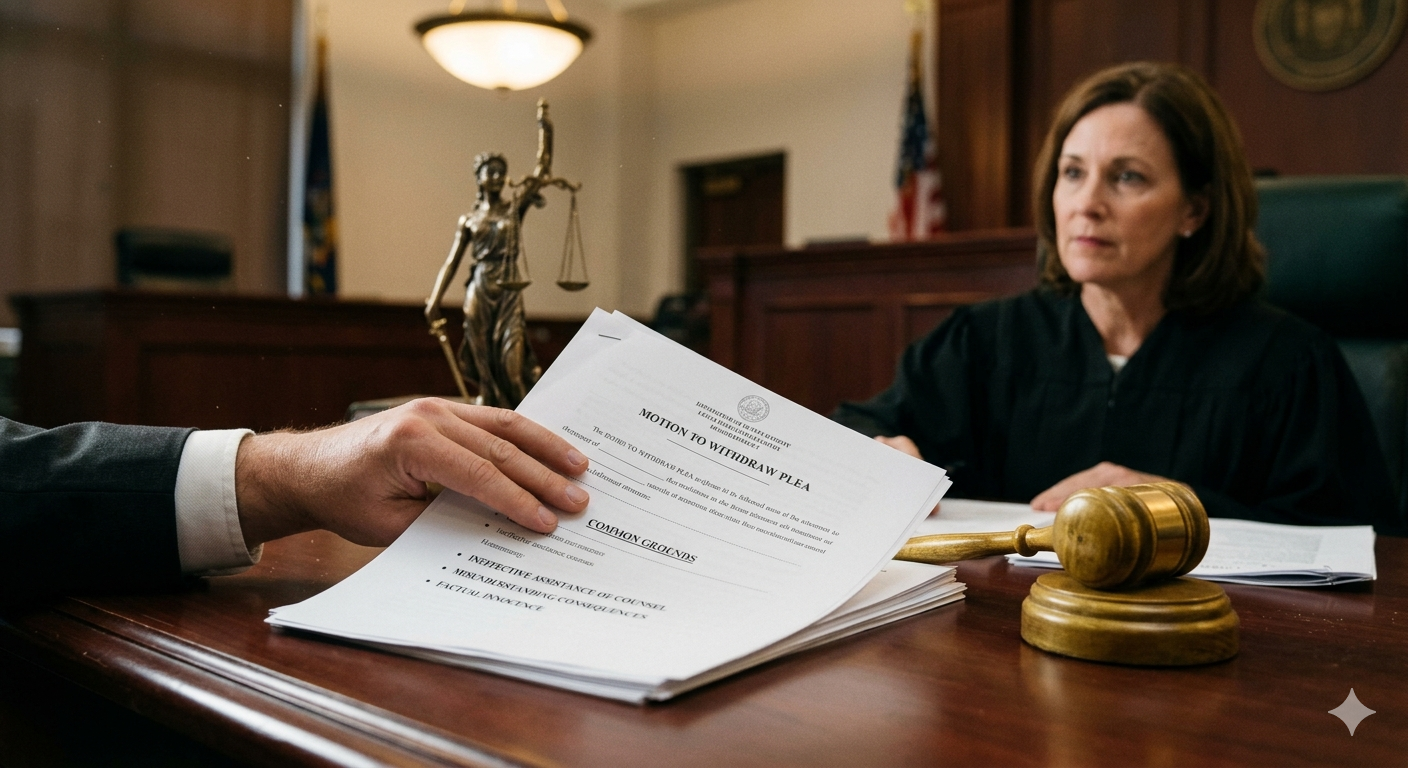
Understanding when a motion to withdraw a plea can be filed is important for anyone involved in a criminal case—whether as a defendant, family member, or legal researcher. A guilty plea is not always permanent, but courts treat requests to undo it very seriously. Once a plea is entered, the legal system assumes it is final, so withdrawing it requires meeting strict standards and following specific timing rules.
This guide explains what you need to know: when you can file, what legal standards apply, what courts consider, and how timing can determine whether your request is granted or denied.
What Is a Motion to Withdraw a Plea?
A motion to withdraw a plea is a formal request asking the court to allow a defendant to take back a previously entered plea of guilty or no contest and return the case to its earlier stage, usually pre-trial.
In most criminal cases, defendants enter one of three pleas:
- Guilty
- Not guilty
- No contest
Once a guilty or no contest plea is entered and accepted by the court, it is treated as a conviction. A motion to withdraw seeks to reverse that step.
However, courts do not allow withdrawal just because a defendant has changed their mind. There must usually be a legally valid reason.
When Can You File a Motion to Withdraw a Plea?
The short answer is:
A motion to withdraw a plea can typically be filed either before sentencing or after sentencing, but the legal standard becomes much stricter after sentencing.
The timing of the motion is the most important factor in determining whether it will succeed.
Withdrawal Before Sentencing (More Lenient Standard)
General Rule
Most jurisdictions allow a defendant to withdraw a plea before sentencing if they can show a fair and just reason.
This is the most favorable time to file a motion.
Why Courts Are More Flexible Before Sentencing
Before sentencing, the court has not yet imposed punishment. Because of this:
- The case is still in progress
- No final judgment has been entered
- The justice system prefers trials over potentially invalid pleas
Courts generally recognize that mistakes can happen during plea bargaining.
Common Fair and Just Reasons
Courts may allow withdrawal if the defendant shows:
- They did not fully understand the plea
- The plea was not voluntary
- There was confusion about consequences
- Ineffective assistance of counsel
- New evidence has emerged
- The defendant was misinformed about sentencing
- Coercion or pressure influenced the plea
Even before sentencing, courts will not grant withdrawal automatically. The defendant must present credible evidence.
Withdrawal After Sentencing (Much Harder Standard)
General Rule
Once sentencing occurs, a plea is considered final. At this stage, a defendant can usually withdraw a plea only if they can prove:
- Manifest injustice, or
- A serious constitutional or procedural violation
This is a much higher legal standard.
Why the Standard Becomes Stricter
After sentencing:
- The court has entered a final judgment
- The prosecution and victims may have relied on the outcome
- Judicial efficiency and finality become priorities
Because of this, courts strongly presume the plea is valid.
Examples of Manifest Injustice
Courts may allow withdrawal after sentencing if:
- The plea was not voluntary or was coerced
- The defendant was denied effective counsel
- The court failed to follow required plea procedures
- The defendant did not understand the rights being waived
- There was fraud or misconduct by the prosecution
- The plea agreement was fundamentally broken
Simple regret or change of mind is not enough.
Withdrawal During the Plea Colloquy (Immediate Withdrawal)
There is a third opportunity:
Before the Court Accepts the Plea
If a defendant changes their mind before the judge formally accepts the plea, they can usually withdraw it freely.
At this stage:
- No conviction exists yet
- The plea is not legally binding
- Courts generally allow withdrawal without question
However, once the judge accepts the plea in open court, stricter rules apply.
Timing Rules and Deadlines
The exact deadline for filing a motion to withdraw a plea depends on the jurisdiction, but common rules include:
- Before sentencing: motion can be filed any time before the judge issues the sentence
- After sentencing: often must be filed within a limited period or through post-conviction procedures
- Post-appeal stage: may require habeas corpus or other collateral relief
Missing deadlines can permanently block the request.
Factors Courts Consider When Reviewing the Motion
Judges evaluate several key factors:
1. Voluntariness of the Plea
Was the plea made freely without threats or pressure?
2. Understanding of Rights
Did the defendant understand:
- The charges
- The penalties
- The rights being waived
3. Competence of Counsel
Did the defense attorney provide proper legal guidance?
4. Strength of Evidence
Would the prosecution still have a strong case if the plea were withdrawn?
5. Delay in Filing
Did the defendant wait too long to request withdrawal?
6. Prejudice to the Prosecution
Would undoing the plea harm the prosecution’s case, such as lost witnesses or evidence?
7. Good Faith of the Defendant
Is the request genuine or just a delay tactic?
Common Reasons Defendants Try to Withdraw a Plea
Frequent grounds include:
Mistake or Misunderstanding
The defendant misunderstood the plea deal or sentencing expectations.
Ineffective Assistance of Counsel
The attorney failed to explain consequences or pressured the defendant.
Coercion or Pressure
The defendant felt forced due to threats, pressure, or circumstances.
New Evidence
Evidence appears that may strongly support innocence.
Immigration or Collateral Consequences
The defendant was not informed about consequences like deportation or loss of rights.
What Courts Usually Do Not Accept
Courts generally reject motions based on:
- “I changed my mind”
- “I think I’ll get a better outcome at trial”
- Fear of sentencing
- Buyer’s remorse
- Strategic delay
Finality of judgments is important, so emotional regret alone is not enough.
Procedure for Filing a Motion to Withdraw a Plea
General steps include:
- Draft a written motion explaining legal grounds
- File the motion with the court handling the case
- Serve the prosecution with notice
- Attend a hearing if scheduled
- Receive the judge’s decision
Some cases may require an evidentiary hearing where testimony is presented.
Burden of Proof
The defendant has the burden of proof. This means:
- The defendant must show valid legal reasons
- The court does not assume the plea is invalid
- Evidence is often required beyond personal statements
Consequences of Granting or Denying the Motion
If Granted:
- The plea is withdrawn
- The case returns to pre-plea status
- Trial or new negotiations may occur
If Denied:
- The conviction remains
- Sentencing or punishment continues
- The defendant may consider appeal or post-conviction relief
Appeals vs Motion to Withdraw a Plea
Important distinction:
- Motion to withdraw: filed in trial court
- Appeal: filed in higher court after conviction
A motion is usually the first step before an appeal, but not all issues can be raised through a motion.
Example
A defendant pleads guilty expecting a lighter sentence based on discussions with their lawyer. At sentencing, the judge imposes a much harsher sentence due to prior convictions the defendant did not understand would be considered.
- Before sentencing: the defendant may argue misunderstanding
- After sentencing: the defendant must prove deeper issues such as ineffective counsel or a constitutional violation
Why Timing Matters So Much
The justice system balances two priorities:
- Fairness to the defendant
- Finality of judgments
Before sentencing, fairness is emphasized. After sentencing, finality becomes more important. This is why legal standards become stricter over time.
Frequently Asked Questions
Can a guilty plea be withdrawn anytime?
No. It depends on timing and legal grounds.
Is regret enough?
No. Courts require legal justification.
Do I need a lawyer?
Yes. These motions involve complex legal rules and procedures.
What happens if the motion is granted?
The case is reopened and proceeds as if the plea never occurred.
Conclusion
A motion to withdraw a plea can be filed before or after sentencing, but success depends heavily on timing and legal justification. Before sentencing, courts may allow withdrawal if a fair and just reason exists. After sentencing, the defendant must prove manifest injustice, which is significantly more difficult.
Because courts strongly value finality, strong evidence and proper legal arguments are essential. The earlier the motion is filed, the better the chance of success, but even then, courts require more than regret—they require a valid legal basis.
Contact Southwest Legal
If you believe your guilty or no contest plea was entered under pressure, without full understanding, or due to legal mistakes, you may have options. The rules surrounding plea withdrawals are complex, and the outcome often depends on timing, legal strategy, and the specific facts of your case.
At Southwest Legal, our defense attorneys can review your situation, explain your rights, and help determine whether a motion to withdraw your plea may be appropriate.
Contact us today for a free consultation and learn how our legal team can help you understand your options and take the next steps toward protecting your future.
Disclaimer: This article is for general informational purposes only and does not constitute legal advice or create an attorney-client relationship. No attorney-client relationship is formed unless and until the firm and client enter into an agreement for legal services. Laws may change, and legal outcomes depend on the specific facts of each case. Consult a qualified attorney for advice regarding your situation.