


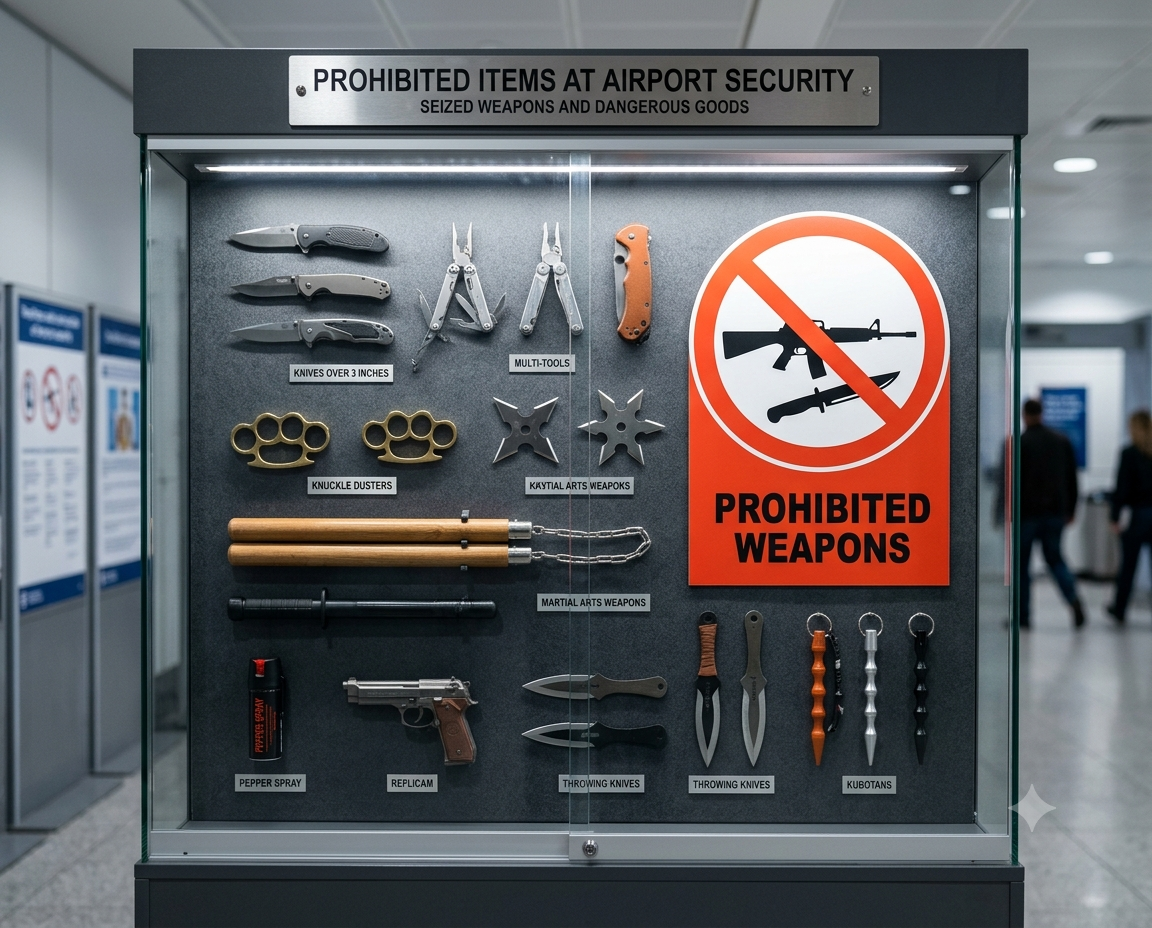
California maintains some of the most detailed and restrictive weapons regulations in the United States. One important part of this legal framework is California Penal Code Section 16590, which identifies a broad category of “generally prohibited weapons.”
This statute is not a stand-alone crime provision. Instead, it functions as a reference section that lists weapons regulated or prohibited elsewhere in California law. Understanding it is important for residents, collectors, security professionals, and anyone who may come into contact with unusual or restricted weapons.
This article an explanation of Penal Code 16590, how it works, what weapons it includes, and what legal risks may apply.
What Is California Penal Code 16590?
Penal Code 16590 defines a list of weapons that California classifies as generally prohibited weapons. These are items that lawmakers have determined to pose heightened risks due to their design, concealability, or destructive nature.
Importantly:
- Section 16590 itself does not always create the penalty
- Instead, it identifies weapons regulated in other sections
- The actual criminal offense is found in other parts of California law
Think of it as a master index of restricted weapons used throughout California’s Penal Code.
Purpose of Penal Code 16590
California created this section to simplify and organize complex weapons laws. Instead of repeating definitions across multiple statutes, the law groups prohibited weapons into one centralized list.
The goals include:
- Improving clarity in enforcement
- Reducing duplication across legal sections
- Helping courts and law enforcement identify restricted weapons
- Providing a single reference point for regulated categories
This structure makes California weapon laws more organized, but also more complex for the general public to interpret without guidance.
Categories of Weapons Covered Under Penal Code 16590
Below are the major categories of weapons commonly included in the “generally prohibited weapons” classification. These descriptions are simplified for educational purposes.
1. Short-Barreled Shotguns
These are shotguns with barrels or overall lengths below legal limits.
They are restricted due to:
- High firepower in a compact form
- Ease of concealment
- Increased risk in criminal misuse
Possession or transfer is heavily regulated under California law.
2. Short-Barreled Rifles
Short-barreled rifles are similar to short-barreled shotguns but involve rifles with reduced barrel length.
Concerns include:
- Increased concealability
- High ballistic capability
- Potential misuse in crimes
These are also regulated under federal and state law.
3. Undetectable Firearms
These are firearms designed to avoid detection by standard security screening devices.
They are prohibited because they pose serious concerns for:
- Airport security
- Government facilities
- Public safety screening systems
4. Disguised Firearms (Cane Guns, Wallet Guns, etc.)
This category includes firearms hidden inside everyday objects such as:
- Walking canes
- Wallet-like items
- Household objects
The main concern is concealment and deception, which increases risks in public environments.
5. Zip Guns (Improvised Firearms)
Zip guns are homemade or improvised firearms not manufactured through regulated processes.
They are restricted due to:
- Lack of safety standards
- Unpredictable performance
- High risk of accidental injury or malfunction
6. Explosive or Destructive Devices
Certain explosive devices or destructive weapons may fall under this category, including items that resemble:
- Bomb-like devices
- Explosive projectiles
- Military-style destructive tools
These restrictions are aimed at preventing mass harm.
7. Ballistic Knives
Ballistic knives are designed to launch a blade using a spring or mechanical system.
They are restricted because:
- They function as projectile weapons
- They can cause severe injury at distance
- They combine stabbing and launching capabilities
8. Metal Knuckles (Brass Knuckles)
Metal knuckles are designed to fit over the hand to enhance striking force.
They are restricted due to:
- High injury potential
- Association with assault scenarios
- Lack of lawful everyday use
9. Nunchaku
Nunchaku consist of two sticks connected by a chain or cord.
Although widely known in martial arts, they are still regulated in California due to their potential use as a striking weapon.
10. Throwing Stars (Shuriken)
Throwing stars are sharp, multi-pointed objects designed to be thrown.
They are restricted because they are specifically designed as offensive weapons.
11. Cane Swords
A cane sword looks like a walking cane but contains a concealed blade inside.
The concealment aspect is the key reason for regulation.
12. Belt Buckle Knives
These are knives hidden inside belt buckles, designed for concealment.
They are regulated because they disguise their true nature as a weapon.
13. Lipstick Case Knives
These small concealed blades resemble cosmetic items.
Their deceptive appearance places them in the restricted category.
14. Writing Instrument Knives
These are knives disguised as pens or writing tools.
They are restricted due to concealment and potential misuse.
Are These Weapons Always Illegal?
A common misconception is that all items listed under Penal Code 16590 are absolutely illegal in every situation. That is not entirely accurate.
Some exceptions may exist, depending on:
- Law enforcement or military use
- Authorized training or duty-related possession
- Licensed or regulated purposes
- Specific statutory exemptions
However, these exceptions are limited and strictly controlled.
For most civilians, possession of many of these weapons is either prohibited or heavily restricted.
Penalties for Violating California Weapon Laws
Penalties depend on the exact offense and circumstances. Violations related to prohibited weapons may result in:
Misdemeanor Charges
Possible consequences include:
- County jail time
- Fines
- Probation
- Confiscation of the weapon
Felony Charges
More serious cases may involve:
- State prison sentences
- Higher fines
- Long-term criminal records
- Loss of firearm rights
Prosecutors often consider factors such as intent, prior history, and the type of weapon involved.
Legal Defenses May Include
Depending on the situation, possible defenses could involve:
- Lack of knowledge or intent
- Illegal search and seizure
- Improper classification of the object
- Statutory exemption
- Lack of possession or control
Each case is fact-specific, and outcomes vary widely.
Why These Laws Matter
California’s weapon restrictions are designed to reduce:
- Concealed weapon violence
- Improvised firearm risks
- Undetectable security threats
- Injuries from specialized assault weapons
While the laws are strict, they are intended to balance public safety with lawful use exceptions in controlled environments.
Final Thoughts
California Penal Code 16590 plays an important role in organizing and defining categories of generally prohibited weapons. It serves as a reference point for understanding which weapons are subject to heightened regulation under California law.
Because weapon laws in California are complex and frequently updated, misunderstanding them can lead to serious legal consequences. Anyone dealing with unusual, collectible, or restricted items should take care to ensure full compliance with state law.
Contact Southwest Legal
If you have questions about weapon possession, criminal charges, or California firearm and weapons laws, obtaining guidance from an experienced legal team can help you understand your rights and options. These cases often involve complex statutes and fact-specific issues that require careful evaluation.
Contact us today for free consultation. Our legal team at Southwest Legal can review your situation, explain the potential legal issues, and help guide you through the process involving California weapons laws.
Disclaimer: This article is for general informational purposes only and does not constitute legal advice or create an attorney-client relationship. No attorney-client relationship is formed unless and until the firm and client enter into an agreement for legal services. Laws may change, and legal outcomes depend on the specific facts of each case. Consult a qualified attorney for advice regarding your situation.