


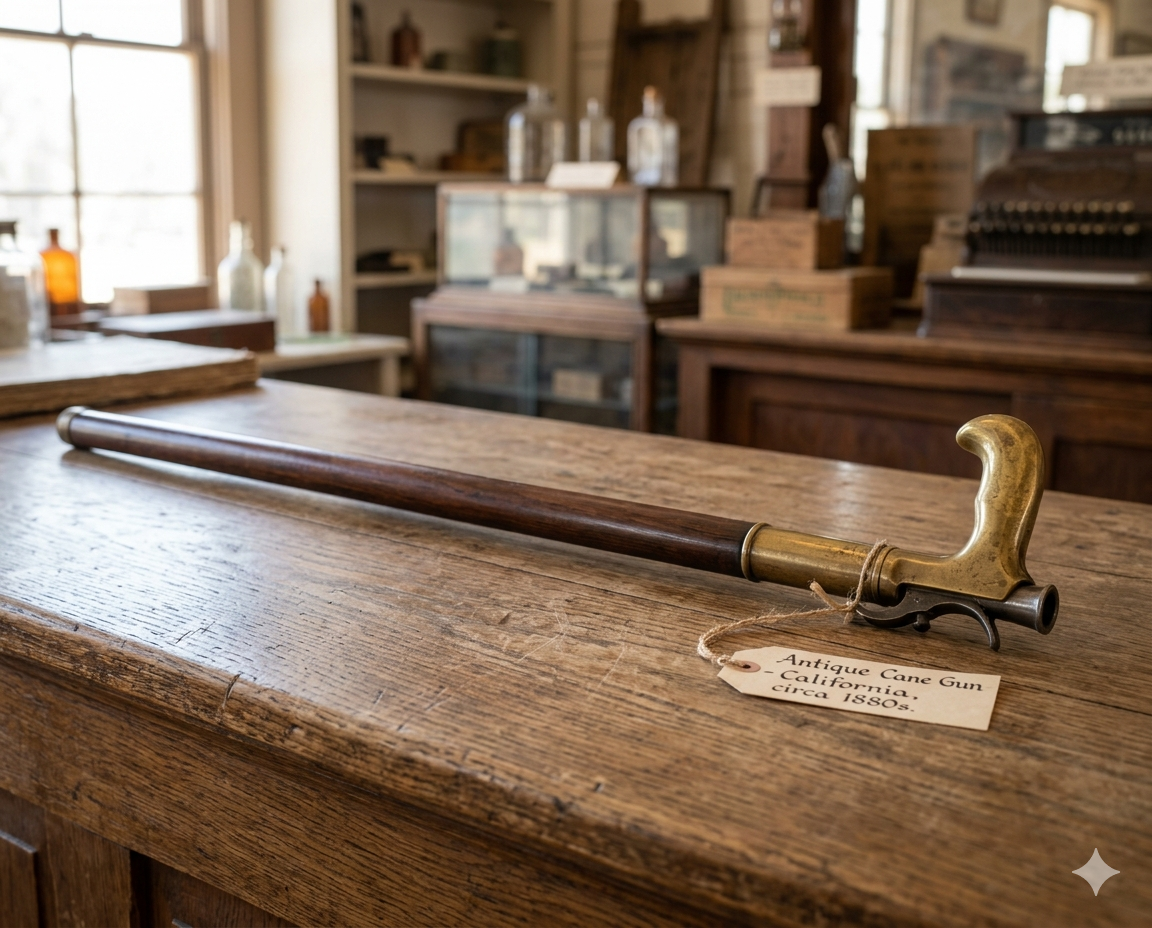
California Penal Code § 24410 makes it illegal to manufacture, import, sell, give, lend, possess, or carry a cane gun in California. Because cane guns are classified as prohibited weapons under California law, individuals found with one may face serious criminal penalties, including misdemeanor or felony charges.
If you are facing allegations involving a cane gun or another prohibited weapon, understanding California’s laws is critical. This guide explains about Penal Code § 24410, including what a cane gun is, the penalties for violating the law, available legal defenses, and frequently asked questions.
What Is California Penal Code § 24410?
California Penal Code § 24410 prohibits the manufacture, importation, sale, transfer, lending, and possession of cane guns within the state.
Under this law, any person who manufactures, causes to be manufactured, imports into California, keeps for sale, offers for sale, gives, lends, or possesses a cane gun may be charged with a criminal offense.
California lawmakers consider cane guns to be particularly dangerous because they are disguised firearms designed to look like ordinary walking canes while concealing a functional weapon.
What Is a Cane Gun?
A cane gun is a device that appears to be a walking cane but contains a concealed firearm capable of firing a projectile.
Unlike traditional firearms, cane guns are intentionally designed to hide their true purpose. To most people, they look like standard mobility aids or walking sticks. However, inside the cane is a functioning firearm mechanism.
A cane gun typically includes:
- A cane-like exterior
- A concealed barrel
- A hidden firing mechanism
- The ability to discharge ammunition
Because the firearm is disguised as an everyday object, California law treats cane guns as prohibited weapons.
Why Are Cane Guns Illegal in California?
California maintains some of the strictest weapons regulations in the nation. The state prohibits various weapons that are considered particularly dangerous due to their concealed nature, ease of disguise, or potential use in criminal activity.
The primary concerns surrounding cane guns include:
- They conceal the existence of a firearm.
- They are difficult to identify as weapons.
- They may evade casual detection.
- They create significant public safety concerns.
- Law enforcement officers may not immediately recognize them as firearms.
For these reasons, California generally prohibits civilians from possessing cane guns regardless of whether the weapon has ever been used.
Actions Prohibited Under Penal Code § 24410
The statute covers more than merely possessing a cane gun.
A person may violate California Penal Code § 24410 by:
Manufacturing a Cane Gun
Creating, assembling, or producing a cane gun is prohibited.
Causing a Cane Gun to Be Manufactured
A person can face criminal liability even if they do not physically build the weapon themselves but direct another person to do so.
Importing a Cane Gun Into California
Bringing a cane gun into California from another state or country is illegal.
Selling or Offering a Cane Gun for Sale
Advertising, displaying, marketing, or offering a cane gun for sale may violate the law.
Giving or Lending a Cane Gun
Transferring a cane gun to another person, even temporarily, is generally prohibited.
Possessing a Cane Gun
Simply possessing a cane gun may be sufficient to support criminal charges.
What Must Prosecutors Prove?
To secure a conviction under Penal Code § 24410, prosecutors generally must prove beyond a reasonable doubt that:
- The defendant manufactured, imported, sold, transferred, lent, or possessed the item.
- The item legally qualifies as a cane gun.
- The defendant acted knowingly.
Knowledge is often a critical issue in these cases. Prosecutors must generally show that the defendant knew the object existed and understood its nature as a concealed firearm.
Is Possession Alone Illegal?
Yes.
Unlike some criminal offenses that require unlawful use or intent to commit another crime, Penal Code § 24410 generally criminalizes possession itself.
An individual may face charges even if:
- The cane gun was never fired.
- Nobody was threatened.
- The weapon remained inside a home.
- The firearm was inherited.
- The owner never intended to use it unlawfully.
Possession alone may be enough to violate the statute.
Penalties for Violating California Penal Code § 24410
A violation of Penal Code § 24410 is generally considered a wobbler offense.
A wobbler can be charged as either a misdemeanor or a felony depending on factors such as:
- The facts of the case
- The defendant’s criminal history
- Whether other crimes were involved
- The circumstances surrounding the weapon
Misdemeanor Penalties
When charged as a misdemeanor, penalties may include:
- Up to one year in county jail
- Fines imposed by the court
- Summary probation
- Other court-ordered conditions
Felony Penalties
When charged as a felony, penalties may include:
- State imprisonment under California sentencing laws
- Significant fines
- Formal probation in certain cases
- Loss of firearm ownership rights
The exact sentence depends on the circumstances of the offense and the defendant’s criminal record.
Will a Conviction Affect Firearm Rights?
Absolutely.
A felony conviction under Penal Code § 24410 may result in serious restrictions on firearm ownership and possession.
A convicted individual may lose the right to:
- Purchase firearms
- Own firearms
- Possess firearms
- Receive firearms
In many cases, these restrictions can have long-term or permanent consequences.
Common Legal Defenses to Cane Gun Charges
Several defenses may be available depending on the facts of the case.
The Object Was Not Actually a Cane Gun
One of the most common defenses is challenging whether the item meets the legal definition of a cane gun.
The defense may argue:
- The object was nonfunctional.
- It could not fire ammunition.
- It did not legally qualify as a concealed firearm.
Expert testimony may be used to support this argument.
Lack of Knowledge
A defendant may argue that they were unaware the object existed or did not know it contained a firearm.
Examples may include:
- Inherited property
- Estate collections
- Recently acquired items
- Property belonging to another person
If the prosecution cannot prove knowledge, the case may be weakened significantly.
Illegal Search and Seizure
The Fourth Amendment protects individuals against unlawful searches and seizures.
If law enforcement discovered the alleged cane gun through an unconstitutional search, the defense may seek to suppress the evidence.
If critical evidence is excluded, prosecutors may be unable to prove their case.
Temporary or Innocent Possession
In some situations, a defendant may argue that possession was temporary and lawful under the circumstances.
Examples might include:
- Discovering the weapon and intending to surrender it
- Taking possession solely to dispose of it safely
- Brief possession without criminal intent
Whether this defense succeeds depends heavily on the facts of the case.
Related California Weapons Offenses
California law regulates numerous prohibited weapons in addition to cane guns.
Related offenses may include:
Possession of a Short-Barreled Rifle
California restricts many short-barreled rifles and shotguns.
Possession of a Wallet Gun
A wallet gun is another disguised firearm that may be prohibited under California law.
Possession of Undetectable Firearms
State and federal laws prohibit certain firearms that cannot be detected by conventional security screening equipment.
Possession of Other Prohibited Weapons
California also regulates weapons such as:
- Cane swords
- Ballistic knives
- Metal knuckles
- Certain explosive devices
- Other disguised firearms
The applicable criminal charge depends on the type of weapon involved.
Federal Law and Cane Guns
Federal firearms regulations may also apply to certain disguised firearms.
Depending on the weapon’s design, registration status, and method of transfer, federal authorities may investigate or prosecute violations involving cane guns.
Individuals who collect antique or unusual firearms should exercise caution and ensure compliance with both state and federal law before acquiring or transferring such items.
Frequently Asked Questions
Are Cane Guns Legal in California?
No. California generally prohibits civilians from possessing, manufacturing, importing, selling, lending, or transferring cane guns.
Can I Legally Own an Antique Cane Gun?
Not necessarily. Even antique firearms may be subject to California’s prohibited weapons laws. The specific characteristics of the weapon are important.
What If the Cane Gun Does Not Work?
A nonfunctional weapon may provide a defense if it does not meet the legal definition of a cane gun. However, every case requires a detailed legal analysis.
Can I Inherit a Cane Gun?
Inheritance does not automatically make possession lawful. Anyone who inherits a cane gun should seek legal guidance before handling or retaining it.
Is a Cane Sword the Same as a Cane Gun?
No. A cane sword conceals a blade, while a cane gun conceals a firearm. Both may be regulated under California law.
Is Penal Code § 24410 a Felony?
It can be. Because the offense is generally a wobbler, prosecutors may file misdemeanor or felony charges depending on the circumstances.
What Should You Do If You Are Charged Under Penal Code § 24410?
If you have been arrested or charged under California Penal Code § 24410, it is important to take the allegations seriously.
A conviction could result in:
- Jail or prison time
- Significant fines
- Probation
- A permanent criminal record
- Loss of firearm rights
- Professional licensing consequences
- Employment difficulties
- Potential immigration consequences
Because these cases often involve technical legal issues, weapon classifications, and constitutional concerns, obtaining legal representation as early as possible can be crucial.
Conclusion
California Penal Code § 24410 strictly prohibits the manufacture, importation, sale, transfer, lending, and possession of cane guns. Because these weapons are disguised as ordinary walking canes while concealing a functional firearm, California law treats them as prohibited weapons that pose unique public safety concerns.
Violations can lead to misdemeanor or felony charges, substantial fines, incarceration, and long-term consequences affecting firearm rights, employment opportunities, and personal freedom. However, defenses may exist depending on the facts of the case, including challenges to the classification of the weapon, lack of knowledge, or constitutional violations involving searches and seizures.
Understanding your rights and legal options is essential if you are accused of violating California’s weapons laws.
Contact Southwest Legal
If you have been arrested, investigated, or charged with violating California Penal Code § 24410 or any other California weapons offense, you should seek legal counsel immediately. Weapons-related charges can carry severe penalties, and the outcome of your case may depend on the actions taken during the earliest stages of the legal process.
At Southwest Legal, our experienced criminal defense attorneys understand the complexities of California firearms and weapons laws. We are committed to protecting our clients’ rights, challenging unlawful searches and seizures, examining weaknesses in the prosecution’s case, and pursuing the best possible outcome in every matter we handle.
Whether you are facing allegations involving a cane gun, concealed firearm, prohibited weapon, or another weapons-related offense, Southwest Legal can provide the knowledgeable representation you need.
Contact us today for a free consultation and learn how our defense team can help protect your future, your freedom, and your constitutional rights.
Disclaimer: This article is for general informational purposes only and does not constitute legal advice or create an attorney-client relationship. No attorney-client relationship is formed unless and until the firm and client enter into an agreement for legal services. Laws may change, and legal outcomes depend on the specific facts of each case. Consult a qualified attorney for advice regarding your situation.