


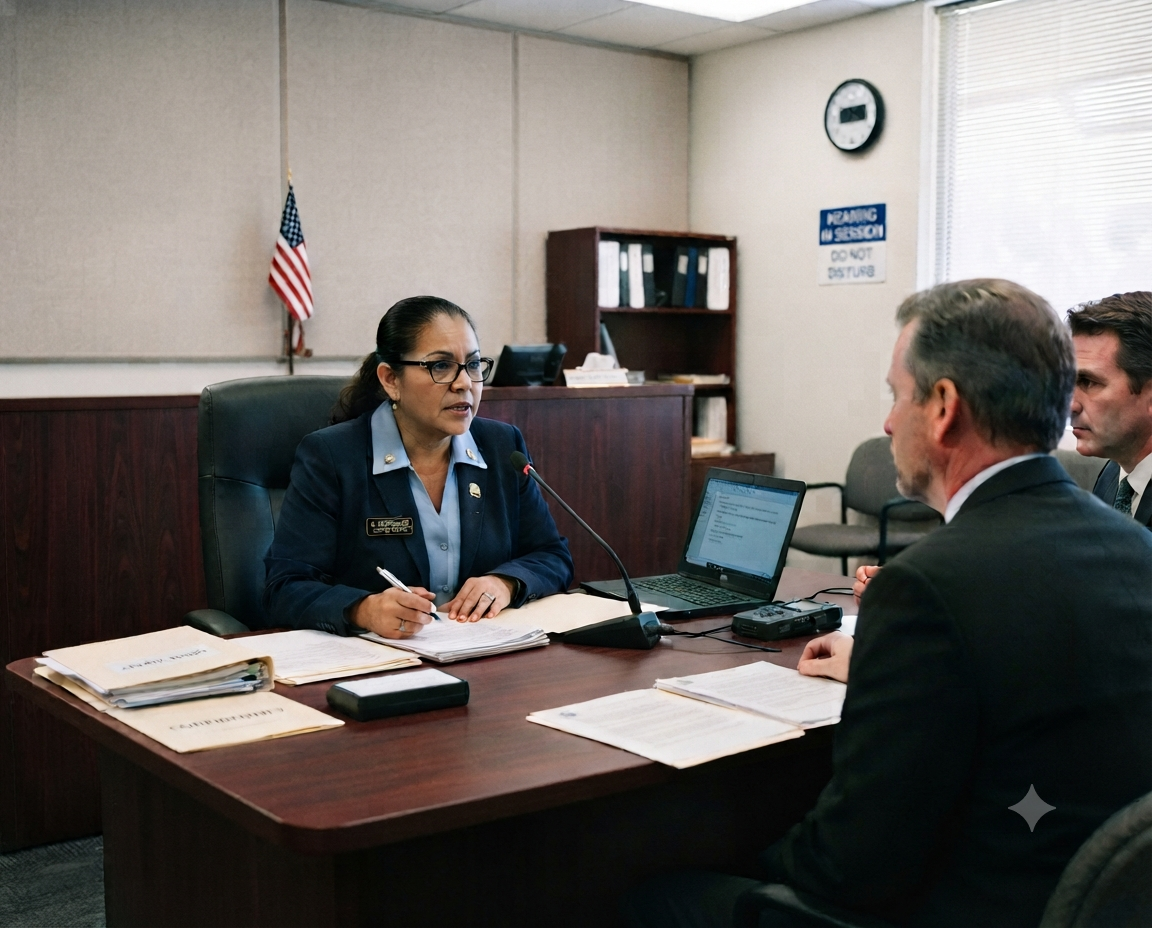
If you have received a notice from the California Department of Motor Vehicles (DMV) stating that your driving privileges may be suspended, revoked, or restricted, you may have questions about what happens next. One of the most important people involved in this process is the California DMV Driver Safety Hearing Officer.
A Driver Safety Hearing Officer is a DMV official who reviews driver safety cases and determines whether the DMV’s proposed action against a person’s license should move forward. These hearings are administrative proceedings, not criminal court hearings, and the officer’s decision is focused on driving privileges rather than criminal punishment.
Many drivers first encounter the DMV hearing process after a DUI arrest, multiple traffic violations, a serious accident, or concerns about a medical condition affecting their ability to drive.
Understanding the role of a DMV hearing officer, your rights during the process, and the possible outcomes can help you make informed decisions when your license is at risk.
What Is a California DMV Driver Safety Hearing Officer?
A California DMV Driver Safety Hearing Officer is a DMV employee who conducts administrative hearings involving driver safety issues.
The hearing officer’s responsibility is to review evidence, consider testimony, and determine whether a driver should continue to have full driving privileges, receive restrictions, or face suspension or revocation.
Although DMV hearing officers make legal decisions regarding driving privileges, they are not criminal court judges. They do not decide whether someone is guilty of a crime. Instead, they determine whether the DMV has sufficient grounds to take action against a person’s driver’s license.
For example, after a DUI arrest, a driver may face both a criminal case in court and a separate DMV administrative hearing. The criminal court determines possible criminal penalties, while the DMV hearing officer determines whether the person’s driving privileges should be affected.
What Does a DMV Driver Safety Hearing Officer Do?
A DMV hearing officer performs several important duties during the hearing process.
Reviews Evidence and Driver Records
The hearing officer examines information related to the DMV’s concerns, which may include:
- Driving history
- Accident reports
- Police reports
- Court records
- DUI-related documents
- Medical evaluations
- Witness statements
- Other evidence related to driving ability
The purpose of reviewing this information is to determine whether the driver presents a safety concern under California DMV standards.
Conducts Administrative Hearings
A DMV hearing provides an opportunity for the driver to respond to the allegations or concerns raised by the DMV.
During the hearing, the officer may:
- Review documents submitted by the DMV and the driver
- Listen to testimony
- Evaluate witness statements
- Consider arguments from the driver or their representative
- Make decisions regarding driving privileges
Unlike a traditional courtroom trial, DMV hearings are administrative proceedings designed to evaluate whether a person should continue driving.
Makes Decisions About Driving Privileges
After reviewing the evidence, the hearing officer may decide whether the DMV action should be:
- Cancelled or set aside
- Modified with restrictions or conditions
- Continued through suspension or revocation
The decision depends on the evidence presented and the circumstances of the individual case.
What Is a California DMV Administrative Hearing?
A DMV administrative hearing is a formal process that allows a driver to challenge a proposed DMV action affecting their license.
The DMV may schedule a hearing when it believes there is a safety concern involving a driver.
Common reasons for a DMV hearing include:
DUI-Related License Actions
A DUI arrest may trigger a separate DMV process involving potential license suspension.
The DMV hearing may examine issues such as whether:
- The required procedures were followed
- The evidence supports the suspension
- The driver has grounds to challenge the action
The DMV hearing is separate from the criminal DUI case.
Negligent Operator Concerns
California monitors drivers who accumulate certain traffic violations and collision points through the Negligent Operator Treatment System (NOTS).
A driver may receive a hearing if the DMV believes their driving record shows a pattern of unsafe behavior.
Example:
A driver receives multiple speeding tickets and causes several accidents within a short period. During a hearing, the driver may present evidence showing corrective actions, such as completing driving courses or demonstrating improved driving habits.
Medical or Physical Driving Concerns
The DMV may review a driver’s ability to operate a vehicle safely if there are concerns about a medical or physical condition.
Examples may include:
- Vision impairment
- Cognitive issues
- Seizure conditions
- Physical limitations affecting vehicle control
The DMV may consider medical documentation, evaluations, and other evidence before deciding whether restrictions or additional requirements are appropriate.
What Rights Do You Have at a California DMV Hearing?
Drivers involved in a DMV administrative hearing have important procedural rights.
Depending on the circumstances, a driver may have the right to:
- Be represented by an attorney
- Review evidence being considered by the DMV
- Present documents and evidence
- Provide testimony
- Present witnesses
- Challenge information presented by the DMV
- Receive a written decision after the hearing
Having the opportunity to present evidence is important because the DMV hearing officer’s decision is based on the information available during the proceeding.
What Evidence Can Help at a DMV Hearing?
The type of evidence that may help depends on the reason for the hearing.
Examples may include:
Driving Records
A driver may present information showing improvement in driving behavior or explaining past incidents.
Medical Documentation
For medical-related cases, updated evaluations or statements from qualified professionals may help demonstrate that a condition is controlled or does not prevent safe driving.
Witness Testimony
Witnesses may provide information about a driver’s habits, condition, or circumstances related to the case.
Proof of Corrective Actions
Evidence may include:
- Completion of driving programs
- Treatment records
- Safety courses
- Other steps taken to address DMV concerns
The strongest cases usually focus on directly addressing the reason the DMV scheduled the hearing.
Can You Have an Attorney at a DMV Hearing?
Yes. A driver may choose to have an attorney represent them during a DMV administrative hearing.
An attorney familiar with California DMV hearings may help by:
- Reviewing the DMV’s evidence
- Identifying potential issues with the case
- Preparing supporting documentation
- Presenting arguments on behalf of the driver
- Helping the driver understand possible outcomes
Because DMV hearings involve specific procedures and deadlines, many drivers choose to seek legal guidance before appearing.
What Are the Possible Outcomes of a DMV Hearing?
After reviewing the evidence, a DMV hearing officer may issue several possible outcomes.
No Suspension or Revocation
The hearing officer may determine that the DMV action is not justified and allow the driver to keep their license.
Restricted Driving Privileges
The driver may be allowed to continue driving under certain conditions or restrictions.
Probation
In some situations, a driver may remain licensed but must meet certain requirements and avoid additional violations.
License Suspension
The hearing officer may uphold the DMV’s decision to suspend driving privileges.
License Revocation
In more serious situations, the DMV may revoke the driver’s license. The outcome depends on the facts, evidence, and applicable DMV rules.
Frequently Asked Questions
Is a DMV hearing the same as a criminal court hearing?
No. A DMV hearing is an administrative proceeding involving driving privileges. A criminal court case determines criminal responsibility and penalties.
Can a DMV hearing officer dismiss my license suspension?
Yes. If the evidence does not support the DMV action, the hearing officer may set aside the suspension.
Will the DMV keep my license because I need it for work?
Needing a license for employment or personal responsibilities alone is generally not enough to prevent a suspension. The hearing officer focuses on whether the driver meets safety requirements.
What happens if I do not attend my DMV hearing?
Failing to appear may result in the DMV proceeding without your participation, which can negatively affect the outcome.
How can I improve my chances at a DMV hearing?
Preparation is important. Reviewing the evidence, gathering supporting documents, and addressing the DMV’s concerns directly can help present a stronger case.
Contact Southwest Legal
A California DMV Driver Safety Hearing can have a significant impact on your ability to drive. Whether your case involves a DUI-related suspension, negligent operator concerns, or another driver safety issue, understanding your rights and preparing properly is essential.
Southwest Legal helps individuals navigate California DMV hearing matters and understand their legal options when their driving privileges are at risk.
If you have received a DMV notice or are facing a possible license suspension or revocation, contact us today for a free consultation to discuss your situation and learn how experienced legal guidance may help you protect your driving privileges.
Disclaimer: This article is for general informational purposes only and does not constitute legal advice or create an attorney-client relationship. No attorney-client relationship is formed unless and until the firm and client enter into an agreement for legal services. Laws may change, and legal outcomes depend on the specific facts of each case. Consult a qualified attorney for advice regarding your situation.