


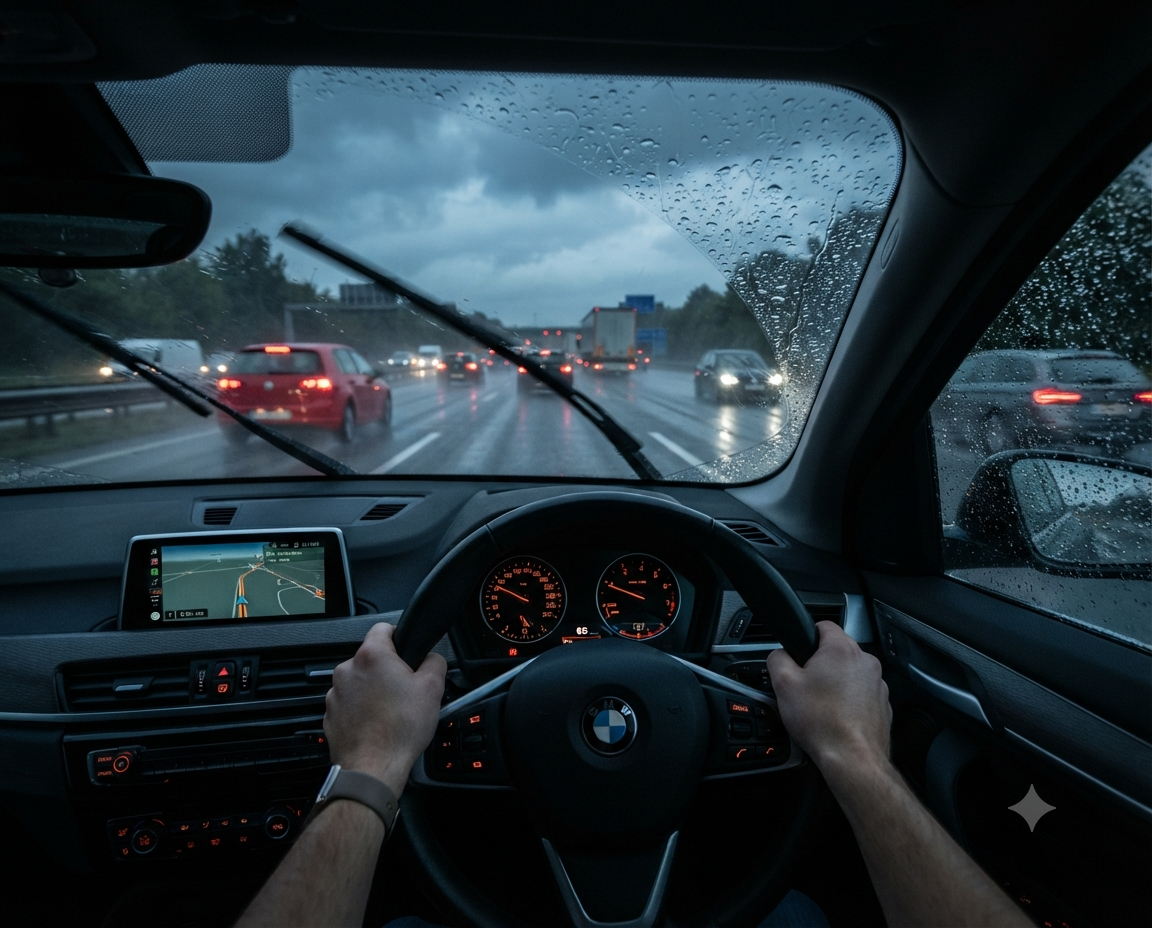
A driver is pulled over after briefly crossing a lane line during a heavy rainstorm. The officer suspects impairment, but the driver explains that poor visibility, standing water, and unsafe road conditions affected the vehicle’s movement.
Situations like this happen more often than many people realize. In California DUI investigations, officers must evaluate the circumstances surrounding a traffic stop, and those circumstances may include weather, roadway conditions, visibility, and other environmental factors.
A driving behavior that appears suspicious at first glance may have another explanation. Rain, fog, construction zones, damaged pavement, traffic congestion, and other road hazards can influence how a person operates a vehicle and how an officer interprets that behavior.
Under California DUI laws, including California Vehicle Code §23152(a) and §23152(b), prosecutors generally must prove that a driver was impaired or had an unlawful blood alcohol concentration while operating a vehicle. The observations made during the investigation can play an important role in that process.
Understanding how weather and road conditions can affect a DUI investigation may help drivers better understand their rights and the issues that may be important when reviewing a DUI case.
Can Weather Affect a DUI Investigation in California?
Yes. Weather conditions can affect both driving behavior and the way law enforcement evaluates a DUI stop.
During a DUI investigation, officers often look for behaviors that may suggest impairment, such as:
- Swerving or drifting within a lane
- Sudden braking
- Driving unusually slowly
- Difficulty maintaining lane position
- Delayed reactions to traffic conditions
- Unsafe turns or lane changes
However, these behaviors do not always occur because of alcohol or drug impairment.
Weather conditions may create similar driving patterns. A driver may slow down during heavy rain, adjust position because lane markings are difficult to see, or brake earlier because the road surface is slippery.
For example, a driver traveling cautiously on a dark highway during a storm may appear nervous or uncertain. However, those actions may simply reflect safe driving practices under dangerous conditions.
When reviewing a DUI investigation, the surrounding circumstances may be important. Driving behavior should be considered together with weather, road conditions, visibility, and other available evidence.
How Rain Can Affect DUI Stops and Investigations
Rain is one of the most common weather conditions that can influence driving in California. Although many areas of the state experience dry conditions for much of the year, major storms can create challenging driving environments.
Heavy rain can affect:
- Tire traction
- Braking distance
- Visibility
- Lane control
- Vehicle handling
A driver may respond by reducing speed, increasing following distance, or making careful movements around puddles and flooded areas.
These actions may sometimes be misunderstood during a DUI investigation.
Example: Driving Slowly During Heavy Rain
Imagine a driver traveling below the speed limit during a severe storm. The driver is moving slowly because water is collecting on the roadway and visibility is reduced.
An officer may view the slow speed as unusual. However, the weather conditions may provide a reasonable explanation for the driver’s actions.
The important question is not only what the driver did, but why the driver did it.
How Fog and Poor Visibility Can Influence DUI Evidence
Fog can create difficult driving conditions throughout California, especially in coastal areas, mountain roads, and inland valleys.
When visibility is limited, drivers may have difficulty:
- Seeing lane markings
- Judging distances
- Detecting hazards
- Maintaining normal speeds
A careful driver may naturally reduce speed or make small corrections within the lane.
Example:
A driver traveling through dense fog may appear to drift slightly because lane markings are difficult to see. Without considering visibility conditions, an officer might interpret the behavior differently.
Fog does not eliminate the possibility of DUI, but it can be an important factor when determining whether observed driving behavior actually indicates impairment.
Can Road Conditions Affect a California DUI Case?
Yes. Road conditions may influence both driving behavior and the evidence collected during a DUI investigation.
Roadway factors that may affect driving include:
- Potholes
- Uneven pavement
- Road construction
- Missing lane markings
- Loose gravel
- Debris
- Flooded roads
- Sharp curves
- Steep hills
A driver traveling on a damaged or unfamiliar road may make sudden adjustments that are completely unrelated to impairment.
Example: Avoiding Road Hazards
A driver approaches several potholes on a poorly maintained road and moves slightly within the lane to avoid damaging the vehicle.
An officer following behind may interpret the movement as possible swerving. However, roadway conditions may provide important context.
A complete DUI investigation should consider whether environmental conditions contributed to the driving behavior.
How California Police Officers Evaluate DUI Stops
A DUI investigation usually involves more than the initial reason for a traffic stop.
Officers may consider:
- The driver’s vehicle movement
- Statements made during the stop
- Physical appearance and behavior
- Field sobriety test performance
- Chemical test results
- Timing and procedures used during the investigation
Weather and road conditions may affect how reliable some observations are.
Example:
A driver who appears unsteady while standing on a wet, uneven roadside may not necessarily be impaired. The environment itself may contribute to difficulty balancing.
Similarly, a driver who has trouble following instructions during heavy traffic, loud wind, or poor visibility may have been affected by the surrounding conditions.
Can Weather Affect Field Sobriety Tests in California?
Yes. Field sobriety tests are often performed outside the vehicle, meaning environmental conditions may influence performance.
Factors that may affect field sobriety testing include:
- Rain or wet pavement
- Uneven roadside surfaces
- Poor lighting
- Cold temperatures
- Strong wind
- Traffic distractions
- Slippery conditions
Common field sobriety exercises require balance, coordination, and attention. These abilities may be affected by the environment where testing occurs.
Example: Performing Tests on a Wet Roadside
A driver is asked to complete a balance test during a nighttime traffic stop while standing on a wet shoulder of the road.
The driver struggles with the test. However, the surface is uneven, vehicles are passing nearby, and rain is falling.
Those conditions may be relevant when evaluating whether the test accurately measured impairment.
Can Weather Conditions Affect DUI Chemical Testing?
Weather conditions do not directly change a person’s blood alcohol concentration. However, weather may affect other parts of the DUI investigation process.
Example:
- Severe storms may delay transportation.
- Road closures may affect timelines.
- Difficult conditions may affect documentation.
- Delays may become relevant when reviewing the investigation.
A DUI case often depends on reviewing the entire timeline, evidence collection process, and reliability of the information used against the driver.
Evidence That May Help Explain Weather and Road Conditions
When reviewing a DUI case, several types of evidence may help show the conditions present during the traffic stop.
This may include:
- Police body camera footage
- Dash camera recordings
- Weather reports
- Roadway photographs
- Witness statements
- Traffic camera footage
- Officer reports
- Vehicle records
Example:
A video footage may show that a driver was avoiding road hazards rather than driving unpredictably. Weather reports may confirm that heavy rain or fog affected visibility at the time of the stop.
Frequently Asked Questions
Can bad weather excuse a DUI charge in California?
No. Bad weather does not automatically excuse impaired driving. If a person is driving under the influence, weather conditions alone do not remove potential criminal liability.
However, weather may provide important context when determining whether the evidence actually proves impairment.
Can rain explain swerving during a DUI stop?
Yes. Rain, standing water, slippery pavement, and poor visibility may contribute to temporary lane movement. Investigators may need to consider whether weather conditions influenced the driving behavior.
Can a DUI charge be challenged because of road conditions?
Potentially. Each DUI case depends on its specific facts. If road conditions contributed to the officer’s observations, those conditions may become relevant when reviewing the evidence.
Do police consider weather during DUI investigations?
Weather conditions should be part of the overall circumstances considered during an investigation. Factors such as visibility, pavement conditions, and hazards may affect how driving behavior is interpreted.
Can field sobriety tests be affected by rain or uneven pavement?
Yes. Field sobriety tests may be affected by external conditions, including slippery surfaces, poor lighting, uneven ground, and weather-related distractions.
What evidence can show that weather affected a DUI investigation?
Evidence may include video recordings, photographs, weather reports, road condition information, witness statements, and other documentation showing the conditions at the time of the stop.
Can fog make a DUI stop less reliable?
Fog may affect visibility and driver behavior. If poor visibility contributed to the officer’s observations, it may be an important factor when evaluating the DUI investigation.
Should I contact a DUI attorney if weather affected my traffic stop?
If weather or road conditions played a role in your DUI stop, speaking with a DUI attorney may help you understand how those factors could affect your case.
Contact Southwest Legal
A DUI investigation involves many details, and the circumstances surrounding the traffic stop can make a significant difference. Weather, road conditions, visibility, field sobriety testing conditions, and police procedures may all affect how evidence is interpreted.
If you are facing a DUI charge in Southern California, Southwest Legal can review the details of your case, including the conditions present during your stop and whether important factors were properly considered.
Contact us today for a free consultation to discuss your DUI case, learn about your legal options, and understand how facts of your case may affect your defense.
Disclaimer: This article is for general informational purposes only and does not constitute legal advice or create an attorney-client relationship. No attorney-client relationship is formed unless and until the firm and client enter into an agreement for legal services. Laws may change, and legal outcomes depend on the specific facts of each case. Consult a qualified attorney for advice regarding your situation.