


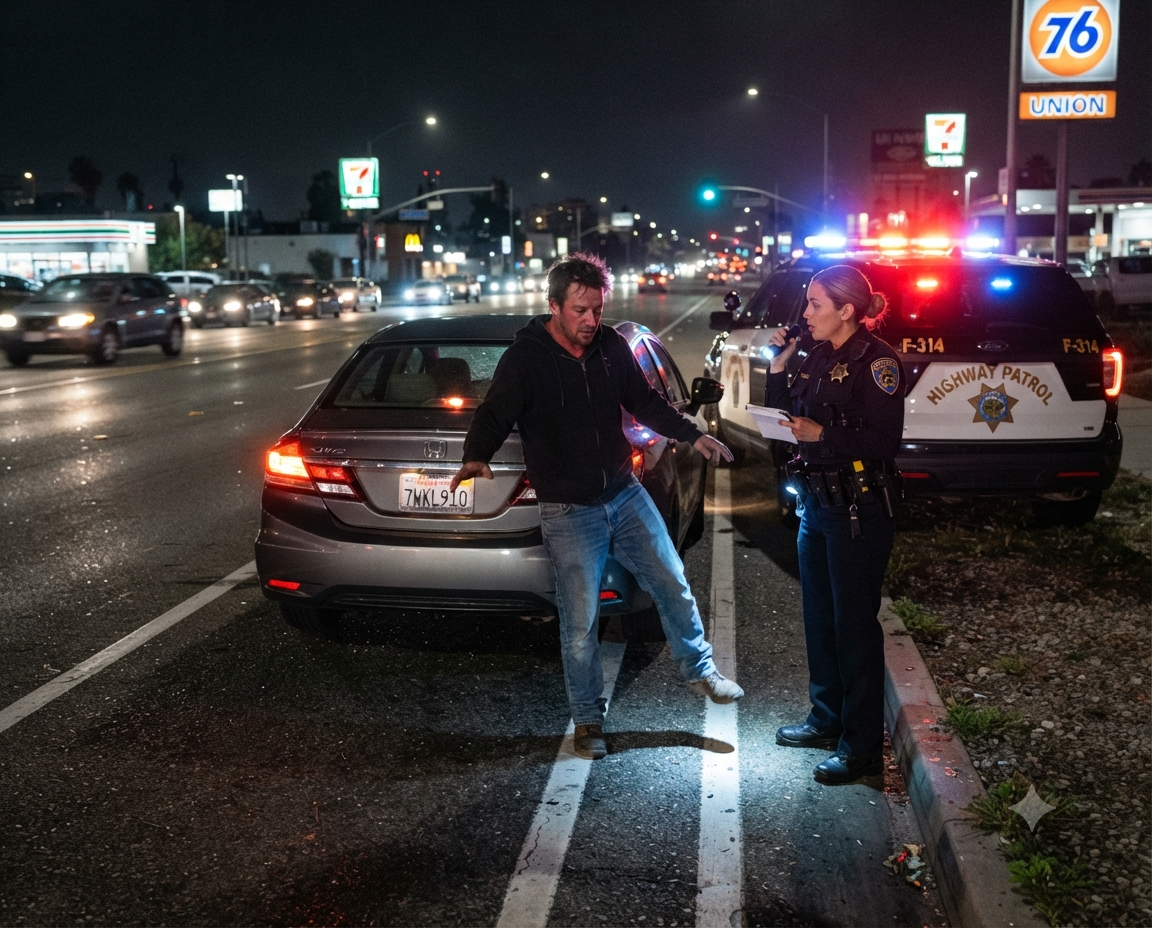
Failing a field sobriety test during a California DUI investigation can be frightening. Many drivers immediately assume that a poor performance means they will automatically be convicted of driving under the influence. However, a failed field sobriety test is not the same as a DUI conviction.
Field sobriety tests are only one part of a DUI investigation. These tests can be affected by many factors, including medical conditions, stress, weather, road conditions, instructions from the officer, and the way the test was administered. Because of these issues, experienced California DUI defense attorneys often examine whether field sobriety test results are accurate, reliable, and legally useful.
If you were arrested after failing a field sobriety test in California, understanding how these tests work and how attorneys challenge them can help you better understand your legal options.
What Is a Field Sobriety Test in California?
A field sobriety test (FST) is a series of physical and coordination exercises used by law enforcement officers during DUI investigations. Officers typically use these tests to look for signs they believe may indicate impairment.
The most commonly used standardized field sobriety tests include:
Horizontal Gaze Nystagmus (HGN) Test
During the HGN test, an officer watches a person’s eye movements while the person follows a moving object, usually a pen or flashlight. Officers look for involuntary eye movements that they believe may be associated with alcohol impairment.
However, factors such as certain medical conditions, fatigue, medications, and natural eye differences can affect results.
Walk-and-Turn Test
The walk-and-turn test requires a person to walk heel-to-toe along a straight line, make a specific turn, and return in the same manner.
Officers may consider actions such as stepping off the line, losing balance, or failing to follow instructions as signs of impairment.
One-Leg Stand Test
During this test, the person must balance on one leg while counting aloud. Officers observe whether the person sways, puts their foot down, or uses their arms for balance.
Balance issues, injuries, age, footwear, and nervousness can all affect performance.
Does Failing a Field Sobriety Test Mean You Are Guilty of DUI in California?
No. Failing a field sobriety test does not automatically prove that someone was driving under the influence.
California DUI cases usually involve multiple types of evidence, such as:
- Officer observations
- Driving behavior
- Statements made during the traffic stop
- Breath or blood test results
- Video recordings
- Witness testimony
A field sobriety test is generally used by officers as part of their investigation. It does not directly measure a person’s blood alcohol concentration (BAC), and it does not alone establish guilt.
For example, a driver may perform poorly on the one-leg stand test because of a knee injury or poor balance. That performance does not necessarily show that alcohol caused the problem.
A DUI defense attorney may argue that the test results do not accurately reflect the driver’s condition at the time of the stop.
How Accurate Are Field Sobriety Tests?
Field sobriety tests can provide useful information during a DUI investigation, but they are not perfect.
These tests depend on several human factors:
- How clearly the officer explains the instructions
- Whether the driver understands what is being asked
- The environment where the test occurs
- The officer’s interpretation of the results
- The driver’s physical condition
Unlike a breath or blood test, field sobriety tests rely heavily on observation and judgment.
A person who is nervous, confused, tired, or uncomfortable during a police encounter may perform poorly even without being impaired.
How DUI Defense Attorneys Challenge Field Sobriety Test Results
A California DUI defense attorney may challenge field sobriety test evidence in several ways.
1. Questioning Whether the Officer Properly Administered the Test
Field sobriety tests require officers to follow specific procedures. A defense attorney may examine whether:
- Instructions were properly explained
- The officer demonstrated the test correctly
- The driver was allowed to complete the test
- The officer accurately recorded what happened
For example, if an officer gave rushed instructions and the driver misunderstood the test requirements, the results may not accurately show impairment.
2. Showing That Medical Conditions Affected Performance
Physical limitations can significantly affect field sobriety test results.
Examples include:
- Previous injuries
- Arthritis
- Back or leg problems
- Inner ear balance disorders
- Neurological conditions
- Vision problems
- Medication side effects
A person recovering from an ankle injury may have difficulty walking in a straight line or standing on one foot. A DUI attorney may use medical evidence to explain why the test results should be viewed cautiously.
3. Challenging Environmental Conditions
Field sobriety tests are often performed outside on the side of a road, sometimes under difficult conditions.
Possible issues include:
- Uneven pavement
- Poor lighting
- Rain or extreme weather
- Heavy traffic
- Loud noises
- Slippery surfaces
- Restrictive clothing or uncomfortable shoes
For example, asking someone to complete a balance test on uneven ground near a busy highway may create challenges unrelated to alcohol consumption.
4. Reviewing Police Body Camera and Dash Camera Footage
Video evidence can be extremely important in DUI cases.
A DUI defense attorney may review recordings to determine whether:
- The officer’s report matches what actually occurred
- Instructions were clearly given
- The driver appeared impaired
- The testing conditions were fair
Sometimes video evidence provides important context that is missing from a written police report.
5. Challenging Officer Interpretation and Subjective Observations
Police officers must make judgment calls during DUI investigations. They may describe behaviors such as:
- Swaying
- Nervousness
- Slow responses
- Balance problems
- Mistakes during testing
However, these behaviors may have explanations unrelated to alcohol impairment.
A defense attorney may argue that ordinary nervousness or physical limitations were incorrectly interpreted as signs of intoxication.
Can You Be Arrested for DUI After Passing a Field Sobriety Test?
Yes. Passing a field sobriety test does not guarantee that a person will not be arrested.
Officers may consider other evidence, including:
- The smell of alcohol
- Statements made during questioning
- Driving patterns
- Chemical test results
- Other observations
Likewise, failing a field sobriety test does not guarantee a DUI conviction.
The prosecution must still prove the charges based on the evidence available.
What Happens If You Fail a Field Sobriety Test but Pass a Breathalyzer?
Failing a field sobriety test while having a breath test result that does not show illegal alcohol levels may create questions about the strength of the DUI case.
A defense attorney may examine why the field sobriety test was unsuccessful and whether other explanations exist.
For example, a driver may fail a balance test because of anxiety, fatigue, or a physical issue while still having a lawful BAC level.
Can Police Arrest You Based Only on Field Sobriety Tests?
A field sobriety test can contribute to an officer’s decision to make an arrest, but the circumstances of each case matter.
A DUI defense attorney can review whether the officer had sufficient justification based on the total situation, including:
- The reason for the traffic stop
- The driver’s behavior
- Field sobriety test performance
- Other observations
- Chemical testing evidence
If the evidence supporting the arrest is weak or unreliable, legal challenges may be available.
What If You Refused a Field Sobriety Test in California?
Many drivers are unsure about their rights during DUI investigations.
Field sobriety tests and chemical tests are different. Refusing a field sobriety test may have different consequences than refusing a legally required chemical test.
Because California DUI laws involve complex rules regarding testing and license consequences, anyone facing a DUI charge should speak with a defense attorney about the specific circumstances of their case.
What Should You Do After Failing a Field Sobriety Test?
If you were arrested after failing a field sobriety test, consider the following steps:
Document What Happened
Write down everything you remember, including:
- Where the stop occurred
- Weather and road conditions
- What instructions the officer gave
- Whether you had medical issues
- How the tests were conducted
Details that seem minor at first may become important in your defense.
Avoid Discussing Your Case Publicly
Avoid posting details about your arrest online or discussing the facts of your case with others before speaking with an attorney.
Contact a California DUI Defense Attorney
DUI cases often involve technical evidence, strict deadlines, and complicated legal procedures. A DUI defense attorney can review the circumstances of your arrest and identify possible weaknesses in the prosecution’s evidence.
Frequently Asked Questions
Can a DUI lawyer challenge field sobriety test results?
Yes. A DUI attorney may challenge the reliability of field sobriety test results by examining how the test was conducted, the testing conditions, the officer’s observations, and possible alternative explanations.
Can a DUI case be dismissed if I failed a field sobriety test?
It is possible in some cases. A failed field sobriety test alone does not determine the outcome of a DUI case. The strength of the prosecution depends on all available evidence.
What if I was nervous during my field sobriety test?
Nervousness is common during traffic stops and can affect concentration, balance, and coordination. A defense attorney may argue that anxiety contributed to poor performance.
Do field sobriety tests measure BAC?
No. Field sobriety tests do not measure blood alcohol concentration. They are observational tools used during DUI investigations.
Contact Southwest Legal
Failing a field sobriety test does not mean your DUI case is over. The accuracy of these tests depends on many factors, including how they were administered, the conditions surrounding the stop, and whether the results truly reflected impairment.
The DUI defense attorneys at Southwest Legal understand how to examine DUI evidence, challenge unreliable field sobriety test results, and develop defense strategies based on the unique facts of each case.
If you were arrested for DUI in Southern California after failing a field sobriety test, contact us today for a free consultation to discuss your situation, understand your rights, and explore your available defense options.
Disclaimer: This article is for general informational purposes only and does not constitute legal advice or create an attorney-client relationship. No attorney-client relationship is formed unless and until the firm and client enter into an agreement for legal services. Laws may change, and legal outcomes depend on the specific facts of each case. Consult a qualified attorney for advice regarding your situation.