


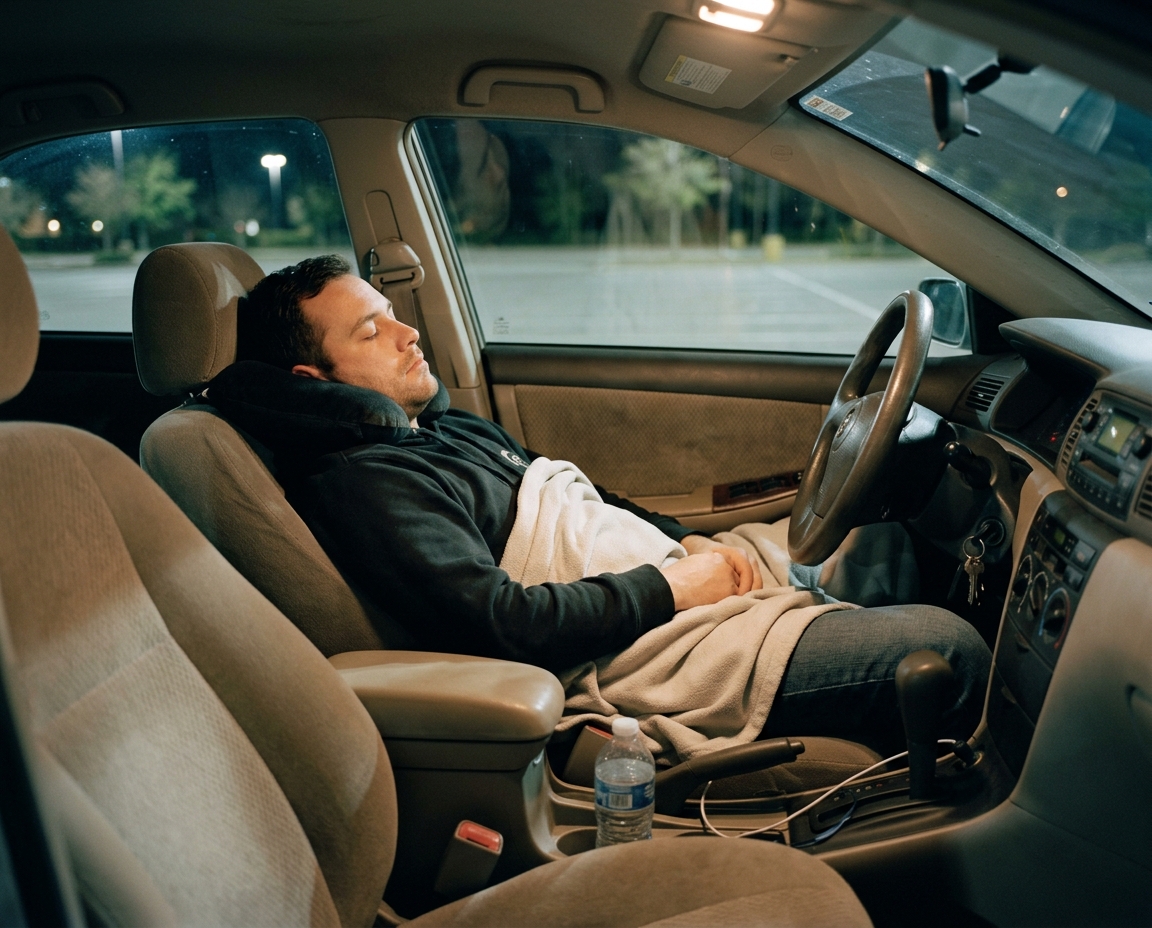
Can you be charged with DUI if nobody saw you driving? Yes. In California, police do not necessarily have to witness a person driving before a DUI investigation, arrest, or prosecution can occur. However, there is an important distinction between being charged with DUI and being convicted of DUI.
For a conviction, the prosecution must prove the required elements of the charged offense beyond a reasonable doubt. For California DUI offenses, that generally includes proving that the defendant drove a vehicle while meeting the applicable impairment or alcohol-related requirement.
When nobody directly saw the accused driving, prosecutors may attempt to prove driving through circumstantial evidence. This can include the vehicle’s location, its condition, who was found inside or near it, witness statements, physical evidence, statements made by the accused, and evidence concerning other potential drivers.
This is where the so-called “no driving” defense can become important.
The basic issue is straightforward: Was there enough evidence to prove that the accused actually drove the vehicle while committing the charged DUI offense?
This article explains how California law addresses that question, what circumstantial evidence can be used to establish driving, and why simply saying “nobody saw me drive” may not be enough to defeat a DUI case.
California DUI Law Requires Proof of Driving
California Vehicle Code § 23152 contains several DUI-related offenses. For example, subdivision (a) makes it unlawful for a person who is under the influence of an alcoholic beverage to drive a vehicle. Subdivision (b) makes it unlawful for a person with a blood-alcohol concentration of 0.08 percent or more to drive a vehicle. The statute also contains provisions involving drugs, commercial drivers, and certain passengers for hire.
The repeated phrase “to drive a vehicle” is important.
California DUI law is not simply a law against being intoxicated while sitting in or near a vehicle. The prosecution generally must establish the required connection between the defendant, the vehicle, and the prohibited conduct.
The Judicial Council’s California Criminal Jury Instructions reflect this requirement. For example, CALCRIM No. 2110 addresses driving under the influence, while related instructions address driving with a prohibited blood-alcohol concentration.
That means an important question in some California DUI cases is not simply:
“Was the person intoxicated?”
It is:
“Did the prosecution prove that this person drove the vehicle while the applicable DUI requirement existed?”
Do Police Have to See You Driving to Charge You With DUI?
No.
California courts have recognized that the prosecution does not necessarily need an eyewitness who personally watched the defendant operate the vehicle.
In People v. Weathington, the California Court of Appeal explained that California law does not require the defendant to have actually been observed driving or to have been identified by a witness as the driver. Proof of driving or the identity of the driver may be established through circumstantial evidence and reasonable inferences.
This distinction is critical.
The absence of an eyewitness may create an evidentiary issue, but it does not automatically prevent a DUI prosecution.
For example, suppose officers find an intoxicated person sitting alone behind the wheel of a vehicle stopped in the middle of a roadway. The engine is running, the headlights are on, and the vehicle is positioned in a way that suggests it was recently driven.
Nobody may have seen the person drive there.
Nevertheless, the prosecution could argue that the circumstances reasonably establish that the person drove the vehicle to that location.
What Is the “No Driving” Defense?
The phrase “no driving defense” is not the name of a separate California DUI statute. Instead, it generally refers to a defense theory in which the accused disputes the prosecution’s ability to prove that the accused actually drove the vehicle.
The defense may focus on questions such as:
- Was the defendant actually driving?
- Could another person have been driving?
- Is there evidence showing when the vehicle was last moving?
- Was the vehicle already parked before the defendant entered it?
- Did the defendant become intoxicated only after the vehicle stopped?
- Is there reliable evidence identifying the defendant as the driver?
- Are the prosecution’s conclusions based on evidence or speculation?
The prosecution does not necessarily need direct evidence of driving. But it still has the burden of proving guilt beyond a reasonable doubt.
California’s criminal jury instructions explain that a criminal defendant is presumed innocent and that the prosecution must prove the defendant guilty beyond a reasonable doubt.
Therefore, a “no driving” defense is fundamentally about challenging whether the evidence actually establishes the driving element to the required standard.
What Is Circumstantial Evidence in a DUI Case?
Circumstantial evidence is evidence from which a fact can be inferred rather than evidence that directly establishes the fact.
Consider two different situations.
Example 1: Intoxicated Person in a Legally Parked Car
Police find a person asleep in the driver’s seat of a vehicle parked legally in a parking space. The engine is off. There are no signs of an accident, and there are no witnesses who saw the vehicle being driven.
The person is intoxicated.
Those facts may establish intoxication, but they do not automatically establish that the person drove the vehicle while intoxicated.
Example 2: Intoxicated Person Behind the Wheel in Traffic
Now imagine police find the person unconscious behind the wheel of a vehicle stopped diagonally across a roadway. The engine is running, the headlights are on, and nobody else is nearby.
Nobody saw the person drive.
The prosecution could nevertheless argue that the surrounding circumstances establish that the person drove the vehicle to that location.
California courts have considered similar circumstances. In People v. Hanggi, the defendant was found behind the wheel of a vehicle positioned in the middle of a street, with the engine running and headlights on. The court concluded that the circumstances supported an inference that he had driven the vehicle to that location while intoxicated.
The important lesson is that the absence of an eyewitness does not automatically eliminate the driving element.
What Evidence Can Prosecutors Use to Prove Driving?
There is no single piece of evidence that automatically establishes driving in every California DUI case. Prosecutors may instead rely on the totality of the circumstances.
Potential evidence can include the following.
1. Where the Defendant Was Found
The defendant’s location can be significant.
Someone found standing several feet away from a parked car presents a different evidentiary situation from someone found alone behind the wheel.
However, being in the driver’s seat is not automatically conclusive. It is one fact that may be considered together with everything else.
2. The Vehicle’s Position
The location and position of the vehicle can provide important circumstantial evidence.
A vehicle may be found:
- In the middle of a roadway;
- Partially blocking traffic;
- On a shoulder;
- Off the road following a collision;
- In a parking space;
- In a driveway; or
- In another location that suggests recent movement.
The more unusual the vehicle’s position, the more prosecutors may argue that it provides evidence of recent driving.
3. Whether the Engine Was Running
An operating engine may be relevant to the question of whether the vehicle was recently driven.
But an engine running does not, by itself, prove that the defendant drove the vehicle while intoxicated.
For example, a person could start a parked vehicle to use the heater or air conditioning without moving it.
The significance of this fact depends on the surrounding circumstances.
4. The Vehicle’s Physical Condition
Investigators may consider evidence such as:
- Collision damage;
- Airbag deployment;
- Tire marks;
- Vehicle position;
- Debris;
- Damage to surrounding property; and
- Other evidence suggesting recent movement or a collision.
Again, these facts must be considered in context.
5. Witness Statements
A witness may have seen the vehicle moving without clearly seeing who was driving.
Another witness may have observed the defendant driving earlier.
Passengers, bystanders, other motorists, business employees, or residents may potentially have information relevant to identifying the driver.
6. Statements Made by the Defendant
Statements made during an investigation can potentially become evidence.
For example, a person might tell an officer that they drove home, that they parked the car, or that they had been driving earlier.
The admissibility and significance of a particular statement depend on the circumstances and applicable evidentiary rules.
7. Evidence Concerning Other Potential Drivers
If several people had access to the vehicle, determining who was driving can become particularly important.
California case law illustrates why identifying and evaluating other potential drivers can matter. In People v. Moreno, the California Court of Appeal addressed a DUI prosecution involving an accident and examined evidence concerning whether the defendant had been established as the driver rather than another possible driver.
This does not mean the prosecution must disprove every imaginable possibility that someone else could have driven. Rather, the evidence must be evaluated to determine whether it proves the defendant’s guilt beyond a reasonable doubt.
Does Being in the Driver’s Seat Mean You Were Driving?
Not necessarily.
A person can be sitting in the driver’s seat without actually driving.
Someone might sit in a vehicle to:
- Sleep;
- Wait for a ride;
- Stay warm or cool;
- Charge a phone;
- Retrieve belongings;
- Wait until they are sober; or
- Simply sit in the vehicle without intending to move it.
The important question is what the evidence shows about whether the vehicle was actually driven.
At the same time, sitting behind the wheel can become powerful circumstantial evidence when combined with other facts.
For example, being found alone behind the wheel of a vehicle stopped in the middle of a roadway with the engine running may allow a jury to infer driving, even if no officer personally witnessed the vehicle move.
That type of inference was accepted in People v. Hanggi, where the vehicle’s position, the defendant’s location behind the wheel, and the running engine and headlights were considered together.
Can You Get a DUI While Parked in California?
Being parked does not automatically prevent a DUI prosecution.
A person may have driven to a parking location while intoxicated and then stopped before police arrived. The prosecution can attempt to establish that sequence through circumstantial evidence.
For example, imagine a person is found asleep in a parked vehicle shortly after an accident. Witnesses report seeing that same vehicle being driven moments earlier, and physical evidence connects the vehicle to the collision.
The fact that the vehicle was parked when police arrived would not necessarily resolve the question of whether the person had driven it before stopping.
On the other hand, if the evidence indicates that the vehicle had been parked for a substantial period before the defendant entered it, that could present a substantially different evidentiary picture.
The details matter.
Can You Get a DUI for Sleeping in Your Car?
Potentially, but sleeping in a vehicle is not automatically proof of DUI.
This is one of the most common questions involving the no-driving defense.
Consider a person who knows they are too intoxicated to drive. They enter their legally parked vehicle and fall asleep in the driver’s seat rather than driving.
If there is no evidence that the vehicle was moved while the person was intoxicated, the driving element may become a central issue.
But suppose officers find the person asleep behind the wheel of a vehicle that is stopped in an unusual location in the roadway. The engine is running, and evidence indicates that the vehicle recently traveled there.
The prosecution may argue that the circumstances support an inference that the person drove before falling asleep.
The California appellate decision in People v. Hanggi illustrates how a combination of circumstances can support such an inference.
What If Someone Else Was Driving?
The possibility that someone else was driving can be highly relevant.
Imagine three friends leave a restaurant together. All three are licensed drivers, and they have been taking turns driving throughout the evening.
The vehicle eventually stops. Police arrive and find one of the occupants sitting in the driver’s seat.
The question of who drove the vehicle to that location may not necessarily be obvious.
Evidence could include:
- Who had the keys;
- Who was seen driving earlier;
- Where each person was sitting;
- Witness observations;
- Surveillance footage;
- Statements made by the occupants;
- Vehicle or accident evidence; and
- The timing of the events.
In People v. Moreno, the Court of Appeal addressed a situation in which the prosecution’s proof concerning the identity of the driver was significant to the DUI convictions. Under the circumstances of that case, the court reversed the DUI convictions after finding problems concerning the prosecution’s independent evidence and the admission of the defendant’s statement.
The case demonstrates an important point: identifying the driver can be a genuine evidentiary issue in a DUI prosecution.
Does a High BAC Prove That You Were Driving?
No.
A chemical test may provide evidence concerning a person’s alcohol concentration, but the test does not independently establish who was driving.
California Vehicle Code § 23152(b) prohibits driving with a blood-alcohol concentration of 0.08 percent or more. The statute also provides a rebuttable presumption concerning the person’s BAC at the time of driving when the qualifying chemical test occurs within three hours after driving.
The important distinction is this:
BAC evidence addresses alcohol concentration. It does not, by itself, identify the driver.
For example, suppose police find an intoxicated person sitting inside a parked vehicle. A chemical test later indicates a BAC above the statutory threshold.
That result may be significant evidence concerning alcohol concentration, but the prosecution still needs to establish the required connection between the defendant and the driving conduct for the applicable offense.
Can Circumstantial Evidence Be Enough to Convict Someone of DUI?
Yes.
This is one of the most important points to understand about the no-driving defense.
The prosecution does not necessarily need a video, eyewitness, or officer who watched the defendant drive.
California courts have held that driving can be established through circumstantial evidence. People v. Weathington recognizes that proof of driving or the identity of the driver may be based wholly or partly on circumstantial evidence and reasonable inferences.
However, circumstantial evidence is still subject to the criminal burden of proof.
California’s criminal jury instructions explain that when the prosecution substantially relies on circumstantial evidence, jurors must evaluate whether the evidence supports the conclusions necessary to establish guilt beyond a reasonable doubt. When competing reasonable conclusions arise from circumstantial evidence, the jury must apply the applicable reasonable-doubt standard.
That principle is particularly relevant when the identity of the driver is disputed.
Does the Defendant Have to Prove Someone Else Was Driving?
No.
This is an important distinction.
A defendant generally does not have to prove an alternative version of events in order for the prosecution to carry its burden. The prosecution must prove the charged offense beyond a reasonable doubt.
However, a defense theory that another person was driving can be important if there is evidence supporting it.
For example, suppose two people were in a vehicle and both had been driving during the evening. If police arrive after the vehicle stops and cannot establish who was driving at the relevant time, evidence concerning the other person’s ability and opportunity to have been the driver may become relevant.
But simply saying “someone else could have been driving” does not automatically create reasonable doubt. The jury evaluates the evidence and reasonable inferences as a whole.
What Does “Beyond a Reasonable Doubt” Mean in a DUI Case?
In California criminal cases, the defendant is presumed innocent and the prosecution must prove guilt beyond a reasonable doubt.
California’s criminal jury instructions explain that the fact a person has been arrested or charged is not itself evidence that the charge is true. The jury must consider the evidence presented at trial and determine whether the prosecution has established guilt beyond a reasonable doubt.
This matters in a no-driving case because the existence of an arrest or DUI charge does not establish that the defendant was actually driving.
The evidence still has to establish the required elements of the offense.
Common California DUI “No Driving” Scenarios
Found asleep in a parked vehicle
The person may argue that they never drove the vehicle while intoxicated. The prosecution may respond with evidence suggesting that the vehicle had recently been driven.
The vehicle’s position, engine status, witnesses, physical evidence, and timeline can all matter.
Found behind the wheel after an accident
An accident can provide significant circumstantial evidence of recent driving.
But the accident alone does not necessarily establish who was driving. Evidence identifying the driver remains important.
Found outside the vehicle
Being outside the vehicle can create an additional identification issue, especially when multiple people were present.
However, witness accounts, surveillance, statements, physical evidence, and other circumstances may still establish who drove.
Multiple people had access to the car
When several people could have driven, the prosecution may need to rely on evidence identifying which person actually operated the vehicle.
Nobody saw the vehicle move
This does not automatically end the DUI case. California law permits driving to be established through circumstantial evidence.
What Evidence May Help Evaluate a No-Driving Defense?
The evidence that may be relevant depends on the particular case, but potentially important information can include:
- Surveillance or security-camera footage;
- Dash-camera or traffic-camera footage;
- Passenger or witness statements;
- Cellphone or location information;
- Photographs of the vehicle’s position;
- Vehicle damage and accident evidence;
- Evidence showing when the vehicle was last moved;
- Information identifying another potential driver;
- Receipts or timestamps that help establish a timeline;
- Statements made to police;
- Evidence concerning when alcohol or drugs were consumed; and
- Inconsistencies between witness accounts and other evidence.
Not every type of evidence will be available or admissible in every case. The significance of evidence also depends on the facts and applicable California evidentiary rules.
What Should You Do If Driving Is the Main Issue in a DUI Case?
If a California DUI case involves a disputed question about who was driving, preserving potentially relevant information can be important.
General steps that may be worth discussing with a California criminal defense attorney include:
Preserve the Timeline
Write down what you remember about where the vehicle was, who was present, when the vehicle was moved, and when alcohol or other substances were consumed.
Identify Potential Witnesses
People who were present before, during, or after the vehicle was moved may have information relevant to who was driving.
Preserve Available Video
Surveillance footage can sometimes be overwritten or deleted after a relatively short period. Relevant footage may come from businesses, residences, parking facilities, traffic cameras, or vehicle cameras.
Preserve Photographs and Records
Photographs of the vehicle, accident scene, parking location, and vehicle damage may help establish the circumstances surrounding the alleged driving.
Discuss Statements With Counsel
Statements made during a DUI investigation can become important evidence. A lawyer can evaluate the circumstances surrounding statements and whether particular evidence may be challenged or excluded under applicable law.
These are general informational considerations, not a substitute for advice about a particular case.
Frequently Asked Questions About the California No-Driving DUI Defense
Can you be charged with DUI if nobody saw you driving?
Yes. California law does not require an eyewitness to have personally watched the defendant drive. Prosecutors may rely on circumstantial evidence to establish driving and the identity of the driver.
Can you be convicted of DUI without video evidence?
Yes. Video is not required in every DUI prosecution. Testimony, physical evidence, chemical testing, statements, and circumstantial evidence may potentially be used to prove the case.
Can you get a DUI while sleeping in a parked car?
Potentially. Sleeping in a parked vehicle does not automatically establish that the person drove while intoxicated. However, prosecutors may use surrounding circumstances to argue that the person drove before the vehicle stopped.
Does sitting in the driver’s seat mean you were driving?
No. Sitting in the driver’s seat alone does not necessarily prove that the vehicle was driven. However, it can become important circumstantial evidence when considered with the vehicle’s position, engine status, witnesses, physical evidence, and other facts.
Does a BAC over 0.08 prove that you were driving?
No. A BAC result provides evidence about alcohol concentration. It does not independently establish the identity of the driver. California Vehicle Code § 23152(b), however, provides a rebuttable presumption concerning BAC at the time of driving when the statutory conditions regarding the timing of the chemical test are met.
What if someone else was driving my car?
Vehicle ownership does not automatically establish who was driving. If another person had access to the vehicle, evidence concerning that person’s presence, statements, movements, and opportunity to drive may become relevant.
Do police have to prove that I drove before arresting me?
An arrest and a criminal conviction involve different legal standards and stages of a case. The absence of an eyewitness does not necessarily prevent police from making an arrest or prosecutors from filing a charge. Ultimately, however, a conviction requires proof of guilt beyond a reasonable doubt.
Is “I wasn’t driving” enough to beat a DUI charge?
Not necessarily. The prosecution can use circumstantial evidence to establish driving. A no-driving defense is generally strongest when the available evidence creates a genuine issue concerning whether the defendant was the person who drove the vehicle.
Does moving a car only a few feet count as driving?
Potentially, yes. California appellate authority states that only slight movement of a vehicle is necessary to establish driving.
The Bottom Line: No Eyewitness Does Not Automatically Mean No DUI Case
So, can you be charged with DUI without proof you were driving?
You can be arrested or charged even when nobody personally witnessed you driving. California law permits prosecutors to use circumstantial evidence to establish the driving element of a DUI offense.
But that does not mean that intoxication plus proximity to a vehicle automatically equals a DUI conviction.
The prosecution still has the burden of proving the charged offense beyond a reasonable doubt. Where driving is disputed, the evidence may include the vehicle’s location, its condition, who was found inside or near it, witness testimony, surveillance footage, statements, accident evidence, and information about other potential drivers.
The California courts have specifically recognized that driving can be proven through circumstantial evidence. At the same time, California’s jury instructions emphasize the prosecution’s burden of proof and provide guidance concerning how jurors evaluate circumstantial evidence.
That is why a “no driving” DUI defense is not simply about whether an officer saw the vehicle move. The more important question is whether the entire body of admissible evidence establishes beyond a reasonable doubt that the defendant drove the vehicle while committing the charged DUI offense.
Contact Southwest Legal
Need Guidance About a California DUI Where Driving Is Disputed?
If you or someone you know is facing a California DUI charge where there is a question about whether you were actually driving, understanding the evidence and the prosecution’s burden can be important.
Every DUI case has its own facts, including the location of the vehicle, witness accounts, chemical-test evidence, statements, accident evidence, and the circumstances surrounding the alleged driving.
Southwest Legal is available if you have questions about a California DUI and the “no driving” defense to seek advice from a qualified California attorney who can review the specific circumstances of the case.
Contact us today for a free consultation to discuss your questions and learn more about the legal issues that may apply to a DUI case involving disputed driving.
Disclaimer: This article is for general informational purposes only and does not constitute legal advice or create an attorney-client relationship. No attorney-client relationship is formed unless and until the firm and client enter into an agreement for legal services. Laws may change, and legal outcomes depend on the specific facts of each case. Consult a qualified attorney for advice regarding your situation.