


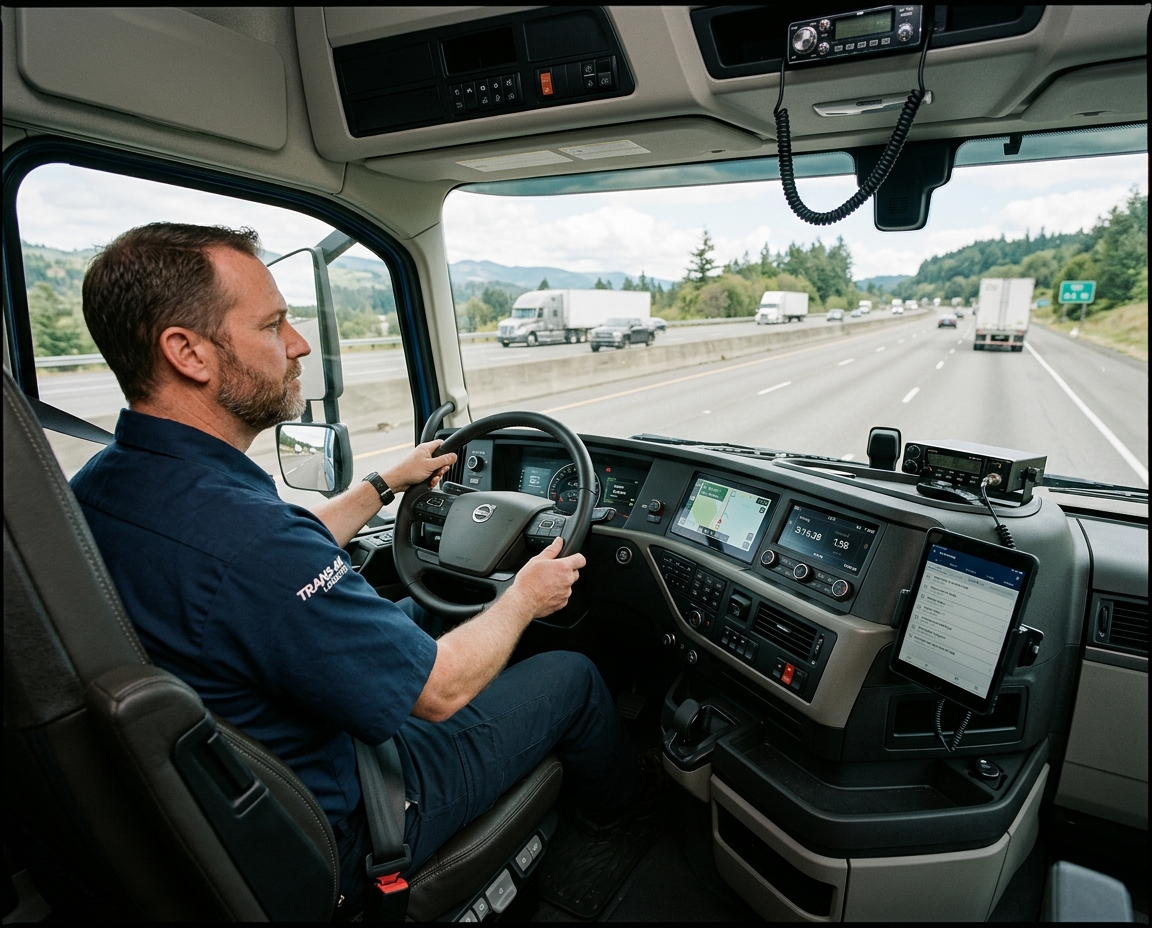
California commercial vehicle operators must follow numerous safety regulations established by state law and the California Highway Patrol (CHP). These requirements can address driver hours, hazardous materials, buses, vehicle equipment, maintenance, and other safety-related matters.
When a person fails to comply with certain CHP rules covered by California Vehicle Code § 34506, the violation may be charged as a misdemeanor.
Because commercial vehicle regulations can be detailed and technical, understanding what California Vehicle Code § 34506 means, what conduct it covers, and what penalties may apply is important for drivers, motor carriers, and other transportation professionals.
This article explains California Vehicle Code § 34506 including common examples, potential penalties, the difference between § 34506 and § 34506.3, and frequently asked questions.
What Is Vehicle Code § 34506?
California Vehicle Code § 34506 addresses failure to comply with certain rules and regulations adopted by the California Highway Patrol.
The statute makes it a misdemeanor to fail to comply with specified CHP rules concerning particular areas of commercial transportation and passenger transportation safety.
The law covers rules involving areas such as:
- Driver hours of service.
- Transportation of hazardous materials.
- School bus construction, design, color, equipment, maintenance, and operation.
- Youth bus equipment, maintenance, and operation.
- Tour bus equipment, maintenance, and operation.
- Certain commercial vehicle equipment, maintenance, and operation requirements.
- School pupil activity bus equipment, maintenance, and operation.
The exact language of the statute and the particular CHP regulation allegedly violated are important. A citation referring to Vehicle Code § 34506 does not, by itself, explain every factual or regulatory detail of the alleged offense.
What Does “Failure to Comply With CHP Rules” Mean?
In simple terms, California Vehicle Code § 34506 can apply when a person or entity subject to one of the specified CHP regulations does not follow an applicable requirement.
The law works together with more detailed regulations. In many situations, the Vehicle Code section provides the legal framework while the specific requirement is found in California’s commercial vehicle regulations.
For example, a commercial vehicle operator may be subject to rules concerning how long a driver can operate a vehicle without the required rest. If the applicable CHP rule is violated, the conduct may potentially fall under Vehicle Code § 34506.
Another example could involve a regulated bus that does not satisfy a particular equipment or maintenance requirement established by an applicable CHP regulation.
The important point is that not every mistake involving a commercial vehicle automatically constitutes a violation of Vehicle Code § 34506. The specific regulation, vehicle classification, facts, and applicable statutory provisions must be considered.
What Types of Conduct Can Fall Under Vehicle Code § 34506?
Driver Hours of Service
One significant category involves hours-of-service requirements.
Hours-of-service rules are intended to limit the amount of time commercial drivers can drive or remain on duty and to reduce risks associated with driver fatigue.
California has specific requirements governing commercial driver hours and records of duty status. Covered drivers may also have electronic logging device requirements, subject to applicable exemptions.
For example, imagine a commercial driver is subject to a particular hours-of-service limitation but continues driving beyond the permitted period without an applicable exception. If the conduct violates the CHP regulation covered by § 34506, the driver may face enforcement under the statute.
Hazardous Material Transportation
Vehicle Code § 34506 also addresses CHP rules concerning the transportation of hazardous materials.
Hazardous materials can create significant risks if improperly transported. Commercial carriers handling regulated materials may therefore have additional requirements involving the vehicle, transportation procedures, equipment, and other safety measures.
For example, a carrier transporting regulated hazardous materials could potentially face enforcement if it fails to comply with an applicable CHP safety regulation.
The precise rule involved matters because hazardous-material transportation is governed by a combination of California and federal requirements.
School Bus Requirements
School buses are subject to specialized safety requirements.
Vehicle Code § 34506 includes CHP regulations concerning the construction, design, color, equipment, maintenance, and operation of school buses.
These requirements exist because school buses transport children and are subject to safety standards beyond those applicable to ordinary passenger vehicles.
A school bus operator or responsible party who fails to comply with an applicable CHP regulation could potentially face a § 34506 violation.
Youth Bus Requirements
The statute also covers specified CHP regulations concerning youth bus equipment, maintenance, and operation.
A youth bus is subject to particular regulatory requirements, and compliance may involve equipment, maintenance, and operational standards.
Whether a particular vehicle qualifies as a youth bus and which regulations apply can depend on the vehicle’s classification and use.
Tour Bus Requirements
California also imposes specialized requirements on tour buses.
Vehicle Code § 34506 covers CHP regulations concerning tour bus equipment, maintenance, and operation.
For example, a tour bus operator may be required to maintain particular safety equipment or comply with operational standards established by CHP regulations. Failure to meet an applicable requirement can result in enforcement.
Commercial Vehicle Equipment, Maintenance, and Operation
Vehicle Code § 34506 also encompasses specified CHP rules concerning the equipment, maintenance, and operation of certain commercial vehicles.
Commercial vehicle safety requirements can involve numerous components, including vehicle condition, required equipment, inspection procedures, and safe operation.
For example, a commercial carrier could face enforcement when a vehicle is operated in violation of an applicable CHP equipment or maintenance requirement covered by the statute.
However, it is important not to assume that every equipment defect or commercial vehicle violation is automatically prosecuted under § 34506. California has numerous separate Vehicle Code provisions addressing commercial vehicle equipment, weight, registration, inspections, and other requirements.
The specific statute and regulation listed on a citation are therefore important.
School Pupil Activity Buses
Vehicle Code § 34506 also addresses CHP rules concerning school pupil activity bus equipment, maintenance, and operation.
These buses are used to transport students for school-related activities and are subject to specialized safety requirements.
A violation involving a school pupil activity bus must be evaluated under the particular regulations applicable to that vehicle.
Is Vehicle Code § 34506 a Misdemeanor?
Yes.
A violation covered by Vehicle Code § 34506 is classified as a misdemeanor under the statute.
That makes a § 34506 charge different from an ordinary infraction.
A misdemeanor is a criminal offense that can potentially carry consequences beyond a typical traffic ticket. Depending on the particular violation and applicable penalty provision, consequences can include fines, probation, and potentially incarceration.
However, the potential penalty should not be determined solely by looking at the words “34506 VC.” Different subsections and related penalty statutes can apply to different violations.
What Are the Penalties for Vehicle Code § 34506?
The potential punishment depends on the particular violation and the penalty provision that applies.
For certain violations involving driver hours of service under Vehicle Code § 34506, California law provides for a fine of at least $500 and up to $1,000, and the violation may be punishable by imprisonment in county jail for up to six months.
This does not mean that every violation associated with Vehicle Code § 34506 automatically results in a $500 to $1,000 fine or six months in jail.
The applicable penalty depends on the specific conduct charged and the relevant California law.
Can a 34506 VC violation result in jail?
Potentially, yes.
Certain violations covered by § 34506 have statutory provisions allowing county jail as a possible punishment.
The maximum penalty is not necessarily the sentence imposed in an individual case. Courts consider the applicable law and the circumstances of the case when determining an appropriate sentence.
Is Vehicle Code § 34506 an Infraction or a Misdemeanor?
Vehicle Code § 34506 is a misdemeanor provision for the specified CHP rules it covers.
However, California also has Vehicle Code § 34506.3, which generally provides that, unless another provision says otherwise, failure to comply with a rule or regulation adopted under the relevant division is an infraction.
This distinction is important.
A person should not assume that every citation for failing to follow a commercial vehicle regulation is a misdemeanor. The exact Vehicle Code section cited and the underlying regulation can determine the classification.
What Is the Difference Between Vehicle Code § 34506 and § 34506.3?
The difference can be summarized simply:
Vehicle Code § 34506: Certain specified failures to comply with CHP rules are misdemeanors.
Vehicle Code § 34506.3: Unless another provision provides otherwise, failure to comply with a department rule or regulation adopted under the applicable division is an infraction.
The distinction matters because misdemeanors and infractions are different classifications of offenses and can carry different procedures and consequences.
If a citation identifies § 34506.3 instead of § 34506, the legal situation may therefore be materially different.
Examples of Potential Vehicle Code § 34506 Violations
Understanding hypothetical situations can make the statute easier to understand.
Example 1: Hours-of-Service Violation
A commercial truck driver is subject to California hours-of-service requirements. The driver continues operating beyond the applicable limit without a valid exception.
If the conduct violates the CHP regulation covered by Vehicle Code § 34506, the driver could potentially be charged under the statute.
Example 2: Tour Bus Equipment
A tour bus is required to maintain particular safety equipment under an applicable CHP regulation. During an inspection, an officer determines that the bus does not meet the regulatory requirement.
Depending on the specific regulation and facts, the failure could potentially result in enforcement under Vehicle Code § 34506.
Example 3: Hazardous Materials
A commercial carrier transports regulated hazardous materials but fails to comply with an applicable CHP requirement governing the transportation of those materials.
If the violated regulation falls within the scope of § 34506, criminal enforcement may be possible.
Example 4: School Bus Maintenance
A school bus is operated despite failing to meet a maintenance requirement imposed by an applicable CHP regulation.
The consequences depend on the exact requirement, the vehicle’s classification, and the applicable enforcement provision.
These examples are intended only to illustrate how the statute can operate. They do not establish that a particular violation will always result in a § 34506 charge.
How Does CHP Enforce Commercial Vehicle Regulations?
The California Highway Patrol’s Commercial Vehicle Section is responsible for significant aspects of commercial vehicle safety enforcement.
CHP commercial vehicle enforcement can involve inspections of vehicles, drivers, records, equipment, and carrier operations.
During an inspection, CHP personnel may identify issues involving:
- Driver hours.
- Records and logs.
- Vehicle equipment.
- Vehicle maintenance.
- Hazardous materials.
- Required inspections.
- Bus safety requirements.
- Other applicable commercial vehicle regulations.
A commercial vehicle inspection does not necessarily mean that a criminal violation has occurred. Inspections can identify a wide range of regulatory issues, and different violations can have different classifications and consequences.
What Is an Out-of-Service Violation?
Commercial vehicle enforcement can also involve out-of-service violations.
An out-of-service determination generally means that a driver or vehicle cannot continue operating until a specified safety problem is addressed or the applicable conditions are satisfied.
Out-of-service enforcement is not necessarily the same thing as a criminal conviction under Vehicle Code § 34506.
For example, a vehicle may be taken out of service because of a serious safety defect. Whether the underlying circumstances also support a separate criminal charge depends on the applicable statutes, regulations, and facts.
Does a 34506 VC Citation Mean You Are Guilty?
No.
A citation or criminal charge is an allegation. It is not the same as a conviction.
The prosecution generally must establish the required elements of the charged offense under California law.
In a Vehicle Code § 34506 case, important questions can include:
- What specific CHP regulation allegedly was violated?
- Did that regulation apply to the vehicle or operation?
- What conduct allegedly violated the regulation?
- What evidence supports the allegation?
- Were the relevant records accurate?
- Was the vehicle properly classified?
- Does another statute or regulation affect the charge?
- What penalty provision applies?
These questions can be particularly important because § 34506 incorporates detailed regulatory requirements.
Why Is the Specific CHP Regulation Important?
One of the most important things to understand about Vehicle Code § 34506 is that the statute does not provide one simple list of every prohibited act.
Instead, it identifies specified categories of CHP regulations.
The actual operational requirements can be found in California’s detailed commercial vehicle regulations.
As a result, someone researching a § 34506 citation should look beyond the Vehicle Code number and determine which specific regulation allegedly was violated.
For example, “34506 VC” alone does not necessarily tell you whether the allegation concerns driver hours, vehicle maintenance, hazardous materials, or bus operations.
The underlying regulation can provide the details.
Does Vehicle Code § 34506 Apply Only to Truck Drivers?
No.
Although commercial truck drivers are commonly associated with California commercial vehicle regulations, Vehicle Code § 34506 covers several different categories of regulated transportation.
Depending on the applicable provision, the statute can involve:
- Commercial vehicle operations.
- Drivers subject to hours-of-service requirements.
- Hazardous material transportation.
- School buses.
- Youth buses.
- Tour buses.
- School pupil activity buses.
The applicability of a particular regulation depends on the vehicle, operation, and circumstances involved.
Does California Require Electronic Logging Devices?
California has electronic logging device requirements for covered intrastate motor carriers and drivers, subject to applicable exemptions.
Electronic logging devices, commonly called ELDs, electronically record certain information concerning a driver’s duty status.
ELD requirements are part of a broader system designed to monitor compliance with hours-of-service requirements.
However, not every commercial driver or vehicle is necessarily subject to the same ELD requirements. Exemptions and federal versus California intrastate rules can affect whether a particular driver must use an ELD.
What Should You Check After Receiving a 34506 VC Citation?
Anyone who receives a commercial vehicle citation should carefully review the documents associated with the citation.
Important information can include:
- The exact Vehicle Code section.
- Any subsection listed.
- The specific Title 13 regulation cited.
- The description of the alleged violation.
- The inspection report.
- Driver logs or ELD information.
- Vehicle inspection and maintenance records.
- Applicable court information.
- Any related out-of-service documentation.
The exact wording can matter.
For example, a citation identifying § 34506 may present different issues from one citing § 34506.3. Similarly, a violation involving driver hours can involve different penalty provisions than a violation involving another category covered by § 34506.
What Are Common Questions About Vehicle Code § 34506?
What does 34506 VC mean?
Vehicle Code § 34506 is a California law addressing failure to comply with specified CHP rules and regulations involving areas of commercial and passenger transportation safety.
Is 34506 VC a criminal offense?
Yes. Violations covered by § 34506 are misdemeanors.
What is the maximum penalty for 34506 VC?
The potential penalty depends on the specific violation and applicable penalty statute. Certain hours-of-service violations can carry a fine of $500 to $1,000 and potential county jail time of up to six months.
Can a first offense under 34506 VC result in jail?
Potentially, although the existence of a statutory jail maximum does not mean jail will automatically be imposed. The outcome depends on the specific charge, applicable law, and circumstances.
Is 34506 the same as 34506.3?
No. Section 34506 addresses specified CHP regulatory violations as misdemeanors, while § 34506.3 generally makes violations of applicable departmental regulations infractions unless another provision provides otherwise.
Does a commercial vehicle inspection automatically lead to a 34506 charge?
No. A commercial vehicle can be inspected without a § 34506 criminal charge being filed. The consequences of an inspection depend on what the inspection reveals and which laws or regulations apply.
Can a business be affected by a commercial vehicle violation?
Potentially. Commercial vehicle regulations can impose obligations on both drivers and motor carriers depending on the applicable law and circumstances. A particular citation should therefore be evaluated based on who is legally responsible for the alleged violation.
Are all commercial vehicle equipment violations prosecuted under 34506?
No. California has numerous commercial vehicle statutes and regulations addressing equipment, maintenance, weight, inspections, registration, and other matters. The specific law cited determines which provision applies.
Why Commercial Vehicle Regulations Matter
California’s commercial vehicle regulations are designed to promote roadway safety.
Commercial trucks, buses, and other regulated vehicles can be large, heavy, carry passengers, or transport hazardous materials. Problems involving driver fatigue, inadequate maintenance, defective equipment, or unsafe operating practices can create serious safety concerns.
For this reason, California imposes extensive regulatory requirements on commercial transportation.
Vehicle Code § 34506 is one part of that regulatory framework. It provides criminal penalties for specified failures to comply with CHP regulations, while other Vehicle Code provisions and regulations address different types of commercial vehicle violations.
Key Takeaways
If you are researching California Vehicle Code § 34506, the most important points are:
- Vehicle Code § 34506 addresses failure to comply with certain CHP rules and regulations.
- Covered violations are classified as misdemeanors.
- The statute covers specified areas including driver hours of service, hazardous materials, certain bus requirements, and specified commercial vehicle equipment, maintenance, and operation.
- The specific CHP regulation allegedly violated is important to understanding a § 34506 charge.
- Penalties vary depending on the particular violation and applicable penalty provision.
- Certain hours-of-service violations can carry fines of $500 to $1,000 and potential county jail time of up to six months.
- Vehicle Code § 34506.3 generally concerns regulatory violations classified as infractions unless another provision provides otherwise.
- A citation is not the same thing as a conviction.
- Commercial vehicle inspections and out-of-service determinations are separate from the question of whether someone is ultimately convicted of a misdemeanor.
- The exact wording of the citation, inspection documents, applicable regulations, and relevant records can all be important.
Conclusion
California Vehicle Code § 34506 is an important commercial vehicle safety statute that can make certain failures to comply with CHP regulations a misdemeanor.
Because the statute works together with detailed California commercial vehicle regulations, determining what a § 34506 citation means often requires more than simply reading the Vehicle Code number. The specific regulation, vehicle classification, alleged conduct, inspection findings, and applicable penalty provision can all affect the legal issues involved.
Contact Southwest Legal
If you have received a Vehicle Code § 34506 VC citation, it is important to understand exactly what you are being accused of violating and what consequences may apply to your circumstances.
Southwest Legal is available to help you better understand the legal process surrounding California commercial vehicle charges. If you have questions about a Vehicle Code § 34506 citation or another commercial vehicle matter, contact us today for a free consultation.
Disclaimer: This article is for general informational purposes only and does not constitute legal advice or create an attorney-client relationship. No attorney-client relationship is formed unless and until the firm and client enter into an agreement for legal services. Laws may change, and legal outcomes depend on the specific facts of each case. Consult a qualified attorney for advice regarding your situation.