


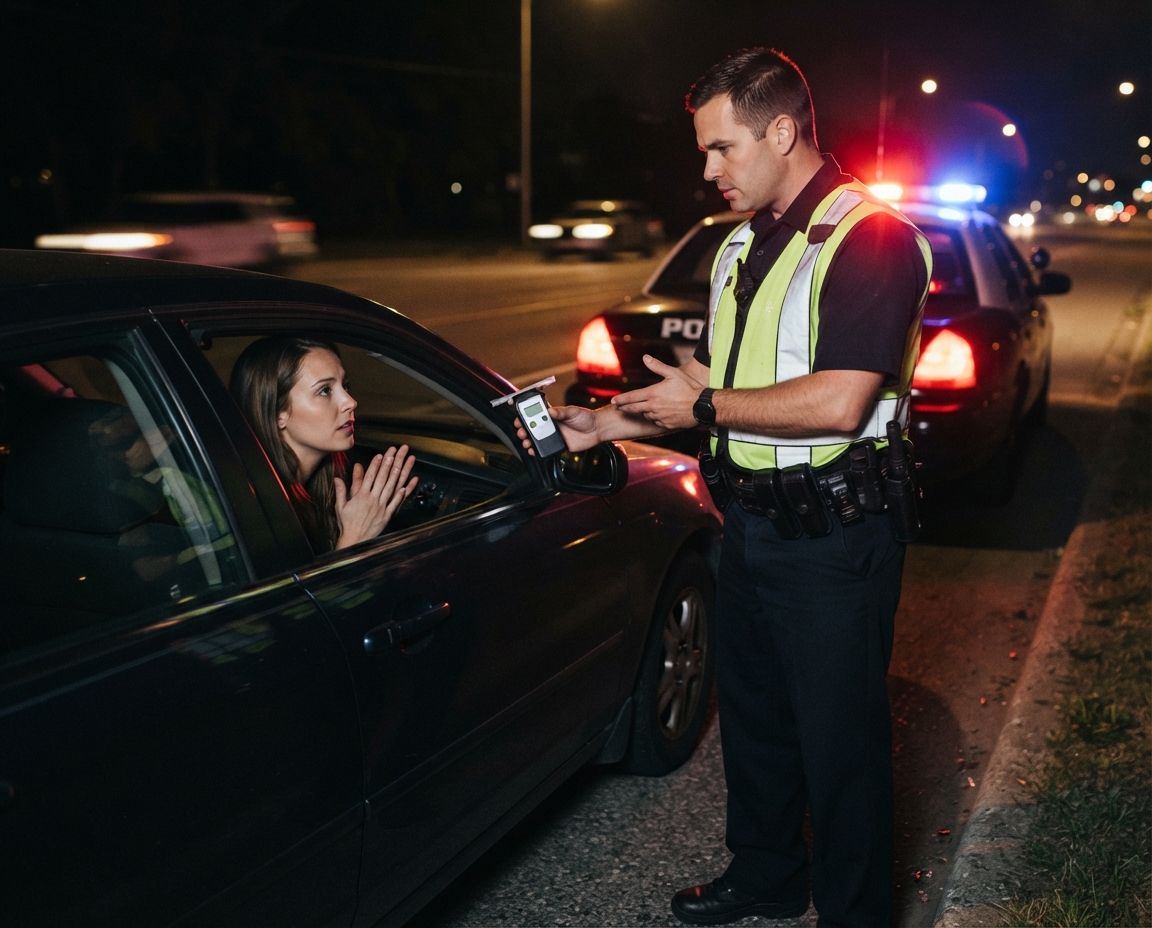
A California DUI stop can involve several different types of testing—but refusing one does not necessarily carry the same consequences as refusing another.
An officer may ask you to perform field sobriety tests, provide a roadside Preliminary Alcohol Screening (PAS) breath sample, and, after an arrest, submit to a chemical test. Although these tests are often discussed together, they serve different purposes and are governed by different rules.
The key distinction is between roadside investigative testing and a required post-arrest chemical test. Refusing a field sobriety exercise is not the same as refusing a chemical test after a qualifying DUI arrest. A qualifying chemical-test refusal can result in DMV action and may also have consequences in a criminal DUI case.
Understanding the difference between these types of testing is important for anyone facing a California DUI investigation or arrest.
What Is the Difference Between a Field Sobriety Test and a Chemical Test?
The main difference is when the test occurs and what it is designed to determine.
Field Sobriety Tests
Field sobriety tests (FSTs) are roadside exercises used to investigate possible impairment. Common standardized tests include:
-
Horizontal gaze nystagmus (HGN)
-
Walk-and-turn
-
One-leg stand
These exercises do not directly measure blood alcohol concentration (BAC). Instead, an officer may consider a person’s performance along with other observations, such as driving behavior, speech, coordination, physical appearance, and statements.
An FST is therefore an investigative tool rather than a chemical measurement of alcohol or drug concentration.
Chemical Tests
Chemical testing is used to determine the alcohol and/or drug content of a person’s blood. Depending on the circumstances, testing may involve:
-
Breath
-
Blood
-
Urine in certain situations
After a qualifying DUI arrest, California’s implied-consent law generally requires a driver to submit to an appropriate chemical test when the statutory requirements are satisfied.
Is It Illegal to Refuse a Field Sobriety Test in California?
Refusing a field sobriety exercise is not the same statutory refusal as refusing a required post-arrest chemical test.
An officer may document that a driver declined an FST and may consider that circumstance as part of the overall investigation. The officer may also continue the investigation using other evidence.
An FST refusal does not automatically trigger the DMV suspension or revocation penalties that apply to qualifying chemical-test refusals.
A driver may also be arrested for DUI without completing field sobriety exercises if other evidence provides a legal basis for the arrest.
What Is a Preliminary Alcohol Screening (PAS) Test?
A Preliminary Alcohol Screening (PAS) test is a roadside breath test used to screen for alcohol during a DUI investigation.
A PAS test is different from a post-arrest chemical test. Depending on the circumstances, a PAS result may be used as part of the investigation, but it does not necessarily satisfy a separate chemical-testing requirement that applies after a qualifying DUI arrest.
A driver may therefore provide a roadside PAS sample and later be required to provide another chemical test after arrest.
What Happens After a DUI Arrest in California?
After a qualifying DUI arrest, California’s implied-consent law generally requires the driver to submit to an appropriate chemical test when the statutory requirements are met.
Blood and breath are the primary testing methods. Urine testing may be available in certain circumstances, including situations involving the availability of other testing methods or suspected drug impairment.
The applicable testing procedure can depend on the circumstances of the arrest and the suspected substance.
What Is a California DUI Chemical-Test Refusal?
A chemical-test refusal generally involves refusing or failing to complete a required post-arrest blood, breath, or, when applicable, urine test.
A qualifying refusal can create issues in two separate proceedings:
-
DMV proceedings, involving the person’s driving privilege
-
Criminal DUI proceedings, involving the DUI charge
These proceedings are separate. A DMV action can therefore proceed independently of the outcome of the criminal DUI case.
What Are the DMV Consequences of Refusing a DUI Chemical Test?
For drivers age 21 or older, qualifying chemical-test refusals can result in:
-
First refusal: One-year suspension
-
Second refusal within 10 years: Two-year revocation
-
Third or subsequent refusal within 10 years: Three-year revocation
Different rules may apply to drivers under 21, drivers on DUI probation, and other circumstances.
These are administrative DMV consequences and are separate from criminal penalties that may result from a DUI conviction.
The DMV Case Is Separate From the Criminal DUI Case
A DUI arrest can involve both a DMV proceeding and a criminal court case.
The DMV proceeding concerns the person’s driving privilege and whether the legal requirements for suspension or revocation have been established.
The criminal case concerns whether the prosecution can prove the DUI charge beyond a reasonable doubt.
The two proceedings are therefore separate, and the result of one does not automatically determine the result of the other.
How Long Do You Have to Request a DMV Hearing?
In a typical Administrative Per Se (APS) case, a driver generally has 10 days from the date of the arrest to request a DMV administrative hearing.
The hearing may address issues such as:
-
Whether the officer had reasonable cause to believe the person was driving under the influence
-
Whether the person was lawfully arrested
-
Whether the required chemical-test advisement was given
-
Whether the person refused or failed to complete the required test
Because the deadline can be short, the paperwork provided by law enforcement and the DMV should be reviewed promptly.
Can a Chemical-Test Refusal Be Used in Criminal Court?
Yes. A qualifying chemical-test refusal may be presented as evidence in a DUI prosecution.
A refusal does not by itself establish guilt. Questions may arise about whether a refusal actually occurred, whether the required advisement was given, and the circumstances surrounding the alleged refusal.
Can You Change Your Mind After Refusing a Chemical Test?
Changing your mind later does not necessarily erase an earlier refusal.
Whether conduct constitutes a refusal can depend on the circumstances, including what the person said or did, how the officer responded, and whether the test was ultimately completed.
For that reason, the circumstances surrounding an alleged refusal can be important in both DMV and criminal proceedings.
What If You Want to Speak With an Attorney First?
California’s DUI chemical-test advisement addresses the driver’s rights concerning an attorney before deciding whether to submit to the required chemical test, selecting a test, or during its administration.
The circumstances of the interaction can still matter, including what the officer requested, what advisements were given, and what the driver said or did.
What If You Cannot Physically Complete the Test?
A person who is physically unable to complete a particular chemical test may present different legal issues from someone who intentionally refuses.
California law provides for alternative testing in certain circumstances. Medical conditions, physical limitations, the officer’s instructions, and the availability of another testing method may therefore be relevant.
Field Sobriety Test vs. Chemical Test
| Issue | Field Sobriety Test | Post-Arrest Chemical Test |
|---|---|---|
| Timing | During the DUI investigation | After a qualifying DUI arrest |
| Purpose | Investigate possible impairment | Determine alcohol and/or drug content |
| Examples | HGN, walk-and-turn, one-leg stand | Breath, blood, or urine in certain circumstances |
| Directly measures BAC? | No | Chemical testing can measure alcohol concentration |
| Implied-consent rules | Not the same statutory requirement | Apply when the legal requirements are met |
| Refusal consequences | May be documented as part of the investigation | Can result in DMV action and criminal-case consequences |
| PAS substitute? | Not applicable | A prior PAS does not necessarily satisfy the post-arrest requirement |
Frequently Asked Questions
Is refusing a field sobriety test the same as refusing a chemical test?
No. Field sobriety tests are investigative exercises. A post-arrest chemical test is subject to California’s implied-consent requirements when the applicable legal conditions are satisfied.
Does refusing an FST automatically suspend my license?
No. An FST refusal is not the same statutory refusal that triggers California’s post-arrest chemical-test refusal penalties.
Is a PAS test the same as a post-arrest breath test?
Not necessarily. A PAS test is generally used during the roadside investigation. A post-arrest chemical test is subject to California’s implied-consent requirements.
What happens if I refuse a DUI chemical test in California?
A qualifying refusal or failure to complete a required chemical test can result in DMV suspension or revocation and may also have consequences in a criminal DUI case.
Can a chemical-test refusal be used against me in court?
Yes. A qualifying refusal may be presented as evidence in a criminal DUI case. However, the refusal alone does not establish guilt.
How quickly should I address a California DUI license suspension?
A driver generally has 10 days from the date of the DUI arrest to request an APS hearing in a typical case. The applicable paperwork and circumstances should be reviewed promptly.
If I took a roadside breath test, can I still be required to take another test?
Yes. Taking a PAS or other roadside breath test does not necessarily satisfy a separate post-arrest chemical-testing requirement.
Key Takeaway
A field sobriety test is an investigative exercise. A PAS test is a roadside alcohol-screening tool. A post-arrest chemical test is subject to California’s implied-consent requirements and can carry separate DMV and criminal-case consequences if a person refuses or fails to complete it.
The legal significance of a refusal depends on the circumstances. Important questions may include whether the arrest was lawful, whether the required advisement was given, whether the person actually refused, whether the person could physically complete the test, and whether the applicable DMV deadline was met.
Contact Southwest Legal
A California DUI arrest can involve both a criminal case and a separate DMV proceeding affecting your driving privilege.
If you or someone you know is facing a California DUI arrest or chemical-test refusal allegation, Southwest Legal can help explain the legal process and the issues that may apply to your situation.
Contact us today for a free consultation to better understand your rights, options, and next steps.
Disclaimer: This article is for general informational purposes only and does not constitute legal advice or create an attorney-client relationship unless and until the firm and client enter into an agreement for legal services. Laws may change, and legal outcomes depend on the specific facts of each case. Consult a qualified attorney for advice regarding your situation.