


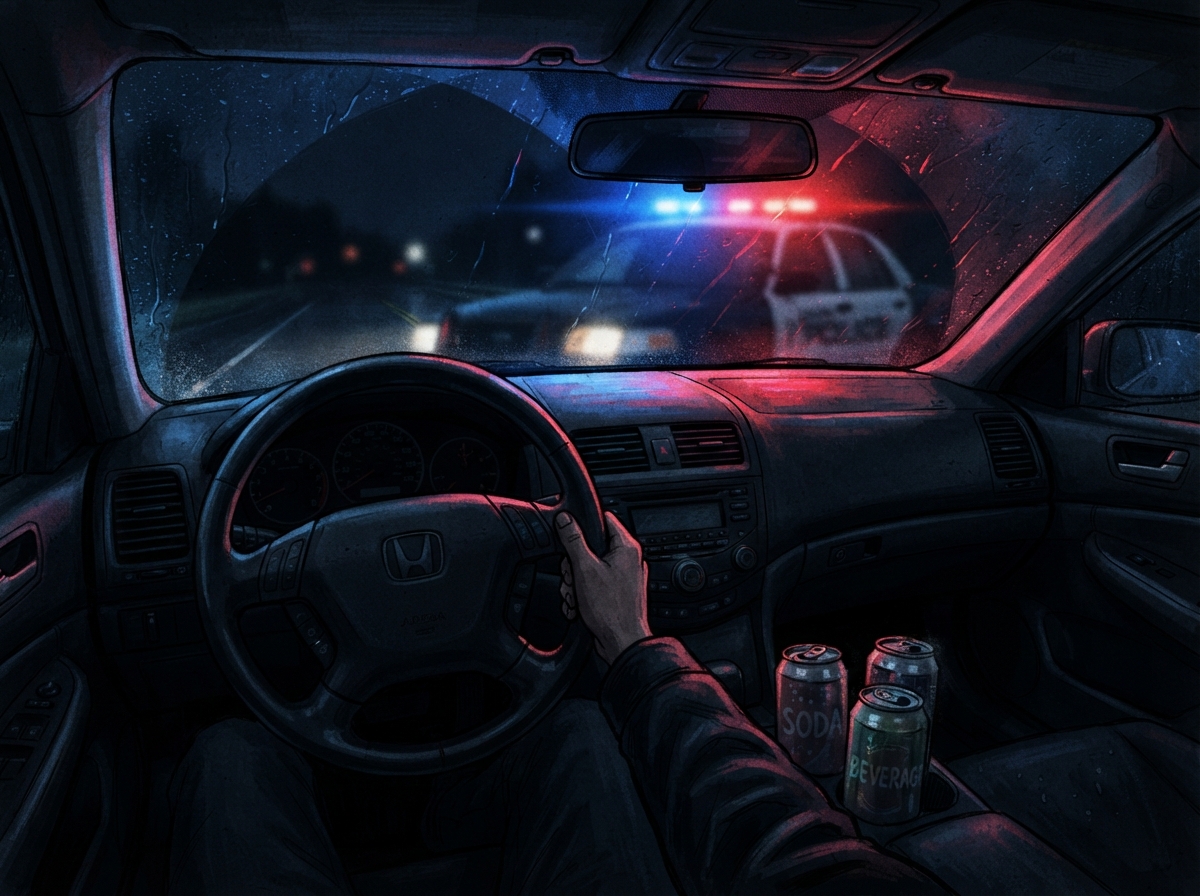
California has different DUI laws governing alcohol-related driving offenses, and the rules can vary significantly depending on the driver’s age, blood alcohol concentration (BAC), and circumstances.
Three California Vehicle Code sections are especially important when discussing DUI and underage drinking and driving:
VC 23136 — California’s under-21 zero-tolerance law
VC 23140 — Driving by a person under 21 with a BAC of 0.05% or higher
VC 23152 — California’s primary DUI statute for alcohol- and drug-related driving offenses
While these DUI laws are related, they are not interchangeable. Each has different requirements and potential consequences.
This guide explains what VC 23136, VC 23140, and VC 23152 mean, how they differ, and how California’s BAC rules apply to drivers.
What Is VC 23136 in California?
California Vehicle Code 23136 establishes California’s zero-tolerance rule for drivers under 21.
Under this law, a person under 21 may not drive a vehicle with a BAC of 0.01% or greater, when the BAC is established through an applicable preliminary alcohol screening test or other chemical test.
The important point is that an under-21 driver does not have to reach the standard 0.08% BAC threshold to face consequences.
Example of VC 23136
Suppose a 19-year-old has one or more alcoholic drinks and later drives home. A chemical test shows a BAC of 0.02%.
A BAC of 0.02% is below the 0.08% threshold generally associated with the standard adult BAC offense. However, because the driver is under 21, the result can trigger California’s zero-tolerance provisions under VC 23136.
Is VC 23136 a criminal DUI?
VC 23136 is different from a standard criminal DUI charge under VC 23152.
The law primarily provides for an administrative action against the driving privilege. A qualifying violation can result in a one-year driver’s license suspension.
Importantly, VC 23136 does not prevent the driver from also being prosecuted under another applicable DUI law if the facts support such a charge.
What Is VC 23140 in California?
California Vehicle Code 23140 addresses drivers under 21 who operate a vehicle with a BAC of 0.05% or higher.
Unlike VC 23136, which is commonly associated with California’s zero-tolerance rule, VC 23140 establishes a separate under-21 alcohol-related driving offense.
VC 23140 is classified as an infraction, not a misdemeanor.
What are the penalties for VC 23140?
The statutory fine for VC 23140 is:
$100 for a first violation.
$200 for a second qualifying violation within one year of a prior conviction.
$300 for a third or subsequent qualifying violation within one year of two or more prior convictions.
Additional requirements or consequences can apply depending on the circumstances.
A conviction under VC 23140 also results in two DMV violation points.
Example of VC 23140
Consider a 20-year-old driver who is stopped by law enforcement. A chemical test establishes a BAC of 0.06%.
Because the driver is under 21 and the BAC is at least 0.05%, VC 23140 may apply.
This is different from a standard adult BAC offense under VC 23152(b), which generally uses a 0.08% threshold.
What Is VC 23152 in California?
California Vehicle Code 23152 is the primary California statute addressing standard DUI offenses.
It includes several different DUI offenses involving alcohol, drugs, or both.
VC 23152(a): Driving Under the Influence
VC 23152(a) makes it unlawful to drive a vehicle while under the influence of an alcoholic beverage.
This provision focuses on impairment, rather than simply whether the driver’s BAC reached a particular number.
VC 23152(b): BAC of 0.08% or Higher
VC 23152(b) makes it unlawful for an ordinary driver to operate a vehicle with a BAC of 0.08% or higher.
The 0.08% threshold is therefore important, but it does not mean that 0.08% is the only BAC level at which a driver can face an alcohol-related DUI charge.
Can you get a DUI below 0.08%?
Potentially, yes.
California distinguishes between driving with a BAC at or above the statutory limit and driving while actually under the influence.
For example, an adult driver’s BAC might be 0.06%. Because that is below 0.08%, the BAC alone does not establish a violation of VC 23152(b). However, if the evidence supports an allegation that the driver was under the influence of alcohol, VC 23152(a) may still be relevant.
Therefore, 0.08% should not be treated as a guaranteed “safe” BAC level for driving.
VC 23152 and Drug-Related DUI
VC 23152 is not limited to alcohol.
California law also prohibits driving under the influence of certain drugs and addresses driving under the combined influence of alcohol and drugs.
This means a person can potentially face a DUI charge even when alcohol is not involved.
There is also no single universal numerical BAC-style limit for every drug. Drug-related DUI cases can involve different types of evidence concerning whether the drug affected the person’s ability to drive safely.
VC 23136 vs. VC 23140 vs. VC 23152
Understanding the differences between these three statutes is easier when their basic requirements are compared directly.
| Vehicle Code | Who It Applies To | Key Threshold | General Classification |
|---|---|---|---|
| VC 23136 | Drivers under 21 | BAC of 0.01% or greater | Under-21 zero-tolerance violation |
| VC 23140 | Drivers under 21 | BAC of 0.05% or greater | Infraction |
| VC 23152 | Drivers subject to the standard DUI laws | Generally 0.08% BAC for the BAC offense; impairment can also be relevant | DUI offense |
These laws can overlap depending on the circumstances.
For example, an under-21 driver with a BAC of 0.08% may potentially face consequences under the under-21 laws as well as prosecution under the standard DUI provisions.
What Is the California Under-21 DUI BAC Limit?
California does not give drivers under 21 the same BAC threshold that applies to the standard adult BAC offense.
The relevant thresholds are:
0.01% or greater: Can trigger the under-21 zero-tolerance law under VC 23136.
0.05% or greater: Can constitute an infraction under VC 23140.
0.08% or greater: Can satisfy the BAC threshold under VC 23152(b), subject to the applicable legal requirements.
These thresholds should not be interpreted as meaning that every driver below 0.08% is legally permitted to drive after drinking.
Can a Person Under 21 Be Charged Under VC 23152?
Yes.
California’s under-21 laws do not prevent prosecution under the standard DUI statute.
For example, a 20-year-old driver with a BAC of 0.09% may potentially face a standard DUI prosecution under VC 23152 in addition to consequences applicable to an under-21 driver.
Likewise, an under-21 driver may potentially face a DUI allegation based on evidence of actual impairment, even when the BAC is below 0.08%.
The specific charges depend on the facts and evidence involved.
What Are the Penalties for VC 23152?
The potential consequences of a VC 23152 conviction depend on factors such as the specific offense, prior DUI history, and whether anyone was injured.
Potential consequences can include:
Fines and court assessments
Driver’s license suspension or other driving restrictions
DUI education programs
Probation
Ignition interlock requirements in qualifying cases
Possible incarceration
Increased penalties for qualifying repeat offenses
Additional consequences when a DUI causes injury or death
A first DUI and a repeat DUI can have significantly different consequences. The specific facts of the case therefore matter.
Does a BAC Below 0.08% Mean You Cannot Get a DUI?
No.
The 0.08% BAC threshold applies to the specific BAC offense in VC 23152(b) for an ordinary driver.
California also prohibits driving under the influence under VC 23152(a).
As a result, a BAC below 0.08% does not automatically eliminate the possibility of an alcohol-related DUI charge.
This is particularly important for under-21 drivers, who are subject to substantially lower BAC thresholds under VC 23136 and VC 23140.
Does VC 23136 Give You a DUI Conviction?
Not necessarily.
VC 23136 is an under-21 zero-tolerance provision involving the driver’s driving privilege. It is distinct from a standard DUI prosecution under VC 23152.
However, the same incident can potentially involve multiple applicable laws depending on the circumstances.
An under-21 driver should therefore distinguish between an administrative license action and a criminal DUI charge.
Does VC 23140 Go on Your Driving Record?
A conviction under VC 23140 results in two DMV violation points.
That is different from VC 23136, which does not receive a violation point under California’s point system.
Because driving records can affect future licensing and insurance-related matters, the distinction can be important.
What Is the Difference Between VC 23136 and VC 23140?
The primary difference is the BAC threshold and the nature of the violation.
VC 23136 applies to drivers under 21 with a BAC of 0.01% or greater and is California’s zero-tolerance law.
VC 23140 applies to drivers under 21 with a BAC of 0.05% or greater and is classified as an infraction.
For example:
A 19-year-old with a BAC of 0.02% may fall under VC 23136.
A 19-year-old with a BAC of 0.06% may fall under VC 23140.
A 19-year-old with a BAC of 0.09% may potentially face a VC 23152 DUI prosecution as well as consequences under laws applicable to under-21 drivers.
The actual legal consequences depend on the circumstances and applicable proceedings.
Frequently Asked Questions
What is VC 23136?
VC 23136 is California’s under-21 zero-tolerance law. It generally prohibits a person under 21 from driving with a BAC of 0.01% or greater.
What is VC 23140?
VC 23140 prohibits a person under 21 from driving with a BAC of 0.05% or greater. It is classified as an infraction.
What is VC 23152?
VC 23152 is California’s primary statute for standard DUI offenses involving alcohol, drugs, or both. It includes driving under the influence and the 0.08% BAC offense applicable to ordinary drivers.
Is VC 23140 a misdemeanor?
No. VC 23140 is an infraction.
Does VC 23140 add points to a driver’s record?
Yes. A conviction under VC 23140 results in two DMV violation points.
Does VC 23136 add points?
No. VC 23136 does not receive a violation point under California Vehicle Code § 12810.
Can you get a DUI with a 0.05% BAC in California?
Potentially. For a driver under 21, a BAC of 0.05% or higher can violate VC 23140. For an adult driver, 0.05% is below the 0.08% BAC threshold under VC 23152(b), but an alcohol-related DUI allegation under VC 23152(a) may still be possible if the evidence supports actual impairment.
Can someone under 21 get a DUI at 0.02%?
An under-21 driver with a BAC of 0.02% can potentially face consequences under VC 23136’s zero-tolerance provisions.
Can an under-21 driver be charged under VC 23152?
Yes. The under-21 laws do not prevent prosecution under the standard DUI statute when the facts support it.
Is 0.08% the legal limit for everyone in California?
No. California has different BAC rules for different categories of drivers. Drivers under 21 and certain commercial or passenger-for-hire drivers are subject to different standards.
Key Takeaways
The most important distinctions are straightforward:
VC 23136: California’s zero-tolerance law for drivers under 21 with a BAC of 0.01% or greater.
VC 23140: An infraction for a driver under 21 who drives with a BAC of 0.05% or greater.
VC 23152: California’s primary standard DUI statute, including driving under the influence and driving with a BAC of 0.08% or greater under the applicable BAC provision.
A BAC below 0.08% does not necessarily eliminate the possibility of an alcohol-related DUI charge.
Under-21 drivers are subject to much lower BAC thresholds.
VC 23136 and VC 23140 can involve consequences separate from a standard DUI prosecution.
A single incident can potentially involve more than one applicable law.
Understanding the specific Vehicle Code section involved is important because VC 23136, VC 23140, and VC 23152 have different legal requirements and consequences.
Contact Southwest Legal
Questions About VC 23136, VC 23140, or VC 23152?
California DUI laws can be difficult to navigate, particularly when an incident involves an under-21 driver, a low BAC, or multiple Vehicle Code sections. Knowing which law applies can make an important difference in understanding the legal process and potential consequences.
If you or a family member is dealing with a California DUI-related charge, citation, or license issue, Southwest Legal can help you understand the laws and legal process that may apply to your situation. Contact us today for a free consultation and take the next step toward understanding your legal options.
Disclaimer: This article is for general informational purposes only and does not constitute legal advice or create an attorney-client relationship unless and until the firm and client enter into an agreement for legal services. Laws may change, and legal outcomes depend on the specific facts of each case. Consult a qualified attorney for advice regarding your situation.