


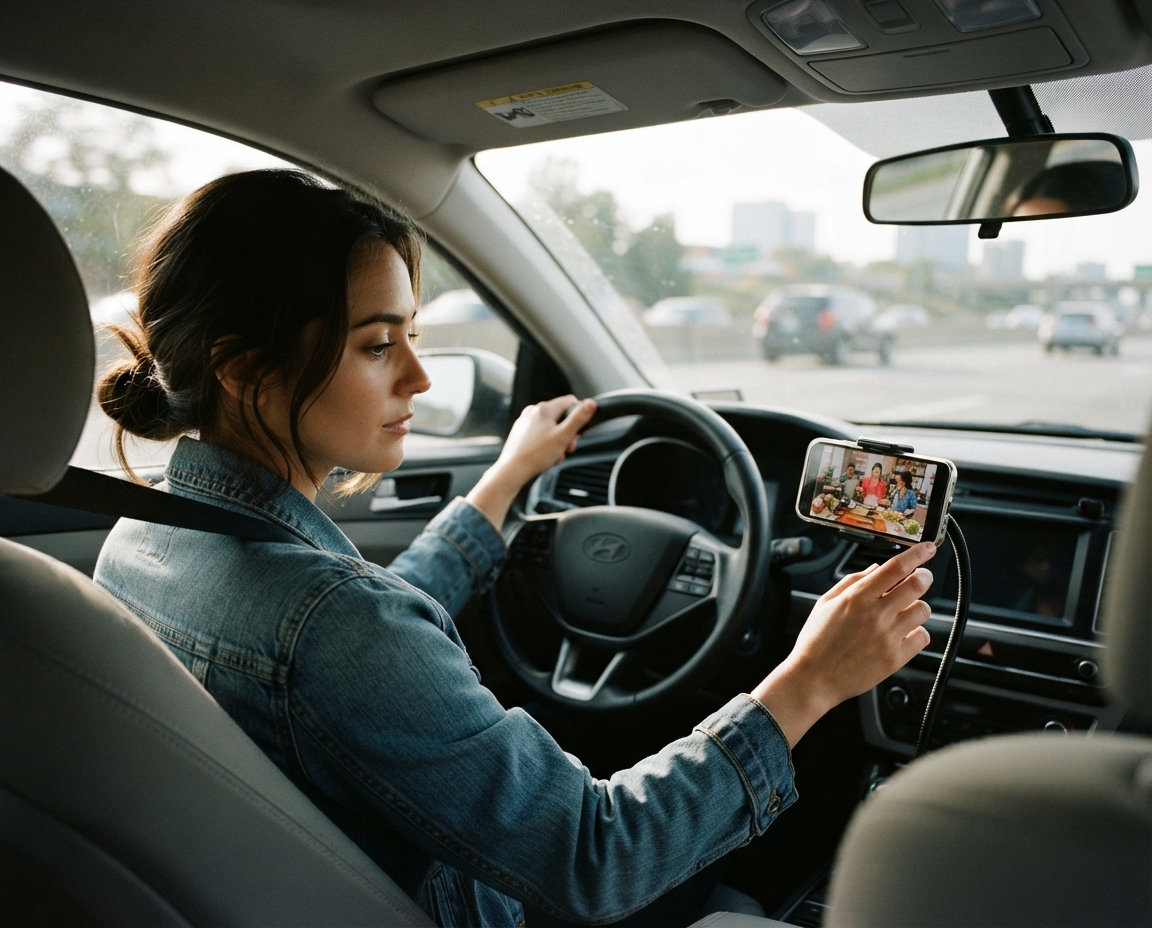
California Vehicle Code § 27602 regulates the use of television receivers, video monitors, and similar video displays in motor vehicles while driving. The law is intended to prevent drivers from viewing certain television or video content while operating a vehicle.
With today’s vehicles equipped with large infotainment screens, rear-seat entertainment systems, navigation displays, and backup cameras, it can be difficult to determine which screens are permitted and which may violate California law.
This guide explains California Vehicle Code § 27602, including when car TV and video displays are prohibited, which displays are exempt, and common questions about watching videos while driving.
What Is California Vehicle Code § 27602?
California Vehicle Code § 27602 generally prohibits a person from driving a motor vehicle while certain television or video equipment is operating under circumstances covered by the statute.
The law applies to a television receiver, video monitor, television or video screen, or similar device that visually displays a television broadcast or video signal producing entertainment or business applications.
The statute addresses equipment that is:
-
Located in the vehicle forward of the back of the driver’s seat; or
-
Operating and visible to the driver while driving.
However, California law does not prohibit every screen inside a vehicle. Section 27602 contains several important exceptions for navigation, mapping, vehicle information, maneuvering displays, and certain properly configured video systems.
Is It Illegal to Watch TV While Driving in California?
Generally, yes, if the television or video display falls within the prohibition of Vehicle Code § 27602.
For example, a driver watching a movie on a dashboard screen while driving may violate the law when the screen is operating and visible to the driver.
The law is not limited to traditional televisions. It can apply to video monitors and similar displays capable of showing television broadcasts or video signals.
The important issue is whether the particular equipment and its use fall within the statute and whether an exception applies.
Does California Law Ban All Screens in Cars?
No.
California Vehicle Code § 27602 specifically excludes several types of displays from the prohibition.
These include qualifying:
-
Vehicle information displays
-
Global positioning displays
-
Mapping displays
-
Visual displays that help the driver see forward, behind, or to the sides of the vehicle for maneuvering
-
Television or video equipment using a qualifying interlock device
-
Certain video systems configured so the driver cannot view the prohibited video while driving
Therefore, the presence of a screen in a vehicle does not automatically mean that the vehicle is violating California law.
Are GPS and Navigation Screens Legal While Driving?
Yes. Vehicle Code § 27602 specifically excludes global positioning displays and mapping displays from the prohibition.
A driver can therefore use a qualifying navigation or mapping display while driving.
Example
A driver uses the vehicle’s built-in navigation system to follow directions. The screen displays a map, the vehicle’s location, and upcoming turns.
That type of display is specifically excluded from the restrictions of § 27602.
Are Backup Cameras Legal in California?
Yes, qualifying backup-camera displays are permitted under the exception for visual displays used to enhance or supplement the driver’s view for maneuvering the vehicle.
This can include displays showing the area behind or around the vehicle while the driver is parking or reversing.
Example
A driver shifts into reverse, and the vehicle’s center display shows the area behind the vehicle through a rear-facing camera.
That maneuvering-related display is different from an entertainment video because its purpose is to help the driver operate the vehicle.
Can You Have a Video Screen in the Dashboard?
Yes. Having a video screen installed in a dashboard is not automatically illegal.
The issue is what the screen is displaying and whether the display is being used in circumstances prohibited by § 27602.
For example:
-
A dashboard screen displaying navigation may fall within the navigation exception.
-
A screen displaying vehicle information may fall within the vehicle-information exception.
-
A screen showing a qualifying maneuvering-camera image may fall within the maneuvering exception.
-
A screen showing an entertainment movie that is visible to the driver while driving can present a violation under § 27602.
The fact that the screen is factory-installed does not automatically make every function available on that screen legal while driving.
Can Passengers Watch Movies in a Car?
A passenger entertainment screen may be permitted when it is configured so the driver cannot view the prohibited video while driving.
California Vehicle Code § 27602 specifically addresses whether a television or video display is visible to the driver and also provides an exception for certain systems designed or configured to prevent the driver from viewing the video.
Example
A vehicle has a rear-seat entertainment screen intended for passengers. The screen is positioned so that the driver cannot see the movie while driving.
That situation is different from a movie playing on a dashboard screen directly visible to the driver.
The exact design and configuration of the entertainment system matter.
What Is an Interlock Device?
An interlock device is a system that disables certain functions when the vehicle is being driven.
Vehicle Code § 27602 provides an exception for qualifying television or video equipment equipped with an interlock that disables the prohibited video functions while the vehicle is being driven.
The system may continue to allow certain permitted displays, such as:
-
Vehicle information
-
GPS
-
Mapping
-
Qualifying maneuvering displays
Example
A vehicle’s entertainment system can play movies while the vehicle is parked. Once the vehicle begins moving, the system automatically disables video playback but continues displaying navigation.
A properly qualifying system of this type can fall within the statutory exception.
Do Aftermarket Car TVs Have to Follow the Law?
Yes. California Vehicle Code § 27602 is not limited to factory-installed equipment.
An aftermarket television, video monitor, or similar display can be subject to the same restrictions.
For example, installing an aftermarket entertainment screen on the dashboard does not make it legal to watch movies on that screen while driving.
The equipment’s location, operation, visibility to the driver, and applicable statutory exceptions all matter.
What About Apple CarPlay and Android Auto?
California Vehicle Code § 27602 does not specifically name Apple CarPlay or Android Auto.
Instead, the relevant question is what the system is displaying.
For example, a navigation or mapping function may fall within the statutory exception for GPS or mapping displays.
An entertainment video visible to the driver is different and can raise an issue under § 27602.
Therefore, the fact that a vehicle has Apple CarPlay, Android Auto, or another infotainment system does not automatically make every feature on the screen permissible while driving.
What Are the Exceptions to California Vehicle Code § 27602?
The law contains several exceptions. The most relevant for ordinary drivers include:
Vehicle information displays
Displays providing qualifying information about the vehicle are excluded.
GPS displays
Global positioning displays are excluded.
Mapping displays
Mapping displays are excluded.
Maneuvering displays
Visual displays that enhance or supplement the driver’s view forward, behind, or to the sides of the vehicle for maneuvering are excluded.
Properly controlled video systems
Certain television and video systems can qualify for an exception when an interlock disables prohibited video while the vehicle is being driven.
Certain systems may also qualify when they are designed, operated, and configured so the driver cannot view the television broadcast or video signal while operating the vehicle safely and reasonably.
What Happens If You Violate Vehicle Code § 27602?
A violation of California Vehicle Code § 27602 is an infraction.
The amount associated with a citation can vary depending on applicable fines, assessments, and court charges. Drivers should review their citation and the current court information rather than relying on an outdated fine amount found online.
If you receive a citation, the specific subdivision listed on the ticket and the circumstances of the alleged violation are important.
Common Examples of California’s Car TV Law
Watching a movie on a dashboard screen
A driver watches an entertainment movie on a dashboard screen while driving.
Because the video is visible to the driver, this can fall within the prohibition of § 27602.
Using built-in GPS
A driver uses the vehicle’s navigation system to follow directions.
A qualifying GPS or mapping display is specifically excluded from the statute.
Using a backup camera
A driver looks at the vehicle’s rear-camera display while backing into a parking space.
A qualifying maneuvering display is specifically excluded.
Watching a movie on a rear-seat screen
Passengers watch a movie on a rear entertainment system that the driver cannot see.
This may qualify for an exception if the system is properly configured so the driver cannot view the prohibited video.
Using an entertainment system with a driving interlock
A vehicle automatically disables entertainment video when the vehicle is being driven.
A qualifying interlock system can fall within the statutory exception.
Frequently Asked Questions
Is it illegal to watch Netflix while driving in California?
Watching an entertainment video on a display that is prohibited under Vehicle Code § 27602 can violate California law. Streaming the video through a vehicle’s infotainment system does not automatically make the display legal.
Can I have a TV in my car in California?
Yes. California law does not prohibit simply having a television or video screen installed in a vehicle. The restrictions concern how qualifying equipment is operated and viewed while driving.
Can passengers watch TV while I drive?
Potentially. A passenger entertainment system may qualify for an exception when it is configured so that the driver cannot view the prohibited video.
Is GPS legal while driving?
Yes. Global positioning and mapping displays are specifically excluded from Vehicle Code § 27602.
Are backup cameras legal?
Yes. Qualifying displays used to enhance or supplement the driver’s view for maneuvering are excluded from the statute.
Are factory-installed screens exempt?
Not automatically. A factory-installed screen can have both permitted and prohibited functions. The particular use of the screen matters.
Does the law apply to aftermarket screens?
Yes, potentially. Aftermarket video equipment can be subject to § 27602 if it falls within the statute.
Does Vehicle Code § 27602 prohibit all screens visible to the driver?
No. GPS, mapping, vehicle-information, and qualifying maneuvering displays are among the displays specifically excluded from the prohibition.
What Should You Do If You Receive a § 27602 Citation?
If you receive a citation under California Vehicle Code § 27602, review the citation carefully and identify the specific equipment and conduct involved.
Relevant facts may include:
-
What type of screen was involved
-
Where the screen was located
-
What the screen was displaying
-
Whether the screen was operating while driving
-
Whether the driver could see the display
-
Whether the system had an interlock
-
Whether the equipment qualified for a statutory exception
Because the law contains specific exceptions, the circumstances surrounding the alleged violation can matter.
A person who receives a citation may wish to consult a qualified California attorney about the particular circumstances of the case.
Conclusion
California Vehicle Code § 27602 restricts the use of certain television and video displays while driving, but it does not ban every screen inside a vehicle.
The law specifically allows or excludes qualifying displays used for:
-
Vehicle information
-
GPS navigation
-
Mapping
-
Vehicle maneuvering and camera views
Certain entertainment systems may also qualify when they are properly configured to prevent the driver from viewing prohibited video while driving.
The key issue is whether the particular display and its use fall within the statute and whether a statutory exception applies.
Contact Southwest Legal
If you have received a citation involving a car TV, video monitor, dashboard screen, or other vehicle display, understanding the specific allegation and applicable exception can be important.
If you need help understanding a California Vehicle Code § 27602 citation, Southwest Legal can help you understand the legal issue and your available options. Contact us today for a free consultation and take the next step toward addressing your citation with greater clarity and confidence.
Disclaimer: This article is for general informational purposes only and does not constitute legal advice or create an attorney-client relationship unless and until the firm and client enter into an agreement for legal services. Laws may change, and legal outcomes depend on the specific facts of each case. Consult a qualified attorney for advice regarding your situation.