


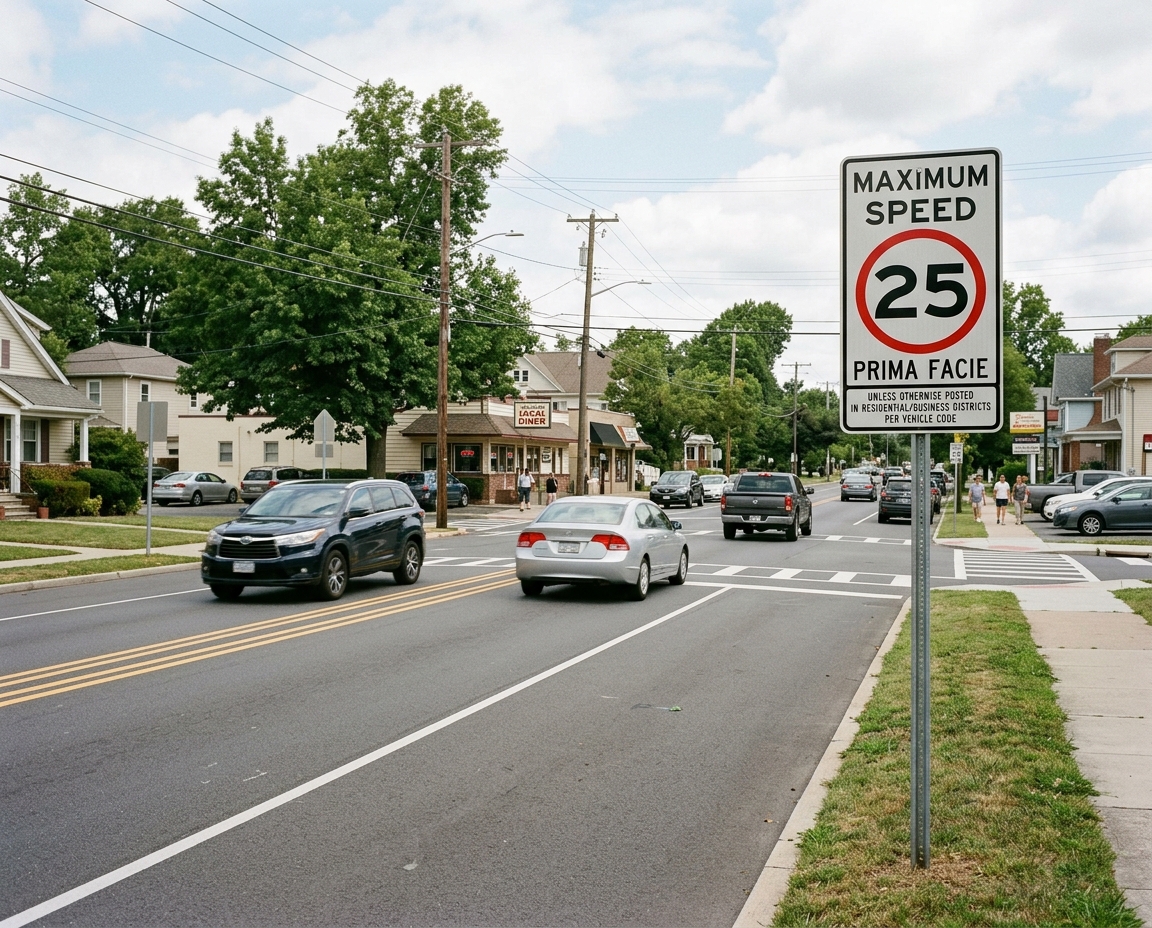
California’s prima facie speed limits are default speed limits that apply to specific roads and driving conditions under California Vehicle Code § 22352. These limits generally include 15 mph in certain alleys, railroad crossings, intersections, and qualifying senior zones, and 25 mph in residential districts, business districts, and qualifying school zones, unless a different limit is lawfully established.
Understanding these rules helps California drivers determine which speed limit applies to a particular location and why exceeding that limit may result in a speeding citation.
What Are Prima Facie Speed Limits in California?
Prima facie speed limits are statutory default speed limits that apply to designated locations or circumstances. Under California Vehicle Code § 22352, certain limits apply even when a driver does not see a sign displaying the exact speed limit.
California Vehicle Code § 22351(b) explains the legal effect of exceeding a prima facie speed limit. Driving above the limit is prima facie unlawful unless the defendant establishes through competent evidence that the speed did not violate the basic speed law under the conditions that existed at the time and place.
This is not general permission to exceed a speed limit. Drivers must follow applicable speed limits and drive at a reasonable speed for the conditions.
What Are the Speed Limits Under California Vehicle Code § 22352?
Section 22352 establishes default speed limits for specific locations.
| Location | Prima facie speed limit | Conditions |
|---|---|---|
| Certain railroad crossings | 15 mph | Specified visibility requirements apply, subject to statutory exceptions |
| Certain intersections | 15 mph | Required visibility is obstructed during the final 100 feet of approach, subject to statutory exceptions |
| Alleys | 15 mph | Applies while traversing an alley |
| Qualifying senior zones | 15 mph | The facility, location, and warning-sign requirements must be met |
| Residential districts | 25 mph | Unless a different limit is lawfully established |
| Business districts | 25 mph | Unless a different limit is lawfully established |
| Qualifying school zones | 25 mph | Statutory school-zone conditions must be satisfied |
These are the principal limits under § 22352. Other provisions of the California Vehicle Code authorize additional speed limits in certain circumstances.
When Does the 15 mph Speed Limit Apply?
The 15 mph limit applies in the specific situations identified in § 22352(a). It does not automatically apply to every intersection or railroad crossing.
For certain railroad crossings, the limit applies when the driver lacks the clear and unobstructed view specified by the statute during the final 100 feet of approach, subject to exceptions involving qualifying flagpersons and warning signals.
At certain intersections, the limit applies when the required view of the intersection and approaching traffic is obstructed during the final 100 feet of approach. This provision excludes intersections protected by stop signs, yield right-of-way signs, or official traffic control signals.
Example: A driver approaches an uncontrolled intersection where buildings obstruct the view of cross traffic. If the statutory visibility conditions are satisfied, the 15 mph limit may apply.
Is the Speed Limit Always 25 mph in Residential Districts?
No. Section 22352 establishes a 25 mph default limit for highways in residential and business districts, but a different limit may apply when lawfully established.
Drivers should check applicable signs and local speed-limit rules rather than assume every residential street has the same limit.
How Do School Zone Speed Limits Work in California?
Under § 22352(b), a 25 mph prima facie speed limit applies in qualifying school areas when the statutory conditions are satisfied, including applicable warning signs and the presence of children during specified school periods.
California law also permits qualifying local authorities to establish reduced school-zone limits under other provisions.
- California Vehicle Code § 22358.4: Authorizes certain local authorities to establish qualifying 15 mph school-zone limits and other specified school-zone limits, subject to statutory requirements.
- California Vehicle Code § 22352.5: Authorizes a local authority to establish a 20 mph prima facie speed limit in a qualifying school zone by ordinance or resolution. This provision took effect January 1, 2026, and is scheduled to expire January 1, 2031, unless the law changes.
The applicable school-zone limit depends on the location, relevant statutory conditions, local action, and signage. Drivers should not assume every California school zone has a 25 mph limit.
What Is the Difference Between Prima Facie Speed Limits and the Basic Speed Law?
California Vehicle Code § 22352 establishes default speed limits for specified locations. Section 22350, known as California’s basic speed law, prohibits driving faster than is reasonable or prudent under the circumstances.
The basic speed law requires drivers to consider factors such as:
- Weather and visibility.
- Traffic conditions.
- Road surface and condition.
- Available stopping distance.
- Potential danger to people or property.
Example: A driver travels at 25 mph on a road with a 25 mph limit during heavy rain. If that speed is unreasonable for the conditions, the driver may still violate § 22350.
Therefore, complying with a posted or prima facie speed limit does not automatically mean a driver’s speed is lawful in every circumstance.
Does a Prima Facie Speed Limit Require a Posted Sign?
No. A statutory default limit under § 22352 may apply even when a sign displaying that exact limit is absent.
However, when a different speed limit is established under an authorized procedure, the applicable statutory requirements, including required signage, must be satisfied.
The absence of a sign does not automatically invalidate a speeding citation. The legal significance depends on the type of speed limit involved and the circumstances of the alleged violation.
Can You Challenge a Ticket for Exceeding a Prima Facie Speed Limit?
Yes. A driver may contest a speeding citation, but the available arguments depend on the charge, applicable law, and evidence.
Relevant questions may include:
- Was the correct speed limit applied to the location?
- Did the road meet the statutory requirements for the alleged limit?
- Was a different speed limit lawfully established?
- Does the evidence reliably establish the vehicle’s speed?
- Are the applicable speed-measurement and enforcement requirements satisfied?
California Vehicle Code § 40802 addresses speed traps and establishes restrictions involving certain speed-limit enforcement methods. Whether those restrictions apply depends on the road, the applicable limit, survey requirements, and statutory exceptions. The use of radar or lidar alone does not establish that a citation involves an unlawful speed trap.
No particular argument guarantees that a citation will be dismissed. The applicable law and evidence determine the issues that may be relevant.
Frequently Asked Questions
1. What does prima facie speed limit mean?
A prima facie speed limit is a statutory default speed limit that applies to specified roads or driving conditions. California Vehicle Code § 22352 establishes these limits, while § 22351 explains the legal effect of exceeding them.
2. What is the default speed limit in a California residential district?
The default prima facie speed limit is generally 25 mph under § 22352, unless a different limit is lawfully established.
3. When does California’s 15 mph speed limit apply?
The 15 mph limit applies to specified alleys, certain railroad crossings, certain intersections, and qualifying senior zones under § 22352. The applicable statutory conditions must be satisfied.
4. What is the speed limit in a California school zone?
The general statutory limit is 25 mph when the conditions under § 22352 are met. Certain qualifying school zones may have lower limits under §§ 22358.4 and 22352.5.
5. Can I receive a speeding ticket without a posted speed limit sign?
Yes. A statutory prima facie speed limit may apply without a sign displaying that exact limit. Special or changed speed limits may have separate signage requirements.
6. Can I legally drive faster than a prima facie speed limit?
Exceeding a prima facie limit is prima facie unlawful under § 22351(b). The statute permits a defendant to establish through competent evidence that the speed did not violate the basic speed law under the conditions at the time and place. This is not a general exemption from speed limits.
7. Can I contest a speeding ticket under § 22352?
Yes. A driver may challenge a citation based on the applicable law and evidence, including whether the correct limit applied and whether the alleged violation can be established. The outcome depends on the circumstances.
8. Is driving below the speed limit always legal?
No. Section 22350 prohibits driving faster than is reasonable or prudent under the prevailing conditions, even when the speed is below the posted limit.
Key Takeaways
- California Vehicle Code § 22352 establishes prima facie speed limits for specified locations.
- The principal statutory limits are 15 mph and 25 mph, depending on the location and applicable conditions.
- School-zone limits may differ under §§ 22358.4 and 22352.5.
- Section 22350 requires drivers to maintain a reasonable and prudent speed for the conditions.
- A missing sign does not automatically invalidate a speeding citation.
- Whether a ticket can be successfully challenged depends on the applicable law and evidence.
Contact Southwest Legal
Understand California Prima Facie Speed Limits
Understanding which speed limit applies to your road can make a difference when reviewing a California speeding citation. The relevant location, statutory conditions, and evidence all matter when determining whether the law was correctly applied.
If you have received a speeding ticket and have questions about California Vehicle Code § 22352, Southwest Legal can help you understand the legal issues involved and explore the options that may be available in your situation.
Contact us today for a free consultation. Learn more about your rights, get clarity on the issues surrounding your citation, and take an informed next step with Southwest Legal.
Disclaimer: This article is for general informational purposes only and does not constitute legal advice or create an attorney-client relationship unless and until the firm and client enter into an agreement for legal services. Laws may change, and legal outcomes depend on the specific facts of each case. Consult a qualified attorney for advice regarding your situation.