


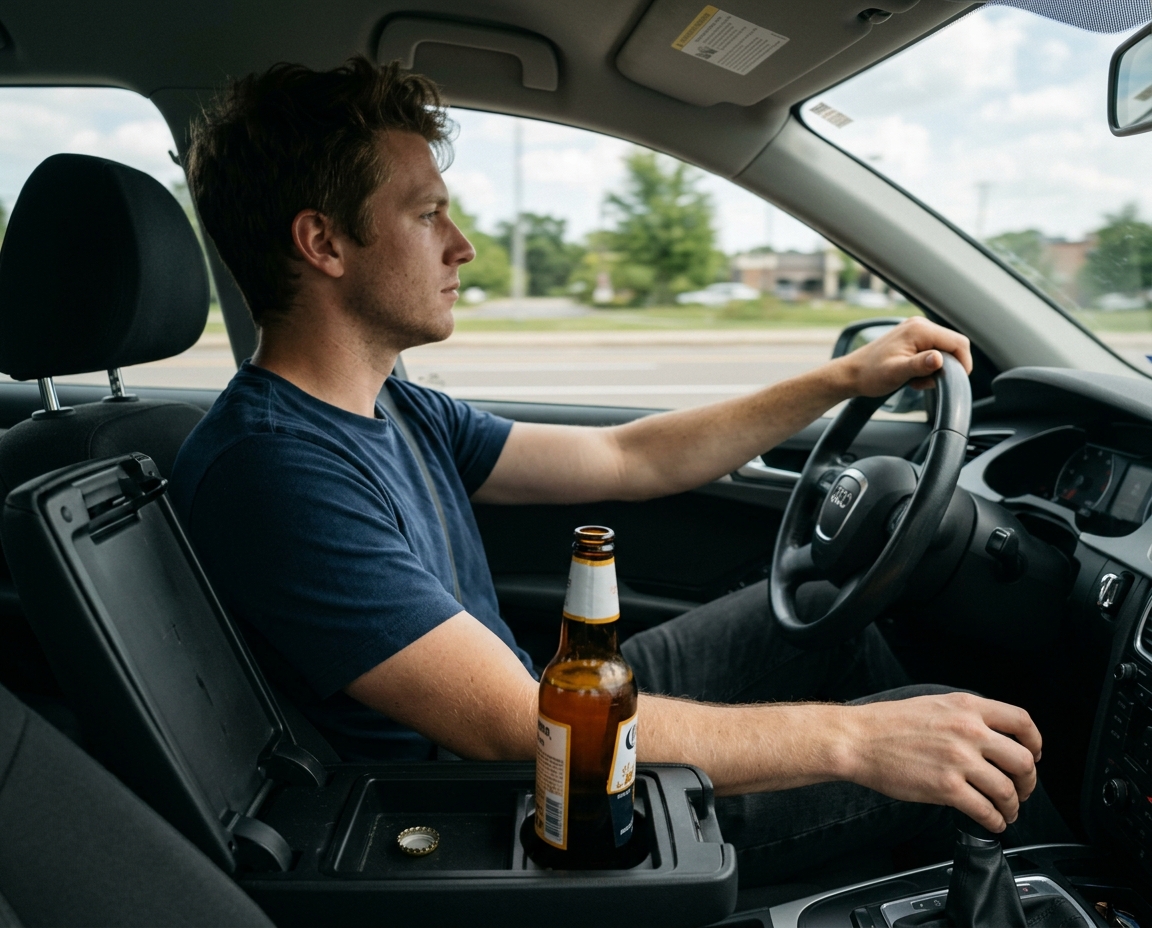
California Vehicle Code § 23223 generally prohibits drivers and passengers from possessing an open container of alcohol inside a motor vehicle on a highway or certain specified lands. A violation may result in a citation even if the person is not drinking from the container, unless an applicable legal exception applies.
Understanding California’s open container law can help drivers and passengers understand what is prohibited, what penalties may apply, and what options may be available after receiving a citation.
What Does California Vehicle Code § 23223 Prohibit?
California Vehicle Code § 23223 prohibits drivers and passengers from possessing qualifying open alcoholic beverage containers inside motor vehicles in locations covered by the statute.
The law has two primary provisions:
- Section 23223(a): Prohibits a driver from possessing a qualifying open alcoholic beverage container.
- Section 23223(b): Prohibits a passenger from possessing a qualifying open alcoholic beverage container.
The restriction applies while the vehicle is on a highway or on lands specified under California Vehicle Code § 23220(c).
An open container generally includes a bottle, can, or other receptacle containing an alcoholic beverage that has been opened, has had its seal broken, or has had some of its contents removed.
For example, a driver carrying an opened beer can in a cup holder may face a citation even if they have not consumed any alcohol during the trip.
Does California’s Open Container Law Apply to Drivers and Passengers?
Yes. California Vehicle Code § 23223 expressly covers both drivers and passengers.
A driver may violate the law by possessing an open alcoholic beverage container while in a vehicle in a covered location. A passenger may also receive a citation for possessing an open container, even if they are not driving.
Example: A passenger holds an opened bottle of wine while riding in a car on a public highway. Even if the passenger does not drink from the bottle, the circumstances may support a violation of § 23223(b).
The fact that another person owns the vehicle does not automatically exempt someone from the law. The relevant question is whether the person possessed the container under circumstances covered by the statute.
What Counts as an Open Container?
An open container may include:
- An opened beer can containing beer.
- A wine bottle with its cork removed and wine remaining inside.
- A liquor bottle with a broken seal and alcohol remaining inside.
- An opened alcoholic beverage container that has been recapped.
Replacing a cap or lid does not necessarily make an opened container legally unopened.
A completely empty bottle presents a different issue because § 23223 addresses receptacles containing alcoholic beverages. Whether the law applies depends on the actual circumstances and statutory requirements.
Are There Exceptions to California’s Open Container Law?
Yes. California Vehicle Code § 23229 provides limited exceptions to the restrictions in § 23223.
These include qualifying passengers in certain buses, taxicabs, and limousines for hire that meet applicable licensing requirements. The statute also addresses the living quarters of a house car or camper.
The exceptions are not unlimited. The type of vehicle, the person’s circumstances, and the applicable statutory requirements determine whether an exception applies. Separate restrictions may apply to people under 21.
What Is the Difference Between Vehicle Code §§ 23223, 23225, and 23226?
These California statutes address related but distinct conduct involving open alcoholic beverage containers.
| Vehicle Code | General purpose |
|---|---|
| § 23223 | Prohibits drivers and passengers from possessing qualifying open alcohol containers in covered motor vehicles. |
| § 23225 | Regulates the storage of open alcoholic beverage containers in motor vehicles. |
| § 23226 | Restricts keeping open alcoholic beverage containers in the passenger compartment under the circumstances covered by the law. |
The distinction matters because possessing an open container and storing one in a vehicle are separate legal issues. The exact code section listed on a citation helps determine which requirements apply.
Is Possessing an Open Container the Same as DUI?
No. Possessing an open container and driving under the influence are separate offenses.
Section 23223 addresses possession of an open alcoholic beverage container in a covered vehicle. California DUI laws address driving while impaired or driving with a prohibited blood alcohol concentration under the applicable statute.
For example, an officer may discover an open container in a passenger’s possession without evidence that the driver is impaired. That situation raises a different legal issue from a suspected DUI.
Separate violations may nevertheless be alleged during the same traffic stop if the evidence supports them.
What Defenses May Apply to an Open Container Ticket?
Potential defenses depend on the facts, evidence, and applicable law. Relevant issues may include the following.
1. The container did not contain alcohol
If the container held a nonalcoholic beverage, that fact may be relevant to whether the statute applies.
2. The cited person did not possess the container
Finding a container inside a shared vehicle does not necessarily establish who possessed it. Its location and the surrounding circumstances may be important.
3. A statutory exception applied
A qualifying passenger or vehicle may fall within an exception under § 23229. The facts must satisfy the applicable legal requirements.
4. The evidence does not establish a violation
Evidence concerning the container’s contents, whether it was open, who possessed it, and where the vehicle was located may be relevant to evaluating the citation.
These are potential issues to examine, not guaranteed defenses. Whether a challenge succeeds depends on the specific circumstances.
What Should You Do If You Receive an Open Container Ticket?
If you receive a citation under California Vehicle Code § 23223, consider these steps:
- Review the citation. Identify the code section and response deadline.
- Document the circumstances. Record where the container was found and who possessed it.
- Preserve relevant evidence. Keep photographs, video footage, or witness information that may clarify the facts.
- Check the court’s instructions. Review the applicable payment, appearance, and contest procedures.
- Understand your options. Consider seeking legal guidance if you dispute the citation or face additional allegations.
Do not ignore a citation. Missing a deadline may create additional legal or financial complications.
Frequently Asked Questions
1. Is possession of an open container in a motor vehicle illegal in California?
Generally, yes. Section 23223 prohibits drivers and passengers from possessing qualifying open alcohol containers in covered motor vehicles, subject to applicable exceptions.
2. Can a passenger get an open container ticket?
Yes. California law expressly prohibits passengers from possessing qualifying open alcoholic beverage containers in covered vehicles.
3. Can I get a ticket if I am not drinking?
Yes. The law addresses possession, so actively drinking alcohol is not required for a potential violation.
4. Does putting the cap back on make an open container legal?
No. Replacing the cap does not necessarily undo the fact that the container has been opened or unsealed.
5. Can I transport an open alcohol container in my trunk?
California Vehicle Code § 23225 regulates the storage of open alcoholic beverage containers and provides requirements for compliant storage. Whether transporting a particular container is lawful depends on the circumstances and applicable statutory requirements.
6. Is an open container violation a misdemeanor?
A standard violation is generally an infraction. Certain repeat violations may be classified as misdemeanors under the applicable law.
7. Can an open container ticket be dismissed?
A citation may be contestable if the evidence does not establish the violation, the cited person did not possess the container, or an applicable exception or other legal issue exists. The outcome depends on the facts and evidence.
Key Takeaways
- California Vehicle Code § 23223 generally prohibits drivers and passengers from possessing qualifying open alcoholic beverage containers in covered motor vehicles.
- A person does not have to be drinking for the law to apply.
- California law provides limited exceptions for certain vehicles and circumstances.
- Open-container possession, improper storage, and DUI are separate legal issues.
- Penalties depend on the circumstances, violation history, and applicable court schedule.
- Reviewing the citation and responding before the deadline can help you understand your available options.
Contact Southwest Legal
Need Help Understanding a California Open Container Citation?
Receiving an open-container citation can leave you with questions about the law, potential penalties, and what to do next. Understanding the specific code section and circumstances of your case is an important first step.
Southwest Legal can help you better understand the legal issues surrounding your citation and explore the options that may be available to you. Contact us today for a free consultation to discuss your concerns, get answers to your questions, and take a more informed next step.
Disclaimer: This article is for general informational purposes only and does not constitute legal advice or create an attorney-client relationship unless and until the firm and client enter into an agreement for legal services. Laws may change, and legal outcomes depend on the specific facts of each case. Consult a qualified attorney for advice regarding your situation.