


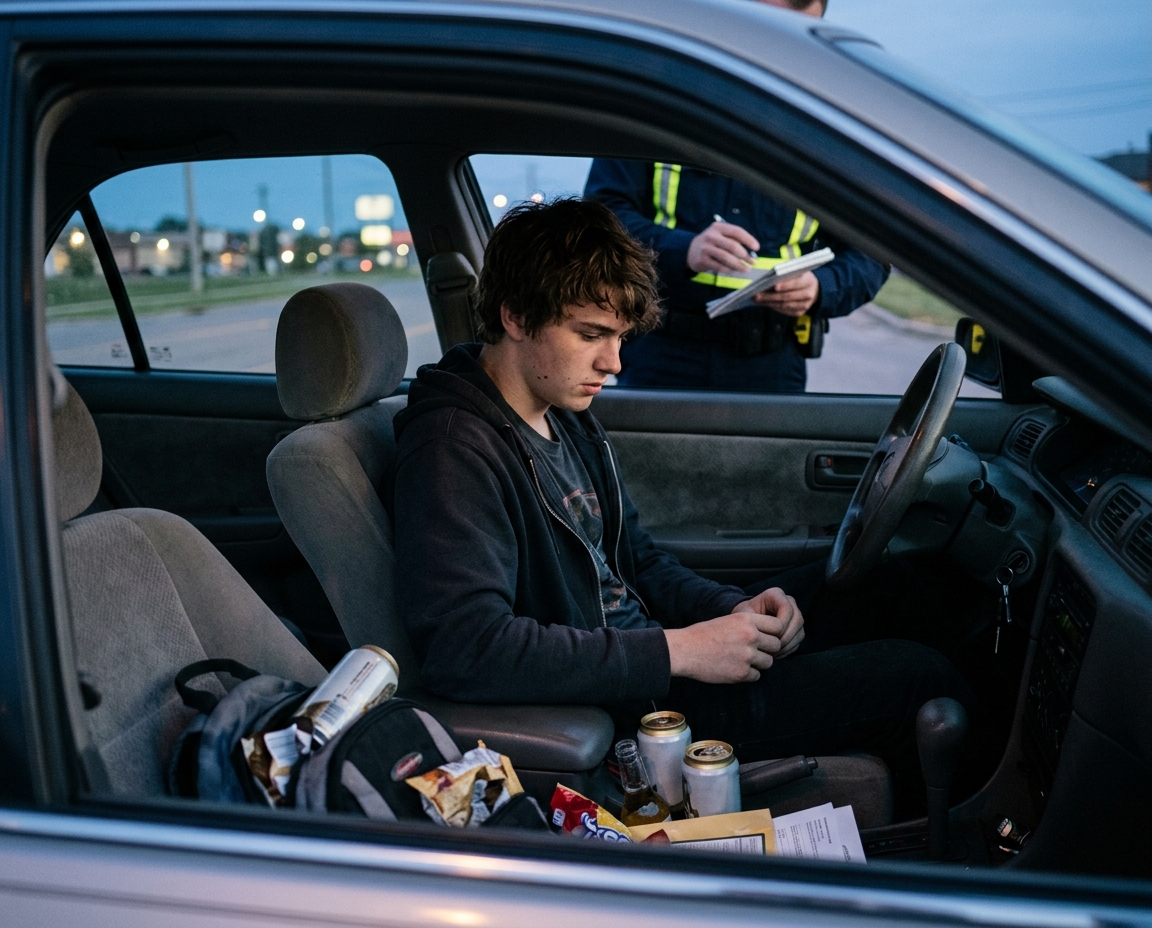
California Vehicle Code § 23224 generally prohibits people under 21 from knowingly driving a vehicle carrying alcohol or knowingly possessing or controlling alcohol as a passenger in a vehicle, unless a specific legal exception applies. A violation is a misdemeanor punishable by a fine of up to $1,000, up to six months in county jail, or both, and qualifying vehicles may be impounded for one to 30 days.
Understanding California’s alcohol-in-vehicle law can help young drivers, passengers, and parents understand the potential consequences of a citation and the exceptions that may apply.
What Is California Vehicle Code § 23224?
California Vehicle Code § 23224 addresses alcohol in vehicle by a minor. It applies to two primary situations:
- Underage drivers: Knowingly driving a motor vehicle carrying an alcoholic beverage.
- Underage passengers: Knowingly possessing or having control of an alcoholic beverage while in a motor vehicle.
The law does not require the person to drink the alcohol or be intoxicated. However, the person’s knowledge, conduct, and any applicable statutory exception are important.
For example, a 19-year-old who knowingly drives home with an unopened bottle of wine may violate the statute even if the bottle remains sealed and the driver never consumes alcohol.
Can Someone Under 21 Have Alcohol in a Car in California?
Generally, no. A person under 21 cannot knowingly transport or possess alcohol in a vehicle in circumstances prohibited by § 23224 unless a statutory exception applies.
An unopened bottle is not automatically exempt. The law addresses knowingly transporting, possessing, or controlling alcohol rather than only drinking it.
For example, a 20-year-old passenger who knowingly carries beer in a backpack may face a potential violation even if the driver is over 21.
What Are the Exceptions to Vehicle Code § 23224?
California law recognizes specific exceptions for qualifying adult-accompanied transportation and certain employment-related activities. The circumstances must satisfy the statutory requirements.
Transportation with a qualifying adult
An exception may apply when the person under 21 is accompanied by a parent, legal guardian, responsible adult relative, or another adult designated by the parent for the purpose of transporting alcohol.
The adult’s presence alone is not sufficient; the purpose and circumstances of the transportation must meet the law’s requirements.
Alcohol transportation for employment
An employment exception may apply when the person works for a qualifying licensee under California’s Alcoholic Beverage Control Act and transports or possesses alcohol during regular working hours and in the course of employment.
A job title alone does not establish that this exception applies.
Following reasonable instructions
The statute provides a complete defense in specified circumstances when an unaccompanied person follows, in a timely manner, reasonable instructions from a parent, legal guardian, responsible adult relative, or designated adult concerning the disposition of the alcohol.
Whether this defense applies depends on the instructions and the person’s actions.
What Are the Penalties for Alcohol in Vehicle by a Minor?
A violation of California Vehicle Code § 23224(a) or (b) is a misdemeanor. The potential penalties are:
| Penalty | Legal consequence |
|---|---|
| Criminal classification | Misdemeanor |
| Fine | Up to $1,000 |
| County jail | Up to six months |
| Combined penalties | Fine and imprisonment may both be imposed |
| Vehicle impoundment | One to 30 days in qualifying circumstances |
These are statutory maximums, not a prediction of the outcome in an individual case.
Can the vehicle be impounded?
Yes. Under § 23224(c), a vehicle used in a violation may be impounded at the owner’s expense for one to 30 days if it is registered to an offender who is under 21.
Impoundment is not automatic in every case. The statutory conditions must be met, and towing and storage expenses may add to the financial consequences.
Does an Unopened Bottle Count as a Violation?
Yes. An unopened bottle can fall within § 23224 if a person under 21 knowingly transports or possesses it in circumstances prohibited by the law.
Examples include:
- A 20-year-old driving with a sealed bottle of wine purchased for personal use.
- A 19-year-old passenger knowingly carrying beer in a backpack.
- An under-21 employee transporting alcohol during qualifying work duties under the statutory employment exception.
The outcome depends on the facts and whether a legal exception applies.
Is Alcohol in Vehicle by a Minor the Same as DUI?
No. Vehicle Code § 23224 is separate from driving under the influence (DUI).
A person may violate § 23224 without drinking alcohol or driving while impaired. DUI laws address different conduct and legal requirements involving driving and impairment or a prohibited blood alcohol concentration under the applicable law.
If an underage driver has alcohol in the vehicle and evidence also suggests impaired driving, additional charges may arise depending on the circumstances.
What Defenses May Apply to a VC 23224 Charge?
Potential defenses depend on the evidence and the circumstances of the alleged violation. Relevant issues may include:
- Lack of knowledge: Whether the driver knew the vehicle carried alcohol or the passenger knowingly possessed or controlled it.
- A statutory exception: Whether the requirements for accompanied transportation or qualifying employment were satisfied.
- Reasonable instructions: Whether the person timely followed reasonable instructions concerning the alcohol’s disposition, as specified by the statute.
- Possession or control: Whether the evidence establishes that the passenger knowingly possessed or controlled the alcohol.
For example, if someone places alcohol in a vehicle without telling the driver, the driver’s knowledge may be an important factual issue.
The availability of a defense depends on the evidence and applicable law. No defense guarantees dismissal or a particular result.
What Should You Do After Receiving a VC 23224 Citation?
If you receive a citation for alcohol in vehicle by a minor, take these steps:
- Review the citation. Identify the charge, court information, and any deadlines.
- Preserve relevant evidence. Keep messages, receipts, and employment records that may explain why the alcohol was in the vehicle.
- Document the incident. Record who was present, where the alcohol was located, and what happened.
- Review possible exceptions. Consider whether the circumstances may fall within a statutory exception or defense.
- Consider legal guidance. An attorney can review the charge, explain potential consequences, and discuss available options.
Do not ignore court deadlines or assume that the citation will automatically be dismissed.
Frequently Asked Questions
1. Can a 20-year-old drive with alcohol in the trunk in California?
Generally, not unless a statutory exception applies. Placing alcohol in the trunk does not automatically exempt an under-21 driver from § 23224.
2. What is the maximum fine for violating VC 23224?
The maximum fine is $1,000. A court may also impose up to six months in county jail, or both penalties.
3. Can a minor transport alcohol with a parent?
Potentially. The statute recognizes an exception involving specified adults accompanying the minor for the purpose of transporting alcohol, subject to the statutory requirements.
4. Can an underage passenger be charged if the driver is over 21?
Yes. Section 23224(b) separately addresses passengers under 21 who knowingly possess or control alcohol in a motor vehicle.
5. Is VC 23224 a misdemeanor?
Yes. Violations of § 23224(a) and (b) are misdemeanors under California law.
6. Can a vehicle be impounded for underage alcohol possession?
Yes. A vehicle may be impounded for one to 30 days when the statutory requirements are met, including the condition concerning registration to an offender under 21.
7. Does a minor have to drink alcohol to violate § 23224?
No. The statute concerns prohibited transportation, possession, or control of alcohol. Consumption or intoxication is not required.
8. Can a VC 23224 charge be dismissed?
A charge may be resolved in different ways depending on the evidence, applicable exceptions, defenses, and procedural circumstances. No outcome is guaranteed.
Key Takeaways
- California Vehicle Code § 23224 restricts under-21 drivers from knowingly transporting alcohol and under-21 passengers from knowingly possessing or controlling it in a vehicle.
- A violation is a misdemeanor punishable by a fine of up to $1,000, up to six months in county jail, or both.
- A qualifying vehicle registered to an offender under 21 may be impounded for one to 30 days.
- The law recognizes specific exceptions involving qualifying adults, employment, and reasonable instructions about alcohol disposition.
- Alcohol transportation violations are distinct from DUI offenses.
Contact Southwest Legal
A citation for alcohol in vehicle by a minor can raise important questions about criminal penalties, vehicle impoundment, and possible defenses. Understanding the law and the circumstances of the allegation is an important step toward evaluating your options.
Southwest Legal can help you understand the legal issues involved and identify questions that may matter in your situation.
Contact us today for a free consultation to discuss your concerns, understand your options, and learn about the next steps that may be available.
Disclaimer: This article is for general informational purposes only and does not constitute legal advice or create an attorney-client relationship unless and until the firm and client enter into an agreement for legal services. Laws may change, and legal outcomes depend on the specific facts of each case. Consult a qualified attorney for advice regarding your situation.