


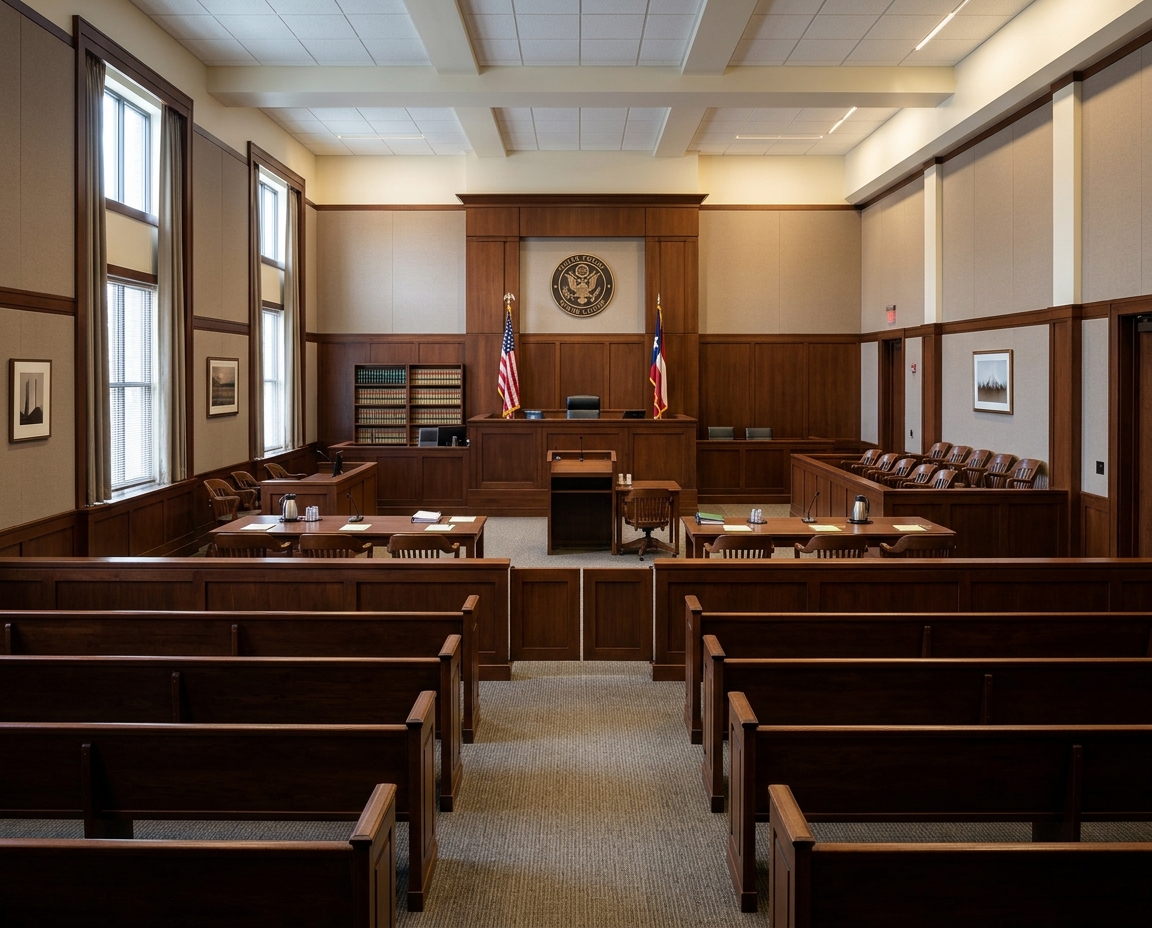
Facing a felony charge in California can be stressful, especially if you have never appeared in criminal court before. Your first court hearing is generally called an arraignment, where the judge informs you of the charges, explains your legal rights, addresses legal representation, and asks you to enter a plea. The court may also consider bail or release conditions if you are still in custody.
Although an arraignment does not determine whether you are guilty or innocent, it is an important first step in your criminal case. Understanding what happens during this hearing can help you prepare and make informed decisions about your defense.
What Is the First Court Hearing for a Felony Charge in California?
The first formal court hearing in a California felony case is generally an arraignment. It is where the defendant is formally informed of the criminal charges and asked to enter a plea.
Under California Penal Code Section 976, an arraignment takes place after the accusatory pleading is filed with the court.
During a felony arraignment, the judge generally:
- Informs the defendant of the criminal charges.
- Explains the defendant’s constitutional rights.
- Addresses legal representation.
- Asks the defendant to enter a plea.
- Considers bail or release conditions when applicable.
- Addresses protective orders when necessary.
- Schedules the next court appearance.
An arraignment is not a trial. The judge does not decide guilt or innocence during this hearing. Instead, the court addresses the initial legal matters necessary for the criminal case to proceed.
What Happens During a Felony Arraignment in California?
A felony arraignment generally involves several important steps. Although the exact proceedings may vary depending on the circumstances, the following are common parts of the hearing.
1. The Judge Explains the Criminal Charges
The judge informs the defendant of the felony charges filed by the prosecutor.
These charges are generally outlined in a criminal complaint, which identifies the alleged offenses and any additional allegations that could affect potential penalties.
For example, someone arrested for an alleged residential burglary may face a felony burglary charge. Depending on the circumstances, additional allegations may also be included.
Being charged does not mean someone has been convicted. The prosecution must still establish guilt through the legal process.
2. The Judge Explains Your Legal Rights
During arraignment, the court addresses the defendant’s constitutional rights.
These include:
- The right to remain silent.
- The right to an attorney.
- The right to appointed counsel if financially eligible.
- The right to a speedy and public trial.
- The right to a jury trial.
- The right to confront and cross-examine witnesses.
- The right to require the prosecution to prove guilt beyond a reasonable doubt.
If you do not understand English, you can also request a court-appointed interpreter.
Understanding these rights is important before making decisions or statements that could affect your case.
3. The Court Addresses Legal Representation
The judge will generally ask whether the defendant has an attorney.
If you already have a criminal defense attorney, your lawyer can represent you during the hearing and address initial legal matters.
If you cannot afford an attorney, you may request court-appointed representation if you qualify.
Under California Penal Code Section 987, eligible defendants who want legal representation but cannot afford an attorney are entitled to appointed counsel in noncapital criminal cases.
In many California counties, this representation is provided by the Public Defender’s Office.
Having legal representation can help protect your rights, evaluate the charges, and ensure important legal issues are addressed from the beginning.
4. You Are Asked to Enter a Plea
One of the most important parts of a felony arraignment is entering a plea.
The judge asks how the defendant responds to the criminal charges.
The three common pleas are:
| Plea | Meaning |
|---|---|
| Not guilty | You do not admit guilt, and the prosecution must prove the charges. |
| Guilty | You formally admit committing the charged offense. |
| No contest | You do not contest the charge. It generally has the same effect as a guilty plea in the criminal case. |
A not-guilty plea is common during an initial felony arraignment because it allows the defense to review the evidence and evaluate available legal options.
A guilty or no-contest plea can have significant consequences, including imprisonment, fines, and other long-term effects.
Important: A defendant should understand the consequences before entering a guilty or no-contest plea. In a felony case, the defendant should have legal representation before the court accepts a guilty plea.
5. The Judge Considers Bail or Release Conditions
If you are still in custody, the judge may consider whether you can be released while your felony case is pending.
Depending on the circumstances and applicable law, the judge may:
- Release you on your own recognizance (OR).
- Order release with specific conditions.
- Set a bail amount.
- Order continued detention when legally authorized.
California Constitution, Article I, Section 12, establishes a general right to bail while providing exceptions for certain serious offenses and circumstances.
Judges must consider applicable legal requirements, including public safety, the seriousness of the offense, the defendant’s criminal history, and the likelihood of appearing in court.
For example, someone facing a nonviolent felony charge with no prior criminal history may be considered for release under appropriate conditions. Someone facing a serious violent felony allegation may be subject to different legal considerations.
Being charged with a felony does not automatically mean you must remain in jail until trial.
6. The Judge May Issue a Protective or No-Contact Order
In certain felony cases, the judge may issue a criminal protective order.
These orders are particularly relevant in cases involving:
- Domestic violence.
- Threats or violent conduct.
- Stalking.
- Alleged crimes involving specific victims or witnesses.
For example, someone facing a domestic violence felony charge may be ordered not to contact the alleged victim.
A protective order may also restrict communication or require the defendant to stay away from certain locations.
Violating a court order can create additional legal consequences. Defendants must understand and follow all conditions imposed by the court.
7. The Judge Schedules Your Next Court Hearing
After addressing the initial matters, the judge generally schedules the next court appearance.
In many felony cases, the next major proceeding is a preliminary hearing.
The court will inform the defendant of the next appearance date and any applicable requirements.
What If You Are Still in Jail or Already Released Before Your First Court Hearing?
Your circumstances before arraignment can affect what happens during your first court appearance.
If You Are Still in Custody
If you remain in jail after your arrest, the judge will generally address your pretrial release status during arraignment.
The court may consider release on your own recognizance, conditional release, bail, or continued detention when legally authorized.
Your attorney may present information relevant to release, such as your community ties, criminal history, and other circumstances.
If You Were Already Released
Some individuals are released before their arraignment, either through a citation, a prearraignment release process, or after posting bail.
Even if you are no longer in custody, you must still attend your scheduled court appearance unless an applicable legal exception allows otherwise.
The judge may also review or modify existing release conditions based on the information presented.
Remember: Being released before arraignment does not mean your felony charges have been dismissed. You must continue following all court instructions and appear for required hearings.
Can You Be Released From Jail After Your First Felony Court Hearing?
Yes. A person facing felony charges in California may be released after the first court hearing, depending on the circumstances.
Common release options include:
| Release option | Explanation |
|---|---|
| Own recognizance | Release based on a promise to return to court. |
| Conditional release | Release subject to court-ordered conditions. |
| Bail | Release after the required bail is posted. |
| Continued detention | Remaining in custody when legally authorized. |
What Factors Affect a Felony Bail Decision?
The judge may consider:
- The seriousness of the alleged offense.
- Whether the allegations involve violence.
- The defendant’s criminal history.
- Previous failures to appear in court.
- Potential risks to victims, witnesses, or public safety.
- Applicable constitutional and statutory restrictions.
There is no universal bail amount for every felony charge. The decision depends on the offense, applicable legal requirements, and circumstances of the case.
What Happens After a Felony Arraignment in California?
If the defendant enters a not-guilty plea, the case generally moves toward a preliminary hearing.
Under California Penal Code Section 859b, a felony preliminary hearing generally must begin within 10 court days after arraignment or plea, whichever is later, unless the applicable time requirements are waived or a legally authorized continuance is granted.
At the preliminary hearing:
- The prosecution presents evidence to establish probable cause.
- Witnesses may testify.
- The defense attorney may cross-examine prosecution witnesses.
- The judge determines whether sufficient evidence exists to hold the defendant to answer.
Unlike a trial, the prosecution does not have to prove guilt beyond a reasonable doubt at this stage.
If the judge finds sufficient evidence, the case generally proceeds toward a formal information filed by the prosecutor and another arraignment.
If the case proceeds to trial, the prosecution must prove guilt beyond a reasonable doubt.
How Long Does a Felony First Court Hearing Take?
A felony arraignment may take only a few minutes or longer, depending on the circumstances and court schedule.
The hearing may take additional time if:
- The defendant needs an attorney.
- Bail or release conditions are disputed.
- Multiple charges are involved.
- The court needs to address protective orders or other legal matters.
- An interpreter is required.
Although the arraignment itself may be brief, the overall felony case can continue for months or longer.
Why Is a Criminal Defense Attorney Important at Your First Felony Hearing?
A felony charge can carry serious consequences, including imprisonment, fines, probation, and long-term effects on employment and other opportunities.
Having a criminal defense attorney can help ensure that your rights are protected from the beginning.
During the first hearing, an attorney may:
- Review the criminal charges.
- Explain potential penalties.
- Address bail and release conditions.
- Protect your constitutional rights.
- Evaluate possible legal defenses.
- Advise you about entering a plea.
- Identify important court deadlines.
An attorney can also help you understand what happens next and prepare for the preliminary hearing.
If you cannot afford private representation, you may request court-appointed counsel if you qualify under California law.
Frequently Asked Questions
1. Is the First Court Appearance for a Felony Charge an Arraignment?
Yes. In most California felony cases, the first formal court appearance is an arraignment. The judge informs the defendant of the charges, addresses legal representation and constitutional rights, and asks the defendant to enter a plea.
2. Do I Have to Attend My First Felony Court Hearing?
Generally, yes. Defendants are ordinarily required to appear for their felony arraignment unless a legally authorized exception applies. Missing a required appearance can result in a bench warrant.
3. Will I Go to Jail Immediately After My First Felony Hearing?
Not necessarily. Depending on the circumstances, the judge may release you on your own recognizance, impose release conditions, set bail, or order continued detention when legally permitted.
4. Can Felony Charges Be Dismissed at the First Court Hearing?
An arraignment is generally not where the court evaluates the full evidence or decides guilt. However, certain legal issues may be addressed early in the case. Charges may also be dismissed through subsequent proceedings, including a preliminary hearing or appropriate legal motions.
5. What Happens If I Plead Not Guilty to a Felony?
The case generally continues to the next stage, often a preliminary hearing. The prosecution must establish probable cause to hold the defendant to answer for the felony charges.
6. Can I Plead Guilty at My First Felony Court Appearance?
Yes, a guilty plea may be entered at arraignment. However, it is a significant legal decision that should not be made without understanding the potential penalties and other consequences.
7. How Soon Is the Next Court Date After a Felony Arraignment?
In many felony cases, the next major proceeding is a preliminary hearing. Under California Penal Code Section 859b, the general deadline is 10 court days after arraignment or plea, whichever is later, subject to applicable waivers and continuances.
8. What Happens If I Cannot Afford a Lawyer for My Felony Case?
You may request court-appointed legal representation. Under California Penal Code Section 987, qualifying defendants who want an attorney but cannot afford one are entitled to appointed counsel in noncapital criminal cases.
9. Does a Felony Charge Mean I Will Automatically Go to State Prison?
No. Being charged does not automatically mean you will be convicted or sentenced to state prison. Potential outcomes depend on the offense, applicable sentencing laws, criminal history, and other circumstances. Legally available outcomes may include probation, county jail, or state prison.
Key Takeaways
- The first hearing is generally an arraignment. The judge informs you of the charges and addresses your legal rights.
- You have the right to legal representation. Qualifying defendants who cannot afford an attorney may receive court-appointed counsel.
- You will generally be asked to enter a plea. Understand the consequences before entering a guilty or no-contest plea.
- Bail is not automatic. The judge evaluates applicable legal requirements and circumstances when deciding release conditions.
- Your custody status matters. The court may address release conditions differently depending on whether you are still in jail or have already been released.
- The preliminary hearing is an important next step. It determines whether sufficient evidence exists to hold you to answer for felony charges.
- An arrest is not a conviction. The prosecution must prove guilt beyond a reasonable doubt at trial.
Contact Southwest Legal
Facing a Felony Charge in California? Understand Your Rights Before Your Next Court Appearance.
Being accused of a felony can put your freedom, reputation, and future at risk. The uncertainty surrounding your first court appearance can make an already difficult situation even more stressful.
You do not have to face the legal process without understanding your rights and options.
Southwest Legal understands the importance of knowing what to expect when facing criminal charges. Whether you have recently been arrested, are preparing for an arraignment, or have questions about the next steps in your case, getting reliable legal information is an important first move.
Take the first step toward understanding your legal options. Contact us today for a free consultation. Get your questions answered, learn about your rights, and make informed decisions about protecting your future.
Disclaimer: This article is for general informational purposes only and does not constitute legal advice or create an attorney-client relationship unless and until the firm and client enter into an agreement for legal services. Laws may change, and legal outcomes depend on the specific facts of each case. Consult a qualified attorney for advice regarding your situation.