


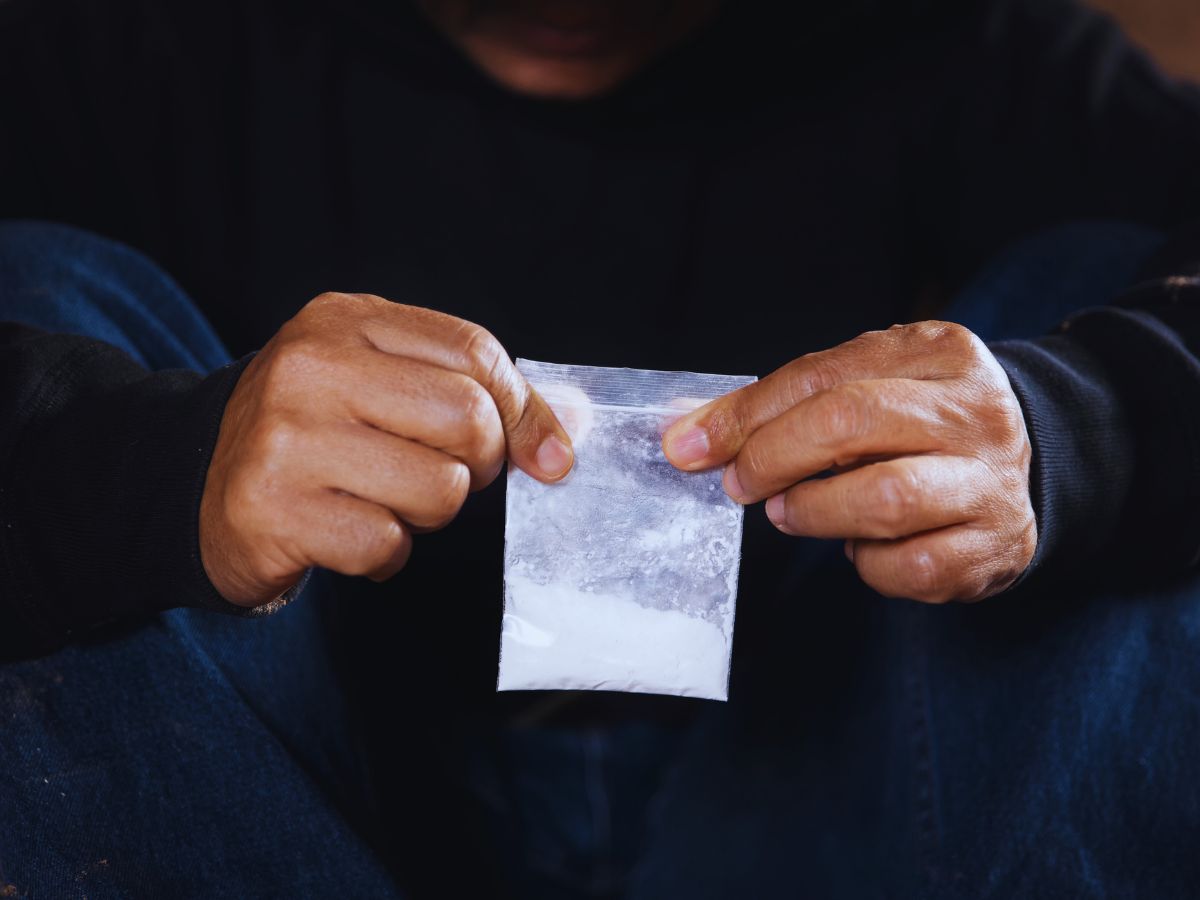
Possession of a Controlled Substance under California Health and Safety Code § 11350(a) generally involves knowingly possessing certain controlled substances without a valid prescription or other legal authorization. The offense is generally a misdemeanor punishable by up to one year in county jail, although qualifying prior convictions can result in felony punishment.
Understanding what the law prohibits, what prosecutors must prove, and what defenses may apply is important for anyone facing a California drug possession charge.
What Is California Health and Safety Code § 11350(a)?
California Health and Safety Code § 11350(a), commonly called HS 11350(a), makes it unlawful to possess specified controlled substances without the required legal authorization.
The statute covers certain narcotics and other controlled substances identified in California’s statutory drug schedules.
Examples include:
- Cocaine: Including cocaine base.
- Heroin: An illegal opioid.
- Certain prescription narcotics: Specified Schedule III, IV, and V narcotic drugs possessed without lawful authorization.
- Other listed controlled substances: Depending on their classification under California law.
Not every drug possession offense falls under HS 11350(a). For example, methamphetamine possession is generally prosecuted under Health and Safety Code § 11377.
The specific substance involved determines which California drug possession statute applies.
What Must the Prosecutor Prove Under HS 11350(a)?
To obtain a conviction, the prosecution must prove every required element beyond a reasonable doubt.
Under CALCRIM No. 2304, the California jury instruction for simple possession of a controlled substance, the prosecution generally must establish:
- The defendant possessed a controlled substance.
- The defendant knew the substance was present.
- The defendant knew of the substance’s nature or character as a controlled substance.
- The substance was a controlled substance covered by the applicable statute.
- The substance was present in a usable amount.
What Does Possession Mean?
California recognizes two primary forms of possession:
- Actual possession: Physically holding or carrying the controlled substance.
- Constructive possession: Having control over the substance or the right to control it, even without physically holding it.
For example, cocaine discovered inside someone’s pocket may establish actual possession. Drugs stored inside a locked personal cabinet may support constructive possession.
However, simply being near a controlled substance does not automatically establish criminal possession.
Does the Defendant Have to Know What Drug They Possess?
The defendant must know that the substance is present and know its nature or character as a controlled substance. However, prosecutors generally do not have to prove that the defendant knew its precise chemical identity.
For example, someone may know they are possessing an illegal narcotic without knowing whether it is cocaine or heroin.
What Is a Usable Amount?
A usable amount is a quantity sufficient for someone to use as a controlled substance. Insignificant residue or useless debris generally does not qualify.
A small quantity may still satisfy this requirement if it is sufficient for use. The substance does not have to be enough to produce a particular physical or psychological effect.
Is Possession of a Controlled Substance a Misdemeanor or Felony in California?
Possession under HS 11350(a) is generally a misdemeanor following the passage of Proposition 47 in 2014.
A standard misdemeanor conviction carries a potential sentence of up to one year in county jail.
However, certain qualifying prior convictions can result in felony punishment.
When Can HS 11350(a) Become a Felony?
HS 11350(a) contains an exception for individuals with certain prior convictions.
A person with one or more qualifying prior convictions identified in Penal Code § 667(e)(2)(C)(iv), or a prior conviction requiring registration under Penal Code § 290(c), may face felony punishment under Penal Code § 1170(h).
Additionally, Proposition 36 introduced Health and Safety Code § 11395, which establishes a separate treatment-mandated felony offense.
This law applies to individuals who possess specified hard drugs and have at least two qualifying prior convictions for certain drug offenses.
Covered substances include:
- Fentanyl.
- Heroin.
- Cocaine.
- Cocaine base.
- Methamphetamine.
- PCP.
HS 11395 has separate requirements and treatment provisions. It does not automatically turn every HS 11350(a) charge into a felony.
What Are the Penalties for Possession of a Controlled Substance?
The penalties depend on the defendant’s criminal history and the applicable statutory provisions.
For an ordinary misdemeanor violation of HS 11350(a), potential consequences include:
| Penalty | Description |
|---|---|
| County jail | Up to one year. |
| Fine | Up to $70 under HS 11350(b), subject to applicable ability-to-pay provisions. |
| Probation | May be available depending on the circumstances. |
| Drug treatment | May be available through qualifying diversion programs. |
| Criminal record | A conviction may affect employment and other opportunities. |
Felony punishment may apply when qualifying prior convictions trigger the statutory exception.
Can You Go to Jail for Simple Drug Possession?
Yes. A misdemeanor conviction under HS 11350(a) can result in up to one year in county jail.
However, incarceration is not automatic. Depending on the circumstances, probation, treatment, or diversion may be available.
Can You Get Drug Diversion for a Possession of Controlled Substance Charge?
Yes. Eligible defendants charged under HS 11350(a) may qualify for California’s pretrial drug diversion program under Penal Code § 1000.
The program focuses on drug education and treatment rather than traditional criminal punishment.
Eligibility depends on statutory requirements, including:
- Whether the defendant has a disqualifying controlled substance conviction within the preceding five years.
- Whether the charged offense involved violence or threatened violence.
- Whether there is evidence of another disqualifying contemporaneous drug-related offense.
- Whether the defendant has a disqualifying felony conviction within the preceding five years.
The prosecuting attorney reviews the applicable eligibility requirements.
What Happens After Successfully Completing Drug Diversion?
Successful completion of the applicable diversion program can result in dismissal of the qualifying charges.
The program generally involves education or treatment requirements and compliance with the court-approved process.
A successful dismissal can allow an eligible defendant to avoid a criminal conviction for the qualifying offense.
However, diversion is not automatic. The defendant must satisfy the statutory eligibility requirements and complete the program successfully.
What Are the Legal Defenses to an HS 11350(a) Charge?
Several legal defenses may apply to a California controlled substance possession charge. The appropriate defense depends on the evidence and circumstances of the arrest.
1. Lack of Knowledge
The prosecution must establish that the defendant knew the controlled substance was present and knew its nature or character as a controlled substance.
For example, someone who unknowingly carries another person’s bag containing cocaine may challenge the allegation based on lack of knowledge.
2. Lack of Possession
Being near drugs does not automatically mean someone possesses them.
A defendant may challenge the charge if there is insufficient evidence that they exercised control over the substance or had the right to control it.
Example: Police discover cocaine inside a locked container belonging to one roommate. Other roommates may challenge possession allegations if there is no evidence connecting them to the container or its contents.
3. Valid Prescription
A qualifying written prescription may provide a defense to unlawful possession.
The prescription must satisfy the applicable California legal requirements and cover the substance involved.
4. Insufficient Quantity
The prosecution must establish that the substance was present in a usable amount.
Insignificant residue or unusable debris may not satisfy this requirement.
5. Illegal Search and Seizure
The Fourth Amendment protects individuals against unreasonable searches and seizures.
If police obtained the alleged controlled substance through an unlawful search, the defense may challenge the evidence under California Penal Code § 1538.5.
If the court grants a motion to suppress, evidence obtained through the unlawful search may be excluded from the criminal proceedings.
6. Incorrect Drug Identification
The prosecution must establish that the substance is actually covered by HS 11350(a).
Laboratory testing and evidence handling may become important when challenging the identification of the alleged controlled substance.
What Is the Difference Between Simple Possession and Possession for Sale?
Simple possession and possession for sale are separate criminal offenses under California law.
HS 11350(a) addresses unlawful possession of specified controlled substances. Possession for sale is generally prosecuted under other statutes, including HS 11351 and HS 11351.5, depending on the substance.
Evidence that may suggest possession for sale includes:
- Large quantities of controlled substances.
- Individually packaged drugs.
- Scales and packaging materials.
- Records of drug transactions.
- Communications concerning drug distribution.
For example, a person found with individually packaged quantities of cocaine and other evidence suggesting distribution may face a possession-for-sale charge instead of simple possession.
However, prosecutors must prove the elements of the separate offense. The presence of packaging materials or large quantities alone does not automatically establish intent to sell.
What Happens After an Arrest for Drug Possession in California?
An arrest under HS 11350(a) begins the criminal process, but it does not mean the defendant has been convicted.
The process generally includes:
- Arrest and booking: Law enforcement records the arrest and processes the individual.
- Arraignment: The defendant appears in court, is informed of the charges, and enters a plea.
- Pretrial proceedings: The prosecution and defense review evidence and address legal issues, including possible motions to suppress evidence.
- Case resolution: The case may proceed through dismissal, diversion when eligible, a negotiated resolution, or trial.
During these proceedings, the defense may challenge the evidence, examine the legality of the search, and evaluate available legal options.
Understanding the charges and available defenses early can help individuals make informed decisions about their cases.
Can a California Drug Possession Conviction Be Expunged?
In some circumstances, yes.
Under California Penal Code § 1203.4, eligible individuals may petition the court for dismissal of certain convictions.
Eligibility generally depends on factors such as successful completion of probation, completion of the sentence, and compliance with other statutory requirements.
A successful dismissal may provide benefits when applying for employment and pursuing other opportunities.
However, dismissal does not erase every consequence of a conviction. Certain government, licensing, and immigration-related proceedings may still consider the underlying record.
Individuals with qualifying older felony drug possession convictions may also explore redesignation under Penal Code § 1170.18, established by Proposition 47.
Frequently Asked Questions
1. Is Possession of a Controlled Substance a felony in California?
Generally, HS 11350(a) is a misdemeanor. However, certain qualifying prior convictions can result in felony punishment. Separate felony charges may also apply under HS 11395 when its specific requirements are met.
2. How much jail time can you get under HS 11350(a)?
A standard misdemeanor conviction carries a maximum sentence of one year in county jail. However, probation or diversion may be available to eligible defendants.
3. Can you be charged if the drugs are not yours?
Yes. California recognizes constructive and joint possession. However, prosecutors must prove that the defendant knew about the substance and had control or the right to control it.
4. Can you be arrested for possessing a small amount of cocaine?
Yes. California does not establish a general minimum weight below which cocaine possession is automatically lawful. However, prosecutors must establish that the substance was present in a usable amount.
5. Can a first-time drug possession charge be dismissed?
Potentially. Eligible defendants may qualify for pretrial drug diversion under Penal Code § 1000. Successful completion can result in dismissal of the qualifying charges.
6. Does a valid prescription protect you from a drug possession charge?
A qualifying written prescription may provide legal authorization for possession. However, it must satisfy applicable California prescription laws.
7. What is the difference between HS 11350(a) and HS 11377?
HS 11350(a) covers specified narcotics and other listed substances, while HS 11377 addresses different controlled substances, including methamphetamine.
8. Can a drug possession conviction affect immigration status?
Yes. Certain controlled substance convictions can have serious immigration consequences, including potential inadmissibility or deportability. The consequences depend on the exact offense, substance, and applicable federal immigration law. Noncitizens should seek qualified legal advice before entering a plea.
9. Do I need an attorney for an HS 11350(a) charge?
An attorney can help evaluate the evidence, identify potential defenses, review the legality of the search, and determine whether diversion or other legal options may apply.
Key Takeaways
- HS 11350(a) prohibits unlawful possession of specified controlled substances.
- Simple possession is generally a misdemeanor punishable by up to one year in county jail.
- Certain qualifying prior convictions can result in felony punishment.
- Prosecutors must prove possession, knowledge, the identity of the controlled substance, and a usable amount beyond a reasonable doubt.
- Potential defenses include lack of knowledge, lack of possession, valid prescription, insufficient quantity, and unlawful search and seizure.
- Eligible defendants may qualify for pretrial drug diversion under Penal Code § 1000.
- A conviction may have consequences beyond criminal penalties, including employment and immigration concerns.
Understand Your Legal Options With Southwest Legal
Facing a Possession of a Controlled Substance charge under California Health and Safety Code § 11350(a) can be stressful, especially when you are uncertain about possible penalties, criminal records, and your legal options.
An arrest does not automatically mean a conviction. Depending on the circumstances, you may have legal defenses or qualify for alternatives to traditional criminal prosecution.
Southwest Legal can help individuals facing drug possession charges to understand their rights and carefully evaluate the allegations against them.
Whether your case involves questions about unlawful searches, lack of possession, prescription authorization, prior convictions, or eligibility for drug diversion, understanding your options is an important first step.
Take control of your next steps. Contact us today for a free consultation. Discuss your situation, understand your legal rights, and explore the options available under California law.
Disclaimer: This article is for general informational purposes only and does not constitute legal advice or create an attorney-client relationship unless and until the firm and client enter into an agreement for legal services. Laws may change, and legal outcomes depend on the specific facts of each case. Consult a qualified attorney for advice regarding your situation.