


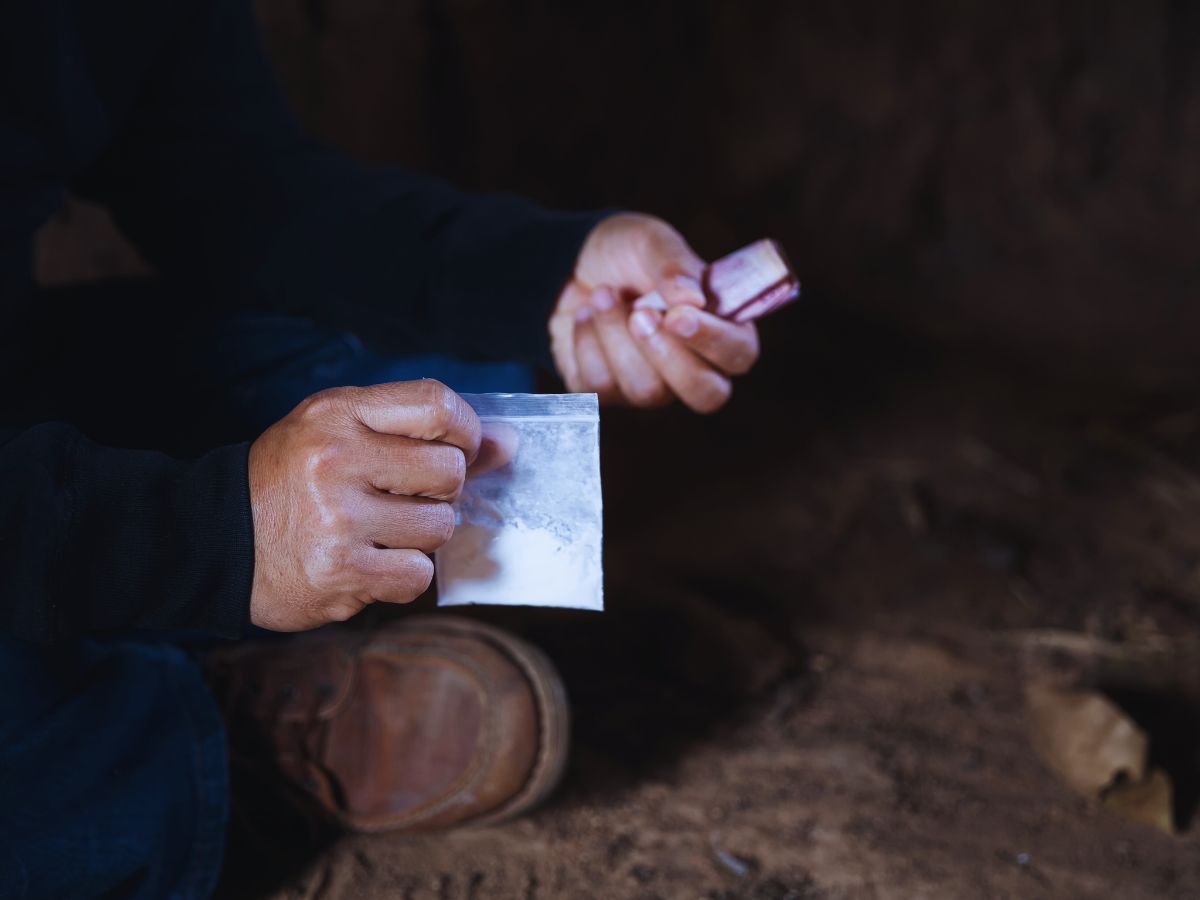
The Sale or Transportation of a Controlled Substance is a felony offense under California Health & Safety Code § 11352. The law prohibits selling, furnishing, administering, giving away, importing, or transporting certain controlled substances for sale. Depending on the circumstances, a conviction can carry three, four, or five years of imprisonment, with increased penalties for transporting covered substances between noncontiguous California counties.
Not every drug-related incident qualifies as a violation of Section 11352. Understanding the prohibited conduct, potential penalties, prosecution requirements, and available legal defenses is important when facing this type of criminal charge.
What Is California Health & Safety Code § 11352?
California Health & Safety Code § 11352 makes it illegal to engage in specified activities involving certain controlled substances.
Prohibited conduct includes:
- Selling a covered controlled substance.
- Furnishing or providing drugs to another person.
- Administering a controlled substance.
- Giving away a controlled substance.
- Importing certain controlled substances into California.
- Transporting controlled substances for sale.
- Offering to perform certain prohibited drug-related activities.
- Attempting to import or transport certain controlled substances.
A transaction does not have to involve money to violate this law. Furnishing or giving away a covered controlled substance may also result in criminal charges.
For example, a person who gives another individual heroin without receiving payment may still face prosecution under Section 11352.
The statute applies only to specifically identified controlled substances. Other drugs, including methamphetamine and cannabis, are generally addressed under separate California statutes.
What Controlled Substances Are Covered Under Section 11352?
Section 11352 covers specific controlled substances identified under California Health & Safety Code §§ 11054, 11055, and 11056, along with certain narcotic drugs classified in Schedules III, IV, and V.
Examples include:
| Controlled substance | Classification |
|---|---|
| Heroin | Schedule I |
| Cocaine | Schedule II |
| Fentanyl | Schedule II |
| Morphine | Schedule II |
| Oxycodone | Schedule II |
| Certain listed narcotic medications | Schedules III–V |
This list is illustrative, not exhaustive. The substance must fall within the specific statutory classifications covered by Section 11352.
Other controlled substances may be prosecuted under different provisions. For example, certain methamphetamine offenses fall under Health & Safety Code § 11379, while cannabis sales and transportation are generally addressed under § 11360.
Correctly identifying the substance is an important part of evaluating a Section 11352 charge.
What Must Prosecutors Prove Under California Health & Safety Code § 11352?
To obtain a conviction, prosecutors must prove every required element of the specific offense beyond a reasonable doubt.
Under CALCRIM No. 2300, the principal elements generally include:
- Prohibited conduct: The defendant sold, furnished, administered, gave away, transported for sale, or imported a covered controlled substance.
- Knowledge of presence: The defendant knew the controlled substance was present.
- Knowledge of its nature: The defendant knew the substance’s nature or character as a controlled substance.
- Intent to sell: For transportation charges, the defendant intended to sell the substance or intended that someone else sell it.
- Substance identification: The substance was covered by the applicable statutory provisions or qualified as an applicable controlled substance analog.
The exact requirements depend on the particular charge.
Does the prosecution have to prove the defendant knew the exact drug?
No. Generally, prosecutors must establish that the defendant knew the substance was a controlled substance, but they do not have to prove that the defendant knew its exact chemical identity.
For example, someone who knowingly transports an illegal controlled substance cannot necessarily avoid liability by claiming they believed it was cocaine rather than heroin.
However, prosecutors must still establish the required knowledge and every other element beyond a reasonable doubt.
Does the prosecution have to prove actual possession?
Not necessarily. A person may be held responsible for certain drug-related activities without physically holding the substance.
Under California law, having control over a controlled substance, including through another person, may be sufficient for the applicable offense.
For transportation charges, prosecutors must also establish that the substance was a usable amount. Useless traces or debris generally do not qualify.
Importantly, a usable amount is not a universal requirement for every Section 11352 offense. The requirement specifically applies to transportation charges under the applicable jury instructions.
Relevant authority: California Health & Safety Code § 11352; CALCRIM No. 2300.
Is Transportation of a Controlled Substance Always Illegal Under Section 11352?
No. Section 11352 specifically defines transportation as transporting a controlled substance for sale.
Simply moving drugs from one location to another does not automatically constitute this offense.
Consider the following distinctions:
- Moving drugs solely for personal use does not automatically establish transportation for sale.
- Driving drugs to another location for an intended sale may constitute a violation.
- Transporting drugs on behalf of another person who intends to sell them may also result in charges.
The prosecution must establish the required intent to sell or have someone else sell the controlled substance.
What if someone transports drugs between California counties?
Section 11352(b) establishes increased penalties for transporting covered controlled substances within California from one county to another noncontiguous county.
For example, Los Angeles County and San Diego County do not share a border. Transportation between these counties may trigger the increased sentencing provision if the other statutory requirements are established.
This provision carries a higher sentencing range than an ordinary violation under Section 11352(a).
Relevant authority: California Health & Safety Code § 11352(b)–(c).
What Are the Penalties for Sale or Transportation of a Controlled Substance in California?
A violation of Section 11352 is generally a felony.
The potential imprisonment terms are:
| Offense | Potential imprisonment term |
|---|---|
| Sale and other covered conduct under § 11352(a) | 3, 4, or 5 years |
| Transportation between noncontiguous counties under § 11352(b) | 3, 6, or 9 years |
These are statutory sentencing ranges. The actual outcome depends on the circumstances, criminal history, and applicable sentencing laws.
Does a Section 11352 conviction always mean state prison?
No. Section 11352 references Penal Code § 1170(h), which generally allows qualifying felony sentences to be served in county jail rather than state prison.
Depending on the circumstances, possible sentencing outcomes may include:
- A county-jail sentence.
- A split sentence involving custody followed by mandatory supervision.
- Felony probation, when legally available.
- State prison when statutory restrictions require it.
Probation is not automatic. Certain drug-related convictions also have additional restrictions or custody requirements.
For example, Penal Code § 1203.076 provides that a person convicted under Section 11352 for the sale of cocaine, cocaine hydrochloride, or heroin who is eligible for and granted probation may be required to serve at least 180 days in county jail as a condition of probation.
Relevant authority: California Health & Safety Code § 11352; Penal Code §§ 1170(h), 1203, and 1203.076.
What Is the Difference Between Sale, Possession for Sale, and Transportation for Sale?
California has separate statutes addressing different types of controlled substance offenses. Although these charges may arise from the same investigation, they involve different legal requirements.
| Offense | California statute | Description |
|---|---|---|
| Sale or transportation for sale | HS § 11352 | Selling, furnishing, or transporting covered controlled substances for sale |
| Possession for sale | HS § 11351 | Possessing specified controlled substances with intent to sell |
| Simple possession | HS § 11350 | Unlawfully possessing specified controlled substances |
How is possession for sale different?
Possession for sale under Section 11351 focuses on possessing a covered controlled substance with the intent to sell it.
For example, someone found with individually packaged drugs and other evidence suggesting distribution may be investigated for possession for sale.
By contrast, Section 11352 addresses the actual sale, furnishing, and other prohibited conduct, including transportation for sale.
What is the difference between possession and transportation for sale?
The main difference is the conduct involved.
- Possession: Having a controlled substance without legal authorization.
- Possession for sale: Having a controlled substance with the intent to sell it.
- Transportation for sale: Moving a covered controlled substance from one location to another with the intent that it be sold.
For example, someone who keeps cocaine at home intending to sell it may face possession-for-sale charges. Someone who moves cocaine to another location for an intended sale may face transportation charges under Section 11352.
Understanding this distinction is important because each offense has different elements and potential penalties.
What Are Common Defenses to a Section 11352 Charge?
A person accused of violating Section 11352 may have several potential legal defenses. The appropriate defense depends on the evidence and circumstances of the alleged offense.
Common defenses include:
1. Lack of knowledge
The prosecution generally must prove that the defendant knew the controlled substance was present and knew its nature or character as a controlled substance.
For example, someone who unknowingly transports a package containing drugs may have a defense based on lack of knowledge.
2. Lack of intent to sell
For transportation charges, prosecutors must establish an intent to sell or have someone else sell the controlled substance.
Moving drugs for personal use does not automatically satisfy this requirement.
3. Unlawful search and seizure
If law enforcement obtained evidence through an unconstitutional search or seizure, the defense may challenge whether that evidence can be used in court.
4. Insufficient evidence
The prosecution must establish the specific prohibited conduct beyond a reasonable doubt. Suspicious behavior or mere presence during an alleged drug transaction does not automatically establish guilt.
5. Mistaken identity
If the defendant was incorrectly identified as the person involved in an alleged sale or transportation, witness identification and other evidence may be challenged.
6. Incorrect substance identification
Section 11352 applies to specifically identified controlled substances. Laboratory testing and chemical identification may be important in determining whether the substance falls within the statute.
No defense guarantees dismissal or acquittal. Each case must be evaluated based on its evidence and applicable law.
Can a Section 11352 Charge Be Reduced or Dismissed?
Yes. Depending on the evidence and circumstances, a Section 11352 charge may potentially be reduced, dismissed, or resolved through a negotiated plea agreement.
Possible legal approaches include:
- Challenging insufficient evidence.
- Disputing the defendant’s knowledge or intent.
- Challenging the legality of a search or seizure.
- Questioning the identification of the alleged controlled substance.
- Negotiating a different charge when legally appropriate.
For example, if someone is charged with transportation for sale but the evidence does not establish an intent to sell, the defense may challenge whether the transportation provision of Section 11352 applies.
The availability of these options depends on the individual case. No particular outcome is guaranteed.
Frequently Asked Questions
1. Is selling a controlled substance a felony in California?
Yes. Selling a controlled substance covered by Section 11352 is generally a felony punishable by three, four, or five years of imprisonment, subject to applicable sentencing laws.
2. Can I be charged under HS 11352 if I never sold drugs?
Yes. The statute also covers furnishing, administering, giving away, and certain offers or attempts involving covered controlled substances.
3. Is transporting drugs for personal use illegal under Section 11352?
Not automatically. Section 11352 defines transportation as transportation for sale. However, other controlled substance laws may apply depending on the circumstances.
4. Does the prosecution have to prove I knew drugs were in my vehicle?
Generally, yes. Prosecutors must establish that you knew the controlled substance was present and knew its nature or character as a controlled substance.
5. What is the penalty for transporting drugs between noncontiguous counties?
Under Section 11352(b), the potential imprisonment terms are three, six, or nine years when the statutory requirements are met.
6. Can a first-time offender receive probation?
Possibly. Probation depends on the offense, criminal history, applicable statutory restrictions, and the court’s assessment. It is not automatic.
7. Can I be convicted without physically possessing the drugs?
Potentially, yes. Physical possession is not required for every offense covered by Section 11352. The prosecution must still establish the elements of the particular charge.
8. Can text messages be used as evidence in a drug sales case?
Yes. Text messages may be introduced as evidence, but prosecutors must still establish the elements of the offense. Their meaning, authenticity, and admissibility may be challenged.
9. Can a Section 11352 conviction affect immigration status?
Yes. Certain controlled substance convictions can have serious immigration consequences under federal law. Noncitizens should obtain qualified immigration advice before entering a plea.
10. Should I contact a criminal defense attorney for an HS 11352 charge?
Yes. A criminal defense attorney can review the allegations, examine the evidence, identify potential defenses, and explain the legal options available under California law.
Key Takeaways
- Section 11352 criminalizes the unlawful sale, furnishing, administration, giving away, importing, and transportation for sale of specified controlled substances.
- Transportation must involve the intent to sell or have someone else sell the drugs.
- Prosecutors must prove the required knowledge and other elements beyond a reasonable doubt.
- Standard felony sentencing ranges are three, four, or five years.
- Transportation between noncontiguous counties can carry three, six, or nine years.
- Potential defenses include lack of knowledge, lack of intent, unlawful searches, mistaken identity, and insufficient evidence.
- A conviction can affect employment, professional opportunities, and immigration status.
Contact Southwest Legal
Facing a California HS 11352 Charge?
A charge involving the Sale or Transportation of a Controlled Substance can carry serious criminal penalties and long-term consequences. Understanding the allegations, potential defenses, and available legal options is an important step in protecting your rights.
At Southwest Legal, individuals facing California drug charges can seek guidance about their legal options and the criminal defense process.
If you or someone you care about is facing charges under California Health & Safety Code § 11352, do not wait to understand your rights and potential defenses.
Contact us today for a free consultation. Discuss your situation, get answers to your legal questions, and learn what steps may be available to protect your interests.
Disclaimer: This article is for general informational purposes only and does not constitute legal advice or create an attorney-client relationship unless and until the firm and client enter into an agreement for legal services. Laws may change, and legal outcomes depend on the specific facts of each case. Consult a qualified attorney for advice regarding your situation.