


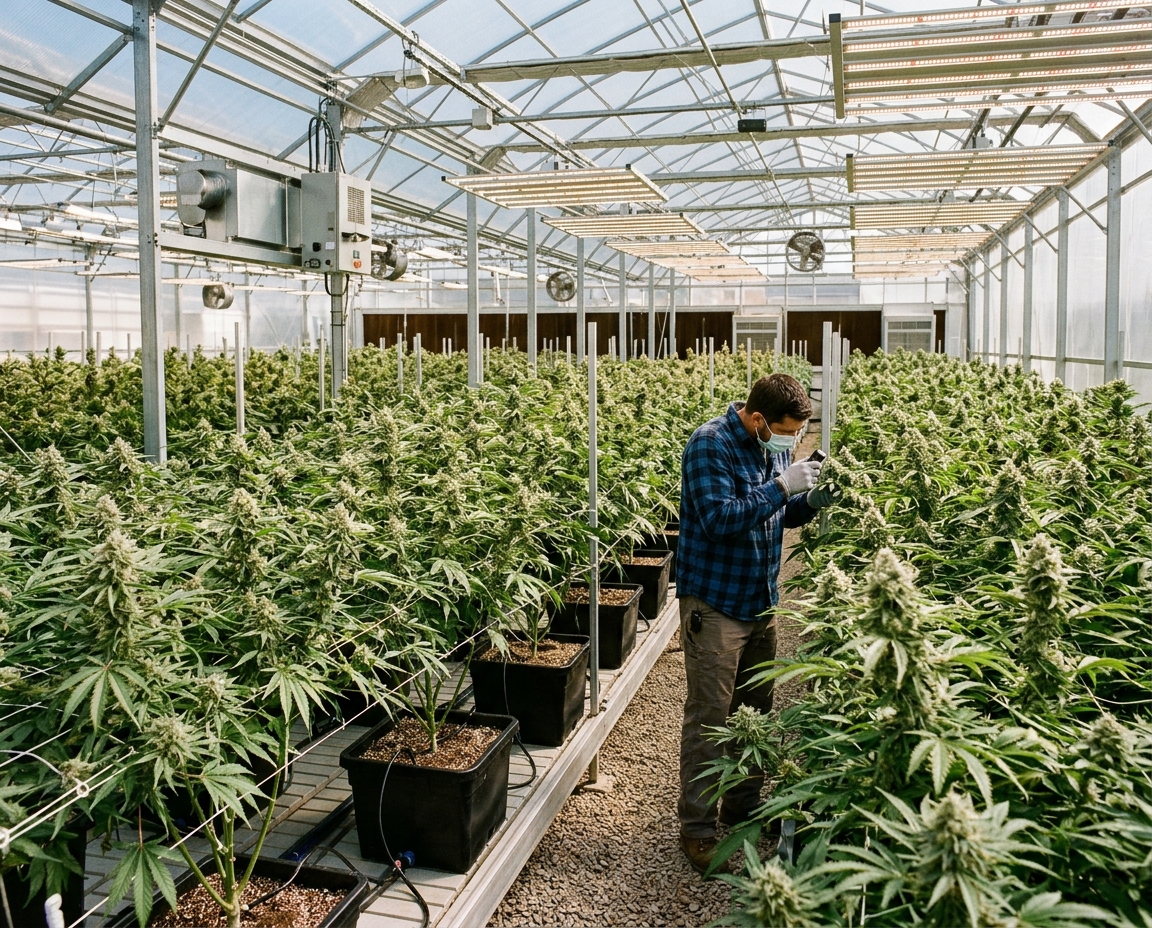
California Marijuana Cultivation Laws generally allow adults 21 and older to grow up to six living cannabis plants at a private residence for personal use, subject to state and local restrictions. However, California Health and Safety Code § 11358 establishes criminal penalties for unauthorized cultivation, including misdemeanor penalties and potential felony-level sentencing when specific aggravating circumstances exist.
Although California legalized recreational marijuana, growing cannabis is not automatically legal in every situation. The number of plants, the grower’s age, applicable local regulations, and certain prior convictions or environmental violations can affect the legal consequences.
Understanding these restrictions is important for anyone growing cannabis or facing a marijuana cultivation investigation in California.
What Does California Health and Safety Code § 11358 Prohibit?
California Health and Safety Code § 11358 establishes penalties for unauthorized cannabis cultivation.
The statute covers individuals who:
- Plant cannabis seeds or plants.
- Cultivate or grow cannabis.
- Harvest cannabis plants.
- Dry harvested cannabis.
- Process cannabis plants or any part of them.
The law recognizes exceptions for activities authorized under California law, including qualifying personal and medical cultivation.
The primary distinction under § 11358 involves the individual’s age and whether the cultivation exceeds six living cannabis plants.
How Many Marijuana Plants Can You Legally Grow in California?
Under Health and Safety Code § 11362.1, adults 21 and older may generally cultivate up to six living cannabis plants for personal use at a private residence.
The six-plant limit applies to the entire residence, not each individual household member.
For example, if three adults live in one house, they cannot automatically grow six plants each. The general recreational limit remains six living plants for the entire residence at one time.
What Are the Requirements for Growing Marijuana at Home?
California law establishes several conditions for personal cannabis cultivation under Health and Safety Code § 11362.2.
Generally, individuals must:
- Be at least 21 years old.
- Grow no more than six living cannabis plants at one private residence.
- Keep the living plants and cannabis produced by them in excess of 28.5 grams in a locked space.
- Ensure the plants and applicable cannabis are not visible by normal unaided vision from a public place.
- Follow applicable city and county cultivation ordinances.
Violating these requirements may create additional legal issues, even when the grower stays within the six-plant limit.
What Are the Penalties for Marijuana Cultivation in California?
The penalties under § 11358 depend on the individual’s age, the number of living cannabis plants, and whether qualifying aggravating circumstances exist.
1. Cultivation by Individuals Under 18
Under § 11358(a), individuals under 18 who cultivate, harvest, dry, or process cannabis are subject to the juvenile-related consequences referenced in Health and Safety Code § 11357(b)(1).
These cases are generally handled through California’s juvenile justice system.
2. Growing Six or Fewer Plants Between Ages 18 and 20
Under § 11358(b), individuals aged 18 to 20 who cultivate six or fewer living cannabis plants commit an infraction.
The maximum statutory fine is $100.
3. Growing More Than Six Marijuana Plants
Under § 11358(c), individuals aged 18 or older who cultivate more than six living cannabis plants generally commit a misdemeanor.
Potential penalties include:
- Up to six months in county jail.
- A fine of up to $500.
- Both imprisonment and a fine.
These are the maximum statutory misdemeanor penalties. The actual consequences depend on the circumstances of the case and applicable sentencing rules.
4. When Can Marijuana Cultivation Result in Felony-Level Sentencing?
Under § 11358(d), cultivating more than six living cannabis plants may result in sentencing under Penal Code § 1170(h) when specific aggravating circumstances exist.
These circumstances include:
- Certain qualifying prior serious or violent felony convictions.
- A qualifying prior conviction requiring sex offender registration under Penal Code § 290(c).
- Two or more previous convictions under § 11358(c).
- Specified environmental violations resulting from the cultivation offense.
- Intentionally or with gross negligence causing substantial environmental harm to surface water, groundwater, public lands, or other public resources.
Environmental violations may involve unlawful water diversion, illegal water discharges, hazardous waste, or violations involving protected wildlife.
Importantly, growing more than six plants does not automatically result in felony-level sentencing. The prosecution must establish the applicable statutory conditions.
California Marijuana Cultivation Penalties at a Glance
| Offense | Classification | Potential penalty |
|---|---|---|
| Cultivation by someone under 18 | Juvenile offense | Juvenile-related consequences |
| Six or fewer plants, ages 18–20 | Infraction | Up to $100 fine |
| More than six plants, age 18 or older | Misdemeanor | Up to six months in county jail and/or $500 fine |
| More than six plants with qualifying aggravating circumstances | Felony-level sentencing | Applicable sentencing under Penal Code § 1170(h) |
Are There Exceptions to California’s Six-Plant Limit?
Yes. California recognizes additional cultivation protections for qualified medical cannabis patients under the Compassionate Use Act.
Can Medical Marijuana Patients Grow More Than Six Plants?
Under Health and Safety Code § 11362.5, qualifying medical cannabis patients and their primary caregivers may receive protection from prosecution under § 11358 when cultivation is for the patient’s personal medical purposes and is based on a physician’s written or oral recommendation or approval.
The amount cultivated must be reasonably related to the patient’s current medical needs.
A medical recommendation does not automatically authorize unlimited cultivation or commercial cannabis sales. The applicable medical protections and circumstances must be evaluated carefully.
Does Commercial Cannabis Cultivation Follow the Same Rules?
No. Commercial cannabis cultivation operates under a separate regulatory framework.
Businesses generally need an appropriate state cultivation license from the California Department of Cannabis Control, along with required local authorization.
The six-plant personal cultivation allowance does not authorize an unlicensed commercial growing operation.
Can Cities and Counties Restrict Marijuana Cultivation?
Yes. Under Health and Safety Code § 11362.2, California allows local governments to regulate personal cannabis cultivation.
Cities and counties may:
- Prohibit outdoor personal cultivation.
- Establish reasonable indoor cultivation requirements.
- Adopt applicable zoning and land-use restrictions.
However, local governments generally cannot completely prohibit qualifying indoor personal cultivation within a private residence or a fully enclosed and secure accessory structure on residential property.
Example: A California resident grows six cannabis plants in an outdoor backyard garden. Although the individual follows the statewide six-plant limit, the city has adopted an ordinance prohibiting outdoor personal cultivation.
The grower may still violate local law despite complying with the statewide plant limit.
This is why checking local regulations is essential before growing cannabis.
What Defenses May Apply to a Marijuana Cultivation Charge?
A marijuana cultivation charge does not automatically establish guilt. The prosecution must prove the elements of the charged offense beyond a reasonable doubt.
Depending on the circumstances, potential defense issues may include:
1. Disputing the Number of Living Plants
The distinction between six and more than six living cannabis plants is important under § 11358.
For example, if authorities allege that someone cultivated eight plants but the evidence establishes that only six were living cannabis plants, the plant-count issue may affect the appropriate charge.
2. Medical Cultivation Protections
A qualified medical cannabis patient may have additional protections beyond the ordinary six-plant limit.
An attorney may examine the physician’s recommendation or approval, the patient’s medical needs, and applicable statutory requirements.
3. Lack of Involvement in Cultivation
A property owner or renter is not automatically criminally responsible for cannabis cultivation conducted by another person.
The prosecution must establish the accused person’s involvement in the prohibited conduct.
4. Unlawful Search and Seizure
The Fourth Amendment protects individuals against unreasonable searches and seizures.
If law enforcement obtains evidence through an unlawful search, an attorney may evaluate whether a motion to suppress that evidence is appropriate.
5. Insufficient Evidence
The prosecution must establish the elements of the charged offense beyond a reasonable doubt.
An attorney may examine whether the available evidence adequately establishes the plant count and the accused person’s involvement.
The availability of any defense depends on the specific facts and evidence of the case.
Can You Go to Jail for Growing Marijuana in California?
Yes. Under § 11358(c), cultivating more than six living cannabis plants generally constitutes a misdemeanor punishable by up to six months in county jail and a fine of up to $500.
When qualifying aggravating circumstances exist, felony-level sentencing may apply under § 11358(d).
The actual consequences depend on the charge, criminal history, evidence, and applicable sentencing rules.
Frequently Asked Questions
1. Is growing marijuana legal in California?
Yes. Adults 21 and older may generally cultivate up to six living cannabis plants at a private residence for personal use, subject to state and local restrictions.
2. How many marijuana plants can one household grow?
The general recreational limit is six living cannabis plants per private residence, regardless of how many adults live there.
3. Is growing seven marijuana plants a felony?
Not automatically. Cultivating more than six living plants generally constitutes a misdemeanor. Felony-level sentencing may apply if qualifying aggravating circumstances under § 11358(d) exist.
4. What is the maximum fine for illegal marijuana cultivation?
The maximum fine for the ordinary misdemeanor offense under § 11358(c) is $500, in addition to potential county jail time.
5. Can someone under 21 grow marijuana in California?
Individuals aged 18 to 20 who cultivate six or fewer living plants commit an infraction punishable by a fine of up to $100. Individuals under 18 are subject to juvenile-related consequences.
6. Can I grow marijuana outdoors on my property?
It depends on local law. California allows cities and counties to prohibit outdoor personal cultivation.
7. Can medical marijuana patients grow more than six plants?
Potentially, yes. Qualified medical cannabis patients may have additional protections under the Compassionate Use Act, provided the applicable legal requirements are satisfied.
8. Can a marijuana cultivation charge be dismissed?
Dismissal may be possible depending on the evidence and legal circumstances. Potential issues include unlawful searches, insufficient evidence, and applicable medical cultivation protections. No particular outcome is guaranteed.
9. Do I need a license to grow marijuana at home in California?
Adults 21 and older generally do not need a commercial cannabis cultivation license to grow up to six plants for personal use. However, they must comply with state cultivation requirements and applicable local ordinances.
Key Takeaways
- Adults 21 and older can generally grow up to six living cannabis plants at one private residence.
- The six-plant limit applies to the entire household.
- Individuals aged 18 to 20 who grow six or fewer plants face an infraction.
- Growing more than six living plants generally constitutes a misdemeanor under § 11358(c).
- Qualifying aggravating circumstances can result in felony-level sentencing under § 11358(d).
- Qualified medical cannabis patients may have additional cultivation protections.
- Local governments may prohibit outdoor cultivation and impose reasonable restrictions on indoor growing.
- Potential defenses depend on the evidence and circumstances of the case.
Speak With Southwest Legal About Marijuana Cultivation Charges
Facing a marijuana cultivation charge in California can have serious legal consequences. Whether the allegations involve exceeding the six-plant limit, unauthorized cultivation, or circumstances that could result in felony-level sentencing, understanding your legal rights is essential.
Southwest Legal can help you understand the charges, evaluate the circumstances of your case, and explore potential legal defenses.
Do not let uncertainty about California’s marijuana cultivation laws put you at a disadvantage. Understanding your rights and available legal options is an important first step toward making informed decisions.
Contact us today for a free consultation. Discuss your situation, get clarity about the potential consequences, and take an informed step toward protecting your rights.
Disclaimer: This article is for general informational purposes only and does not constitute legal advice or create an attorney-client relationship unless and until the firm and client enter into an agreement for legal services. Laws may change, and legal outcomes depend on the specific facts of each case. Consult a qualified attorney for advice regarding your situation.