


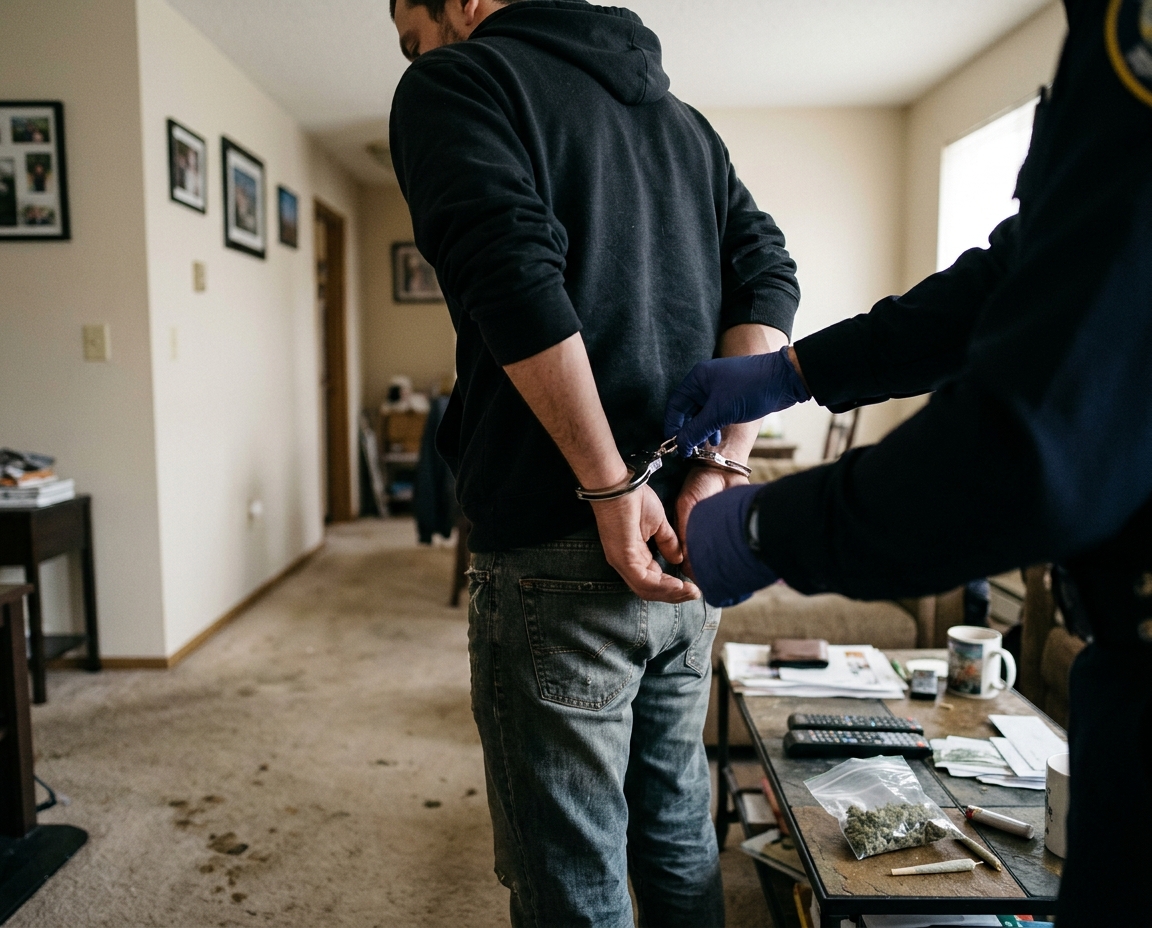
California allows adults 21 and older to possess limited amounts of marijuana for personal use, but possessing more than the legal limit or possessing cannabis in certain restricted locations can result in criminal penalties. Under California Health and Safety Code § 11357, the consequences of unlawful Possession of Marijuana depend on the amount involved, the person’s age, and the circumstances of the offense.
Although recreational marijuana is legal in California, not all possession is permitted. Understanding the state’s possession limits, penalties, and legal exceptions can help individuals recognize when their actions may violate California law.
What Is California Health and Safety Code § 11357?
California Health and Safety Code § 11357 establishes the penalties for certain forms of unlawful marijuana possession. The statute addresses possession of cannabis above the permitted limits and possession on qualifying K–12 school grounds.
Depending on the circumstances, an offense may be classified as an infraction or misdemeanor.
The statute generally covers three important situations:
- Possessing more than 28.5 grams of cannabis or more than 8 grams of concentrated cannabis.
- Possessing cannabis without legal authorization while under 21 years old.
- Possessing cannabis on qualifying K–12 school grounds during school hours or school-related programs.
California’s legalization of recreational marijuana does not eliminate these restrictions. Adults must still comply with the applicable possession limits and location requirements.
How Much Marijuana Can You Legally Possess in California?
Under California Health and Safety Code § 11362.1, adults who are at least 21 years old may generally possess up to 28.5 grams of cannabis and 8 grams of concentrated cannabis for personal use.
The legal limits are:
| Type of cannabis | General adult possession limit |
|---|---|
| Cannabis flower | 28.5 grams |
| Concentrated cannabis | 8 grams |
Adults may also legally possess up to six living cannabis plants under applicable state law, subject to cultivation restrictions.
These limits apply to authorized personal-use possession. Additional restrictions may apply depending on where the cannabis is possessed and how it is used.
Example: A 25-year-old carrying 15 grams of marijuana flower for personal use generally falls within California’s adult possession limit, provided no other legal restriction applies.
However, possessing more than the permitted amount without legal authorization may result in a charge under Health and Safety Code § 11357.
What Are the Penalties for Possession of Marijuana in California?
The penalties for Possession of Marijuana depend on the individual’s age, the amount possessed, and whether the possession occurs in a restricted location.
1. Possession of 28.5 Grams or Less
Under Health and Safety Code § 11357(a), unauthorized possession of no more than 28.5 grams of cannabis or 8 grams of concentrated cannabis is generally treated as an infraction for individuals under 21.
The penalties are:
| Age | Classification | Potential penalty |
|---|---|---|
| Under 18 | Infraction | Drug education and community service |
| 18 to 20 | Infraction | Fine of up to $100 |
| 21 or older | Generally lawful within authorized limits | No possession penalty when otherwise lawful |
For individuals under 18, the requirements depend on whether it is a first or subsequent offense.
First offense:
- Four hours of drug education or counseling.
- Up to 10 hours of community service.
- Completion within 60 days.
Second or subsequent offense:
- Six hours of drug education or counseling.
- Up to 20 hours of community service.
- Completion within 90 days.
2. Possession of More Than 28.5 Grams
Under Health and Safety Code § 11357(b), possessing more than 28.5 grams of cannabis or more than 8 grams of concentrated cannabis without legal authorization carries different penalties based on age.
For individuals 18 or older, the offense is a misdemeanor punishable by:
- Up to six months in county jail.
- A fine of up to $500.
- Both imprisonment and a fine.
For individuals under 18, the offense is generally an infraction.
The requirements are:
First offense:
- Eight hours of drug education or counseling.
- Up to 40 hours of community service.
- Completion within 90 days.
Second or subsequent offense:
- Ten hours of drug education or counseling.
- Up to 60 hours of community service.
- Completion within 120 days.
These are the penalties specified by the statute. The actual consequences depend on the circumstances and applicable legal exceptions.
Is Marijuana Possession on School Grounds Illegal in California?
Yes. California Health and Safety Code § 11357(c) and (d) prohibit certain marijuana possession on the grounds of or within schools providing instruction in kindergarten through grade 12 during hours when the school is open for classes or school-related programs.
This restriction applies even when the amount possessed is otherwise within the ordinary adult possession limit.
What Are the Penalties for Marijuana Possession at School?
For individuals 18 or older, possessing no more than 28.5 grams of cannabis or 8 grams of concentrated cannabis on qualifying school grounds is a misdemeanor.
The penalties include:
- First offense: Fine of up to $250.
- Second or subsequent offense: Fine of up to $500, county jail imprisonment for up to 10 days, or both.
For individuals under 18, the offense is an infraction. The drug education and community service requirements under § 11357(b)(1) apply.
Example: A 22-year-old legally possesses 5 grams of marijuana but brings it onto a qualifying high school campus during school hours. Although the amount is within the adult possession limit, the location may make the possession a misdemeanor under § 11357(c).
What Is the Difference Between Marijuana and Concentrated Cannabis?
California law establishes separate possession limits for cannabis flower and concentrated cannabis.
Cannabis flower generally refers to the dried plant material.
Concentrated cannabis refers to cannabis resin separated from the plant. Examples include certain forms of cannabis wax, shatter, and extracts.
The general adult possession limits are:
| Cannabis type | Possession limit |
|---|---|
| Cannabis flower | 28.5 grams |
| Concentrated cannabis | 8 grams |
Possessing more than either applicable limit without legal authorization may result in penalties under § 11357(b).
The distinction is important because the possession limits are not interchangeable.
Can Medical Marijuana Patients Possess More Than the Legal Limit?
Yes. Qualified medical marijuana patients and primary caregivers may have additional possession allowances under California Health and Safety Code § 11362.77.
Generally, the law permits a qualified patient or primary caregiver to possess:
- Up to eight ounces of dried cannabis per qualified patient.
- Up to six mature cannabis plants per qualified patient.
- Up to 12 immature cannabis plants per qualified patient.
A patient may possess an amount exceeding the standard quantity when a physician’s recommendation establishes that the standard allowance does not meet the patient’s medical needs.
Applicable local medical cannabis rules may also allow higher quantities.
Medical marijuana authorization does not create unlimited possession rights. Individuals must still satisfy the applicable medical cannabis requirements.
What Are Possible Defenses to a Possession of Marijuana Charge?
A possession of marijuana charge does not automatically establish guilt. The prosecution must prove the applicable elements of the offense beyond a reasonable doubt.
Depending on the circumstances, several legal defenses may be available.
1. Lack of Knowledge
The prosecution generally must establish that the accused knew the cannabis was present and knew its nature or character as cannabis.
For example, someone who unknowingly carries another person’s bag containing marijuana may raise a defense based on lack of knowledge.
2. Lack of Possession
Being near marijuana does not automatically establish possession.
For example, if police discover cannabis inside a shared vehicle, the prosecution must establish the necessary connection between the substance and the individual accused.
3. Incorrect Quantity
The amount of cannabis is important when determining whether possession exceeded the statutory limit.
If the substance was incorrectly weighed or the evidence does not establish that the applicable limit was exceeded, the quantity may be challenged.
4. Lawful Medical Authorization
Qualified medical marijuana patients may have legal possession rights beyond ordinary recreational limits.
Medical documentation and physician recommendations may help establish that the possession was authorized.
5. Unlawful Search and Seizure
Law enforcement must follow constitutional requirements when searching individuals, vehicles, and properties.
If marijuana was discovered through an unconstitutional search, the defense may challenge whether the evidence can be used in court.
The availability of these defenses depends on the evidence and circumstances of the particular case.
What Should You Do If You Are Charged With Possession of Marijuana?
Being charged under California Health and Safety Code § 11357 can raise questions about potential penalties, criminal records, and available legal defenses.
If you are facing a marijuana possession charge, consider these steps:
- Identify the specific charge. Determine whether the allegation involves § 11357(a), (b), (c), or (d).
- Understand the alleged quantity. The amount and type of cannabis may affect the classification of the offense.
- Preserve relevant documentation. Medical authorizations and other relevant records may help establish lawful possession.
- Protect your legal rights. You generally have the right to remain silent and the right to seek legal counsel.
- Understand your legal options. An attorney can review the evidence, identify potential defenses, and explain possible consequences.
The circumstances surrounding the alleged possession can significantly affect how a case is handled.
Frequently Asked Questions
1. Is Possession of Marijuana legal in California?
Yes, under certain conditions. Adults 21 and older may generally possess up to 28.5 grams of cannabis and 8 grams of concentrated cannabis for personal use. Restrictions still apply to certain locations and circumstances.
2. How much marijuana can an adult legally possess in California?
An adult who is at least 21 years old may generally possess up to 28.5 grams of cannabis flower and 8 grams of concentrated cannabis under California law.
3. Is possessing more than one ounce of marijuana a misdemeanor?
Generally, yes. Possessing more than 28.5 grams of cannabis without legal authorization can result in a misdemeanor under Health and Safety Code § 11357(b) for individuals 18 or older.
4. Can you go to jail for possession of marijuana in California?
Yes. Individuals 18 or older who unlawfully possess more than 28.5 grams of cannabis or more than 8 grams of concentrated cannabis may face up to six months in county jail.
5. Can someone under 21 legally possess marijuana?
Generally, recreational marijuana possession is limited to individuals 21 and older. However, qualified medical marijuana patients may have separate legal protections under California law.
6. Can you be charged if the marijuana belongs to someone else?
Potentially, but being near marijuana does not automatically establish possession. The prosecution must prove the required elements, including knowledge and possession.
7. Is possession of marijuana on school grounds illegal?
Yes. Health and Safety Code § 11357(c) and (d) prohibit specified possession on qualifying K–12 school grounds during school hours or school-related programs. The penalties depend on the person’s age.
8. Can medical marijuana patients possess more than 28.5 grams?
Yes. Qualified medical patients may generally possess up to eight ounces of dried cannabis, subject to applicable requirements. A physician’s recommendation may support possession of a greater amount when medically necessary.
9. Can possession of marijuana charge be dismissed?
Depending on the circumstances, possible grounds for challenging a charge include insufficient evidence, lack of knowledge, lack of possession, unlawful searches, or valid medical authorization. No particular defense guarantees dismissal.
Key Takeaways
California Health and Safety Code § 11357 establishes penalties for unauthorized possession of marijuana based on the quantity, the individual’s age, and the location of possession.
The most important points to remember are:
- Adults 21 and older may generally possess up to 28.5 grams of cannabis and 8 grams of concentrated cannabis.
- Possessing more than the applicable limits without authorization can result in a misdemeanor for adults 18 or older.
- The maximum penalty for qualifying adult possession above the limits is six months in county jail and a $500 fine.
- Individuals under 21 are subject to different possession rules.
- Marijuana possession on qualifying K–12 school grounds can result in additional penalties.
- Qualified medical marijuana patients may have separate possession allowances.
- Possible defenses depend on the evidence and circumstances of the alleged offense.
Understanding these rules can help individuals recognize their rights and the potential consequences of a marijuana possession charge in California.
Contact Southwest Legal
Facing a Marijuana Possession Charge?
Being accused of unlawful possession of marijuana can be stressful, especially when you are uncertain about the charges, potential penalties, or legal options available to you.
A possession of marijuana allegation does not mean you should automatically assume the worst. Understanding the specific charge, examining the evidence, and knowing your legal rights are important steps toward making informed decisions.
If you are facing criminal allegations, Southwest Legal can help you understand your legal situation and explore the options available under California law.
Do not leave important questions about your rights and future unanswered. Contact us today for a free consultation. Discuss your concerns, get a better understanding of your legal options, and take an informed first step toward protecting your rights.
Disclaimer: This article is for general informational purposes only and does not constitute legal advice or create an attorney-client relationship unless and until the firm and client enter into an agreement for legal services. Laws may change, and legal outcomes depend on the specific facts of each case. Consult a qualified attorney for advice regarding your situation.