


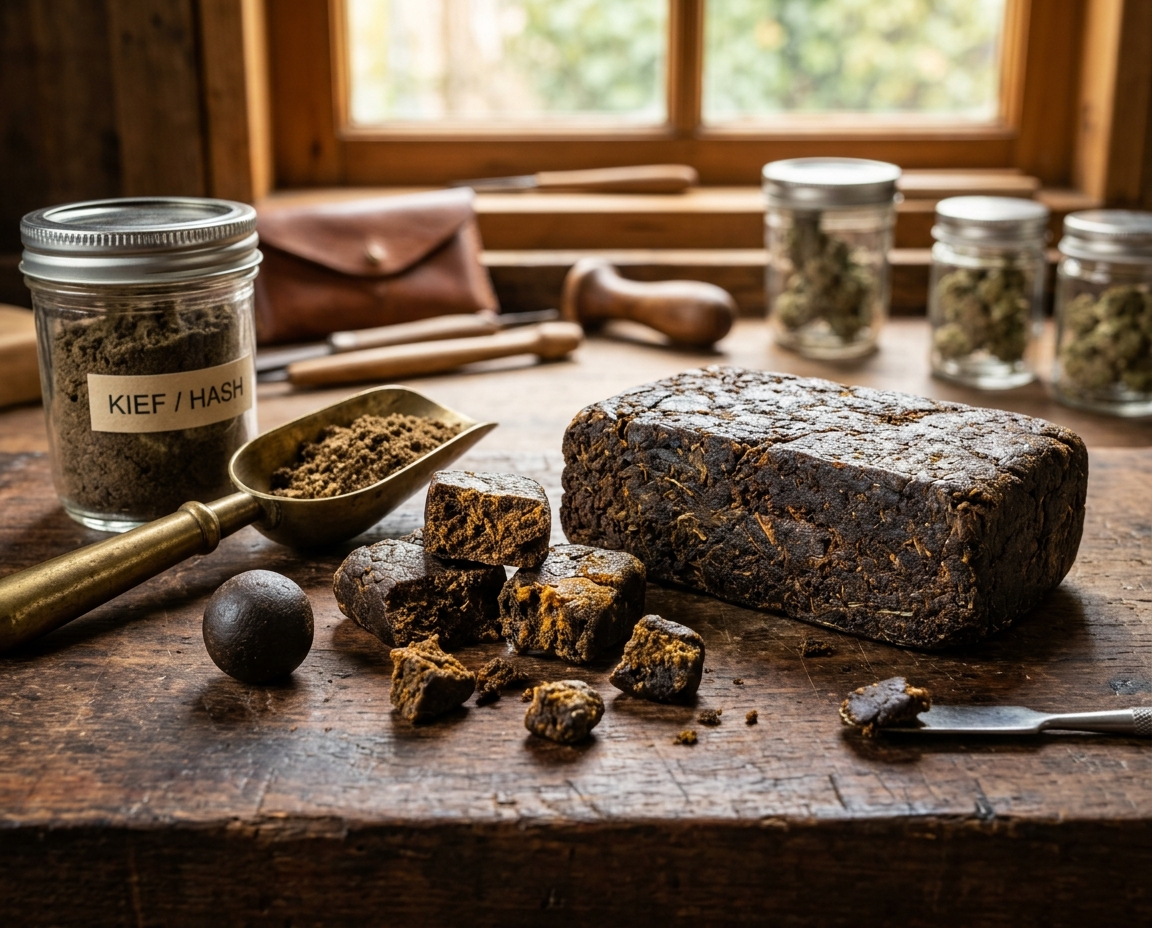
California allows adults aged 21 and older to possess up to 8 grams of concentrated cannabis, including hashish, for personal use. However, possessing more than the legal limit, possessing cannabis for unauthorized sale, or manufacturing concentrates through prohibited methods can result in criminal charges and penalties.
California’s cannabis laws distinguish between lawful personal possession and prohibited cannabis-related activities. Understanding these rules can help individuals recognize what is legal, what conduct may lead to criminal charges, and what legal defenses may be available.
What Is Concentrated Cannabis Under California Law?
Concentrated Cannabis refers to cannabis that has undergone processing to concentrate one or more active cannabinoids, thereby increasing its potency.
Under California Health and Safety Code § 11006.5, the definition was expanded effective January 1, 2026.
Common examples include:
- Hashish (hash): Cannabis resin collected and compressed into a concentrated product.
- Wax: A cannabis extract with a soft, wax-like consistency.
- Shatter: A cannabis concentrate with a brittle, glass-like texture.
- Rosin: A concentrate produced through mechanical extraction.
- Cannabis oil: An extracted product containing concentrated cannabinoids.
- Dabs: Concentrated cannabis products commonly consumed using specialized devices.
The updated legal definition expressly includes extracts, oils, hash, dab, shatter, rosin, wax, and separated resin, whether crude or purified.
Beginning January 1, 2028, the definition will also cover qualifying concentrates derived from industrial hemp, while excluding CBD isolate and CBN isolate.
This expanded definition is important because these products are subject to California’s applicable cannabis possession and criminal laws.
Is Concentrated Cannabis Legal in California?
Yes. California permits adults aged 21 and older to possess and purchase limited amounts of cannabis concentrates for personal use.
Under California Health and Safety Code § 11362.1, adults may generally:
- Possess up to 8 grams of concentrated cannabis.
- Possess up to 28.5 grams of cannabis flower.
- Purchase cannabis concentrates from licensed retailers.
- Give away up to 8 grams of concentrated cannabis to another adult aged 21 or older without compensation.
However, these rights do not authorize possession above the legal limit, unauthorized commercial sales, or prohibited manufacturing activities.
Cannabis also remains illegal under federal law, even when possession is permitted under California law.
How Much Hashish Can You Legally Possess in California?
Adults aged 21 and older may generally possess up to 8 grams of concentrated cannabis for personal use.
California Health and Safety Code § 11357 establishes the penalties for possessing amounts exceeding the permitted limit.
| Possession situation | General legal consequence |
|---|---|
| Adult 21 or older possessing up to 8 grams | Generally lawful |
| Adult possessing more than 8 grams without authorization | Generally a misdemeanor |
| Person aged 18–20 possessing up to 8 grams | Infraction, fine up to $100 |
| Person under 18 possessing up to 8 grams | Infraction with education and community service requirements |
For example, a 25-year-old possessing 5 grams of hashish for personal use would generally be within California’s legal possession limit.
However, someone possessing 12 grams without legal authorization could face a misdemeanor charge.
Certain medical cannabis patients may qualify for different possession allowances under applicable California law.
What Are the Penalties for Possessing More Than 8 Grams of Concentrated Cannabis?
Under California Health and Safety Code § 11357(b), unauthorized possession of more than 8 grams of concentrated cannabis is generally a misdemeanor for individuals aged 18 and older.
Potential penalties include:
- Up to six months in county jail.
- A fine of up to $500.
- Both imprisonment and a fine.
For individuals under 18, different infraction penalties apply, including drug education or counseling and community service.
The circumstances of possession can also affect the applicable charge.
For example, possessing 12 grams of hashish for personal use is not automatically the same offense as possessing the substance for sale. The prosecution must establish the additional elements of a possession-for-sale charge.
Is Selling Concentrated Cannabis Illegal in California?
Yes. Selling concentrated cannabis without proper authorization is illegal in California.
Under Health and Safety Code § 11359, possessing cannabis for sale without legal authorization can result in criminal charges.
For individuals aged 18 and older, possession for sale is generally a misdemeanor punishable by:
- Up to six months in county jail.
- A fine of up to $500.
- Both a fine and imprisonment.
Certain circumstances can result in felony punishment, including specified prior convictions and offenses involving the unlawful sale of cannabis to minors or the unlawful use of younger individuals in cannabis-related activities.
Authorities may consider several factors when investigating alleged possession for sale:
- The quantity of cannabis concentrates.
- Packaging and labeling.
- Evidence of attempted sales.
- Communications suggesting distribution.
- Other evidence indicating an intent to sell.
Importantly, possessing more than 8 grams does not automatically establish an intent to sell. The prosecution must prove the elements of the separate offense.
Can You Manufacture Hashish at Home in California?
California permits certain personal cannabis cultivation and processing activities, but manufacturing concentrated cannabis is subject to specific restrictions.
Adults aged 21 and older may generally cultivate up to six living cannabis plants at a private residence, subject to applicable state and local laws.
However, personal cultivation rights do not authorize unrestricted concentrate manufacturing.
Under Health and Safety Code § 11362.3(a)(6), manufacturing concentrated cannabis using a volatile solvent is prohibited unless the activity is conducted in accordance with the required commercial licensing provisions.
Volatile solvents include substances such as butane and propane.
Commercial cannabis extraction and manufacturing must comply with California Department of Cannabis Control licensing, equipment, safety, and regulatory requirements.
Therefore, permission to grow cannabis at home does not automatically authorize every method of producing hashish or other concentrates.
Can You Transport Concentrated Cannabis in California?
Yes. Adults may generally transport legally possessed cannabis concentrates within California, provided they comply with applicable transportation restrictions.
Under Health and Safety Code § 11362.3(a)(4), possessing an open container or open package of cannabis or cannabis products in the passenger compartment of a vehicle while driving, operating, or riding in it is prohibited.
Cannabis should be transported in a sealed container or stored in the vehicle’s trunk.
Drivers and passengers are also prohibited from smoking or consuming cannabis in a motor vehicle under California Vehicle Code § 23221 and applicable provisions of Health and Safety Code § 11362.3.
Driving under the influence of cannabis is separately prohibited under Vehicle Code § 23152(f).
What Legal Defenses May Apply to Concentrated Cannabis Charges?
Individuals facing cannabis-related criminal charges may have potential legal defenses depending on the circumstances of the case.
Common defense considerations include:
- Unlawful search and seizure: Evidence may be challenged if law enforcement conducted an unconstitutional search.
- Lack of knowledge: The prosecution generally must establish that the accused knew of the substance’s presence and its controlled nature.
- Lack of possession: Being near another person’s cannabis does not automatically establish actual or constructive possession.
- Incorrect quantity or classification: Disputes about the amount or legal classification of the substance may affect the applicable charge.
- Lack of intent to sell: Possession alone does not automatically prove possession for sale.
- Legal authorization: Applicable medical cannabis protections or other statutory exceptions may provide a defense.
The appropriate defense depends on the evidence, the specific allegations, and the circumstances surrounding the investigation.
Frequently Asked Questions
1. Is hashish considered concentrated cannabis in California?
Yes. Hashish is expressly included in California’s definition of concentrated cannabis under Health and Safety Code § 11006.5, effective January 1, 2026.
2. How many grams of hashish can I legally possess in California?
Adults aged 21 and older may generally possess up to 8 grams of concentrated cannabis for personal use, subject to applicable restrictions and exceptions.
3. Is possessing 10 grams of hashish a felony in California?
No, not automatically. Unauthorized possession of more than 8 grams is generally a misdemeanor under Health and Safety Code § 11357(b).
4. Can I legally buy hashish from a California dispensary?
Yes. Adults aged 21 and older may purchase cannabis concentrates from licensed California retailers, subject to applicable purchase limits.
5. Can I give hashish to another adult in California?
Yes. Adults aged 21 and older may generally give up to 8 grams of concentrated cannabis to another adult without compensation.
6. Can I manufacture cannabis concentrates at home?
Certain personal cannabis processing activities are permitted, but manufacturing concentrated cannabis using volatile solvents without the required commercial authorization is prohibited.
7. Is possession of concentrated cannabis for sale a crime?
Yes. Unauthorized possession for sale is prohibited under Health and Safety Code § 11359 and can result in misdemeanor or, under specified circumstances, felony charges.
8. Can I transport hashish in my car?
Yes, provided the cannabis is legally possessed and transported in compliance with California’s vehicle and cannabis transportation restrictions.
9. Can I take concentrated cannabis outside California?
No. Transporting cannabis across state lines remains prohibited under federal law, even if the destination state permits recreational cannabis.
Key Takeaways
California permits adults aged 21 and older to possess limited amounts of hashish and other cannabis concentrates, but exceeding legal limits or engaging in unauthorized activities can result in criminal penalties.
The most important points to remember are:
- Adults aged 21 and older may generally possess up to 8 grams of concentrated cannabis.
- Possessing more than 8 grams without legal authorization is generally a misdemeanor.
- Hashish, wax, shatter, rosin, and cannabis oils are included in California’s expanded definition.
- Unauthorized possession for sale can result in separate criminal charges.
- Manufacturing concentrates using volatile solvents without the required authorization is prohibited.
- Cannabis transportation and consumption are subject to specific restrictions.
- Potential legal defenses depend on the circumstances and evidence involved.
Speak With Southwest Legal About California Cannabis Charges
Facing a concentrated cannabis possession, possession-for-sale, or manufacturing charge can be stressful. Understanding the applicable California laws and your legal rights is essential when responding to these allegations.
Southwest Legal can help individuals understand cannabis-related criminal charges, evaluate the legal issues involved, and explore potential defense options.
Whether you are facing a hashish possession charge, an excessive-quantity allegation, or a charge involving unauthorized cannabis distribution, obtaining reliable legal guidance is an important first step.
Don’t let uncertainty about California cannabis laws leave you without a clear understanding of your rights and options.
Contact us today for a free consultation. Discuss your situation, get answers to your legal questions, and learn what legal options may be available to protect your rights. Take the first step toward understanding your case and making informed decisions about your future.
Disclaimer: This article is for general informational purposes only and does not constitute legal advice or create an attorney-client relationship unless and until the firm and client enter into an agreement for legal services. Laws may change, and legal outcomes depend on the specific facts of each case. Consult a qualified attorney for advice regarding your situation.