


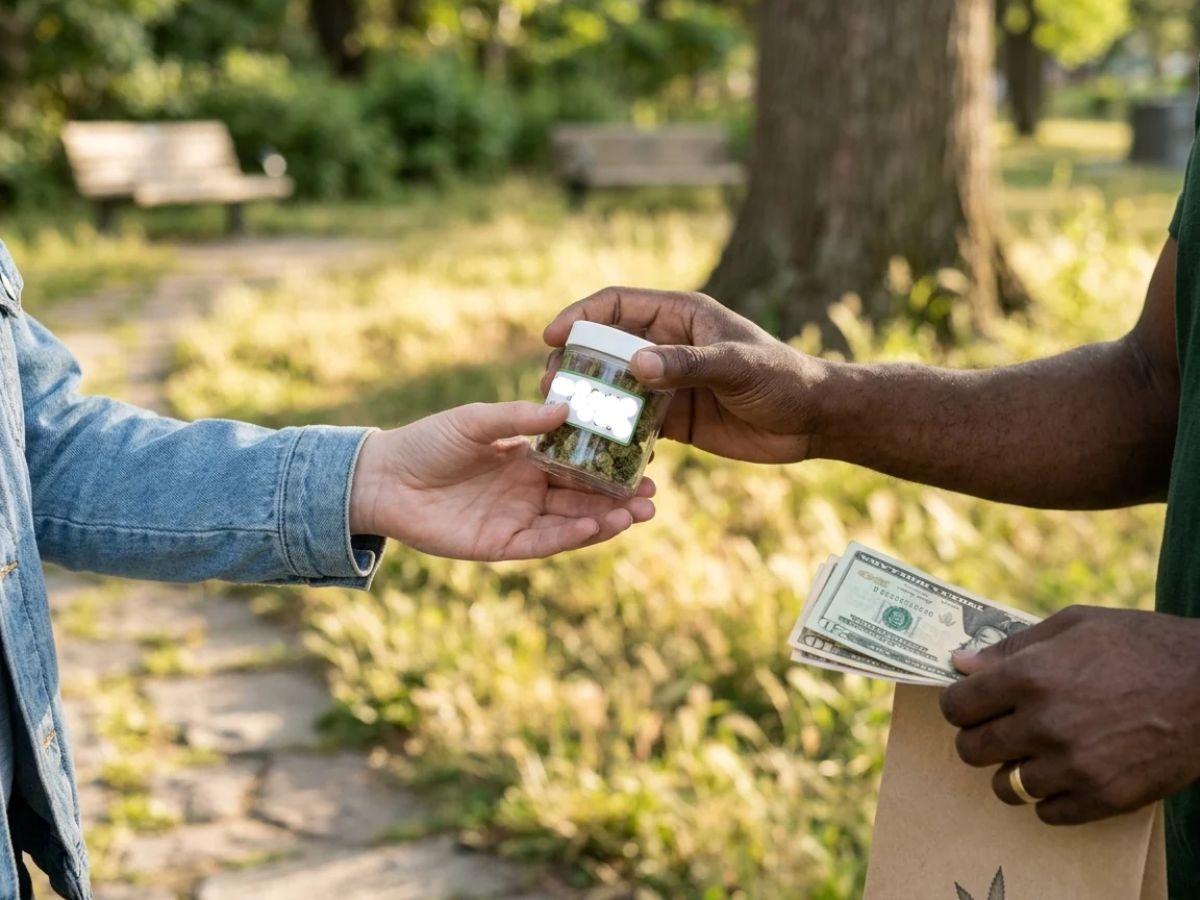
Selling marijuana to a minor in California is a serious criminal offense under California Health and Safety Code § 11361. Adults convicted of unlawfully selling or offering to sell cannabis to someone under 18 can face three, five, or seven years in state prison, depending on the circumstances.
Although California has legalized recreational marijuana for adults, selling or unlawfully providing cannabis to minors remains illegal. Understanding the penalties, prohibited conduct, and possible legal defenses is important for anyone facing charges under this law.
What Is California Health & Safety Code § 11361?
California Health and Safety Code § 11361 prohibits adults aged 18 or older from engaging in certain unlawful cannabis-related activities involving minors.
The law specifically prohibits adults from:
- Selling or offering to sell cannabis to someone under 18.
- Furnishing, administering, or giving cannabis to minors.
- Offering to furnish, administer, or give cannabis to minors.
- Using minors to transport, carry, sell, or distribute cannabis unlawfully.
- Hiring or employing minors in unlawful cannabis sales activities.
- Inducing minors to use cannabis in violation of the law.
Importantly, a person does not have to complete a marijuana sale to face prosecution. Offering to sell cannabis to a minor can also violate the statute.
The law distinguishes between selling cannabis and furnishing it without payment. This distinction affects the potential criminal penalties.
What Are the Penalties for Selling Marijuana to a Minor in California?
Under Health and Safety Code § 11361, selling or offering to sell cannabis to a minor can result in three, five, or seven years in state prison.
The applicable penalty depends on the specific offense and the minor’s age.
California HSC § 11361 Penalty Breakdown
| Offense | Potential prison sentence |
|---|---|
| Selling or offering to sell cannabis to a minor under 18 | 3, 5, or 7 years |
| Using a minor in unlawful cannabis sales or distribution activities | 3, 5, or 7 years |
| Inducing a minor to use cannabis unlawfully | 3, 5, or 7 years |
| Furnishing, administering, giving, or offering to provide cannabis to a minor under 14 | 3, 5, or 7 years |
| Furnishing, administering, giving, or offering to provide cannabis to a minor aged 14–17 | 3, 4, or 5 years |
These sentencing ranges are established under subdivisions (a) and (b) of § 11361.
Important distinction: Selling or offering to sell cannabis to a minor carries the same sentencing range regardless of whether the minor is under 14 or between 14 and 17. The different sentencing range applies to furnishing, administering, giving, or offering to provide cannabis to minors aged 14 through 17.
A conviction can also result in a criminal record and potential difficulties with employment, professional licensing, and future opportunities.
Is Selling Marijuana to a Minor a Felony in California?
Yes. Selling or offering to sell cannabis to a minor is punishable under California Health and Safety Code § 11361(a) by three, five, or seven years in state prison.
This is a serious felony-level criminal offense, not a simple marijuana possession violation.
California’s recreational marijuana laws do not provide an exception. Although qualifying adults can legally purchase and possess cannabis, they cannot legally sell or unlawfully distribute it to minors.
For example, an adult who sells marijuana to a 17-year-old may face criminal charges even if the marijuana was legally purchased from a licensed dispensary.
What Is the Difference Between Selling and Furnishing Marijuana to a Minor?
Selling and furnishing cannabis are separate forms of prohibited conduct under California Health and Safety Code § 11361.
Selling marijuana generally involves exchanging cannabis for money, services, or something else of value.
Furnishing marijuana means providing cannabis to another person, even when no payment is involved.
For example:
- An adult sells marijuana to a 16-year-old for $40. This may constitute selling cannabis to a minor.
- An adult gives marijuana to a 15-year-old for free. This may constitute furnishing cannabis to a minor.
- An adult offers to sell marijuana to a 17-year-old, but the transaction never happens. The offer may still support criminal charges.
The distinction matters because selling or offering to sell cannabis carries a three-, five-, or seven-year sentencing range, while furnishing cannabis to a minor aged 14 through 17 carries a three-, four-, or five-year range.
Can You Be Charged for Offering to Sell Marijuana to a Minor Without Completing the Sale?
Yes. California law prohibits offering to sell cannabis to a minor even if the transaction is never completed.
Under § 11361(a), prosecutors do not necessarily need to prove that marijuana was delivered or payment was received.
For an offer-to-sell charge, the prosecution generally must establish that:
- The defendant offered to sell cannabis to the alleged minor.
- The defendant intended to complete the proposed sale.
- The defendant was at least 18 years old.
- The alleged recipient was under 18.
For example, an adult sends a message offering to sell marijuana to a 16-year-old for $50. Police intervene before the exchange takes place.
The absence of an actual sale does not automatically prevent prosecution because the unlawful offer itself may support a charge.
What Must Prosecutors Prove Under HSC § 11361?
To obtain a conviction, prosecutors must prove the required elements of the specific offense beyond a reasonable doubt.
For a completed sale or furnishing offense, the prosecution generally must establish:
- The defendant sold, furnished, administered, or gave cannabis to the alleged recipient.
- The defendant knew the controlled substance was present.
- The defendant knew the nature or character of the substance as a controlled substance.
- The defendant was at least 18 years old.
- The recipient was under the applicable age threshold.
For an offer-to-sell or offer-to-furnish charge, prosecutors must establish that the defendant made the offer with the intention of completing the proposed transaction or transfer.
Evidence may include:
- Text messages and social media conversations.
- Witness statements.
- Surveillance footage.
- Recorded communications.
- Physical cannabis evidence.
- Payment records.
- Evidence establishing the minor’s age.
An accusation alone is not enough to establish guilt. The prosecution must prove every required element using admissible evidence.
What Legal Defenses May Apply to a Marijuana Sale to a Minor Charge?
The available defenses depend on the facts, evidence, and specific allegations. A criminal defense attorney may examine several issues when evaluating a charge under Health and Safety Code § 11361.
1. Insufficient Evidence
The prosecution must prove every element of the offense beyond a reasonable doubt.
If the evidence does not establish the alleged sale, furnishing, offer, or recipient’s age, the defense may challenge whether the prosecution has sufficient evidence to proceed.
2. No Intent to Complete the Proposed Transaction
For an offer-to-sell charge, prosecutors must establish that the defendant intended to complete the proposed sale.
An ambiguous conversation or message does not automatically establish an unlawful offer. The surrounding circumstances and context of the communications may be important.
3. Disputes About the Substance
The prosecution must establish that the substance involved was cannabis covered by the statute.
Questions involving substance identification, laboratory testing, and evidence handling may be relevant when evaluating the case.
4. Unlawful Search or Seizure
If law enforcement obtained evidence through an unconstitutional search or seizure, the defense may challenge whether that evidence can be used in court.
Whether evidence can be excluded depends on the circumstances and applicable constitutional rules.
5. Unreliable Witness or Digital Evidence
Inconsistent statements, inaccurate identification, incomplete messages, and unreliable electronic evidence may create questions about the prosecution’s version of events.
A careful review of witness testimony, communications, and other evidence can help identify weaknesses in the allegations.
Important: A defendant’s claim that they believed the minor was at least 18 is not automatically a defense to an offer-to-sell charge under § 11361. California law recognizes no general good-faith mistake-of-age defense to this offense.
What Happens After an Arrest for Selling Marijuana to a Minor?
An arrest under Health and Safety Code § 11361 can lead to a felony criminal prosecution.
The process generally includes:
- Investigation and arrest: Police investigate the alleged marijuana transaction and collect evidence.
- Booking: The arrested individual is processed by law enforcement.
- Arraignment: The defendant appears in court, receives information about the charges, and enters a plea.
- Pretrial proceedings: The defense and prosecution address evidence and legal motions.
- Case resolution: The case may end through dismissal, a negotiated plea, or trial.
- Sentencing: If convicted, the court determines the applicable sentence.
Anyone facing these allegations should understand their legal rights and consider obtaining legal representation before discussing the case with investigators.
Frequently Asked Questions
1. Is selling marijuana to someone under 18 a felony in California?
Yes. Under Health and Safety Code § 11361(a), an adult who unlawfully sells or offers to sell cannabis to someone under 18 can face three, five, or seven years in state prison.
2. Can I be charged for giving marijuana to a minor without payment?
Yes. Furnishing, administering, or giving cannabis to a minor can result in criminal charges even when no money changes hands.
3. Does the minor have to be under 14 for a § 11361 charge?
No. The statute applies to minors under 18. However, the penalties differ depending on whether the minor is under 14 or between 14 and 17.
4. Can I be charged if I only offered to sell marijuana?
Yes. Section 11361(a) specifically prohibits offering to sell cannabis to a minor. A completed transaction is not required.
5. What if the minor lied about their age?
A minor’s alleged misrepresentation of age does not automatically provide a defense. A claimed good-faith belief that the recipient was an adult is not generally a defense to an offer-to-sell charge under this statute.
6. Can a licensed dispensary sell marijuana to someone under 18?
No. A cannabis business license does not authorize recreational marijuana sales to minors. Licensed businesses must comply with California’s age restrictions and applicable regulations.
7. What if I used a minor to deliver marijuana?
You may face charges under § 11361(a). The statute prohibits hiring, employing, or using minors in unlawful cannabis transportation, carrying, sales, and distribution activities.
8. Can a California HSC § 11361 charge be dismissed?
Yes. Dismissal may be possible depending on the evidence, legal issues, and circumstances. Potential grounds may include insufficient evidence or successful challenges to improperly obtained evidence. However, no particular outcome is guaranteed.
Key Takeaways
- Selling or offering to sell marijuana to a minor under 18 is a serious criminal offense in California.
- Under HSC § 11361(a), the potential prison sentence is three, five, or seven years.
- Giving marijuana to a minor for free can also result in criminal charges.
- Furnishing cannabis to minors aged 14–17 carries a different sentencing range.
- Using a minor in unlawful cannabis distribution activities is prohibited.
- An actual marijuana sale does not have to occur for an offer-to-sell charge.
- The prosecution must prove the required elements beyond a reasonable doubt.
- Potential defenses depend on the specific facts and evidence.
Speak With Southwest Legal About a California Marijuana Charge
Facing charges for selling marijuana to a minor can put your freedom, reputation, and future opportunities at risk. Understanding California Health and Safety Code § 11361, the allegations against you, and the legal options available is an important first step.
Southwest Legal can help you understand the charges, evaluate the legal issues involved, and learn about the options that may be available in your situation.
An arrest does not automatically mean a conviction. The evidence must be examined, the prosecution must meet its burden of proof, and your legal rights must be protected throughout the criminal process.
If you or someone you care about is facing allegations involving selling or furnishing marijuana to a minor in California, do not leave important legal questions unanswered.
Contact us today for a free consultation.
Take the next step toward understanding your rights, evaluating your legal options, and protecting your future with guidance from Southwest Legal.
Disclaimer: This article is for general informational purposes only and does not constitute legal advice or create an attorney-client relationship unless and until the firm and client enter into an agreement for legal services. Laws may change, and legal outcomes depend on the specific facts of each case. Consult a qualified attorney for advice regarding your situation.