


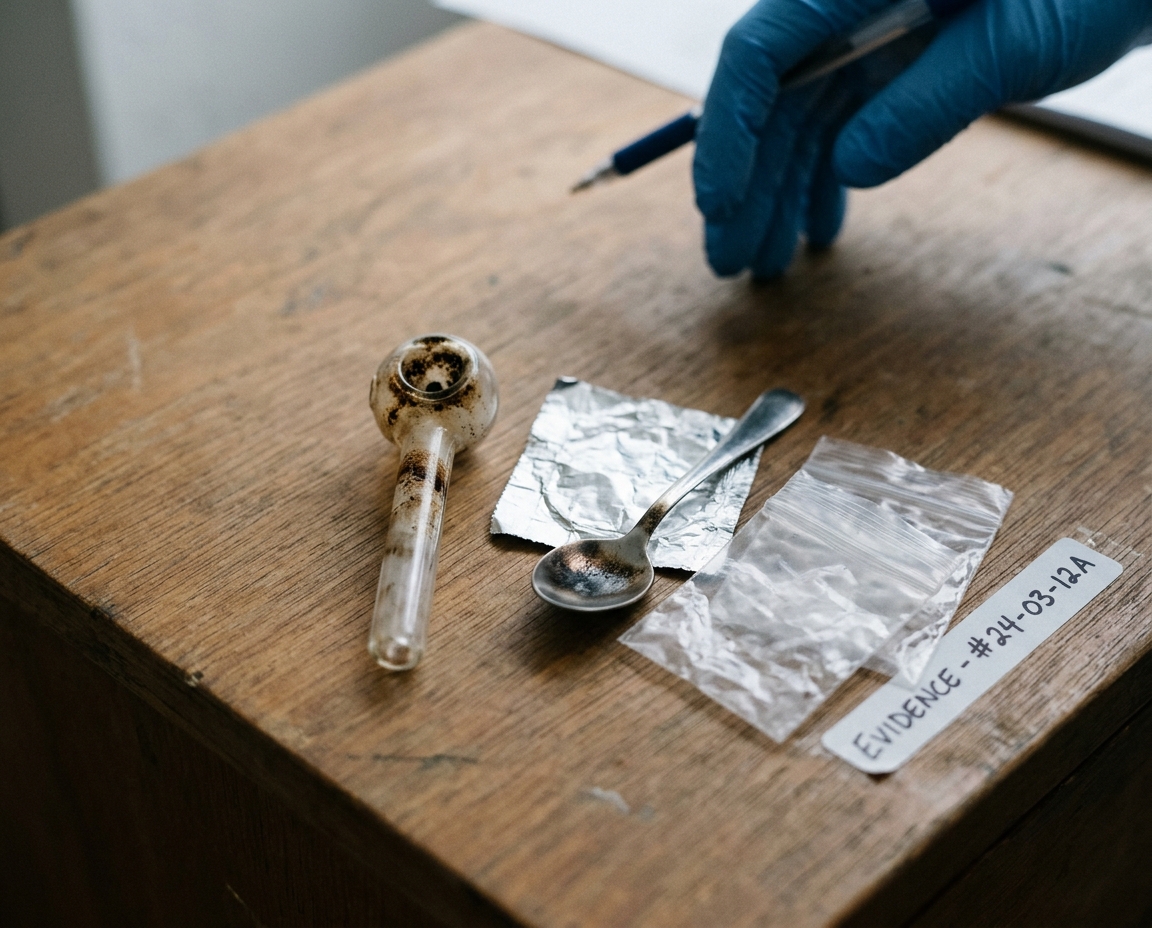
California Health and Safety Code § 11364(a) makes it illegal to possess certain devices or instruments used to unlawfully inject or smoke specified controlled substances. Possession of Controlled Substance Paraphernalia is generally a misdemeanor punishable under California Health and Safety Code § 11374 by a fine of $30 to $500, imprisonment for 15 to 180 days, or both.
However, possessing an object commonly associated with drug use does not automatically constitute a crime. Prosecutors must prove that the defendant knowingly possessed an item used for unlawfully injecting or smoking a controlled substance covered by the statute.
What Is California Health and Safety Code § 11364(a)?
California Health and Safety Code § 11364(a) prohibits possessing an opium pipe or another device, instrument, or item of paraphernalia used to unlawfully inject or smoke specified controlled substances.
The law identifies covered substances by referring to particular categories under Health and Safety Code §§ 11054 and 11055. It also includes narcotic drugs classified in Schedules III, IV, or V.
Examples of items that may be relevant to a charge include:
- Opium pipes.
- Glass pipes used to smoke covered controlled substances.
- Devices used to unlawfully inject covered narcotic substances.
- Other instruments used to unlawfully smoke or inject substances identified by the statute.
The substance involved and the item’s actual use are important. Not every pipe, syringe, or household object automatically qualifies as prohibited paraphernalia under this law.
What Are the Elements of Possession of Controlled Substance Paraphernalia?
To obtain a conviction under Health and Safety Code § 11364(a), the prosecution must prove three elements beyond a reasonable doubt.
Under California Criminal Jury Instructions, CALCRIM No. 2410, the prosecution must establish that:
- The defendant possessed an object used for unlawfully injecting or smoking a controlled substance covered by the statute.
- The defendant knew the object was present.
- The defendant knew the object was used for unlawfully injecting or smoking a controlled substance.
All three elements must be established for a conviction.
1. Possession of the Paraphernalia
Possession can be actual or constructive.
- Actual possession: The defendant physically holds or carries the item.
- Constructive possession: The defendant has control over the item or the right to control it, even if it is not physically in their possession.
For example, someone carrying a prohibited pipe inside a backpack may be considered to have actual possession.
Constructive possession may arise when an individual has control over an item stored elsewhere.
However, proximity alone does not establish possession. Finding a pipe inside a shared vehicle does not automatically mean every passenger possessed it. The prosecution must establish a sufficient connection between the individual and the item.
2. Knowledge That the Item Was Present
The defendant must have known that the alleged paraphernalia existed.
For example, imagine someone borrows a friend’s vehicle. During a traffic stop, police discover a glass pipe underneath the passenger seat.
The driver may have a defense if they genuinely did not know the pipe was there. The prosecution must establish knowledge rather than rely solely on the item’s location.
3. Knowledge of the Item’s Drug-Related Purpose
The prosecution must also prove that the defendant knew the item was used for unlawfully injecting or smoking a covered controlled substance.
Evidence may include:
- The item’s physical characteristics.
- Residue found on the item.
- Statements made by the defendant.
- Circumstances surrounding its discovery.
An ordinary glass object does not automatically establish this element. The prosecution must prove the defendant’s knowledge of its prohibited purpose.
What Are the Penalties for HS 11364(a) in California?
A violation of Health and Safety Code § 11364(a) is a misdemeanor under Health and Safety Code § 11374.
The applicable statutory penalties are:
| Penalty | Punishment |
|---|---|
| Criminal fine | $30 to $500 |
| County jail | 15 to 180 days |
| Both | A fine and imprisonment may be imposed |
These are the statutory penalty ranges under § 11374. The actual sentence depends on the circumstances and applicable sentencing rules.
Can a Drug Paraphernalia Conviction Affect Your Criminal Record?
Yes. A misdemeanor conviction may appear on a person’s criminal record and create additional concerns beyond the immediate penalties.
Possible consequences include:
- Employment background check concerns.
- Professional licensing complications.
- Difficulties with certain educational opportunities.
- Immigration-related consequences for noncitizens.
Individuals with immigration concerns should consult an attorney familiar with both criminal and immigration law because the consequences depend on the specific circumstances.
What Items Qualify as Drug Paraphernalia Under HS 11364(a)?
The statute focuses on equipment used to unlawfully inject or smoke specified controlled substances.
| Item | Potential legal significance |
|---|---|
| Opium pipe | Specifically identified in the statute |
| Glass smoking pipe | May qualify depending on the substance and circumstances |
| Injection equipment | May qualify when used to unlawfully inject a covered substance, subject to exceptions |
| Ordinary glass tube | Not automatically prohibited |
| Household container | Not automatically illegal |
| Marijuana-smoking device | Possession alone is not prohibited under § 11364(a) |
California Health and Safety Code § 11364.5 contains broader provisions concerning drug paraphernalia. However, an item falling within a broader definition does not automatically establish a violation of § 11364(a).
Is Possession of a Marijuana Pipe Illegal in California?
Generally, no. Possessing a device for smoking marijuana, without more, does not violate Health and Safety Code § 11364(a).
In In re Johnny O. (2003) 107 Cal.App.4th 888, the California Court of Appeal recognized that possession of a marijuana-smoking device alone does not establish a violation of this statute.
However, other California laws may regulate cannabis possession, consumption, and use depending on the circumstances.
Are Hypodermic Needles and Syringes Illegal to Possess in California?
No, not automatically. California Health and Safety Code § 11364 contains specific exceptions for hypodermic needles and syringes.
Under the current law, effective January 1, 2026:
- Personal use: Subdivision (d) excludes possession solely for personal use of hypodermic needles or syringes.
- Safe disposal: Subdivision (b) excludes needles or syringes properly containerized for safe disposal in a container meeting applicable state and federal standards.
- Controlled substance checking services: Subdivision (c) provides an exception for individuals obtaining qualifying services under Health and Safety Code § 11300 et seq.
The personal-use exception is particularly important. Possessing a hypodermic needle or syringe solely for personal use does not automatically violate § 11364.
What Defenses Are Available Against a California HS 11364 Charge?
A person accused of Possession of Controlled Substance Paraphernalia may have several possible legal defenses. The appropriate defense depends on the evidence and circumstances of the case.
1. Lack of Knowledge
The defendant may argue that they did not know the alleged paraphernalia was present.
For example, someone borrowing a vehicle may not know that another person left a pipe inside.
If the prosecution cannot establish knowledge of the item’s presence, an essential element is missing.
2. Lack of Possession or Control
Being near an item does not automatically establish possession.
A defense may challenge whether the defendant actually possessed the alleged paraphernalia or had the right to control it.
This issue may arise when items are discovered in shared apartments, vehicles, or other locations occupied by multiple people.
3. Lack of Knowledge of the Item’s Purpose
The defendant may argue that they did not know the object was used for unlawfully injecting or smoking a covered controlled substance.
The prosecution must establish this knowledge beyond a reasonable doubt rather than rely on assumptions about the item’s appearance.
4. The Substance Is Not Covered by the Statute
Section 11364(a) applies only to specified controlled substances.
If the alleged substance does not fall within the statutory categories, the prosecution may be unable to establish the offense.
The legal distinction involving marijuana-smoking devices is one example.
5. Applicable Syringe Exception
Possession of hypodermic needles or syringes solely for personal use is excluded under § 11364(d). Other statutory exceptions may also apply.
The circumstances of possession and the applicable legal requirements should be carefully reviewed.
6. Illegal Search or Seizure
The defense may challenge whether police obtained the alleged paraphernalia through an unconstitutional search.
The Fourth Amendment protects individuals against unreasonable searches and seizures.
Depending on the circumstances, an attorney may file a motion to suppress evidence obtained in violation of constitutional requirements.
Can a California Drug Paraphernalia Charge Be Dismissed?
Yes. A charge under Health and Safety Code § 11364(a) may be dismissed when the evidence or applicable law does not support the prosecution.
Potential grounds for challenging the charge include:
- Insufficient evidence of possession.
- Lack of proof that the defendant knew the item was present.
- Lack of proof that the defendant knew the item’s prohibited purpose.
- Evidence that the alleged substance is not covered by the statute.
- An applicable statutory exception.
- A successful motion to suppress unlawfully obtained evidence.
Example: Suppose police discover a pipe in a shared apartment occupied by three people. The prosecution cannot establish which person possessed or controlled the item.
The discovery of the pipe in a common area does not automatically establish that every resident committed a crime. The prosecution must establish the required elements against the specific defendant.
Dismissal is not guaranteed. Each case must be evaluated based on its evidence and legal circumstances.
Frequently Asked Questions
1. Is Possession of Controlled Substance Paraphernalia a felony in California?
Generally, no. A violation of Health and Safety Code § 11364(a) is a misdemeanor punishable under § 11374 by a fine of $30 to $500, imprisonment for 15 to 180 days, or both.
2. Can I be arrested for having a glass pipe in my car?
Possibly, depending on the circumstances. The prosecution must prove that you knowingly possessed an item used for unlawfully injecting or smoking a controlled substance covered by § 11364(a).
3. Is it illegal to possess a used drug pipe in California?
It may be illegal if the pipe was used for unlawfully smoking a controlled substance covered by the statute and the prosecution establishes all required elements.
4. Can I be charged if the paraphernalia belongs to someone else?
Possibly, but ownership and possession are different legal concepts. The prosecution must establish that you possessed the item and knew it was present and had the prohibited purpose.
5. Are syringes illegal in California?
No, not automatically. California law excludes possession solely for personal use, along with certain other qualifying circumstances.
6. Can I be charged for having a marijuana pipe?
Possession of a marijuana-smoking device alone does not violate § 11364(a). This distinction was recognized in In re Johnny O. (2003) 107 Cal.App.4th 888.
7. Does the prosecution have to prove I knew the object was drug paraphernalia?
Yes. The prosecution must prove that you knew the object was present and knew it was used for unlawfully injecting or smoking a covered controlled substance.
8. Can police search my car because they suspect I have drug paraphernalia?
Not automatically. Police must have a lawful basis for a vehicle search under applicable constitutional requirements.
9. Can a drug paraphernalia conviction affect my employment?
Yes. A misdemeanor conviction may appear in background checks and create employment or professional licensing concerns, depending on the circumstances.
Key Takeaways
California Health and Safety Code § 11364(a) prohibits knowingly possessing certain equipment used to unlawfully inject or smoke specified controlled substances.
Important points to remember:
- The offense is generally a misdemeanor.
- Health and Safety Code § 11374 provides a fine of $30 to $500, imprisonment for 15 to 180 days, or both.
- The prosecution must prove possession and the required knowledge elements beyond a reasonable doubt.
- Not every object associated with drug use qualifies as prohibited paraphernalia.
- Possession of a marijuana-smoking device alone does not violate this statute.
- Possession of hypodermic needles or syringes solely for personal use is exempt.
- Potential defenses include lack of knowledge, lack of possession, statutory exceptions, and unlawful searches.
Contact Southwest Legal
Facing a Possession of Drug Paraphernalia Charge in California?
A charge under California Health and Safety Code § 11364(a) can raise serious concerns about possible penalties, your criminal record, and your future. Understanding what the prosecution must prove and knowing which legal defenses may apply can make an important difference in how you approach your case.
Southwest Legal can help you understand the allegations, review the circumstances surrounding your arrest, and identify potential defenses and legal options that may be available.
If you or someone close to you is facing a Possession of Controlled Substance Paraphernalia charge, do not leave important questions about your rights unanswered. Get a clearer understanding of your situation and the legal steps you may be able to take.
Contact us today for a free consultation. Speak with Southwest Legal about your circumstances, get answers to your legal questions, and understand the options available to help protect your rights.
Disclaimer: This article is for general informational purposes only and does not constitute legal advice or create an attorney-client relationship unless and until the firm and client enter into an agreement for legal services. Laws may change, and legal outcomes depend on the specific facts of each case. Consult a qualified attorney for advice regarding your situation.