


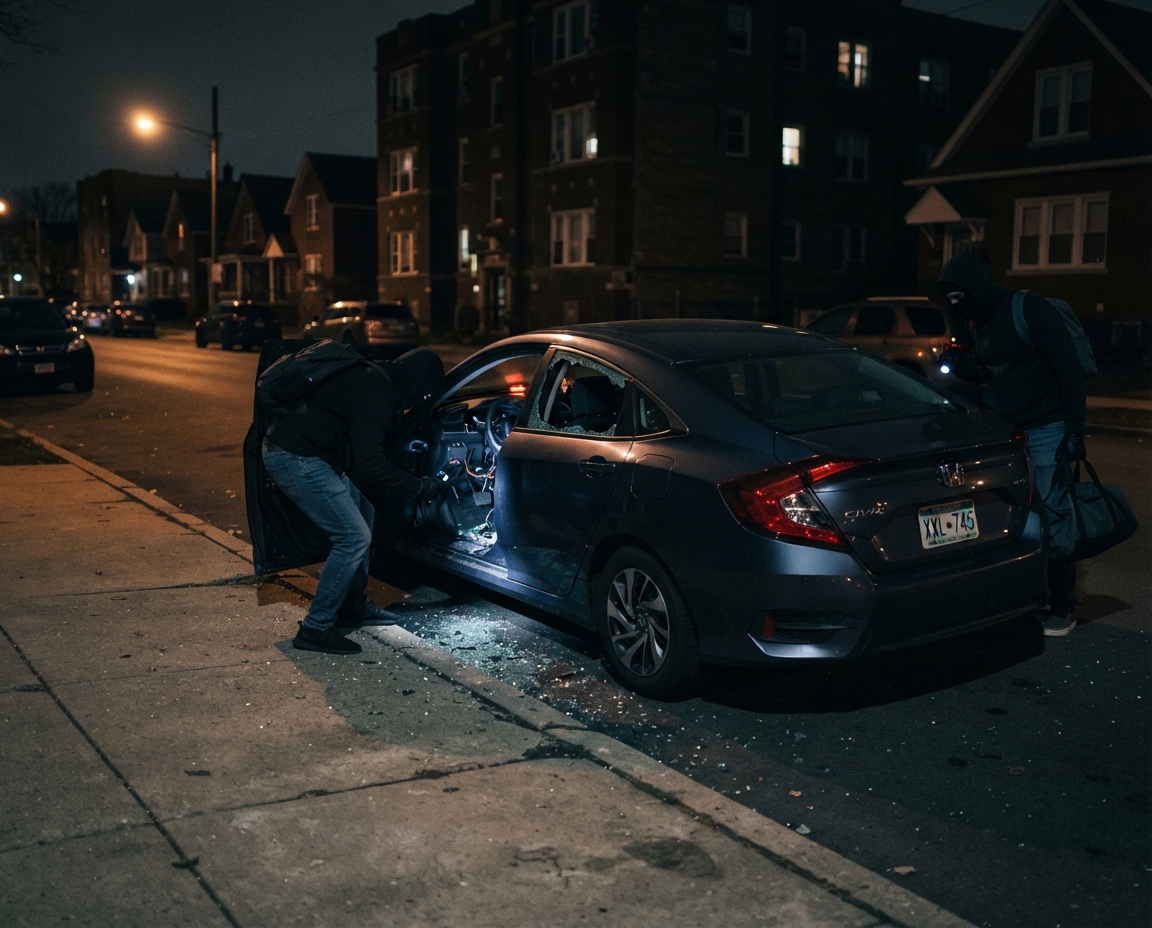
California Penal Code § 496.5 makes it a crime to knowingly and unlawfully possess qualifying property stolen from a vehicle with the intent to sell or exchange it for value when the property’s combined value exceeds $950. A person can be charged even if they did not personally commit the original vehicle-related theft.
Effective January 1, 2025, this law specifically addresses the resale of stolen automotive property. It targets individuals who knowingly possess stolen vehicle components for resale rather than limiting criminal liability to the people who originally steal them.
The statute applies to property obtained through:
- Theft from a vehicle.
- Unlawful entry of a vehicle.
- Burglary of a locked vehicle.
- Vehicle tampering under California Vehicle Code § 10852.
The prosecution must establish the specific legal elements of the offense. Simply possessing automotive parts does not automatically constitute a violation.
What Must Prosecutors Prove Under Penal Code § 496.5?
To obtain a conviction, California prosecutors must prove every required element beyond a reasonable doubt.
Under California Criminal Jury Instruction CALCRIM No. 1760, the prosecution must establish that:
- The defendant possessed property obtained through a qualifying vehicle-related offense.
- The defendant knew the property was stolen when possessing it.
- The defendant intended to sell or exchange the property for value, or intended to act with another person to accomplish that transaction.
- The defendant did not possess the property for personal use.
- The combined value of the qualifying property exceeded $950.
These elements distinguish Automotive Property Theft for Resale from ordinary possession of automotive parts.
For example, someone who purchases used vehicle components without knowing they were stolen may challenge the knowledge requirement. Similarly, possessing automotive parts for personal repairs does not automatically establish an intention to resell them.
Why Is Resale Intent Important?
Resale intent is a defining element of Penal Code § 496.5. The prosecution must establish that the defendant intended to sell or exchange the property for value rather than possess it for personal use.
Under the statute, relevant evidence may include:
- Whether the defendant sold or exchanged qualifying stolen automotive property during the preceding two years.
- Whether the type or quantity of property is unusual for ordinary personal use or consumption.
- Other competent evidence relevant to the alleged resale activity.
For example, possessing a large quantity of similar automotive components may raise questions about whether the property was intended for commercial resale. However, quantity alone does not establish guilt. A legitimate automotive business may also maintain a substantial inventory.
Does the $950 Threshold Apply to Automotive Property Theft for Resale?
Yes. California Penal Code § 496.5 requires the qualifying combined value of the stolen automotive property to exceed $950. Property valued at exactly $950 does not satisfy this threshold.
However, the statute allows certain property values to be combined when determining whether the threshold has been met.
Can Multiple Transactions Be Combined?
Yes. Prosecutors may aggregate qualifying property:
- Possessed by the same defendant with the required resale intent within the preceding two years.
- Possessed by another person acting in concert with the defendant to sell or exchange the property for value, when that property was also obtained through a qualifying vehicle-related offense.
Example: An individual possesses qualifying stolen automotive components worth $600 in one transaction and another $500 worth of qualifying property several months later.
If the statutory aggregation requirements are satisfied, the combined value is $1,100, exceeding the $950 threshold.
Prosecutors must still establish the other elements of the offense, including knowledge and resale intent.
Importantly, unrelated property values cannot automatically be combined simply because different individuals possess stolen automotive components. The statutory requirements for aggregation must be met.
What Types of Automotive Property Are Covered by Penal Code § 496.5?
The law covers property obtained through the specific vehicle-related offenses identified in the statute.
Depending on how the items were stolen, examples may include:
- Catalytic converters.
- Vehicle batteries.
- Wheels and tires.
- Car stereos and electronics.
- Headlights and other vehicle components.
- Tools and equipment stolen from vehicles.
These items are not automatically covered simply because they are automotive products. Prosecutors must establish that the property was obtained through a qualifying offense.
For example, someone who knowingly possesses catalytic converters removed from vehicles through qualifying theft may face charges under § 496.5 if the remaining statutory requirements are satisfied.
Does Someone Have to Steal the Automotive Parts Personally to Be Charged?
No. California Penal Code § 496.5 applies even when the defendant did not personally commit the original theft, burglary, unlawful entry, or vehicle tampering.
For example, one individual may remove components from vehicles while another knowingly stores those components for resale.
The second individual may face charges under § 496.5 despite not participating in the original theft.
The prosecution must still prove that the individual unlawfully possessed the qualifying stolen property with the required knowledge and resale intent.
What Are the Penalties for Automotive Property Theft for Resale in California?
California Penal Code § 496.5 provides for up to one year in county jail or imprisonment under Penal Code § 1170(h).
The potential punishment depends on the applicable sentencing classification and circumstances of the case.
| Classification | Potential punishment |
|---|---|
| Misdemeanor | Up to one year in county jail |
| Felony | Generally 16 months, two years, or three years under Penal Code § 1170(h), subject to applicable sentencing rules |
The circumstances of the alleged offense, the defendant’s criminal history, and other relevant legal considerations may affect the outcome.
What Defenses May Apply to a Penal Code § 496.5 Charge?
A person accused of Automotive Property Theft for Resale may have several potential defenses depending on the evidence.
1. Lack of Knowledge
The prosecution must establish that the defendant knew the automotive property was stolen.
If someone purchased used vehicle components without knowing they were stolen, the lack of knowledge may be relevant to the defense.
2. No Intent to Resell
The statute requires an intent to sell or exchange the property for value.
If the property was possessed for personal use rather than resale, the defendant may challenge this element.
3. No Connection to a Qualifying Theft
The prosecution must establish that the property was obtained through one of the vehicle-related offenses covered by § 496.5.
If that connection cannot be established, an essential element may be missing.
4. Property Value Does Not Exceed $950
The prosecution must establish that the qualifying combined value exceeds $950.
A defense may challenge the property’s valuation or whether the statutory requirements for combining property values have been satisfied.
5. Lack of Possession
Being near stolen automotive property does not automatically establish possession.
The prosecution must show that the defendant had actual possession or the required control over the property.
The appropriate defense depends on the facts, evidence, and circumstances of the case.
How Is Penal Code § 496.5 Different From Receiving Stolen Property Under § 496?
Both California statutes address stolen property, but they cover different conduct.
Penal Code § 496 generally addresses buying, receiving, concealing, selling, or withholding stolen property under its applicable requirements.
Penal Code § 496.5 specifically addresses the unlawful possession of qualifying property stolen through vehicle-related offenses when the property is intended for resale or exchange and exceeds $950 in combined value.
| Legal issue | Penal Code § 496 | Penal Code § 496.5 |
|---|---|---|
| Property covered | Stolen property generally | Qualifying stolen automotive property |
| Knowledge required | Yes | Yes |
| Resale intent | Not required for every violation | Required |
| Personal-use requirement | No equivalent specific element | Property must not be possessed for personal use |
| Value threshold | Depends on applicable provision | More than $950 |
The two statutes may be relevant to the same investigation, depending on the conduct and available evidence. Section 496.5 also expressly allows prosecution under other applicable laws.
Frequently Asked Questions
1. Is Automotive Property Theft for Resale a felony in California?
It can be. Penal Code § 496.5 provides for up to one year in county jail or imprisonment under Penal Code § 1170(h). The applicable classification and sentencing depend on the circumstances of the case.
2. What is the minimum value required under Penal Code § 496.5?
The qualifying combined value must exceed $950. Property valued at exactly $950 does not meet the statutory threshold.
3. Can someone be charged without personally stealing the automotive parts?
Yes. A person may be charged for knowingly possessing qualifying stolen automotive property for resale even if someone else committed the original theft.
4. Can someone be charged for possessing stolen car parts without knowing they were stolen?
Knowledge is a required element. The prosecution must establish that the defendant knew the property was stolen when possessing it.
5. Does selling stolen catalytic converters qualify under Penal Code § 496.5?
Potentially. Catalytic converters stolen through qualifying vehicle-related offenses may fall under the statute if all other legal requirements are satisfied.
6. Can prosecutors combine property values from different transactions?
Yes. The statute allows qualifying property possessed by the same defendant with resale intent within the preceding two years to be aggregated. It also permits aggregation involving another person acting in concert with the defendant for resale.
7. What is the maximum punishment under Penal Code § 496.5?
The statute provides for up to one year in county jail or imprisonment under Penal Code § 1170(h). The applicable felony sentencing term generally follows the 16-month, two-year, or three-year sentencing triad, subject to applicable rules.
8. Can an automotive repair shop face charges under Penal Code § 496.5?
An individual involved in an automotive business may face charges if the prosecution establishes all required elements. Simply operating a repair shop or possessing used automotive parts is not automatically a criminal offense.
9. When did California Penal Code § 496.5 take effect?
The statute became effective January 1, 2025, following its enactment through Senate Bill 905 in 2024.
Key Takeaways
California Penal Code § 496.5 specifically addresses the unlawful possession of stolen automotive property intended for resale.
The most important points include:
- The property must originate from a qualifying vehicle-related offense.
- The defendant must know that the property was stolen.
- The property must be intended for resale or exchange rather than personal use.
- The qualifying combined value must exceed $950.
- Certain property values may be aggregated under the statute.
- The law provides for up to one year in county jail or sentencing under Penal Code § 1170(h).
- Potential defenses include lack of knowledge, absence of resale intent, insufficient possession evidence, and disputed property valuation.
Understanding these requirements is important for anyone facing an investigation or criminal charge involving stolen automotive property in California.
How Southwest Legal Can Help With an Automotive Property Theft Charge
Facing an allegation under California Penal Code § 496.5 can be overwhelming, especially when you are uncertain about the charges, potential penalties, or what may happen next. You do not have to navigate these concerns without guidance.
Southwest Legal can help you better understand the allegations, explain the legal requirements involved, and review the circumstances of your situation. Having a clearer understanding of your rights and available legal options can help you make more informed decisions about your next steps.
Contact us today for a free consultation.
If you or someone close to you is facing an Automotive Property Theft for Resale allegation, reach out to Southwest Legal to discuss your concerns, get answers to your questions, and understand the legal options that may be available.
Disclaimer: This article is for general informational purposes only and does not constitute legal advice or create an attorney-client relationship unless and until the firm and client enter into an agreement for legal services. Laws may change, and legal outcomes depend on the specific facts of each case. Consult a qualified attorney for advice regarding your situation.