


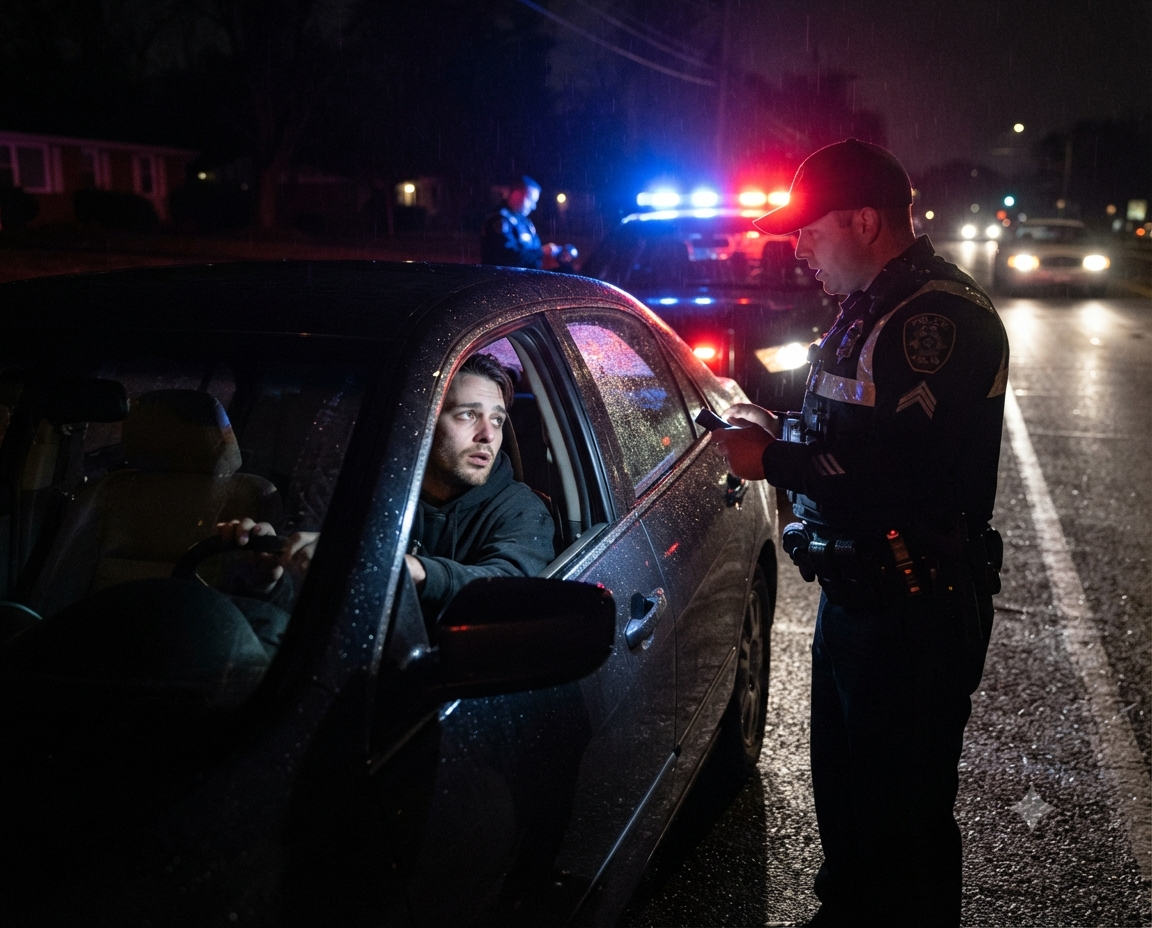
A California DUI arrest can happen quickly, but police officers cannot legally arrest someone simply because they suspect the person has been drinking or using drugs. Before making an arrest, law enforcement must have probable cause—a legal standard requiring enough facts and circumstances to reasonably believe that a person was driving under the influence.
Many people ask: “What evidence does police need to arrest someone for DUI in California?” The answer depends on the facts of the situation. Officers may consider driving behavior, physical symptoms, statements, field sobriety tests, chemical testing results, and other circumstances surrounding the traffic stop.
Understanding California DUI probable cause is important because the legality of an arrest can affect the evidence used in a DUI case. If police did not have sufficient legal grounds to make an arrest, certain evidence may be challenged by a DUI defense attorney.
What Is Probable Cause for a DUI Arrest in California?
Probable cause is the legal standard police must meet before making a DUI arrest. It means an officer has enough objective facts to reasonably believe that a person committed a DUI offense.
In California, DUI charges are commonly based on allegations that a person drove:
- While under the influence of alcohol or drugs
- With a blood alcohol concentration (BAC) of 0.08% or higher for most adult drivers
However, an officer does not need to prove a DUI charge at the roadside. The officer’s job is to determine whether enough evidence exists to justify an arrest.
The difference between an arrest and a conviction is important:
- Probable cause: The evidence standard police need before making an arrest.
- Beyond a reasonable doubt: The much higher standard prosecutors must meet to obtain a criminal conviction.
A person can be legally arrested and still successfully challenge the charges later.
Probable Cause vs. Reasonable Suspicion in a California DUI Stop
One of the most common questions people have is whether police can stop someone for DUI based only on suspicion.
The answer depends on the stage of the investigation.
Reasonable Suspicion
Police need reasonable suspicion to make a traffic stop. This means they must have specific facts suggesting that a traffic violation or possible crime occurred.
Examples include:
- A driver weaving within a lane
- A vehicle speeding
- Running a red light
- Driving without headlights at night
Reasonable suspicion allows police to investigate further, but it does not automatically allow an arrest.
Probable Cause
Probable cause requires stronger evidence. Police must develop enough information to reasonably believe the driver was impaired before making a DUI arrest.
Examples that may contribute to probable cause include:
- A strong odor of alcohol
- Slurred speech
- Bloodshot or watery eyes
- Poor coordination
- Failed field sobriety tests
- Admissions of drinking
- Evidence from a DUI investigation
A traffic stop may begin with reasonable suspicion, but police need probable cause before taking someone into custody for DUI.
What Evidence Can Police Use to Establish DUI Probable Cause?
Police officers may rely on multiple types of evidence when deciding whether a DUI arrest is appropriate.
1. Erratic or Unsafe Driving
The investigation often begins with how the driver was operating the vehicle.
Examples of driving behavior that may raise concerns include:
- Swerving across lanes
- Nearly causing a collision
- Driving unusually slowly
- Failing to obey traffic signals
- Making unsafe turns
- Stopping without a clear reason
Not every driving mistake indicates impairment. A single minor traffic violation may not be enough by itself. Officers typically look at the entire situation.
For example, a driver who briefly crosses a lane marker because of road conditions presents a different situation from a driver repeatedly drifting across lanes and almost striking other vehicles.
2. Physical Signs of Possible Impairment
During a DUI investigation, officers may look for signs that suggest alcohol or drug impairment.
Common observations include:
- Slurred speech
- Difficulty answering questions
- Confusion
- Poor balance
- Bloodshot eyes
- The smell of alcohol
- Slow reactions
These observations may contribute to probable cause, but they do not automatically prove that someone was impaired.
Many factors can cause similar symptoms, including fatigue, medical conditions, stress, or prescription medications.
3. Statements About Alcohol or Drug Consumption
Statements made by a driver may become part of the evidence considered by police.
Examples include:
- “I had drinks earlier tonight.”
- “I was at a restaurant before driving.”
- “I took medication before getting behind the wheel.”
Simply admitting that alcohol was consumed does not automatically establish DUI impairment.
For example, someone who says they had one drink several hours earlier may present a different situation than someone who admits to consuming several drinks shortly before driving and shows other signs of impairment.
4. Field Sobriety Tests
Police often use field sobriety tests during DUI investigations.
Common tests include:
- Walking heel-to-toe in a straight line
- Standing on one leg
- Following an object with the eyes
Officers may consider performance on these tests when determining whether probable cause exists.
However, field sobriety tests have limitations. Performance may be affected by:
- Medical conditions
- Physical injuries
- Age
- Poor lighting
- Uneven surfaces
- Footwear
- Nervousness
Failing a field sobriety test does not automatically mean a person is guilty of DUI.
5. Preliminary Alcohol Screening Tests
Police may request a preliminary alcohol screening (PAS) breath test during a DUI investigation.
These portable breath devices may provide information about possible alcohol consumption, but they are not the only factor police consider.
Questions may arise regarding:
- Device accuracy
- Calibration
- Maintenance records
- Testing procedures
A DUI defense attorney may review whether testing equipment was properly used and whether the results are reliable.
Can Police Arrest Someone for DUI Without a Breath Test?
Yes. A breath test is not always required before a DUI arrest.
Police may establish probable cause based on other evidence, such as:
- Unsafe driving
- Physical symptoms
- Statements
- Field sobriety test results
- Witness observations
For example, an officer responding to a crash may arrest a driver based on signs of impairment, even before obtaining a chemical test result.
However, the prosecution still must prove the DUI charge using admissible evidence.
Can Police Arrest Someone for DUI Based Only on Suspicion?
No. Suspicion alone is not enough.
Police must have objective facts supporting the belief that a DUI violation occurred.
For example:
Possible Insufficient Evidence
An officer stops a driver for speeding. The driver:
- Has no odor of alcohol
- Speaks clearly
- Shows no signs of impairment
- Drives normally after the stop
Speeding alone may not establish probable cause for a DUI arrest.
Stronger Probable Cause
An officer stops a driver who:
- Is weaving across lanes
- Smells strongly of alcohol
- Has bloodshot eyes
- Admits drinking
- Performs poorly on field sobriety tests
The combined facts may provide probable cause for arrest.
Can a DUI Arrest Be Challenged If Police Did Not Have Probable Cause?
Yes. A DUI arrest may be challenged if police lacked sufficient legal grounds.
A DUI defense attorney may examine:
- Why the traffic stop occurred
- Whether the investigation was properly conducted
- Whether probable cause existed
- Whether chemical testing procedures were followed
- Whether evidence was legally obtained
If law enforcement violated constitutional protections or failed to follow proper procedures, certain evidence may potentially be excluded.
What Happens After a California DUI Arrest?
A DUI arrest can lead to two separate matters:
1. Criminal DUI Case
The prosecutor may file criminal charges. The prosecution must prove the case beyond a reasonable doubt.
Possible consequences may include:
- Fines
- License-related penalties
- DUI education requirements
- Probation
- Other court-ordered penalties
The outcome depends on the facts of the case and the applicable law.
2. DMV License Suspension Process
A DUI arrest may also trigger a separate Department of Motor Vehicles administrative process.
Drivers often have a limited period to request a DMV hearing to challenge a possible license suspension.
Because the DMV process and criminal case are separate, taking action quickly after a DUI arrest is important.
Frequently Asked Questions
How much evidence does police need to arrest someone for DUI in California?
Police need enough facts to reasonably believe a DUI offense occurred. They do not need proof beyond a reasonable doubt at the time of arrest.
Can I be arrested for DUI if my BAC is unknown?
Yes. Police may arrest someone based on other evidence of impairment, even before receiving chemical test results.
Does failing a field sobriety test guarantee a DUI conviction?
No. Field sobriety tests are only one part of the evidence. Their accuracy and administration can be questioned.
Can police arrest me for DUI if I was parked?
Possibly. A DUI investigation may depend on whether police can establish that the person drove or was in actual physical control of the vehicle while impaired.
Can body camera footage help fight a DUI charge?
Yes. Video evidence may provide important information about the traffic stop, officer instructions, field sobriety tests, and the driver’s behavior.
What if the officer made mistakes during the DUI investigation?
Errors in the investigation may affect the strength of the prosecution’s case. A DUI attorney can review police reports, videos, testing procedures, and other evidence.
How long do police need to observe someone before making a DUI arrest?
There is no specific required observation period. Officers must have sufficient facts and circumstances to establish probable cause based on the entire situation.
Protect Your Rights After a California DUI Arrest
A DUI arrest does not automatically mean a person will be convicted. Police officers must follow legal procedures and have sufficient evidence before making an arrest.
Understanding California DUI probable cause can help you better understand your legal options and whether police had proper grounds to take action.
If you are facing a DUI charge, reviewing the details of the arrest as soon as possible can be critical. Evidence such as police reports, body camera footage, witness statements, and testing records may affect the outcome of your case.
Contact Southwest Legal
If you or a loved one has been arrested for DUI in California, Southwest Legal can help you understand your rights and legal options. Our team can review whether police had probable cause, examine the evidence against you, and identify potential defenses available in your case.
Do not wait until important deadlines pass. Contact us today for a free consultation to discuss your case, understand your legal options, and learn how our experienced legal team may be able to help to protect your rights.
Disclaimer: This article is for general informational purposes only and does not constitute legal advice or create an attorney-client relationship. No attorney-client relationship is formed unless and until the firm and client enter into an agreement for legal services. Laws may change, and legal outcomes depend on the specific facts of each case. Consult a qualified attorney for advice regarding your situation.