


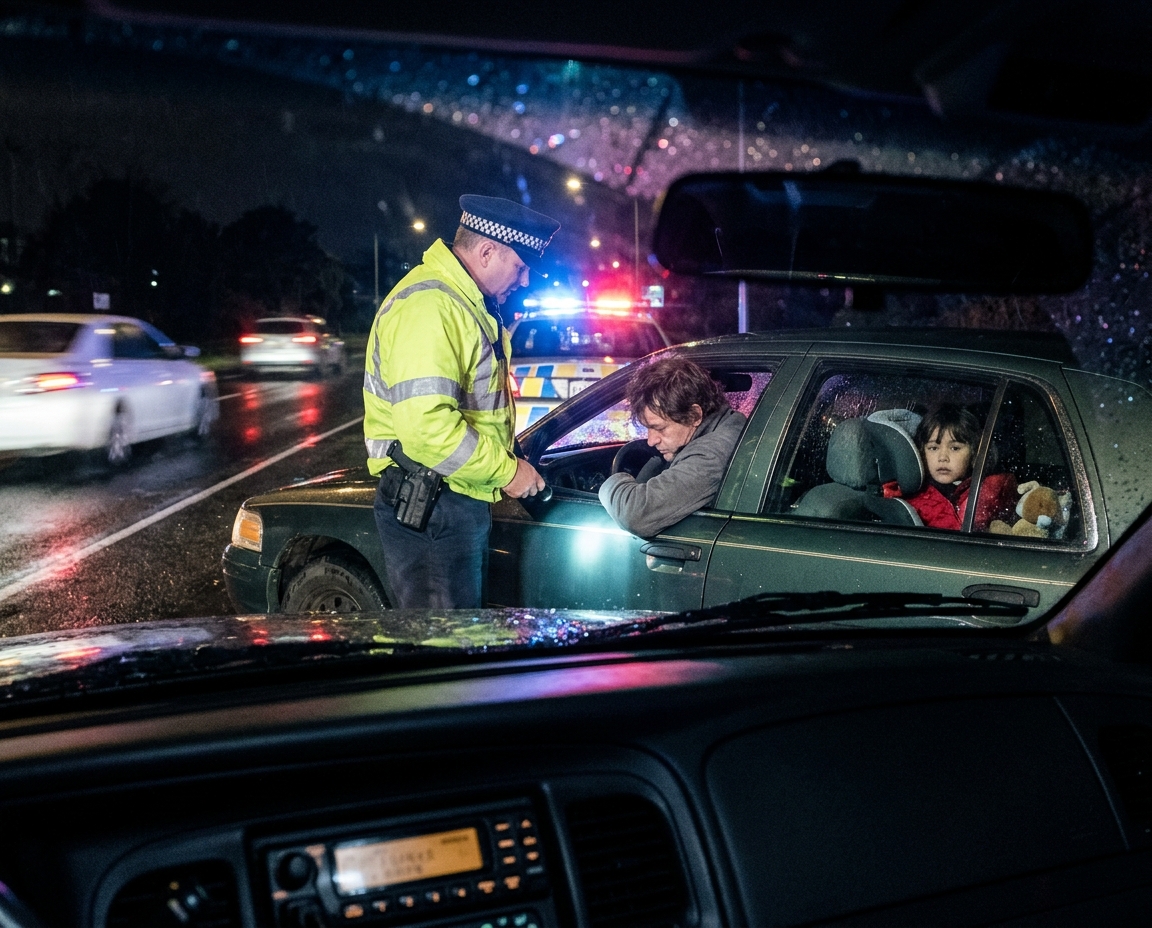
DUI with a child under 14 in the car can result in additional mandatory jail time under California Vehicle Code § 23572. This sentencing enhancement applies to qualifying DUI convictions when a child younger than 14 was a passenger in the vehicle, even if no accident occurred and the child was not injured.
What Is California Vehicle Code § 23572?
California Vehicle Code § 23572 is a sentencing enhancement that increases the punishment for certain DUI convictions when a child under 14 was a passenger in the vehicle at the time of the offense.
The enhancement applies to qualifying convictions under California Vehicle Code § 23152, which prohibits driving under the influence of alcohol or drugs and driving with a blood alcohol concentration of 0.08% or higher under the applicable statutory provision.
To apply the enhancement, the prosecution must establish the underlying DUI conviction and plead and prove that a child under 14 was a passenger in the vehicle at the time of the offense.
The child’s relationship to the driver does not determine whether the enhancement applies. The law focuses on the child’s age and presence in the vehicle.
What Are the Penalties for DUI With a Child Under 14 in California?
Under California Vehicle Code § 23572, a qualifying DUI conviction can carry additional jail time depending on the applicable sentencing provision.
The following table summarizes the statutory framework applicable as of October 23, 2026.
| Underlying DUI sentencing provision | Additional jail time under § 23572 |
|---|---|
| Vehicle Code § 23536 | 48 continuous hours |
| Vehicle Code § 23540 | 10 days |
| Vehicle Code § 23546 | 30 days |
| Misdemeanor DUI under Vehicle Code § 23550 | 90 days |
These are additional punishment terms, not the complete sentences for the underlying DUI offenses. Other penalties may include fines, probation conditions, DUI education requirements, and driver’s license consequences.
Important 2027 update: California enacted Assembly Bill 1546 in 2026. An amendment to § 23572 is scheduled to take effect on January 1, 2027. The amended language changes the wording of the 30-day enhancement category. The applicable statutory version should be verified based on the date of the offense and the law governing the case.
Does a First-Time DUI With a Child Passenger Require Jail Time?
Yes. A qualifying first-offense DUI conviction generally carries an additional 48 continuous hours in county jail when a child under 14 was in the vehicle.
Section 23572 specifies that this additional imprisonment applies whether or not the court grants probation, and the additional term cannot be stayed.
Example: A driver with no prior DUI convictions is stopped while driving home with a nine-year-old child in the back seat. If the driver is convicted of a qualifying DUI and the prosecution proves the child’s presence at the time of the offense, the court must impose the applicable additional jail term.
Do Repeat DUI Offenses Increase the Penalty?
Yes. Repeat DUI convictions can lead to more serious underlying penalties and additional jail time under § 23572.
The applicable sentence depends on the underlying conviction, qualifying prior offenses, and the statutory provisions governing the case. The number of arrests alone does not determine the penalty.
Does the Child Have to Be Injured for the Enhancement to Apply?
No. California Vehicle Code § 23572 does not require the child to suffer an injury for the enhancement to apply.
The law focuses on the qualifying DUI conviction and the child’s presence as a passenger at the time of the offense.
The enhancement may apply even if:
- The child was properly secured in a car seat or seat belt.
- No accident occurred.
- Nobody suffered physical injuries.
- The driver was traveling only a short distance.
- The child was the driver’s own son or daughter.
Example: A parent drives after drinking alcohol with a seven-year-old child secured in the back seat. Police stop the vehicle, and the driver is later convicted of a qualifying DUI. The child does not need to be injured for the enhancement to apply.
Is DUI With a Child Under 14 Automatically a Felony?
No. Having a child under 14 in the car does not automatically make a DUI a felony.
Vehicle Code § 23572 increases the punishment for a qualifying DUI conviction but does not independently determine whether the underlying offense is a misdemeanor or felony.
The classification may depend on:
- Prior qualifying DUI convictions.
- Whether anyone was injured.
- Whether the circumstances support a separate felony offense.
- Other applicable California laws.
A driver with qualifying prior convictions may face a more serious underlying DUI charge than a first-time offender. However, the child’s presence alone does not automatically make the DUI a felony.
Can DUI With a Child Passenger Also Lead to Child-Endangerment Charges?
Yes. Depending on the circumstances, prosecutors may consider child endangerment under California Penal Code § 273a in addition to DUI.
Penal Code § 273a addresses certain conduct that willfully causes or permits a child to be placed in a situation where the child’s person or health may be endangered.
However, California Vehicle Code § 23572(c) prohibits imposing the child-passenger enhancement if the defendant is also convicted under Penal Code § 273a based on the same facts and incident.
The two offenses have different legal requirements. Whether a child-endangerment charge is appropriate depends on the evidence and circumstances.
Can You Lose Your Driver’s License for DUI With a Child in the Car?
Yes. A DUI arrest or conviction may result in driver’s license consequences under separate California laws and Department of Motor Vehicles (DMV) procedures.
Depending on the circumstances, a driver may face:
- Administrative license suspension following a DUI arrest.
- Suspension or revocation following a criminal conviction.
- DUI education program requirements.
- Ignition interlock device requirements, where applicable.
The DMV process is separate from the criminal court case. A driver may need to address both proceedings and meet different deadlines.
For example, a driver arrested for DUI while transporting a child may need to respond to the criminal charge while also determining whether to request a DMV hearing. Missing an applicable deadline may affect the driver’s ability to challenge an administrative license action.
What Defenses May Apply to DUI With a Child Under 14?
Potential defenses depend on the evidence, the charges, and the circumstances of the arrest. A DUI arrest does not automatically establish guilt, and the presence of a child does not independently prove that the driver was under the influence.
1. Challenging the DUI Evidence
A defense may examine the officer’s observations, driving behavior, field sobriety tests, chemical test results, and other evidence used to establish the alleged DUI.
The central question is whether the prosecution can prove the underlying offense beyond a reasonable doubt.
2. Questioning Chemical Test Reliability
Breath and blood test results may be examined for issues involving testing procedures, equipment reliability, sample handling, and timing.
A potential issue does not automatically invalidate a test result. Its significance depends on the evidence and applicable law.
3. Challenging Proof of the Child’s Presence
Section 23572 requires proof that a child under 14 was a passenger in the vehicle at the time of the offense.
If the prosecution cannot establish a required element, the enhancement may be challenged.
4. Reviewing the Sentencing Allegations
A defense review may examine prior conviction allegations, charging documents, the evidence supporting the enhancement, and the statutory provisions applicable to the offense.
No defense guarantees dismissal or a reduced sentence. The available options depend on the facts, evidence, and applicable law.
What Should You Do After a DUI Arrest With a Child in the Car?
If you have been arrested for DUI while a child under 14 was in the vehicle, consider these steps:
- Keep your paperwork. Save the citation, court notices, release documents, and DMV correspondence.
- Track deadlines. Criminal court dates and DMV deadlines may be separate.
- Preserve relevant evidence. Keep available video footage, witness information, and other records related to the incident.
- Understand the charges. Determine whether the case includes a DUI charge, a § 23572 enhancement, child endangerment, or other allegations.
- Consider legal guidance. A California DUI defense attorney can review the evidence, explain the applicable law, and discuss potential defenses.
The appropriate next steps depend on the specific charges, evidence, prior record, and relevant deadlines.
Frequently Asked Questions
1. What is California Vehicle Code § 23572?
It is a DUI sentencing enhancement that adds mandatory jail time to qualifying DUI convictions when a child under 14 was a passenger in the vehicle at the time of the offense.
2. How much additional jail time can I face?
Under the statutory framework applicable as of October 23, 2026, the additional jail term ranges from 48 continuous hours to 90 days, depending on the underlying DUI sentencing provision.
3. Does the child have to be injured?
No. The enhancement does not require an injury or an accident.
4. Does the child have to be related to the driver?
No. The statute focuses on the child’s age and presence in the vehicle, not the child’s relationship to the driver.
5. Is DUI with a child passenger automatically a felony?
No. The underlying DUI’s classification depends on the applicable law and circumstances, including qualifying prior convictions and injuries.
6. Can I face child-endangerment charges as well as DUI?
Yes, if the circumstances support a separate charge under Penal Code § 273a. However, § 23572 limits when its enhancement may be imposed alongside a conviction under that statute arising from the same incident.
7. Can I lose my driver’s license?
Yes. A DUI arrest or conviction can lead to separate DMV proceedings and license consequences.
8. Can the child-passenger enhancement be challenged?
Potentially. A defense may examine the DUI evidence, proof of the child’s presence, charging allegations, and applicable sentencing rules. The outcome depends on the specific case.
Key Takeaways
- California Vehicle Code § 23572 adds jail time to qualifying DUI convictions involving a passenger under 14.
- The child does not need to be injured for the enhancement to apply.
- Additional jail time depends on the underlying DUI sentencing provision.
- A child passenger does not automatically make a DUI a felony.
- Child-endangerment charges may also arise, but statutory restrictions apply to the enhancement.
- DUI cases can involve separate criminal and DMV proceedings.
- California’s 2026 legislation changes the wording of part of the enhancement statute beginning January 1, 2027.
Contact Southwest Legal
A DUI charge involving a child under 14 can raise serious concerns about mandatory jail time, sentencing enhancements, and driving privileges. If you are facing these allegations, understanding the charges and the evidence can help you make informed decisions about your next steps.
Southwest Legal is here to help you understand your situation and explore your legal options. Our team can help you identify the questions that matter, understand the potential consequences, and learn what steps may be available under California law.
Contact us today for a free consultation to discuss your concerns, get answers to your questions, and learn what legal options may be available in your situation.
Disclaimer: This article is for general informational purposes only and does not constitute legal advice or create an attorney-client relationship unless and until the firm and client enter into an agreement for legal services. Laws may change, and legal outcomes depend on the specific facts of each case. Consult a qualified attorney for advice regarding your situation.