


Understanding California Penal Code § 32900
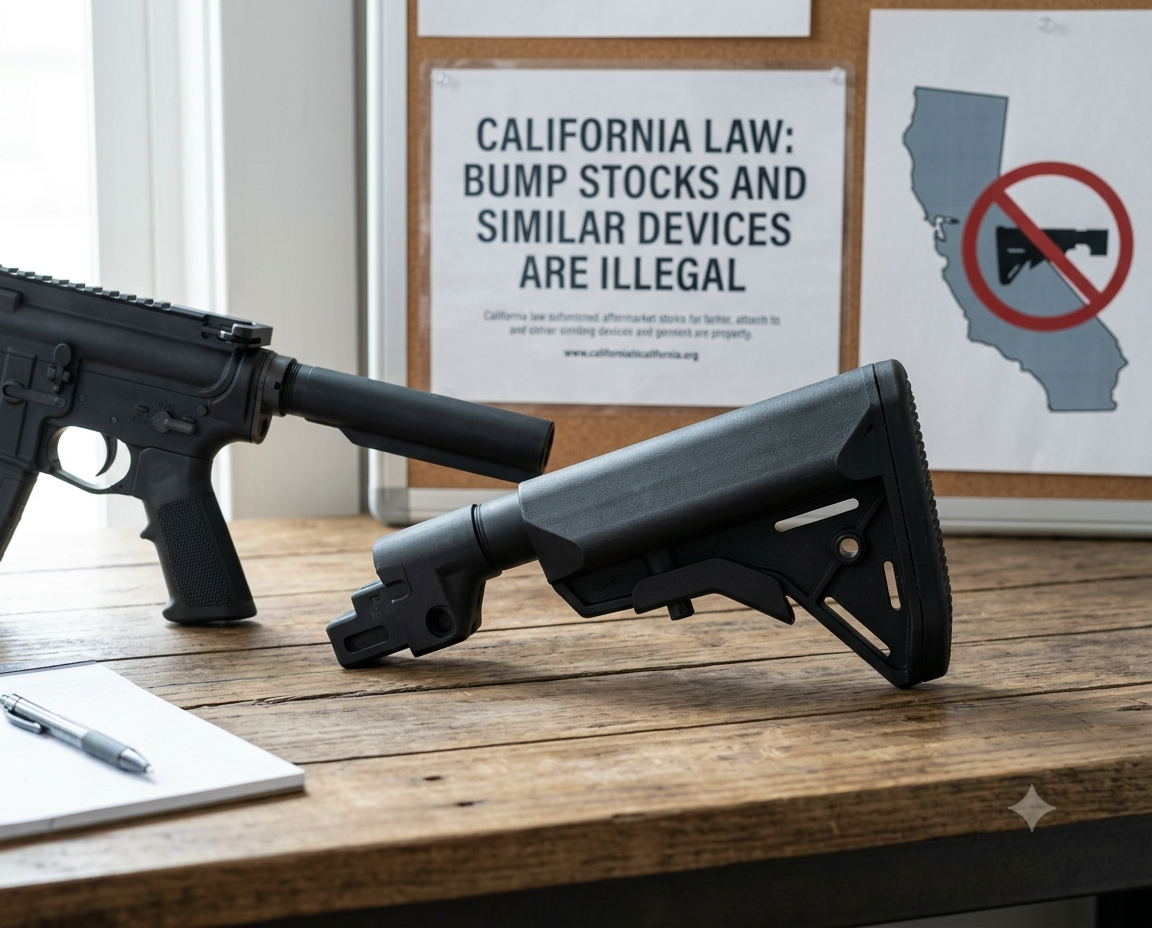
California has some of the strictest firearm laws in the United States. Among these regulations is California Penal Code § 32900, which makes it generally illegal to manufacture, import, sell, give away, lend, possess, or purchase a bump stock within the state.
Because firearm laws frequently generate confusion, many California residents search for answers about what bump stocks are, whether they are legal, what penalties may apply, and what defenses could be available if someone is accused of violating the law. This guide provides a comprehensive overview of California Penal Code § 32900 and explains how the statute works in practice.
What Is a Bump Stock?
A bump stock is a firearm accessory designed to increase the rate of fire of a semi-automatic firearm. It replaces the standard stock and allows the firearm to recoil and move back and forth rapidly, helping the shooter fire successive rounds more quickly.
Although a bump stock does not technically convert a firearm into a traditional fully automatic machine gun, it can significantly increase firing speed. Because of concerns about public safety and mass shooting incidents, lawmakers in California and other jurisdictions have enacted laws restricting or prohibiting bump stocks.
What Does California Penal Code § 32900 Say?
California Penal Code § 32900 generally prohibits individuals from:
- Manufacturing a bump stock
- Importing a bump stock into California
- Keeping a bump stock for sale
- Offering a bump stock for sale
- Giving away a bump stock
- Lending a bump stock
- Possessing a bump stock
- Purchasing a bump stock
The statute is broad and covers nearly every form of ownership, transfer, distribution, and acquisition.
As a result, a person can face criminal charges even if they are not actively using the bump stock. Mere possession may be sufficient for prosecution under the law.
Why Did California Ban Bump Stocks?
California lawmakers enacted restrictions on bump stocks after growing concerns that the devices could allow shooters to fire rounds at rates approaching those of automatic weapons.
Public safety advocates argued that bump stocks increase the potential lethality of firearms during criminal incidents. In response, California enacted legislation aimed at preventing the possession and distribution of these devices throughout the state.
The law reflects California’s broader approach to regulating firearm accessories and weapons that may increase a firearm’s firing capability.
Are Bump Stocks Legal in California?
No. In most circumstances, bump stocks are illegal in California.
California law generally prohibits individuals from possessing, buying, selling, manufacturing, importing, lending, or transferring bump stocks.
Even if a bump stock was legally obtained elsewhere, bringing it into California may violate Penal Code § 32900.
Because firearm laws can change through legislation or court rulings, individuals should seek legal guidance regarding current regulations and their specific circumstances.
What Is Considered Possession of a Bump Stock?
Possession can be either:
Actual Possession
Actual possession occurs when the bump stock is physically on the person’s body or within their immediate control.
Examples include:
- Carrying a bump stock in a backpack
- Holding the device
- Storing it in a vehicle under direct control
Constructive Possession
Constructive possession occurs when a person has control over the location where the bump stock is stored, even if it is not physically on their person.
Examples may include:
- Keeping a bump stock in a home safe
- Storing it in a garage
- Maintaining it in a storage unit under the person’s control
Prosecutors frequently rely on constructive possession theories in firearm-related cases.
What Are the Penalties for Violating Penal Code § 32900?
A violation of California Penal Code § 32900 is generally charged as a misdemeanor.
Potential penalties may include:
- Up to six months in county jail
- A fine of up to $1,000
- Misdemeanor probation
- Court-imposed conditions and restrictions
The specific sentence can depend on several factors, including:
- Criminal history
- Circumstances of the offense
- Whether other firearm-related charges are involved
- Compliance with court orders
Judges have discretion within the limits established by California law.
Can a Conviction Affect Firearm Rights?
Potentially, yes.
Although the impact may vary depending on the specific conviction and an individual’s overall criminal record, firearm-related convictions can create significant legal consequences.
Individuals facing charges under Penal Code § 32900 should understand that even a misdemeanor conviction can have long-term effects on:
- Firearm ownership rights
- Employment opportunities
- Professional licenses
- Background checks
- Immigration matters in some situations
Because these consequences can be substantial, legal representation is often important when defending against firearm-related allegations.
Are There Any Exceptions Under the Law?
Certain exceptions and exemptions may apply under California firearm regulations.
For example, specific law enforcement agencies, governmental entities, or authorized personnel acting within the scope of official duties may be subject to different rules.
However, exemptions are narrowly interpreted and depend on the facts of each case.
Individuals should not assume that an exemption applies simply because they are affiliated with a government agency or possess specialized firearms training.
Common Defenses to Penal Code § 32900 Charges
Every criminal case is unique, but several legal defenses may arise in bump stock prosecutions.
Lack of Possession
One of the most common defenses is that the defendant never possessed the bump stock.
The prosecution must prove possession beyond a reasonable doubt. If ownership or control cannot be established, the charge may fail.
Lack of Knowledge
The prosecution may need to show that the defendant knew about the item’s presence.
For example, if a prohibited device was left in a shared residence or vehicle without the defendant’s knowledge, the government may face challenges proving knowing possession.
Mistaken Identification of the Device
Not every firearm accessory qualifies as a bump stock under applicable laws.
An experienced defense attorney may challenge whether the seized item actually meets the legal definition of a prohibited device.
Illegal Search and Seizure
The Fourth Amendment protects individuals from unreasonable searches and seizures.
If law enforcement obtained evidence through an unlawful search, a defense attorney may seek suppression of the evidence.
Without critical evidence, prosecutors may have difficulty proceeding with the case.
Ownership by Another Person
In shared homes, vehicles, or storage spaces, ownership issues often arise.
A defendant may argue that another person owned or controlled the device and that they had no authority over it.
How Prosecutors Prove a Violation
To obtain a conviction, prosecutors typically attempt to establish several facts, including:
- The item was legally classified as a bump stock.
- The defendant possessed, purchased, sold, manufactured, imported, lent, or transferred the device.
- The defendant acted knowingly.
- No applicable exemption existed.
Evidence may include:
- Physical recovery of the device
- Witness testimony
- Statements made by the accused
- Purchase records
- Electronic communications
- Surveillance footage
The burden remains on the prosecution to prove guilt beyond a reasonable doubt.
Can Federal Law Also Apply?
In some circumstances, federal firearm regulations may intersect with California law.
Federal treatment of bump stocks has been the subject of significant legal and judicial developments in recent years. Because federal regulations and court decisions can change, individuals should not assume that compliance with federal law automatically means compliance with California law.
California may impose restrictions that are separate from federal requirements.
Therefore, even if federal regulations evolve, California’s state law may continue to prohibit bump stocks unless changed by legislation or court action.
Frequently Asked Questions
Is it illegal to own a bump stock in California?
Yes. California Penal Code § 32900 generally prohibits possession of bump stocks.
Can I buy a bump stock in another state and bring it into California?
No. Importing a bump stock into California may violate Penal Code § 32900.
Is selling a bump stock illegal?
Yes. California law prohibits selling, offering for sale, giving away, or lending bump stocks.
Is possession enough to be charged?
Yes. Prosecutors may file charges based solely on possession of a bump stock.
Is a violation a felony?
A violation of Penal Code § 32900 is generally prosecuted as a misdemeanor.
Can charges be dismissed?
Potentially. Dismissal may occur when the evidence is insufficient, the device is improperly identified, constitutional rights were violated, or other legal defenses apply.
Do I need a lawyer if I am charged?
Because firearm-related offenses can have serious legal consequences, consulting a qualified criminal defense attorney is often advisable.
What Should You Do If You Are Accused of Violating Penal Code § 32900?
If you are under investigation or have been arrested for possessing, purchasing, selling, manufacturing, or transferring a bump stock, it is important to take the matter seriously.
Avoid making statements to investigators without legal counsel. Statements that seem harmless may later be used as evidence in court. Preserving your rights early in the process can make a significant difference in the outcome of a case.
A criminal defense attorney can review the evidence, evaluate potential constitutional issues, identify available defenses, and work toward the most favorable resolution possible.
Conclusion
California Penal Code § 32900 establishes a broad prohibition on bump stocks and makes it generally unlawful to possess, purchase, sell, manufacture, import, lend, or transfer these devices within the state. Violations can result in criminal penalties, including jail time, fines, and other lasting consequences.
Understanding the law, knowing your rights, and obtaining experienced legal guidance are critical when facing allegations involving firearm-related offenses.
Contact Southwest Legal
If you have been charged with violating California Penal Code § 32900 or are facing questions regarding California firearm laws, Southwest Legal can help you understand your options and navigate the legal process. Our team is committed to providing knowledgeable guidance, personalized attention, and strategic defense representation tailored to your unique circumstances. Contact us today for a free consultation to discuss your situation and learn how we may be able to assist.
Disclaimer: This article is for general informational purposes only and does not constitute legal advice or create an attorney-client relationship. No attorney-client relationship is formed unless and until the firm and client enter into an agreement for legal services. Laws may change, and legal outcomes depend on the specific facts of each case. Consult a qualified attorney for advice regarding your situation.