


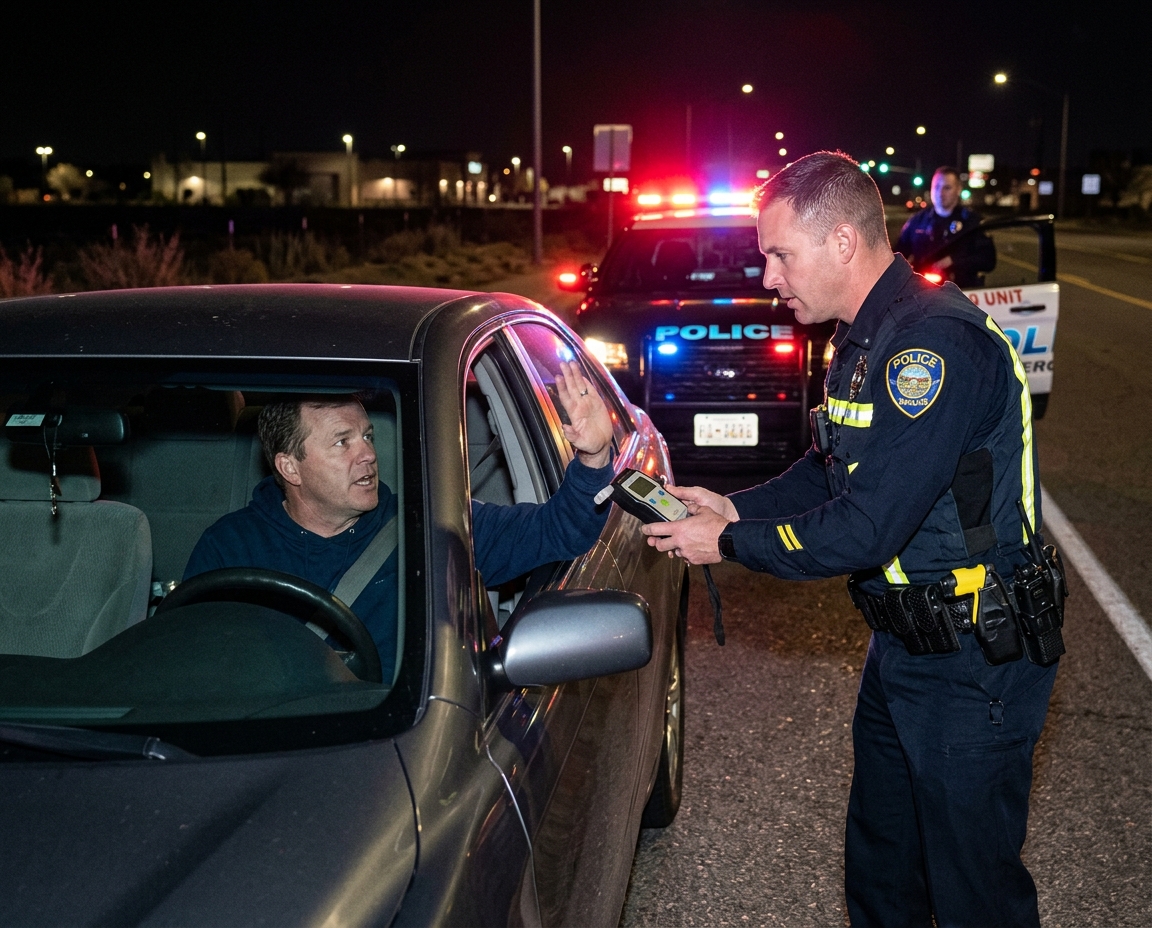
Under California Vehicle Code § 13353, refusing or failing to complete a legally required chemical test after a qualifying DUI arrest can result in a driver’s license suspension or revocation. A first qualifying refusal generally results in a one-year suspension, while qualifying repeat offenses within 10 years can lead to longer revocations.
A Refusal of Chemical Test allegation can affect your driving privileges even before your criminal DUI case is resolved. Understanding the penalties, DMV hearing process, and applicable legal requirements can help you understand your options.
What Is California Vehicle Code § 13353?
California Vehicle Code § 13353 authorizes the Department of Motor Vehicles (DMV) to suspend or revoke driving privileges when a driver refuses or fails to complete a qualifying chemical test following a DUI arrest.
The statute works alongside California Vehicle Code § 23612, which establishes the state’s implied consent requirements for chemical testing after a qualifying DUI arrest.
Depending on the circumstances, a chemical test may involve a breath or blood sample. The applicable testing requirements depend on the circumstances of the arrest and the governing law.
A chemical test refusal does not automatically establish criminal guilt. The DMV’s administrative license action is separate from the criminal DUI case.
What Are the Penalties for Refusing a Chemical Test in California?
Under California Vehicle Code § 13353, the standard administrative licensing consequences depend on the driver’s qualifying offense history.
| Qualifying refusal history | General license consequence |
|---|---|
| First qualifying refusal | One-year suspension |
| Qualifying repeat offense within 10 years | Two-year revocation |
| Qualifying third or subsequent offense within 10 years | Three-year revocation |
The longer revocation periods apply when the statutory requirements concerning prior qualifying convictions or administrative actions are satisfied. Not every prior traffic violation or DUI-related incident automatically places a driver in a more serious penalty category.
A suspension temporarily removes the privilege to drive for a specified period. A revocation withdraws that privilege and generally requires additional steps before it can be restored.
Can a Chemical Test Refusal Affect a Criminal DUI Case?
Yes. Refusing a chemical test may have consequences in both the DMV proceeding and the criminal DUI case.
The refusal may be introduced as evidence in a criminal prosecution when permitted by the applicable evidentiary rules. However, a refusal alone does not establish guilt, and the prosecution must still prove the charged offense under the applicable legal standard.
What Counts as a Refusal of Chemical Test?
A refusal may involve explicitly declining a required chemical test or failing to complete testing under circumstances that qualify as a refusal under California law.
Examples include:
- Telling an officer you will not take a required post-arrest chemical test.
- Refusing to provide a required breath sample.
- Declining to provide a requested blood sample.
- Failing to provide an adequate sample after receiving instructions.
Not every unsuccessful test automatically constitutes a legally valid refusal. The circumstances, the officer’s instructions, and the applicable legal requirements matter.
What If You Could Not Complete the Test?
A medical condition or physical limitation may be relevant if it interfered with your ability to complete the requested test. However, a medical condition does not automatically invalidate a refusal allegation.
The driver’s explanation, the officer’s observations, and other relevant evidence may help determine whether the DMV’s action is justified.
Is Refusing a Breathalyzer the Same as Refusing a Chemical Test?
Not always. California law distinguishes between a roadside preliminary alcohol screening test and a post-arrest evidentiary chemical test.
For many drivers age 21 or older who are not on DUI probation, a roadside preliminary alcohol screening test is treated differently from a chemical test required after a qualifying DUI arrest. Separate rules apply to drivers under 21 and drivers on DUI probation.
California Vehicle Code § 23612 generally governs post-arrest chemical testing under the implied consent law. The consequences of refusing a test depend on which test was requested and the circumstances of the encounter.
Can You Challenge a Chemical Test Refusal in California?
Yes. You may challenge a refusal-related license action through a DMV administrative hearing.
Under California Vehicle Code § 13353, the DMV generally reviews four key issues:
- Reasonable cause: Did the officer have reasonable cause to believe you were driving in violation of the applicable DUI laws?
- Arrest: Were you placed under arrest?
- Refusal: Did you refuse or fail to complete the requested chemical test?
- Required warning: Were you informed that refusing or failing to complete the test could result in license suspension or revocation, subject to the applicable statutory exception?
Evidence relevant to these issues may include the officer’s report, available recordings, test documentation, witness statements, and relevant medical information.
The outcome depends on the evidence and applicable law. A DMV hearing does not guarantee that the suspension or revocation will be canceled.
How Long Do You Have to Request a DMV Hearing?
Generally, you must request a DMV administrative hearing within 10 days of receiving the suspension or revocation order.
Because missing the deadline can limit your opportunity to challenge the action, review the notice and contact the DMV promptly.
After receiving a refusal notice, consider taking these steps:
- Review the notice and identify the stated reason for the license action.
- Confirm the deadline and procedures for requesting a hearing.
- Preserve documents and other evidence related to the arrest.
- Review the alleged refusal and the warning provided by the officer.
- Consider the DMV proceeding separately from any criminal DUI case.
Requesting a hearing does not automatically stop the suspension or revocation. Whether the action is stayed depends on the applicable law and circumstances.
Frequently Asked Questions
1. Can I lose my license for refusing a chemical test in California?
Yes. A first qualifying refusal generally results in a one-year suspension. Certain qualifying repeat offenses within 10 years can result in two- or three-year revocations.
2. Is refusing a chemical test the same as a DUI conviction?
No. The DMV handles the administrative license action, while the criminal court determines whether the driver is guilty of DUI. The two proceedings are separate.
3. Can I refuse a blood test after a DUI arrest?
California’s implied consent law generally requires an appropriate chemical test after a qualifying DUI arrest, subject to statutory requirements and applicable legal protections. Refusal may carry licensing consequences and does not necessarily prevent prosecution.
4. What happens if I refuse a breathalyzer after being arrested?
You may face a license suspension or revocation, a DMV administrative hearing, and possible use of the refusal as evidence in a criminal DUI case.
5. Can I challenge a chemical test refusal?
Yes. You may request a DMV administrative hearing to contest whether the legal requirements for the suspension or revocation have been met.
6. What is the deadline for a DMV refusal hearing?
Generally, the request must be made within 10 days of receiving the suspension or revocation order. Confirm the applicable deadline and procedures with the DMV promptly.
7. Can I get a restricted license after refusing a chemical test?
Eligibility depends on the applicable law, your driving history, and the type of license action. A restricted license is not automatically available in every refusal case.
8. Does a prior DUI automatically mean a three-year revocation?
No. The applicable period depends on the qualifying prior convictions or administrative actions and the relevant 10-year period.
Key Takeaways
- California Vehicle Code § 13353 addresses license suspension and revocation for qualifying chemical test refusals.
- A first qualifying refusal generally results in a one-year suspension.
- Certain repeat offenses within 10 years can result in longer revocations.
- The DMV hearing and criminal DUI case are separate proceedings.
- A refusal may be used as evidence in court but does not automatically establish guilt.
- The DMV hearing deadline is generally 10 days from receipt of the suspension or revocation order.
Contact Southwest Legal
Understand Your Options After a Refusal of Chemical Test
A refusal of chemical test can put your driving privileges at risk and complicate a DUI case. Understanding California law, preserving relevant evidence, and acting promptly on DMV deadlines can help you make informed decisions about your situation.
Contact us today for a free consultation. Get clarity on California’s chemical test refusal laws, understand the proceedings you may be facing, and discuss the legal options that may be available to protect your rights and driving privileges.
Disclaimer: This article is for general informational purposes only and does not constitute legal advice or create an attorney-client relationship unless and until the firm and client enter into an agreement for legal services. Laws may change, and legal outcomes depend on the specific facts of each case. Consult a qualified attorney for advice regarding your situation.