


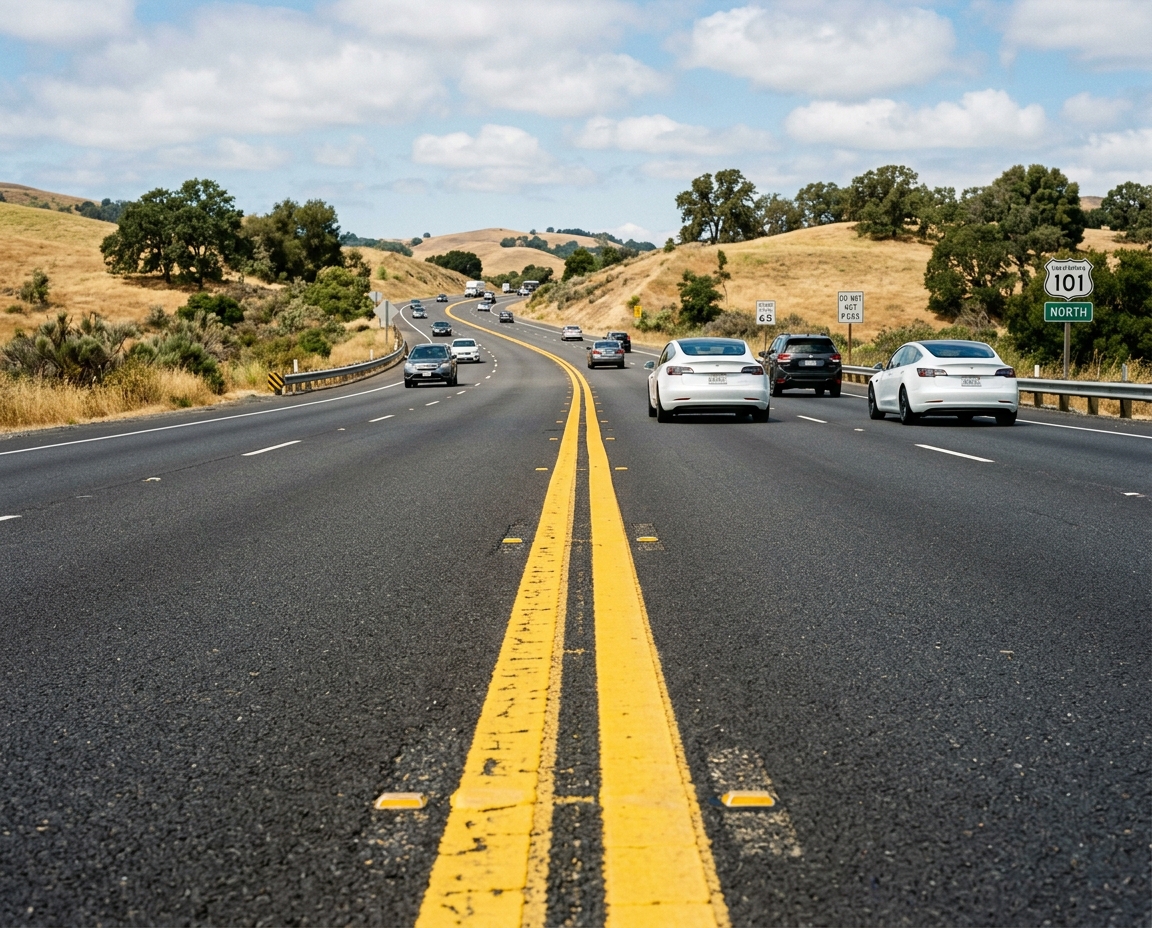
In California, crossing double lines is generally restricted, but California Vehicle Code § 21460(d) provides exceptions for certain left turns and U-turns. Whether crossing the lines is legal depends on the road markings, the purpose of the maneuver, and other applicable traffic laws.
What Does California Vehicle Code § 21460(d) Say?
California Vehicle Code § 21460(d) identifies circumstances in which certain double-line markings do not prohibit crossing. These include turning left at an intersection, turning left into or out of a driveway or private road, and making a U-turn in accordance with the rules governing that turn.
However, these exceptions do not give drivers unrestricted permission to cross double lines. Posted signs, traffic signals, lane restrictions, and other applicable laws must still be followed.
When Is Crossing Double Lines Legal in California?
California law distinguishes between different road markings and the movements they permit.
| Road marking | General rule |
|---|---|
| Double solid yellow lines | Driving to the left of the lines to pass another vehicle is generally prohibited. Certain left turns and lawful U-turns may be permitted. |
| Double solid white lines | Crossing any part of the lines is generally prohibited, subject to statutory exceptions. |
| One solid yellow line and one broken yellow line | A driver on the broken-line side may cross to pass when safe and otherwise lawful. |
| Double yellow-line barrier | Crossing is generally prohibited except at designated openings. |
Crossing Double Yellow Lines to Turn Left
Drivers may cross a single set of double yellow lines to make a permitted left turn at an intersection or to enter or exit a driveway or private road, subject to other applicable restrictions.
Example: A driver needs to turn left into a residential driveway across a two-way street. The driver may cross the double yellow centerlines to enter the driveway if the maneuver is lawful and safe.
Crossing Double Yellow Lines to Make a U-Turn
A U-turn across a single set of double yellow lines may be legal if the location permits the maneuver and the driver complies with applicable traffic laws.
U-turns may be prohibited by posted signs, divided-highway restrictions, or other rules governing where and how a U-turn may be made.
Crossing Double Lines to Pass Another Vehicle
Drivers generally cannot cross double solid yellow lines to overtake a slower vehicle. The exceptions for left turns and U-turns do not create a general right to pass.
When a road has one solid yellow line and one broken yellow line, passing may be permitted from the broken-line side if the maneuver is safe and otherwise lawful.
Crossing Double White Lines
Double solid white lines generally prohibit crossing between lanes. They commonly separate regular traffic lanes from high-occupancy vehicle (HOV) lanes.
Drivers should use designated entry and exit points rather than crossing double solid white lines to enter or leave an HOV lane. The applicable statutory exceptions and lane-specific restrictions must be considered before crossing.
What Happens if You Get a Ticket for Crossing Double Lines?
A driver cited for crossing double lines may face a fine and other consequences depending on the specific violation and how the citation is resolved.
A citation does not automatically establish that the maneuver was unlawful. For example, the driver may have been making a left turn permitted under § 21460(d).
If you receive a ticket, consider these steps:
- Review the citation. Identify the alleged violation and the deadline to respond.
- Check the road markings. Determine whether the lines were double yellow, double white, or a combination of solid and broken lines.
- Review the circumstances. Consider whether you were turning, making a U-turn, changing lanes, or passing another vehicle.
- Preserve relevant evidence. Photographs, dashcam footage, and witness information may help clarify what happened.
- Understand your options. A qualified California traffic attorney can explain the applicable law and potential ways to respond.
Whether a defense is available depends on the facts, evidence, and applicable law. No particular outcome is guaranteed.
Frequently Asked Questions
1. Is crossing double yellow lines illegal in California?
Generally, crossing double solid yellow lines to pass another vehicle is prohibited. Certain left turns and lawful U-turns are exceptions.
2. Can I cross double yellow lines to enter my driveway?
Yes. California Vehicle Code § 21460(d) permits crossing the covered markings to turn into or out of a driveway or private road, subject to other applicable laws.
3. Can I make a U-turn across double yellow lines?
Yes, if the U-turn is permitted at that location and complies with applicable traffic laws and restrictions.
4. Can I cross double white lines to enter an HOV lane?
Generally, drivers should use designated HOV-lane entrances and exits rather than crossing double solid white lines. Applicable statutory exceptions and lane restrictions must be considered.
5. Can I cross double yellow lines to pass a slow vehicle?
Generally, no. The exceptions for certain turns do not authorize passing across double solid yellow lines.
6. What is the penalty for crossing double lines?
The consequences depend on the specific violation, applicable fine schedule, and court assessments. Check your citation and court instructions for details.
7. Can I contest a ticket for crossing double lines?
Yes. Drivers can contest traffic citations through the applicable court process. The available arguments depend on the charge, evidence, and circumstances.
Key Takeaways
- California Vehicle Code § 21460(d) recognizes specific exceptions to restrictions on crossing certain road markings.
- Qualifying left turns and lawful U-turns may be permitted across a single set of double yellow lines.
- Crossing double yellow lines to pass another vehicle is generally prohibited.
- Double solid white lines generally restrict lane changes, including entry into or exit from HOV lanes outside authorized openings.
- The legality of a maneuver depends on the road markings, circumstances, and other applicable traffic laws.
Understand Your Options With Southwest Legal
A traffic citation for crossing double lines can raise questions about California law, whether an exception applies, and what steps to take next. Understanding your rights and the circumstances of your citation can help you make informed decisions.
Southwest Legal can help you better understand the legal issues surrounding your traffic ticket and explore the options available for your situation.
Contact us today for a free consultation. Get clarity on your citation, discuss your concerns, and take the next step toward understanding your options under California law.
Disclaimer: This article is for general informational purposes only and does not constitute legal advice or create an attorney-client relationship unless and until the firm and client enter into an agreement for legal services. Laws may change, and legal outcomes depend on the specific facts of each case. Consult a qualified attorney for advice regarding your situation.