


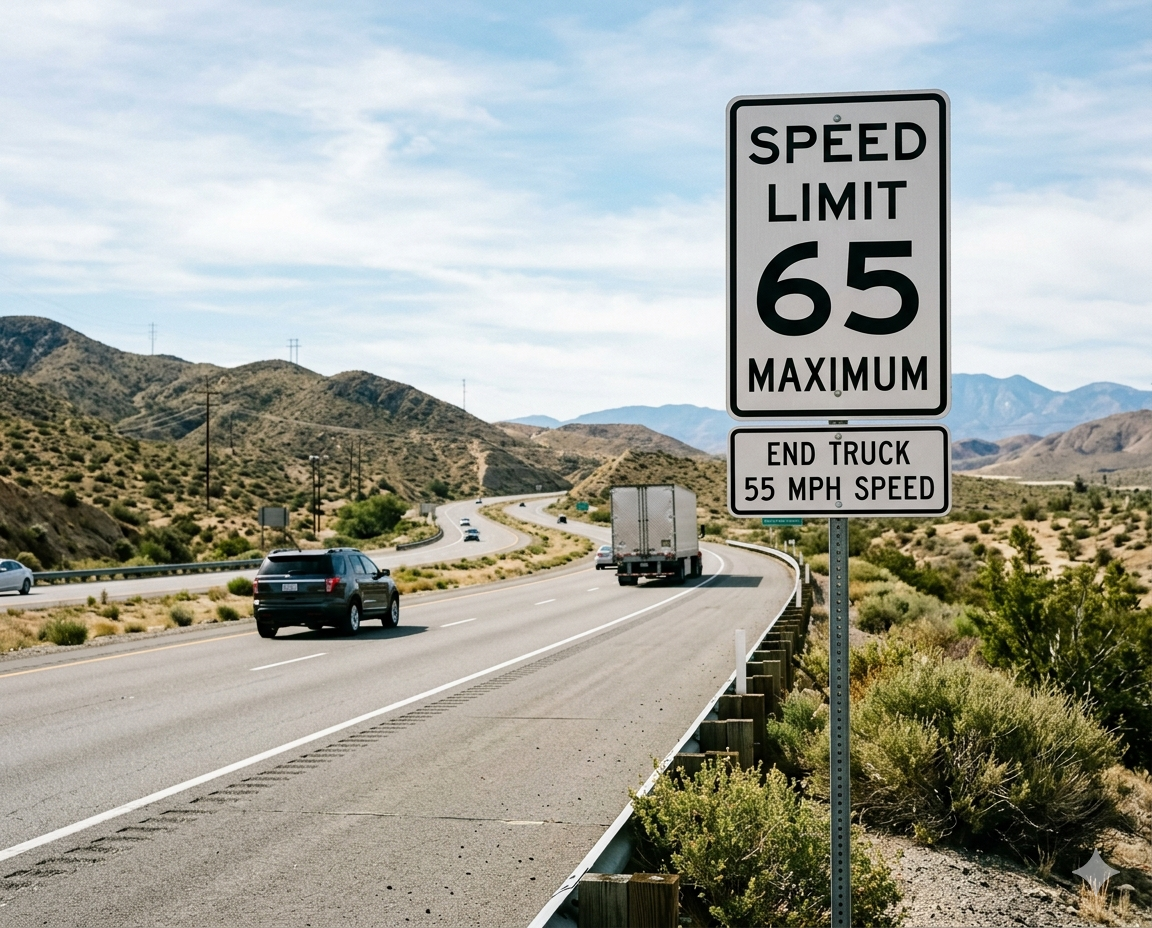
Many California drivers assume that speed limits are simple: if the sign says 65 mph, driving 65 mph or less is always legal. In reality, California speed laws are far more detailed. The state uses several different types of speed limits, including maximum speed limits, prima facie speed limits, and posted speed limits. Understanding the differences between these categories can help drivers avoid tickets, protect their driving records, and better understand their legal rights.
California traffic laws are designed not only to regulate speed but also to promote public safety under changing road and weather conditions. Because of this, a driver may sometimes receive a speeding ticket even while traveling below the posted speed limit if the officer believes the speed was unsafe for the conditions.
This guide explains how California speed limit laws work, what the different legal terms mean, and why they matter for drivers throughout the state.
Understanding California Speed Laws
California speed regulations are based on a combination of statutes and roadway safety principles. Unlike states that rely strictly on fixed speed limits, California applies what is known as the Basic Speed Law.
Under California law, drivers must travel at a speed that is reasonable and safe for current road, traffic, and weather conditions. This means that the legality of a driver’s speed depends not only on the posted sign but also on surrounding circumstances.
Factors that may affect whether a speed is considered safe include:
- Traffic congestion
- Rain or wet pavement
- Fog or reduced visibility
- Construction zones
- Pedestrian activity
- Sharp curves or narrow roads
- School zones
Because of these variables, California drivers should understand how different speed limit categories operate.
What Is a Maximum Speed Limit?
A maximum speed limit is the highest lawful speed allowed on a roadway under normal conditions. In most situations, drivers cannot legally exceed this limit regardless of traffic or weather conditions.
California’s standard maximum speed limits include:
- 65 mph on most highways and freeways
- 70 mph on designated rural freeways
- 55 mph for vehicles towing trailers
These limits are considered absolute maximums unless lower speeds are required for safety reasons.
Examples of Maximum Speed Limits
Drivers commonly encounter maximum speed limits on:
- Interstate highways
- Major freeways
- Rural highways
- State routes
Even if traffic is light and visibility is excellent, traveling significantly above the maximum speed limit can result in a citation.
Penalties for Exceeding Maximum Speed Limits
Driving above California’s maximum speed limits may lead to several consequences, including:
- Traffic fines
- Court fees
- Points on a driving record
- Increased insurance premiums
- Traffic school requirements
In more serious situations, excessive speeding may result in allegations of:
- Reckless driving
- Negligent operation of a vehicle
- Exhibition of speed
- Criminal traffic offenses
Extremely high speeds may also increase the likelihood of a DUI investigation if law enforcement suspects impaired driving behavior.
What Is a Prima Facie Speed Limit?
The term prima facie is a legal phrase meaning “presumed to be true unless disproven.”
In California traffic law, a prima facie speed limit is a speed that is presumed safe under normal driving conditions. However, unlike maximum speed limits, prima facie limits allow room for legal arguments about whether a particular speed was actually safe or unsafe based on the circumstances.
This distinction is important because many California speed limits are considered prima facie limits rather than absolute limits.
Common Prima Facie Speed Limits in California
California law establishes several common prima facie speed limits, including:
- 25 mph in residential districts
- 25 mph near schools when children are present
- 15 mph in alleys
- 15 mph at railroad crossings with obstructed views
These limits may apply even when signs are not clearly visible or temporarily absent.
Why Prima Facie Speed Limits Matter
Prima facie limits create flexibility in traffic enforcement. A driver traveling slightly above a prima facie speed limit may argue that the speed was still reasonable and safe under ideal conditions.
At the same time, a driver traveling below the posted speed limit may still receive a citation if the speed was unsafe because of weather, traffic, or road hazards.
For example:
- Driving 30 mph in a residential neighborhood posted at 25 mph may or may not be considered unsafe depending on conditions.
- Driving 50 mph in heavy rain on a roadway posted at 65 mph could still violate California’s Basic Speed Law.
Because these situations often involve judgment calls, prima facie speed limit cases may sometimes be challenged in court.
Engineering and Traffic Surveys
California law often requires valid engineering and traffic surveys for radar-enforced speed limits.
These surveys are studies conducted to determine safe and reasonable speeds for particular roadways based on factors such as:
- Traffic patterns
- Road design
- Accident history
- Visibility
- Pedestrian activity
If a roadway’s speed limit is not properly supported by a current engineering survey, radar evidence may become vulnerable to challenge in certain traffic cases.
This issue is especially important in speeding cases involving radar or laser enforcement.
What Is a Posted Speed Limit?
A posted speed limit is the numerical speed displayed on roadside signs.
Examples include:
- 25 mph signs in residential areas
- 35 mph signs on city streets
- 65 mph freeway signs
- School zone speed signs
- Temporary construction zone signs
Posted speed limits are intended to inform drivers of the lawful or presumed safe speed for a roadway.
However, many posted speed limits in California are actually prima facie limits rather than strict absolute limits.
Posted Speed Limits and Driver Responsibility
Even when following a posted speed limit, drivers must still comply with California’s Basic Speed Law.
This means drivers must reduce speed when necessary for safety.
Situations requiring slower speeds may include:
- Heavy rain
- Dense fog
- Ice or slippery roads
- Road construction
- Heavy pedestrian traffic
- Poor lighting conditions
Drivers who fail to adjust their speed appropriately may still receive citations even if they were technically below the posted limit.
California’s Basic Speed Law Explained
California’s Basic Speed Law requires drivers to operate vehicles at a speed that is reasonable and prudent under existing conditions.
This law gives officers discretion to determine whether a speed was unsafe based on the total circumstances.
Key factors include:
- Weather conditions
- Visibility
- Traffic volume
- Road surface conditions
- Width and design of the roadway
The Basic Speed Law is one reason California traffic cases can become more complicated than drivers expect.
Examples of Basic Speed Law Violations
Unsafe Speed Below the Limit
A driver traveling 60 mph on a freeway posted at 65 mph during heavy rain may still be cited if the speed is considered unsafe for wet conditions.
Residential Speed Limit Violation
A driver traveling 35 mph in a 25 mph residential area may be cited even if the roads appear empty because residential speed limits are intended to protect pedestrians and neighborhood safety.
Speeding and DUI Investigations
Speeding violations frequently lead to DUI traffic stops.
Law enforcement officers often initiate stops after observing behaviors such as:
- Excessive speeding
- Sudden acceleration
- Weaving between lanes
- Driving too slowly
- Failure to obey traffic signs
Once a stop occurs, officers may begin looking for signs of impairment, including:
- Odor of alcohol
- Slurred speech
- Bloodshot or watery eyes
- Delayed responses
- Poor coordination
Because of this, speeding violations can sometimes become part of larger criminal investigations.
Can You Fight a California Speeding Ticket?
Depending on the circumstances, it may be possible to challenge a speeding citation.
Potential defenses may include:
Improper Radar or Laser Use
Speed detection devices must be properly calibrated and operated according to legal standards.
Invalid Engineering Surveys
Some radar-enforced speed limits require current engineering and traffic surveys.
Officer Observation Issues
Visibility problems or traffic conditions may affect an officer’s ability to identify the correct vehicle.
Emergency Situations
Certain emergencies may justify temporary speeding under limited circumstances.
Unsafe Road Conditions
Drivers may challenge allegations by arguing conditions were misinterpreted or inaccurately documented.
Every traffic case depends on its specific facts, evidence, and legal issues.
Consequences of Speeding Tickets in California
Many drivers underestimate how costly speeding violations can become over time.
Potential consequences include:
- Significant fines and penalties
- DMV points
- Increased insurance rates
- Traffic school costs
- License suspension risks for repeat offenses
Serious speeding allegations may also create employment concerns for:
- Commercial drivers
- Delivery drivers
- Professional license holders
Additionally, repeated traffic violations may negatively affect future court proceedings involving DUI or reckless driving allegations.
Tips for Avoiding Speeding Violations
Drivers can reduce the risk of tickets by following several practical safety measures.
Watch for Changing Speed Zones
Speed limits often change rapidly near:
- Schools
- Residential neighborhoods
- Construction areas
- Highway transitions
Adjust Speed for Conditions
Rain, fog, smoke, and traffic congestion may require speeds below the posted limit.
Avoid Aggressive Driving
Rapid acceleration, tailgating, and weaving frequently attract law enforcement attention.
Stay Alert in Residential Areas
Residential speed limits are heavily enforced due to pedestrian safety concerns.
Pay Attention to Temporary Signs
Construction and emergency zones may impose temporary reduced speed limits.
Why Understanding California Speed Laws Matters
California’s traffic laws combine:
- Maximum speed limits
- Prima facie speed limits
- Posted speed limits
- The Basic Speed Law
Because these rules overlap, speeding cases are not always straightforward. A traffic citation may involve complex legal questions regarding roadway conditions, enforcement methods, engineering surveys, or driver conduct.
Understanding these laws can help drivers make safer decisions and better protect their legal rights when facing traffic-related allegations.
Contact Southwest Legal
If you are facing a speeding ticket, reckless driving allegation, or DUI-related traffic offense in Southern California, experienced legal representation can make a significant difference.
The legal team at Southwest Legal understands the complexities of California traffic and DUI defense cases and works to protect clients’ rights, driving privileges, and futures.
Contact us today for a free consultation to discuss your case and learn more about your legal options.
Disclaimer: This article is for general informational purposes only and does not constitute legal advice or create an attorney-client relationship. No attorney-client relationship is formed unless and until the firm and client enter into an agreement for legal services. Laws may change, and legal outcomes depend on the specific facts of each case. Consult a qualified attorney for advice regarding your situation.