


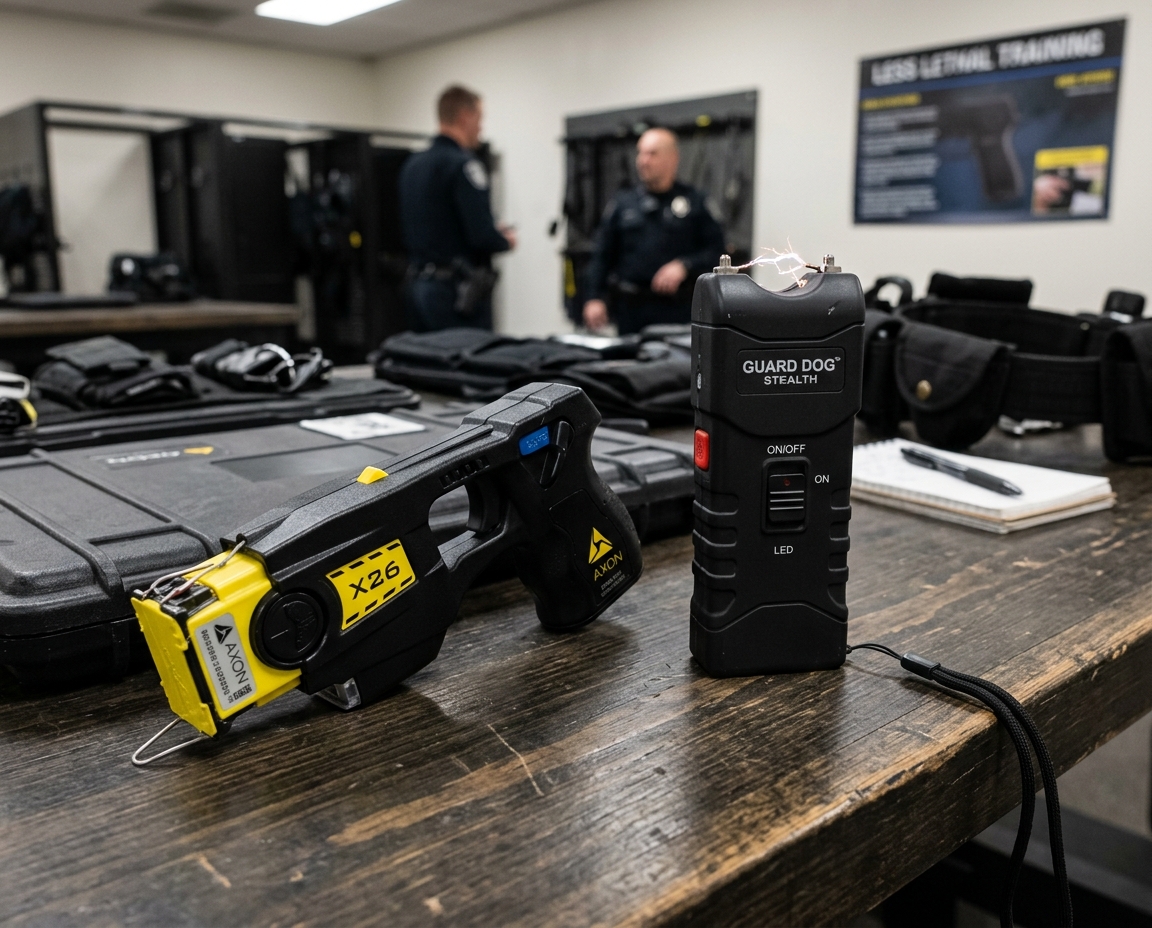
California generally allows eligible individuals to purchase, possess, and use stun guns and Tasers for lawful purposes, including self-defense. However, California Penal Code § 22610 prohibits certain individuals from possessing these devices and establishes specific requirements for minors.
Understanding these restrictions is important because lawful ownership does not give someone unlimited permission to carry an electronic weapon into restricted locations or use it against another person.
What Does California Penal Code § 22610 Say About Stun Guns and Tasers?
California Penal Code § 22610 establishes the basic rules governing who may purchase, possess, or use a stun gun. It permits these activities subject to restrictions involving criminal convictions, narcotic drug addiction, and minors.
Under this law:
- A person convicted of a felony, a crime involving an assault, or misuse of a stun gun under Penal Code § 244.5 cannot purchase, possess, or use a stun gun.
- A person addicted to a narcotic drug cannot purchase, possess, or use a stun gun.
- A minor who is at least 16 may possess a stun gun with written consent from a parent or legal guardian.
- Selling or furnishing a stun gun to a minor who does not meet the statutory requirements is prohibited.
Other California laws regulate assault with a stun gun and possession in specific locations.
Are Stun Guns and Tasers Legal in California?
Yes. Stun guns and Tasers are generally legal for eligible individuals in California, provided they comply with applicable restrictions.
California does not impose a blanket ban on civilian possession of these devices. However, the person’s criminal history, eligibility, intended use, and location can affect whether possession is lawful.
For example, an eligible adult may generally possess a stun gun for personal protection in a location where it is permitted. The same person could face legal consequences for bringing the device into a prohibited area or using it to commit an assault.
The key distinction is that lawful possession does not automatically make every use lawful.
Who Cannot Legally Possess a Stun Gun in California?
Penal Code § 22610 identifies specific categories of people who cannot purchase, possess, or use stun guns.
People with certain criminal convictions
Under § 22610(a), a person convicted of a felony or a crime involving an assault cannot purchase, possess, or use a stun gun. The restriction also covers a person convicted of misuse of a stun gun under § 244.5.
The statute addresses qualifying convictions under the laws of California, the United States, and other states and jurisdictions.
For example, a person with a qualifying felony conviction in another state should not assume that moving to California removes the restriction.
People addicted to narcotic drugs
Section 22610(b) prohibits a person addicted to a narcotic drug from purchasing, possessing, or using a stun gun.
The statutory language concerns addiction, rather than automatically prohibiting every person who has previously used a drug.
Minors who do not meet the legal requirements
Under § 22610(d), a minor may possess a stun gun only if the minor is at least 16 years old and has written consent from a parent or legal guardian.
Section 22610(c) also prohibits selling or furnishing a stun gun to a minor who does not meet those requirements.
These rules apply even when the person providing the device intends it for personal protection.
Can You Carry a Stun Gun or Taser in Public in California?
Generally, an eligible person may carry a stun gun in a location where possession is permitted. However, California law restricts these devices in certain places.
For example:
- K–12 school grounds: Penal Code § 626.10 restricts possession of stun guns and Tasers on covered school grounds, subject to statutory exceptions.
- Airport security areas: Penal Code § 171.5 restricts specified weapons, including stun guns and Tasers, in designated secured areas.
- Certain government facilities: Additional laws may prohibit weapons in specified courthouses and other government locations.
The applicable restrictions depend on the location and any statutory exceptions.
For example, an adult who lawfully carries a stun gun for personal safety should not assume the device can also be taken onto school grounds or through an airport security area.
Before carrying a stun gun into a particular facility, check the applicable restrictions. Permission to own a device does not override a location-based prohibition.
Is Using a Stun Gun Against Another Person a Crime?
Yes, using a stun gun against another person can result in criminal charges. California Penal Code § 244.5 specifically addresses assault with a stun gun or a qualifying less lethal weapon.
Under § 244.5(b), assault with a stun gun or qualifying less lethal weapon is punishable by up to one year in county jail or felony imprisonment for 16 months, two years, or three years.
Section 244.5(c) establishes increased penalties for qualifying assaults against peace officers and firefighters performing their duties when the person using the device knows or reasonably should know the victim’s status.
The exact charge and potential punishment depend on the circumstances.
Can you use a stun gun in self-defense?
Potentially. California recognizes self-defense when the applicable legal requirements are met.
Relevant considerations include whether a person reasonably believed force was necessary to defend against imminent unlawful force and whether the response was reasonable under the circumstances.
For example, using a stun gun to respond to an imminent physical attack may raise different legal questions from using one to retaliate after an argument has ended.
Self-defense does not automatically justify every use of an electronic weapon. The facts of the incident determine whether the defense may apply.
What Are the Penalties for Violating California Stun Gun Laws?
Penalties depend on the specific offense and the circumstances.
| Offense | Potential penalty |
|---|---|
| Furnishing a stun gun to an ineligible minor under § 22610(c) | $50 fine for a first violation; a subsequent violation is a misdemeanor |
| Violation of the stun gun division when no different penalty is specified under § 22620 | Misdemeanor |
| Assault with a stun gun under § 244.5(b) | Up to one year in county jail or felony imprisonment for 16 months, two years, or three years |
| Qualifying assault against an on-duty peace officer or firefighter under § 244.5(c) | Up to one year in county jail or felony imprisonment for two, three, or four years |
These penalties apply to different offenses and should not be confused with one another.
For example, unlawful possession does not automatically mean a person has committed assault. Each charge has its own legal requirements, and the outcome depends on the evidence and applicable law.
What Should You Do if You Face a Stun Gun-Related Criminal Charge?
A stun gun-related allegation may involve questions about prohibited possession, criminal history, restricted locations, or self-defense.
If you are accused of violating California’s stun gun laws:
- Identify the specific charge. Determine whether the allegation concerns possession, an unlawful transfer to a minor, assault, or a restricted location.
- Preserve relevant evidence. Keep potentially relevant messages, photographs, videos, and witness information.
- Avoid discussing the incident publicly. Public statements may complicate a pending criminal matter.
- Understand your legal options. A criminal defense attorney can review the allegations, assess the evidence, and explain potential defenses and consequences.
The appropriate response depends on the specific charge and facts. No particular legal outcome can be guaranteed.
Frequently Asked Questions
1. Do you need a permit to own a stun gun in California?
Penal Code § 22610 does not establish a general state permit requirement for eligible individuals to possess a stun gun. Other restrictions concerning eligibility, location, and use still apply.
2. Can a convicted felon own a Taser in California?
Generally, no. Section 22610 prohibits a person convicted of a felony from purchasing, possessing, or using a stun gun.
3. Can I carry a stun gun in my car?
Possession in a vehicle may be lawful for an eligible person if no other applicable restriction prohibits it. Taking the device into a restricted location or using it unlawfully may create separate legal issues.
4. Can a 17-year-old possess a stun gun?
Yes. Under § 22610(d), a minor who is at least 16 may possess a stun gun with written consent from a parent or legal guardian, subject to other applicable laws.
5. Can I use a Taser to protect myself?
Potentially. California self-defense law may justify the use of force when its legal requirements are satisfied. Whether a particular use was lawful depends on the circumstances.
6. Can I bring a stun gun to school?
California law generally restricts stun guns and Tasers on covered K–12 school grounds, subject to statutory exceptions.
7. What happens if I use a stun gun during an argument?
You may face an assault charge under Penal Code § 244.5, depending on the circumstances and the evidence.
8. Where can I find California’s stun gun laws?
The principal provisions include Penal Code §§ 22610 and 244.5, along with other laws addressing restricted locations and related conduct.
Key Takeaways
- California generally permits eligible individuals to possess stun guns and Tasers for lawful purposes.
- Penal Code § 22610 prohibits possession by certain individuals with disqualifying criminal convictions or narcotic drug addiction.
- Minors must satisfy the statutory age and written-consent requirements.
- Separate laws restrict possession in schools and designated secured areas.
- Unlawful use may result in criminal charges, including assault under § 244.5.
- Self-defense depends on the circumstances and applicable legal requirements.
Contact Southwest Legal
Understand Your Rights Under California Law
California’s stun gun and Taser laws establish important boundaries for lawful possession, self-defense, and use. Understanding these rules can help you recognize potential legal risks and make informed decisions.
If you are facing a stun gun-related criminal allegation, Southwest Legal encourages you to understand the applicable law, the potential consequences, and the options available for your circumstances.
Contact us today for a free consultation to discuss your concerns and take an informed step toward understanding your rights under California law.
Disclaimer: This article is for general informational purposes only and does not constitute legal advice or create an attorney-client relationship unless and until the firm and client enter into an agreement for legal services. Laws may change, and legal outcomes depend on the specific facts of each case. Consult a qualified attorney for advice regarding your situation.