


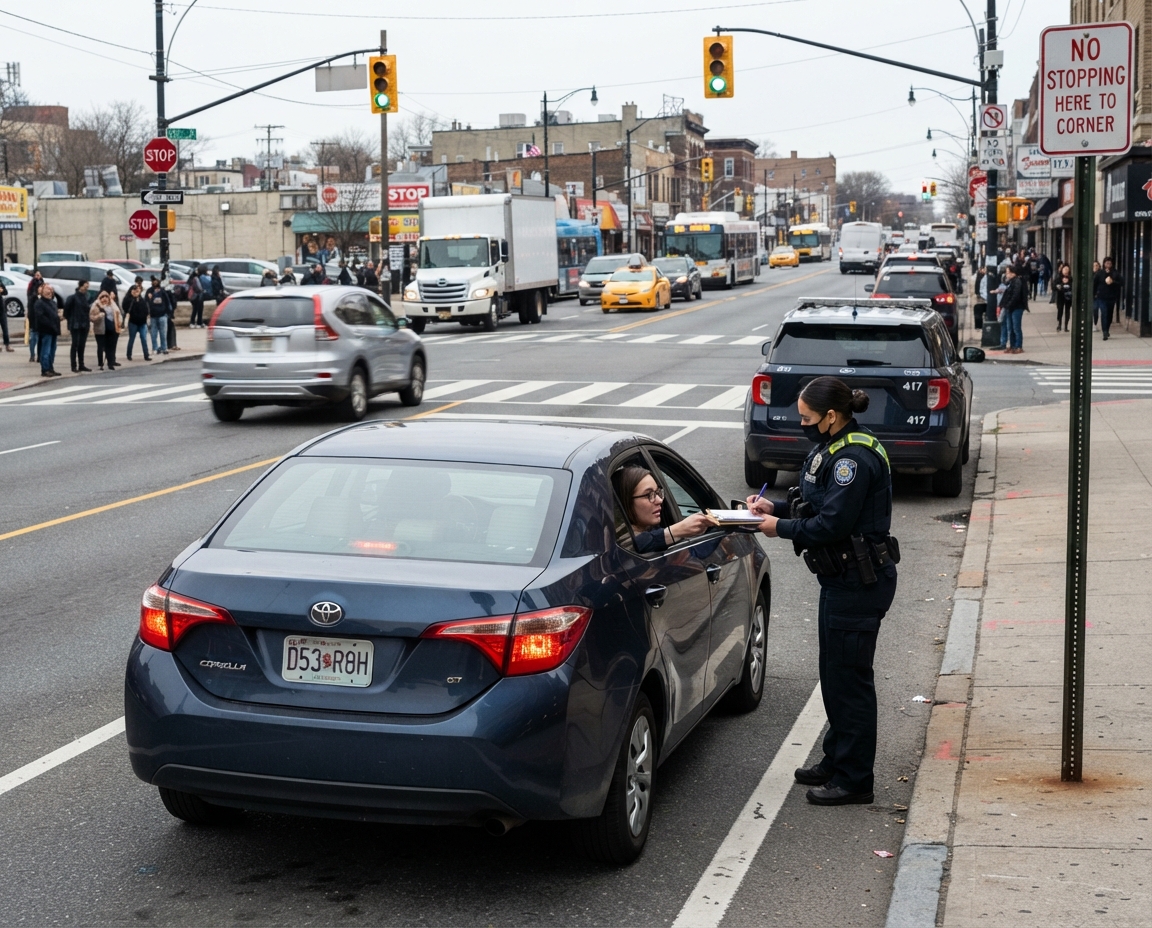
A California traffic ticket can involve more than paying a fine. Depending on the violation, a traffic infraction may affect your driving record, add DMV points, increase insurance costs, or make you eligible for traffic school.
Understanding how California traffic infractions work can help you understand your options and avoid unnecessary complications.
This guide covers the essentials of California traffic ticket fines, DMV points, traffic school, paying a ticket, contesting a citation, and what happens if you miss your deadline.
What Is a Traffic Infraction in California?
A traffic infraction is generally a lower-level violation of California traffic law. Common examples include certain speeding violations, failing to obey traffic signals or signs, and other moving violations.
Unlike a misdemeanor or felony, an infraction generally does not carry jail time. However, it can still result in financial penalties and other consequences.
Depending on the violation, a traffic infraction may result in:
A fine and other court charges
A conviction
A DMV point
Potential insurance consequences
Eligibility for traffic school
Additional penalties if you fail to respond
Not every traffic citation results in a DMV point, and not every violation has the same fine or eligibility requirements.
How Much Is a California Traffic Ticket?
There is no single fine for all California traffic tickets.
The total amount depends on the specific violation and may include the base fine plus additional penalties, assessments, and fees.
This means the amount a driver ultimately owes can be substantially higher than the basic fine associated with the traffic violation.
For example, a driver who receives a speeding ticket should not assume that the total amount due will equal only the statutory base fine. The court calculates the amount owed according to the applicable rules and schedules.
Always check the amount listed by the court handling your citation rather than relying on an estimated fine found online.
Do Traffic Tickets Add Points to Your California Driving Record?
Some do, but not all.
California uses a negligent operator point system to track certain traffic convictions and other qualifying driving-related incidents. The number of points depends on the specific violation.
Many ordinary moving violations are worth one point, while certain more serious violations can result in two points.
Some violations carry no DMV points.
Because the point value depends on the specific offense, drivers should determine the consequences of the particular violation listed on their citation.
How Many Points Can Lead to DMV Action?
For most adult California drivers, the DMV’s negligent-operator system uses these thresholds:
4 points within 12 months
6 points within 24 months
8 points within 36 months
Reaching an applicable threshold can result in DMV action, including negligent-operator probation or suspension depending on the circumstances.
For example, a driver who accumulates four qualifying points within a 12-month period may receive DMV action under the negligent-operator system.
Commercial drivers and certain other drivers can be subject to different rules.
How Long Do Traffic Points Stay on Your Record?
The amount of time a violation remains on a California driving record depends on the type of violation.
Generally, traffic convictions can remain relevant to a driver’s record for several years. Some violations remain for approximately three years, while more serious violations can remain for longer periods.
Because the duration varies, drivers should consider both the immediate financial cost of a ticket and its potential effect on their driving record.
Does Paying a Traffic Ticket Add a Point?
It can.
Paying the amount required by the court generally resolves the financial obligation, but it does not necessarily mean the violation disappears.
For an applicable traffic offense, paying or forfeiting bail can result in a conviction. If that conviction carries a DMV point, the point can be reported to the DMV.
For example, if a driver receives a one-point speeding violation and simply pays the ticket, the driver may still receive the corresponding DMV point.
Paying a ticket is therefore not the same as having the ticket dismissed.
Can Traffic School Prevent a Point From Affecting Insurance?
For eligible drivers, traffic school can provide an important benefit.
When an eligible driver successfully completes an approved traffic school program for a qualifying violation, the conviction can generally be kept confidential from insurance companies under California’s traffic-school rules.
This does not mean the conviction is erased from the DMV’s records.
Who Can Attend Traffic School?
Traffic-school eligibility depends on the violation and the driver’s circumstances.
Common requirements include:
Having a valid driver’s license
Being cited for a qualifying violation
Meeting the applicable requirements for the type of vehicle involved
Not having attended or elected traffic school for a previous qualifying violation within the preceding 18 months
Meeting the other eligibility requirements established by California law
Certain violations are excluded from traffic-school eligibility.
If traffic school is available for your citation, the court should provide information about the requirements, fees, and deadline.
Can a Traffic Ticket Increase Your Insurance?
A traffic conviction can potentially affect auto insurance.
Insurance companies may consider qualifying driving violations and information on a driver’s record when determining rates and eligibility, subject to California insurance rules.
For an eligible driver, successfully completing traffic school for a qualifying violation can result in confidential treatment of the conviction for insurance purposes.
However, traffic school does not guarantee that insurance rates will remain unchanged.
What Happens If You Ignore a Traffic Ticket?
Ignoring a California traffic ticket can lead to additional problems.
Your citation will generally include a deadline to respond. Failing to appear or otherwise resolve the citation can result in additional consequences, which may include monetary assessments and a failure-to-appear matter.
The consequences can become more complicated if the ticket remains unresolved.
If you have missed your deadline, contact the court listed on the citation as soon as possible to determine the status of the case and what procedures are available.
Can You Fight a California Traffic Infraction?
Yes. Drivers who dispute a traffic citation generally have the right to contest an eligible infraction through the court process.
A traffic infraction trial is decided by a judge or other judicial officer rather than a jury.
At trial, relevant evidence may include:
Your testimony
Witness testimony
Photographs
Video
Documents
Other evidence related to the alleged violation
California also permits trial by written declaration for eligible traffic cases. This allows a defendant to submit a written statement and supporting evidence instead of appearing for the initial trial.
The procedures and deadlines for contesting a ticket depend on the court and the specific case.
What Is a California Fix-It Ticket?
Some traffic violations are correctable. These are commonly called fix-it tickets.
A correctable violation may involve a vehicle or documentation issue that can be fixed or brought into compliance.
For example, a driver may receive a citation involving a correctable vehicle-equipment problem. After correcting the problem, the driver may be required to provide proof of correction to the appropriate authority or court.
Not every traffic ticket is correctable, so check the citation and court instructions.
What If You Cannot Afford Your Traffic Fine?
California courts may provide options for drivers who cannot afford the amount owed.
Depending on the circumstances and court, options may include:
Requesting a reduction
Requesting additional time to pay
Setting up a payment plan
Requesting another available ability-to-pay option
Some California courts also offer an online ability-to-pay process.
If you cannot afford your traffic fine, do not simply ignore the ticket. Review the court’s available options and make sure you understand how an ability-to-pay request could affect other options in your case.
Frequently Asked Questions
Is a traffic infraction a crime in California?
An infraction is a lower-level offense than a misdemeanor or felony and generally does not carry jail time. However, it can still result in fines, convictions, and DMV consequences.
Do all California traffic tickets add points?
No. The DMV point value depends on the specific violation. Some violations carry one point, some carry two points, and some carry no points.
Does paying a traffic ticket mean the ticket is dismissed?
No. Paying the required amount generally resolves the court obligation but can result in a conviction for the underlying violation.
How many points can I have before my license is suspended?
For most adult drivers, DMV negligent-operator thresholds are 4 points in 12 months, 6 points in 24 months, or 8 points in 36 months. DMV procedures and the driver’s circumstances can affect what action follows.
Can traffic school remove a point?
Traffic school does not erase the underlying conviction from the DMV record. For an eligible driver who successfully completes traffic school, the qualifying conviction can generally be kept confidential from insurance companies.
How often can I attend traffic school?
For qualifying violations, California generally uses an 18-month restriction based on the previous violation and traffic-school attendance or election. Other eligibility requirements also apply.
What happens if I miss my traffic ticket deadline?
Missing the deadline can result in additional consequences, including possible monetary assessments and a failure-to-appear matter. Contact the court handling the citation to determine what steps are available.
Can I contest a traffic infraction?
Generally, yes. Eligible traffic infractions can be contested through a court trial, and some cases may qualify for a trial by written declaration.
What Should You Do After Receiving a California Traffic Ticket?
After receiving a traffic citation, focus on these key steps:
Read the citation carefully. Identify the violation, court, and response deadline.
Check the total amount owed. The basic fine may not be the total cost.
Determine whether the violation carries DMV points.
Check whether you qualify for traffic school.
Decide whether you want to contest the citation.
If you cannot afford the fine, review available payment or ability-to-pay options.
Do not ignore the deadline.
Taking the time to understand these issues can help you avoid turning a routine traffic citation into a more complicated legal or DMV matter.
Contact Southwest Legal
A California traffic ticket can affect more than your wallet. Depending on the violation, it may involve DMV points, traffic school, insurance concerns, court deadlines, and other consequences.
If you have received a California traffic citation and want to better understand the process and options available to you, Southwest Legal can help you understand your situation.
Contact us today for a free consultation and take the next step toward understanding your California traffic infraction.
Disclaimer: This article is for general informational purposes only and does not constitute legal advice. California laws, court procedures, fines, and DMV requirements may change. The information provided does not guarantee any particular outcome in an individual case.