


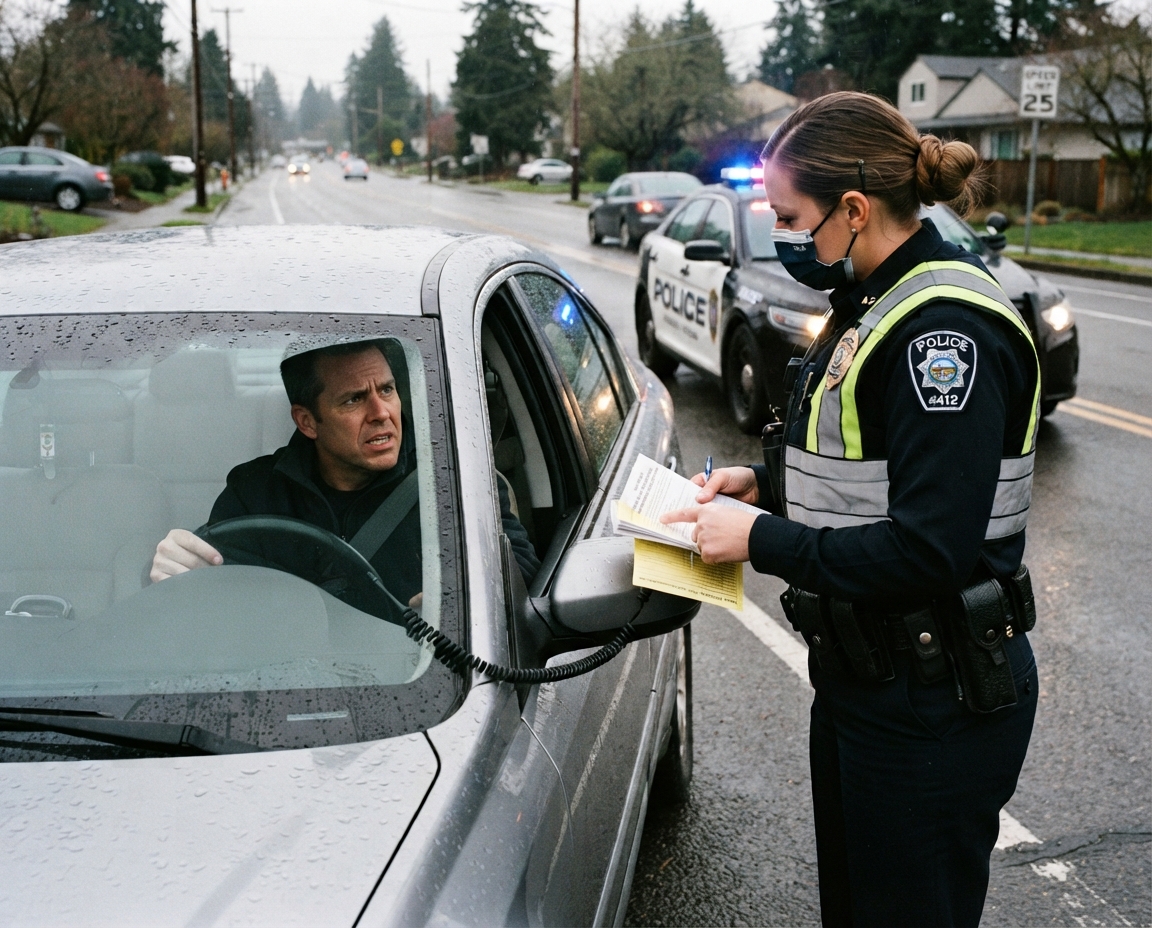
If you are required to use an ignition interlock device (IID) in California, driving a vehicle without the required functioning IID can be a separate criminal offense and can result in additional consequences for your driver’s license. The penalties depend on the type of IID restriction, the circumstances of the alleged violation, and your driving record.
Is Driving Without an Ignition Interlock Illegal in California?
Yes. If your California driver’s license is subject to a qualifying IID restriction, you generally cannot operate a vehicle that does not have the required functioning IID.
California Vehicle Code § 23247(e) prohibits a person whose driving privilege is restricted under specified DUI-related statutes from operating a vehicle that is not equipped with a functioning, certified IID.
The law applies to the vehicle being driven. Therefore, switching to another vehicle does not automatically eliminate the IID requirement.
For example, if your own vehicle has an IID but you borrow a family member’s vehicle without one, you can still be violating your driving restriction.
What Is the Penalty for Driving Without an IID?
A conviction for violating Vehicle Code § 23247 can result in:
-
Up to six months in county jail;
-
A fine of up to $5,000; or
-
Both jail and a fine.
These are the statutory maximum penalties. They do not mean that every person convicted of an IID violation will receive the maximum sentence.
There can also be consequences for your driver’s license.
Under Vehicle Code § 23247(g), a conviction for operating a vehicle without a functioning IID can result in additional DMV action. The exact consequence depends on the statute under which the IID restriction was imposed.
For some restrictions, the DMV can terminate the IID restriction and suspend or revoke the driver’s privilege for the remaining period of the underlying suspension or revocation.
For certain other IID restrictions, a conviction can result in a one-year driver’s license suspension.
Can You Be Charged for Driving Someone Else’s Car Without an IID?
Yes. Owning the vehicle is not what determines whether the IID restriction applies.
California’s IID laws generally focus on whether the restricted driver is operating the vehicle.
This means that borrowing a car from a:
-
Spouse;
-
Family member;
-
Friend; or
-
Other vehicle owner
does not automatically provide an exception.
Example
Suppose Maria has an IID-restricted license. Her vehicle is equipped with an IID, but it is being repaired. She borrows her sister’s car, which does not have an IID.
Even though Maria does not own the car, driving it can violate her IID restriction.
The fact that the trip is short or that Maria only borrowed the vehicle temporarily does not automatically create an exception.
Can You Drive an Employer’s Vehicle Without an IID?
A limited exception may allow you to drive an employer’s vehicle without an IID during the scope of your employment.
California provides an employer-vehicle exception when specific requirements are satisfied.
Generally, the driver must complete the required Notice to Employers Ignition Interlock Restriction (DL 923) and provide the notice to the employer. The driver must also comply with the applicable documentation requirements.
This exception is limited.
It does not generally mean that you can drive any vehicle without an IID simply because you are going to or from work.
For example, an employee may qualify to operate a qualifying employer vehicle while performing job duties, while still being prohibited from driving a spouse’s or friend’s personal vehicle without an IID.
Can You Rent a Car Without an IID?
Generally, an IID-restricted driver cannot simply rent a vehicle without an IID and use it for personal driving.
California Vehicle Code § 23247 addresses renting, leasing, and lending vehicles to people who are subject to covered IID restrictions.
If you have an IID-restricted license, do not assume that a rental car is exempt from your restriction merely because the vehicle is not yours.
What Happens to Your License After an IID Violation?
A conviction can lead to additional DMV action against your driving privilege.
The consequences depend on the legal basis for your IID restriction.
This is important because California does not impose exactly the same DMV consequence for every IID violation.
Depending on the applicable statute, a conviction can result in:
-
Termination of an IID restriction;
-
Additional suspension of your driving privilege;
-
Revocation of your driving privilege; or
-
A one-year suspension in certain circumstances.
The criminal case and the DMV consequences should be treated as separate issues. A person facing an IID charge may need to address both.
What If the IID Was Not Working?
A malfunction does not automatically allow you to drive without the IID.
If the device is not working, contact the IID provider as soon as possible and document the problem.
Keep records such as:
-
Service and repair records;
-
Appointment confirmations;
-
Error messages;
-
Receipts;
-
Communications with the IID provider; and
-
Any related DMV correspondence.
California’s IID program also requires periodic servicing and calibration. Failing to complete required service can create additional problems with your driving privilege.
If the device malfunctioned, the circumstances surrounding the malfunction may be important, but a driver should not assume that the malfunction automatically eliminates the IID restriction.
What If You Were Caught Driving Without an IID?
If you were stopped while driving a vehicle without the required IID, take the situation seriously.
1. Check the citation or charging document
Find the specific Vehicle Code section you are accused of violating.
Vehicle Code § 23247(e) is particularly important in cases involving operation of a vehicle without a required functioning IID.
2. Check your license status
Determine whether your license is:
-
Valid and IID-restricted;
-
Suspended;
-
Revoked; or
-
Subject to another DUI-related restriction.
Driving while your license is suspended or revoked can create additional legal problems.
3. Review your IID paperwork
Gather your:
-
DMV notices;
-
Restricted-license documents;
-
IID installation records;
-
Service records; and
-
Any paperwork concerning your underlying DUI case.
4. Do not continue driving vehicles without an IID
If your license requires you to drive only IID-equipped vehicles, continuing to drive without one can expose you to additional violations.
5. Pay attention to DMV deadlines
A criminal citation and DMV action can involve different procedures and deadlines. Do not assume that resolving one automatically resolves the other.
Can a First-Time DUI Driver Be Charged With Driving Without an IID?
It depends on the type of restriction imposed after the DUI.
Not every California DUI results in the same IID requirement.
A first-time, non-injury DUI does not automatically result in the same mandatory statewide IID period that applies to certain repeat or injury-related DUI offenses. However, an IID can still be required or become part of a restricted-driving arrangement in appropriate circumstances.
Therefore, the important question is not simply whether someone has a first DUI.
The important question is:
Was the driver’s privilege actually restricted in a way that required an IID?
If the answer is yes, operating a vehicle without the required IID can create a violation even if the underlying DUI was the driver’s first offense.
Can You Get an IID Exemption?
Some drivers may qualify for an exemption from a mandatory IID requirement, but eligibility is limited.
California provides an exemption process for certain people who do not own or have access to a vehicle and who no longer have access to the vehicle involved in the DUI that resulted in the IID requirement.
The exemption process has specific eligibility requirements and deadlines.
An exemption is not the same thing as simply choosing not to install an IID.
If you believe you qualify for an exemption, review the applicable DMV requirements before driving.
Frequently Asked Questions
Is driving without an ignition interlock a crime in California?
It can be. Vehicle Code § 23247(e) makes it unlawful for a person subject to certain IID restrictions to operate a vehicle without the required functioning IID.
What is the maximum penalty for driving without an IID?
Vehicle Code § 23247 provides for up to six months in county jail, a fine of up to $5,000, or both for the applicable violation.
Can I drive my friend’s car without an IID?
Generally, no, if your license requires you to operate only vehicles equipped with a functioning IID. The fact that you do not own the vehicle does not automatically create an exception.
Can I drive my employer’s vehicle without an IID?
Potentially. California provides a limited employer-vehicle exception when the statutory requirements are satisfied, including the required employer notification procedure.
Can driving without an IID suspend my license?
Yes. A conviction can result in additional DMV action, including suspension or revocation, depending on the underlying IID restriction.
What if my IID stopped working?
Contact your IID provider promptly and document the malfunction. Do not assume that a malfunction automatically gives you permission to drive without the device.
Can I rent a car without an IID?
Generally, an IID-restricted driver cannot simply rent and operate a vehicle without the required IID. California law addresses renting, leasing, and lending vehicles to people subject to covered IID restrictions.
Can I get an IID exemption?
Some drivers may qualify for an exemption if they meet specific California DMV requirements, including requirements concerning vehicle ownership and access.
Does every California DUI require an IID?
No. IID requirements vary based on the DUI offense, prior convictions, injury circumstances, and the type of restriction imposed.
Key Takeaways
-
Driving without an ignition interlock can be a California criminal offense when an applicable IID restriction requires the driver to use one.
-
Vehicle Code § 23247 provides for up to six months in county jail, a fine of up to $5,000, or both for the applicable violation.
-
A conviction can result in additional DMV consequences, including suspension or revocation of driving privileges.
-
Borrowing someone else’s vehicle does not automatically eliminate an IID requirement.
-
A limited exception can apply to certain employer vehicles when the legal requirements are satisfied.
-
An IID malfunction does not automatically authorize driving without the device.
-
The exact consequences depend on the specific IID restriction and the circumstances of the alleged violation.
Contact Southwest Legal
Need Help After an IID Violation?
Being accused of driving without an ignition interlock can leave you facing two separate concerns: the criminal case and the potential impact on your California driver’s license. Understanding what you are charged with, what restriction applies to your license, and what deadlines you may be facing can help you make informed decisions about your next steps.
If you have been cited or arrested for driving without an IID, Southwest Legal can help you understand the legal issues involved and what options may be available based on the circumstances of your case.
Contact us today for a free consultation.
Disclaimer: This article is for general informational purposes only and does not constitute legal advice or create an attorney-client relationship unless and until the firm and client enter into an agreement for legal services. Laws may change, and legal outcomes depend on the specific facts of each case. Consult a qualified attorney for advice regarding your situation.